Gordon brown

Number 10’s flawed plan

Andrew Grice has an interesting column in the Independent today laying out Number 10's plans for an autumn fightback. The six-step strategy is as follows: "1. Labour will focus on the policy choice between the two main parties because the Tories are more vulnerable on policy than their current opinion poll lead suggests. The Tories are perceived by the public not to have any policies. 2. The focus on Labour's record and future plans will allow it to close the poll gap. 3. As an economic recovery begins, the Government's approach will be seen to have stopped recession turning into depression. 4.

Brown’s Afghanistan speech was encouraging, but the strategy’s still flawed

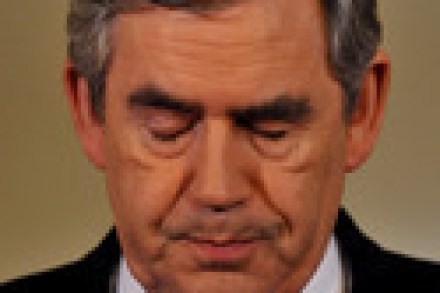
Brown’s delivery may have been beyond sepulchral, but the content was encouraging. He laid out how Afghan stability is being bolstered by the increased activity and competence of Afghan security forces, the replacement of the heroin crop with wheat, an intensification of government in rural hinterlands and by arresting urban corruption. At least there now seems to be a degree of co-ordination between coalition and Afghan security operations, civic reconstruction and the administration of government. These are welcome changes but there is still no overarching sense of what the ‘Afghan mission’ hopes to achieve, beyond the dubious contention that it will make the West safer. As a result, a number of the initiatives Brown articulated are ill-focussed or counter-productive.

Why Britain needs to stay in Afghanistan

With the resignation of Eric Joyce as PPS to the Defence Secretary Bob Ainsworth, the question of why Britain is part of the NATO-led Afghan mission has taken on new force. No doubt the Prime Minister will explain what he sees as the reasons when he speaks at IISS later today. But just because Gordon Brown supports a policy does not make it wrong. Here are the reasons why we should remain engaged: 1. To deny Al Qaeda a safe-haven from which to train and organise attacks on the West. Though terrorism can be organized in Oldham, Hamburg and Marseilles, Al Qaeda still believes it needs safe-havens in places like Afghanistan. 2. To prevent a new generation of terrorists and insurgencies of getting the mother of all propaganda coups by having routed NATO.

Who really freed Megrahi?

Who really freed the Lockerbie bomber? The question cannot be answered by deliberately looking in the wrong place. And for the fortnight since Kenny MacAskill, Scotland’s Justice Secretary, announced Mr Megrahi’s release that is what journalists have been doing, obsessively. Reporting with the pack mentality that often misdirects them, British newspapers have tried to prove that Gordon Brown authorised the release. Instead they have demonstrated only that the Prime Minister wanted Megrahi to be transferred to Libya under the prisoner transfer scheme, and that he had no power to make it happen. Granted, Mr Brown and the British Cabinet desired a result that would have appalled Americans nearly as much as the actual outcome has. But their view did not prevail.

Discontent is in the air

This morning's political firecracker comes courtesy of Martin Kettle in the Guardian, who claims that a group of Labour figures are moving to oust Brown in October: "An active network of MPs and peers now exists, involving some names you might expect, but also others – including big ones – whose participation would surprise you. This group, like probably the majority of Labour MPs, accepts that Brown is a liability to his party's election prospects. Unlike the majority, though, they claim to think something can be done about it. They believe the window of opportunity, if it comes, will be in the two or three weeks after October 12. If Brown can be pushed, then this is the time. They say they are ready to try.

If Britain hasn’t returned to growth by the end of the year, will it still be ‘no time for a novice’?

Looking at the OECD’s latest economic forecast it seems that the UK—unlike the US and the Euro-Zone--will not return to growth by the end of this year. (Although, one can’t help but wonder if Brown will start heralding zero percent growth in the fourth growth). Indeed, the OECD projects that the UK economy will shrink by 4.7 percent over this year as a whole—although the worst appears to be behind us with the rate of shrinkage slowing since the last quarter of 2008 and the first quarter of this year.   As Kevin Maguire suggests today, Labour’s election strategy is likely to be that Britain is not out of the woods yet and so it is still no time for a novice.

Brown’s misplaced hope

In his insightful article on Brown and the forthcoming G20 summit, Francis Elliot writes a sentence which should terrify Labour supporters: "[Gordon Brown] has already decided that his only hope of a comeback in the polls lies with the economy." Sure, we all know that Team Brown has been putting a lot of hope in a green shoots strategy.  But, as we've pointed out on Coffee House before, there's little reason to believe that an economic recovery will deliver a significant boost for the Government.  If that's all that the PM has, then his situation is looking more hopeless than ever.

The FT is still the Brown ‘un

Most of Fleet Street might have abandoned Gordon Brown but judging by today’s editorial the FT, along with the Mirror, will be with Brown to the end. In its editorial today it praises Brown’s “prudent suggestions” for the G20 meeting. It goes onto say that “the G20’s aim should be to provide political cover so that governments – including the UK’s – have the room to continue running large deficits, if sustainable growth should prove to be further away than hoped.” Then, bizarrely, it goes onto say that the “prime minister faces both ways on bankers’ bonuses” as if this is a good thing.

Brown’s fightback is hampered by the negative stories that hover over him

So Brown has said more about the al-Megrahi case, although he hasn't said anything particularly new.  Speaking at an event to mark the government's new "Backing Young Britain" project, the PM claimed that, "There was no conspiracy, no cover up, no double-dealing, no deal on oil, no attempt to instruct Scottish ministers, no private assurances to Colonel Gaddafi".  Which is exactly the message we've heard from a string of ministers, and which has been thrown into doubt by all those published letters.  No word yet on whether Brown agreed or disagreed with Megrahi's release, when it finally came. All this exemplifies the problem that Labour have had for months now, and will continue to have for months to come.

10 Days Away and Libya Still on the Front Pages

It's not often that you take a holiday to return to the same story running nearly two weeks later. Just before I went away, I updated my Facebook page to say that I thought the release of Megrahi would rebound on the UK government, but I had no idea it would develop into a full-blown crisis. Bill Rammell was filmed in very unfortunate circumstances making his confession last night. But well may he sweat -- perhaps he agreed to be shot like that in sympathy for the dissidents held in Gaddafi's desert jails. But the game is up now. Rammell, Miliband, Straw and Brown all decided that they didn't want Megrahi to die in a British jail. Why? Perhaps because they thought it was cruel to let a man dying of cancer perish in Scotland. Or perhaps not.

The Sky debate could be a lifeline for Brown

As the Megrahi case grows more serious by the day, one thing should be cheering up those in the Brown bunker: Sky’s plan to host a debate among the party leaders. Now, Brown might be the only party leader yet to have agreed to the debate but he is the one with the most to gain from it. If Brown is to have any hope of stopping David Cameron from winning the next election outright, he needs a game changing moment—and a debate might just produce one. The first televised leaders’ debate will be a hugely hyped event. One has to imagine that it would draw a huge TV audience and a ton of media coverage. It would provide the clunking fist with the perfect platform to land a blow on David Cameron.

The Lockerbie papers

Bill Rammell’s admission that the Prime Minister and the Foreign Secretary told the Libyans that they ‘did not want al-Megrahi to pass away in prison’ is the bombshell the government hoped to avoid. And, together with Jack Straw’s sudden decision not to exclude al-Magrahi from the PTA to protect ‘wider negotiations with the Libyans”, this disclosure requires answers from the government. David Miliband heightened the chaos the government now finds itself in on the Today programme when he very foolishly remarked: “We did not want him to die in prison”.

Brown’s new dividing lines are merely muddled hypotheticals

Reading the transcript of Gordon Brown’s interview with the FT one is struck by how little of a domestic policy message Brown has. Say what you like about Labour’s mantra in 2001 and 2005 of Labour investment versus Tory cuts but it was clear. By contrast, Brown’s attempt to explain his new dividing lines to the FT is distinctly muddled. Brown’s main line is that things could have been a lot worse without the government’s action. But that is, of course, a hypothetical. It also seems doubtful that the public will share this view or forget who was Chancellor in the decade before the crisis. Brown then moves on to what he thinks will be the battleground for the next election.

Cameron is the winner of the al-Megrahi scandal 

It is clear that the al-Megrahi release has damaged Labour, not least because their collective refusal to condemn, or at least have an opinion on, the release of the Lockerbie bomber has confirmed that the government is totally out of touch with public opinion. On the other hand, David Cameron has played a blinder. In stark contrast to the Prime Minister’s Trappist monk act, Cameron has led this issue, voicing considered condemnations of Kenny MacAskill’s decision, the government’s reticence and the its supposedly ethical foreign policy. Cameron writes a piece in today’s Times branding the entire affair a ‘fiasco’ and a ‘failure of judgement by the Scottish government...the British government...and the Prime Minister’.

But he did for the both of them with his plan of attack

The tension between defence ministers and senior officers has been a running story throughout the summer, perhaps at the expense of the opinions of troops on the ground. The Times’ war correspondent, Anthony Loyd, wrote a piece today describing soldiers’ views in the wake of the Prime Minister’s visit: ‘One can only hope that if Mr Brown had braved the journey northwards from Bastion to Sangin (he didn’t), where British infantrymen are getting killed or wounded at a rate directly comparable to that of their predecessors in Western Europe in 1944, his media men would have first whitewashed the graffiti in the latrine third from the left on the northern wall. '“I dropped a Gordon” a rifleman has scrawled beside the seat.

The Libya plot thickens

So the Sunday Times has got its hands on letters which suggest the al-Megrahi release was tied up with a BP-Libya oil deal, and overseen by the Government with an eye on "the overwhelming interests for the United Kingdom".  The ST article deserves quoting at some length: "Two letters dated five months apart show that [Jack] Straw initially intended to exclude Megrahi from a prisoner transfer agreement with Colonel Muammar Gadaffi, under which British and Libyan prisoners could serve out their sentences in their home country. In a letter dated July 26, 2007, Straw said he favoured an option to leave out Megrahi by stipulating that any prisoners convicted before a specified date would not be considered for transfer.

Libyagate: first denial, then silence now contradictions

The Times has obtained confidential correspondence suggesting that, in 1999, Robin Cook assured Madeleine Albright that those found guilty of involvement in the Lockerbie bombing would serve their sentences in Scotland. A senior US official told the Times: “There was a clear understanding at the time of the trial that al-Megrahi would serve his sentence in Scotland. In the 1990s the UK had the same view. It is up to them to explain what changed.” So how do they explain it? Kenny MacAskill claims that US officials urged him against releasing the Lockerbie bomber because Britain had pledged he would serve his serve sentence in Scotland. Seeking clarification, MacAskill wrote to Foreign Office minister Ivan Lewis on 22nd July.

Brown’s hypocrisy over Lockerbie?

So far, Gordon Brown has refused to specifically comment on the Scottish Government's decision to release Abdelbaset Ali al-Megrahi to Libya.  Yes, we've heard that he was "angry and repulsed" by al-Megrahi's reception in Libya, and that our government had "no role" in the decision.  But there's been nothing on whether he actually agrees or disagrees with the Scottish government's actions. The official excuse has been that Brown has to respect the devolution settlement and can't comment on devolved matters.  But - what's this? - it seems he hasn't had a problem with commenting on another devolved matter before now: the level of health spending set by the Scottish Government.