Gordon brown

No way to lead a nation

It's been terrible a morning for Gordon Brown in the editorials and on the front pages. And David Cameron, scenting blood, has condemned Gordon Brown’s leadership over the al-Megrahi affair. These pieces share the same basic analysis: Brown’s calculated caution is the cause of his problems. John Rentoul, admittedly no fan of the PM, writes in today’s Independent: ‘This has everything to do with a pattern of behaviour, an inbuilt caution that served Brown well enough on the road to No 10, but which is disastrous in anyone actually holding the top job.

Brown faces another backbench revolt  

Despite protesting to the contrary, it turns out the government have been cutting all along. The Times reports that, buried in the small print of the budget, there is a commitment to abolish the £780 per year surplus housing benefit allowance, which encourages families to pay their rent and trade quality of accommodation for cash. These changes come into force on April 1, probably a month before the election. Labour backbenchers condemn the saving, worth £160 million per year, and plan to table amendments. Frank Field, who draws a comparison between this cut and the 10p rate revolt, tells the Times:  “At one stroke, they get rid of a reform aimed at getting flexibility into a fairly inflexible market by giving people incentives to shop around.

It’s written in the stars

The gods of fortune have spoken: Gordon Brown is not finished. According to the Independent’s Andrew Buncombe, an Indian astrologer has cast the embattled PM’s horoscope and predicts that we “can expect sudden positive changes in the economy from 19th November 2009”; that Mr Brown will win the election; and that “the year 2011 will be the best year of his lifetime, with many achievements”. “Why must the British people endure another term as tennis balls for the gods’ sport?” I hear you ask. Well, because Gordon’s got good karma - the position of the moon in his chart suggests that Brown “did good for the marine animals” of yesteryear. Lucky old them - wherever they are now, I'm sure they're pitying us.

The language of political debate

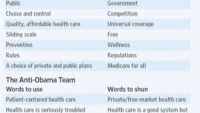
A great spot by Tim Montgomerie over at ConservativeHome, who highlights this Wall Street Journal graphic on the words that both sides of the US healthcare debate should be using to score a rhetorical advantage.  For instance, it suggests that the pro-Obama team should say "rules" rather than "regulations", while the President's opponents should attack the system for being "too profit-driven" and "too bureaucratic": As Tim says, words have power.

A very risky strategy

Labour’s attempt to create a new dividing line on cuts is intriguing because it suggests that the government reckons we are pulling out of recession – a message Alistair Darling has been stressing recently. Central to Labour’s argument is that their initial interventions, opposed by the Tories, preserved public services through the recession. By claiming that now is the time to make extensive cuts, beyond mere efficiency savings, suggests that they think the economy is robust enough to survive sweeping public spending cuts. If an economic boom couldn’t save John Major, I doubt a modest recovery will save Brown from defeat.

Twilight Zone Tuesday: Brown to announce spending cuts

Now this is a turn up.  According to the Independent, Gordon Brown is going to "issue a list of specific [spending] cuts" as part of his Autumn "fightback".  Here's how the strategy goes: "Initially, Mr Brown will seek to establish in voters' minds the key differences between Labour and the Tories – on policy, government intervention to limit the impact of the recession and preserving frontline services. Then he will acknowledge that the Government needs to go beyond the £35bn of efficiency savings it has already promised. The aim will be to show Labour is serious about reducing the deficit, which is set to rocket to £175bn in the current financial year and to £173bn next year.

There’s no one like Macavity

Paul Waugh’s spot on: Brown has been reluctant to congratulate England for their Ashes victory because he is so desperate to avoid being dragged into the international furore surrounding al-Megrahi's release. A Number.10 spokesman described Kenny MacAskill’s release order as a “uniquely sensitive and difficult decision" and one that (surprise, surprise) was taken completely independently of the British government. But, as yet, Macavity's not here. I suppose I could be doing the PM a disservice. Braying about our Ashes victory would, of course, be uniquely insensitive to our Australian brothers. And besides, giving congratulations is probably someone else’s job.

Confidence returns

One of the most significant news stories of the day comes courtesy of the Institute of Chartered Accountants: "Confidence among business professionals has surged, suggesting the recession is at an end, a survey has said. The Institute of Chartered Accountants' index of business confidence rose to 4.8 at the end of June, from -28.2 in March, the biggest rise for two years." Economically speaking, this is encouraging stuff – it's the view from the frontline of the real economy, after all.  And these types of surveys always tend to have a self-fulfilling quality, as more confident companies adopt the measures – spending, hiring etc. – which are likely to drive us out of recession.

The stench of realpolitik

Suggesting that al-Megrahi’s release was the result of a deal being struck to protect commercial interests should be offensive, but there are a number of questions the government need to answer. First, was al-Megrahi’s transfer a condition of the Blair-Gadaffi Deal in the Desert? On Friday, Saif al-Islam said: “In all commercial contracts for oil and gas with Britain, Megrahi was always on the negotiating table”. The Foreign Office deny this and yesterday Lord Mandelson said: “The issue of the prisoner’s release is quite separate from the general matter of our relations and indeed the prisoner’s release has not been influenced in any way by the British government.

Another Sunday, another set of damaging rumours for Brown

Brace yourselves, it's leadership speculation time again.  A story in the Mail on Sunday alleges that Alistair Darling has been attacking Brown in private - "I am trying to talk sense into that man..." - before adding this: "Last night there were claims that backers of Home Secretary Alan Johnson - widely seen as the stop-gap leader if Mr Brown quits before the General Election - were secretly canvassing 'non-aligned' Labour MPs not closely linked to any potential successor. Sports Minister Gerry Sutcliffe, who ran Mr Johnson's unsuccessful Labour deputy leadership bid in 2007, was accused of quietly taking names." Whether true or no', these rumblings tell you everything you need to know about Brown's beleagured premiership.

The ‘Dear Leader’s Children’

A major political headache is how to ensure the recession doesn’t claim another lost generation. Official figures suggest that nearly 1 million people under the age of 25 are already on the dole, with a further 1.5 million being economically inactive. These figures will only get worse. Polly Toynbee thinks that Germany is pulling out of recession because they have the answer: ‘Labour's efforts are directed towards getting people into work. But Germany focuses on stopping people falling out of work, by contributing to wages. A study this week says a ¤6bn scheme prevented a major rise in unemployment, and helps explain why Germany is already pulling out of recession.

Finally, a stroke of good luck for Gordon Brown

This UK-US spat over the NHS has spilled over into a snowballing twitter campaign, with comments flooding in from Brits. Nigel Lawson said the NHS was like a religion to Britain, and many have come to defend the faith. Brown has lent his support to the campaign, and it's perfect for him. It allows him to play the patriotic card, telling those yanks (especially - boo - the conservative ones who watch Fox news, and their neocon supporters like Class Enemy Hannan) where to shove it. He also gives President Obama - he of Obama Beach fame - some political support. Finally, it allows him to claim that the NHS is somehow a great success - and of course it was a great Labour creation that the wicked Tories would ruin etc etc.

Mandy: Brown would “relish” televised debates with Cameron

So Mandy's brought up the idea of a public debate between Brown and Cameron again, claiming – in interview with Sky (see footage above) – that the PM would "relish" the opportunity to "take the fight to the Conservatives".  If you remember, the last time Mandy mentioned it, Downing St quickly moved to dampen all the speculation - the rumour was that Brown was going to challenge* Cameron to a series of debates in his conference speech, and was irritated at the PoD for giving the game away so early.  But now that Mandy has made the same point again – indeed, even more forcefully this time – I reckon it near confirms that Brown's challenge will come soon enough. * The word "challenge" is used in the loosest possible sense here.

The race to recovery is looking bad for Brown

Oh dear.  Another blow to Brown's economic credibility this morning, as France and Germany announce that they've come out of recession already.  Both economies grew by 0.3 percent in the second quarter of the year - in contrast to the UK economy, which shrank by 0.8 percent. Whatever the factors behind it, this spells trouble for Brown.  A poor performance in the race to recovery not only calls his management of the economy into question, but it also undermines his anticipated "green shoots strategy".  The PM will find it hard to brag about our "green shoots" when other countries already have full-grown plants.

The truth behind Mandy’s “half-a-million jobs” claim

Anyone listening to Lord Mandelson’s claim this morning that the Brown stimulus saved “at least” half a million jobs would have smelt a large, whiskered rat. The Treasury has tonight told The Telegraph that the 500,000 figure was a maximum estimate, not a minimum as Mandy claimed. Your baristas here at Coffee House have asked the Treasury to show us their study – not available, it seems. So we have submitted a Freedom of Information request for it. While we all hold our breath, it’s worth looking at this claim in more detail because it is a Brownie we are highly likely to hear again.

Osborne should avoid Brown-style rhetoric on cuts

Right, I know I keep banging on about Osborne's speech, but - Alan Duncan's loose lips aside - it's certainly the topic du jour in Westminster.  Yesterday evening, I noted a couple of qualms I had with what I thought was - on the whole - an important and effective address.  Today, I've got another concern to add to the pile; one prompted by Osborne's article in the Times. The headline to that article reads thus: "The new dividing line: radical reform or cuts".  And the sub-head runs: "Sceptics argue that reform is a luxury we cannot afford.  Without it, money for schools and health will inevitably be slashed."  Now, there are some major problems with that argument.

Brown’s children

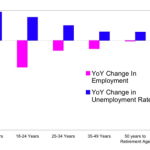
Why is this recession so cruel to the young? The unemployment figures - now up to 2.44 million - are bad enough. It's the largest single quarterly drop since data began in 1971. But look deeper and there's a striking disparity amongst the age groups. The under-18s – school leavers – are hit the most, with their employment numbers down 17% year-on-year. The 18-24 year olds are next worst hit. But there is actually a rise in pension-aged people returning to work. The bottom line: unemployment amongst the under-25s is a third higher than when Labour came to power. CoffeeHousers may remember how full of pious anger Gordon Brown was during the last recession, saying that youth unemployment was a particular outrage, and he called them "Major's children".

When Mandelson can’t launch a convincing counterattack, you know things are bad for Labour

Whatever you might think of George Osborne's speech on progressive politics yesterday - and I have some doubts of my own - it's hard to take Peter Mandelson's Guardian article about it particularly seriously.  As Tim Montgomerie says over at ConservativeHome, there's little in there beyond personal attacks on Osborne and a caricature of the Tory position, all underpinned by the insistent claim that progressive ends can only be delivered by Labour means.  For someone who lambasted the media for not "not talking about policy" in his interview with the Guardian on Monday, it's a rather poor show. But, worst of all for Labour, is that Mandy's position is confused and inconsistent.