Gordon brown

Miliband talks the language of cuts

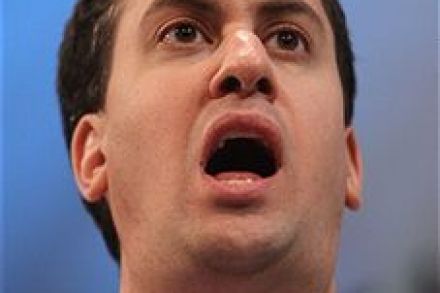
Much of Ed Miliband's Grand Confession on the economy is wearily familiar. I mean, we've known his take on the deficit for some time: that the drop in tax receipts from a crumbling financial sector was to blame, rather than Brown's spending. And to have him argue that Labour should have made the economy less dependent on the City is just another way of saying exactly the same thing. But there is something new in there, too. Miliband is set to admit that Labour didn't "talk the language of cuts" soon enough. Not that he's saying Labour should have – or still should – cut deeper and faster, mind. It's simply that Brown and his ministers didn't breath the c-word early enough.

Mixed attitudes towards the cuts

Forget the voting intentions, the real action in YouGov's latest poll comes in the supplementary results. There, as Anthony Wells suggests, are attitudes towards spending cuts that will both perturb and hearten the coalition. Let's take the bad stuff first: "Asked if the government’s cuts will be good or bad for the economy only 38% now think they will be good, compared to 47% who think they will be bad. In comparison between October and December last year it was roughly even between people thinking the cuts would be good and those thinking they would be bad. On whether the cuts are being done fairly or unfairly, 57% now think the cuts are being done unfairly, again the highest we’ve shown so fair.

The crash from an Austrian perspective

It’s not all politics at Westminster. There’s a pretty good think-tank scene too, with lectures on topics that you’re unlikely to read about in the newspapers. One took place today: the Adam Smith Institute hosted a lecture by Steven G. Horwitz, from St. Lawrence University, entitled “An Austrian perspective on the great recession of 2008-09”. As many CoffeeHousers will know, "Austrian" refers to von Mises, Hayek and the others whose analysis of bubbles and crises certainly seems to fit current events. My colleague Jonathan Jones was there, and took some notes – which I have moulded into a six-point briefing.  It’s not often we do a post based on a think-tank talk – we may do more, if CoffeeHousers find them useful.

Affable Cameron invites you into his home

Perhaps I’m alone in this, but David Cameron interviews better in print than he does on screen. He’s almost too polished on television. His supreme confidence and tendency to guffaw at his scripted jokes can grate. But in print his assurance has an affable, human quality. The Daily Mail has interviewed him today. Most of the piece is a lifestyle feature – Dave at home attending to Florence’s evening feed as he watches Newsnight. It is vacuous fare, but it strikes a brilliant contrast with Ed Miliband’s rout at the hands of the nation’s housewives on the Jeremy Vine Show, where there were echoes of Gordon Brown’s excruciating unease with the world beyond Westminster.

Rising costs: a problem for the public and the coalition in 2011

Ne’er mistake correlation with cause, I know. But, during the Brown premiership, the correlation between petrol prices and poll ratings was still pretty striking. Mike Smithson graphed it early last year, but the basic story was this: the Tories enjoyed their biggest poll lead over Labour when petrol prices were at their highest, and Labour closed the gap to only 1 percent when petrol prices were at their lowest. At the very least, it gives us a hypothesis to work from: prices up, the government suffers; prices down, the government recovers. And it looks as though we’ll be able to test that hypothesis soon enough. Today’s Express reports that – thanks to rising VAT, fuel duty and oil prices – petrol may soon soar to £1.40 a litre.

Boom and bust for Gordon

Iain Martin examines Gordon Brown’s confident policies before and after disaster struck and finds them wanting In a previous life, working on Scottish newspapers, I used to take delivery of the occasional article offered by Gordon Brown. The then Chancellor of the Exchequer or one of his aides would call— on the way to the airport from some important gathering — to check that the copy sent by Stone Age fax or then new-fangled email had arrived. It had, I responded ruefully. The piece he had written for the opinion pages had most definitely arrived. It was lying there on my desk staring at me. More than a thousand words by Gordon Brown, waiting to be read. Beyond the Crash is many times longer than the newspaper articles Brown bashed out.

Government by signature

Remember this petition to have Gordon Brown resign as Prime Minister? It secured 72,222 signatures in the end: not quite enough to have it debated in Parliament under the coalition’s new plans, but enough to make you think. I mean, will we see parliamentary debates about whether Dave and Nick should step down at the public’s request? Not going to happen, I’d say. But these latest ideas for involving voters in the legislative process could certainly provoke one or two embarrassments for our political class. Take the obvious example of withdrawing from the EU: that petition could probably attract any number of votes, but is unlikely to be met positively by Parliament. Ditto an entire spectrum of political matters, from MPs’ pay to immigration.

The political year in ten videos

With Westminster winding down for Christmas, and Coffee House with it, it's probably time to start looking back on the year in politics. In which case, here's an opener: a chronological selection of ten videos that capture the some of the glories, iniquities and embarrassments of 2010. If CoffeeHousers have any alternative suggestions, then just shout out in the comments section, and we can add them to the bottom of this post. Here goes: 1.Terror on Downing St: The Movie A Taiwanese news report about the bullying allegations made against Brown in Andrew Rawnsley's book. The computer animations are astonishing, to say the least: 2. Gordon Brown calls the election (and the sound fails him) 3.

The Brown version

For children who have been naughty this year, Simon & Schuster have just produced the perfect punitive Christmas present: a new book from Gordon Brown, Beyond the Crash. It would be a mistake to write off our former prime minister’s musings on the financial crisis as an irrelevance, to be read only by Tories with a taste for schadenfreude. It provides a compendium of the dangerous thinking which brought such economic calamity to Britain, and threatens us still. Brown claims, preposterously, that the crash would have been much less severe if only senior bankers had paid themselves 10 per cent less. He speaks darkly of ‘unchecked greed’, when the root problem lay with unchecked incompetence at the Treasury.

Brown struggles on beyond the crash

Today's Guardian calls it his first interview since leaving office, although I think the Independent beat them to that one back in July. But, in any case, Gordon Brown's chat with Larry Elliot is another staging post on his slow path back to public life. Here's my quick summary: 1) Sniping from the moral high ground. A bit late now, but Brown is making a desperate scramble for the moral high ground. Not for him, he says, scurrilous memoirs that sift through the "arguments" of the past. No, he's got far more important things on his mind than muck-raking and innuendo, like the future of financial regulation across the world. Or has he? It's hard not to see barbs mixed in amongst it all. Take this line from the interview: "I am a full-time MP, not a businessman.

A national embarrassment

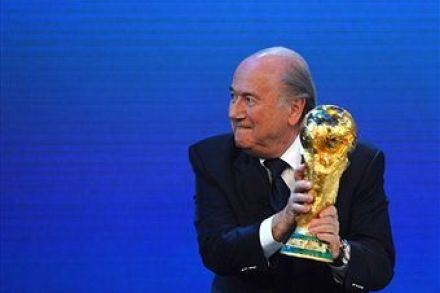
‘We only got two votes, we only got two votes.’ That England’s World Cup bid only mustered two votes is a national embarrassment. All the briefing had suggested that we were in a very competitive position; The Times was predicting that we could win as many as 15 votes. This failure has led to a rapid change of tune from Cameron loyalist MPs. One told me just now that ‘you know how awful the whole process is you saw Panorama.’ But just yesterday, Cameron was proudly holding up the Sun’s BBC-bashing front page (have a look at the spread on pages 4 and 5 of the paper). In truth, we should never have got ourselves involved in this horribly mucky process. Instead, we should have demanded that the FIFA stables be thoroughly cleaned out.

A grim turning point for Ed Miliband

Yesterday's PMQs already feels like a turning point. It wasn't so much the nature of David Cameron's victory – comprehensive though it was – but rather the way  Labour MPs have reacted to Ed Miliband's defeat. Whatever doubts some of them held privately about their leader have suddenly spilled out, mercilessly, across the snow. In his Daily Mail sketch, Quentin Letts describes Miliband's excrutiating exit from the chamber yesterday; Guido and the Telegraph are carrying remarks from disgruntled Labour figures. The volume of hostile radio chatter has risen considerably over the past twenty-four hours. Of course, there are several caveats to be slapped across all this – not least that Labour are bobbing up above the Tories in the polls.

The Guardian’s Wiki-spin

In today's Wikileaks revelations, it is Mervyn King's turn to be pushed through the mill. Did he act politically when pushing for a deficit reduction plan? Was he critical of David Cameron and George Osborne or just pointing out the obvious: that the Tory leaders had not held power before and - shock horror - were keen to get elected? The Guardian's reading of the cables suggests that the government's Batman and Robin (to keep with US diplomatic style) were unprepared for the task ahead. But re-read the key passages and it is clear that Cameron and Osborne were no different from any other opposition leaders - reliant on a small staff, and unprepared for the special pleading they would face as they entered government and tried to cut the deficit.

Ed Miliband: “Yes, I am a socialist”

Ed Miliband was doing the interview rounds today, and CoffeeHouses may be interested in the below – an edited version of his exchange with Nicky Campbell on Five Live. NC: Is the problem union power?  MPs and the constituencies clearly voted for your brother, Alan Johnson’s favourite candidate.  He was a clear winner in those two parts of the party, and many people say union influence has to be limited.  Now this is a real test of your guts, isn’t it?  Is it the right thing to do? EM: I see it a different way, Nicky, to be honest.  I see that politics as a whole, in every party, is massively disconnected from people up and down this country.

From The Annals of the Gord

This snippet from Anthony Seldon and Guy Lodge’s latest book merits repeating: ‘As Barack Obama waited in a cavernous building in London, he suddenly noticed Gordon Brown stomping towards him down a corridor, with a flurry of aides in his wake. Unfortunately — probably because he has a glass eye as the result of a rugby injury — the Prime Minister didn’t see the President. To the surprise of Obama and his entourage, the British premier was doing a passable impression of an erupting volcano. He was clearly furious about something his aides had or hadn’t done. It was hardly the behaviour anyone would expect of a G20 summit host, and the American President watched with growing disbelief.

What Gordon Brown and Sarah Palin have in common

Gordon Brown and Sarah Palin are not two politicians one thinks of as having much in common. But reading Robert Draper’s New York Times magazine essay on Sarah Palin’s political organisation and Rachel Sylvester and Tom Baldwin’s piece on Brown’s Downing Street I was struck by the similarity between the two at least in terms of being disorganised and the boss’s refusal to delegate. It was a reminder of how much of politics is about organisation, about having the right team in place. Of course, no operation is perfect. The Blair one, which was far better than Brown’s, had its own imperfection as Andrew Adonis sets out in his review of Jonathan Powell’s book.

Nato – from the glass half empty point of view

Nato leaders are in Lisbon and Daniel Korski has argued that the most successful military alliance in history isn’t done yet. Writing in the Independent, Patrick Cockburn gives an alternative. He contends that Nato will never recover from the Afghan mission, and he has three substantive points: 1). Nato's solutions are the problem. ‘It is not just that the war is going badly, but that Nato's need to show progress has produced a number of counter-productive quick fixes likely to deepen the violence. These dangerous initiatives include setting up local militias to fight the Taliban where government forces are weak. These are often guns-for-hire provided by local warlords who prey on ordinary Afghans.’ 2).

Labour’s ice cream moment

This from Matthew Taylor – the former No.10 head of policy, speaking to the Times for their series (£) on the fall of New Labour – deserves a post of its own: "For me, New Labour died when Tony bought Gordon an ice cream in 2005. I remember sitting in Downing St two days after the election win and chucking into the bin the proposal to break up the Treasury.

Laws and the coalition

David Laws’ eagerly awaited account of the coalition negotiations contains some great lines. Peter Mandelson’s declaration on being told of the Lib Dem’s desire for a mansions that ‘surely the rich have suffered enough already’ is classic. While William Hague’s description of the Conservative party as an 'an absolute monarchy, moderated by regicide’ is a candidate for the dictionary of quotations. But politically the thing that struck me about it most was what it tells us about Ed Balls. Balls had worked with Gordon Brown for years and had been one of the most ardent Brownite. Yet it was Balls who effectively pulled the plug on the idea of a Lib Lab pact when Brown was still desperate to try and make it work.