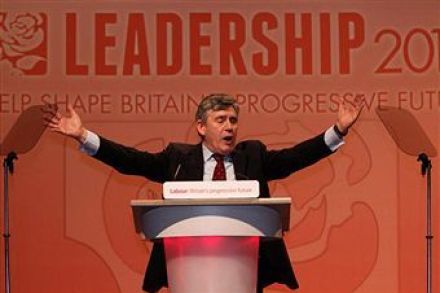
Gordon brown

50p tax: the coalition’s most expensive policy

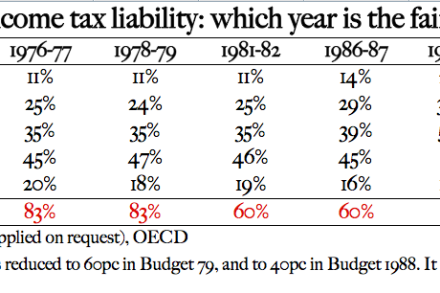
In my cover story for this week’s magazine, I say that the damage of the 50p tax, various bank levies and general banker-bashing is far greater than Osborne realises. Here are the top points I seek to make:   1. We may hate to admit it but the British tax base, and our chances of reducing the deficit, are heavily reliant on a handful of very rich people. The highest-paid 1 percent will generate 23 percent of income tax collected in the UK in the year before the 50p tax (see the table below). And spot the correlation between the top tax rate, and the burden shouldered by the richest and the poorest. Which are the most progressive – the figures on the right, or the figures on the left? 2.

Johnson’s deceptions and out-of-date figures

Oh, how Labour enjoy misleading the public about their record on the public finances. Ed Miliband did it a couple of weeks ago, with some very loose rhetoric about how the previous government had "paid down the debt". And now Alan Johnson's at it, with a fiery speech at the RSA which reheated many of the themes in his recent New Statesman article. The passage that struck me was this: "In 2007/08 as the crisis hit, we have the second lowest debt level in the G7 reduced by 14 percent in the 10 years we'd been in office... …The year before the crisis hit we were borrowing 2.4 percent of GDP compared to the 3.4 percent we inherited from Ken Clarke." Some points: 1) Second lowest debt level in the G7.

Labour’s Woolas trouble

This Phil Woolas business is fast becoming a rather large problem for Ed Miliband. Those Labour MPs who are organising a fighting fund for Woolas are effectively defying the party leadership. Remarkably, he is on course to raise £50,000 by Friday. There is a whole slew of explanations for why Labour MPs are, to borrow a phrase, standing by Phil. First of all, the idea of judges overturning election results isn’t popular. Second, he’s a well-liked and sociable colleague, and no one who has fought a Lib Dem has much sympathy with their complaints about dirty tactics. But after these explanations, we move into more murky territory.

The coalition pins a number on its welfare reforms

The coalition has few better defenders of its cause than Nick Clegg. And if you need proof, then I'd point you in the direction of his article for the FT when the IFS first called the Budget "regressive"; his article on welfare reform for the Times in September; or his summertime speech on social mobility, which, along with his 2009 conference speech, is perhaps the defining statement of his politics. I mention all this now, because there's another effective Clegg article in the papers this morning – again on welfare reform, and again dripping with punchy arguments in the coalition's defence.

Gordon Brown speaks out about not speaking out

Courtesy of Andrew Sparrow's ever-superb live blog of the political day, from Brown's appearance before the Commons development committee: "Let's not get into this in any detail because it's a diversion from what we're doing, and I think it's unfortunate that this is the sort of question that is the first question to this committee from a member. Let's put it this way, most former prime ministers have rarely spoken in the house at all. I have decided obviously to concentrate on my constituency work and on some of the work that I've been doing internationally. But, at the same time, I have taken a very big interest in some of the questions that the government I led was involved in ...

Cameron the optimist

Is David Cameron just too nice? There are worse accusations to levy at a politician, but it's one I have heard suggested quite a lot recently - and I have written about it in my News of the World column today. He seems to have adopted the politics of wishful thinking. There is a "zip-a-dee-do-dah strategy" and precious little contingency if things go wrong. He makes defence cuts, because he doesn't intend to go on a massive deployment (neither did Woodrow Wilson). He will make prison cuts, because he thinks - bless him - that it won't increase crime. He signs a deal with French for military co-operation, thinking they will dump the habit of 500-years and actually agree with Britain on the next major foreign policy dispute.

Cameron’s bad news day

Yesterday, Nick Robinson set out why the past week may count as David Cameron's worst in office so far. It's not a great news day for the Prime Minister today, either. First up is a new report from the Commons public accounts committee. Its headline finding relates to the last government, but has stark implications for this one: only £15 billion of the £35 billion of savings identified in the 2007 Spending Review have been implemented, and only 38 percent of those have come from "definitely legitimate value-for-money savings". In other words, all those efficiency savings may not be as straightforward as you were led to believe - even if there are efficiencies to be made. Osborne & Co.

Why Ed Miliband was being deceptive over debt

"Remember, our government paid down the debt before the crisis hit." That's what Ed Miliband said in a speech last Friday, and I took exception to it at the time. My point was, admittedly, quite blunt: how could the Labour leader make such a claim when debt was around £500 billion in 2006, and rising? So I'm glad that the excellent Full Fact blog has since looked into the matter, and come down broadly on my side – giving Miliband a 2-out-of-5 rating on their truth scale. But some of their wider points are worth developing, which is why I'm returning to the topic now. First, though, the observation that I made on Friday. Here's a graph which shows our national debt throughout the Labour years.

Return of the Gord

Oh look, the Old Crowd are moving in on the New Generation's patch. Not only has David Miliband broken his post-defeat silence with an engaging little article in the Mail on Sunday, but we also have news that Gordon Brown is to make his first Commons speech since the general election. That's right, after 174 paid days of, erm, indiscernible activity, Gordon will tomorrow insist that maintenance on Britain's two new aircraft carriers should be carried out on a Scottish shipyard, rather than in France. Everyone else is surprised that he didn't get that written into the contracts already. The return of the Gord throws up some questions for Ed Miliband. It's not just the speech tomorrow, but rather the release of our former Prime Minister's book on 7 December.

The Miliband deception

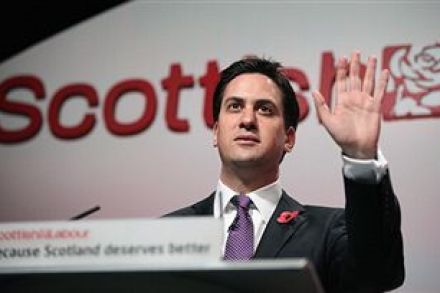
Ed Miliband's speech in Scotland this afternoon was a strange beast. So much of it was typical of the new Labour leader: for instance, the incessant stream of words like "optimism," "new" and "change". Some of it was rather surprising, such as the lengthy and warm tribute he paid to Gordon Brown at the start. One passage on the flaws of the Big Society (from a Labour perspective, natch) set out a philosophically intriguing dividing line. And his challenge over housing benefit was quite swashbuckling, in a Westminster-ish kind of way. But there's one line I'd like to focus on, because I'm sure it will come up again and again. Namely, this one: "Remember, our government paid down the debt before the crisis hit." Really?

Cable takes his wind-up act to the stage

A luminous streak of self-aggrandisement in Vince Cable's speech to the CBI this afternoon, which began thus: "I should acknowledge that that the CBI has been remarkably far sighted; Digby Jones first invited me to speak to you eight years ago, the first Lib Dem asked to do so. I recall some members wondering 'Vince Who?'" And continued, as Paul Waugh notes in a typically insightful post, with a passage that will wind up the Business Secretary's detractors in the Tory party: "Just a few years ago, most people in politics, not only Gordon Brown, thought the growth problem had been solved.

Labour loses the last semblance of its economic credibility

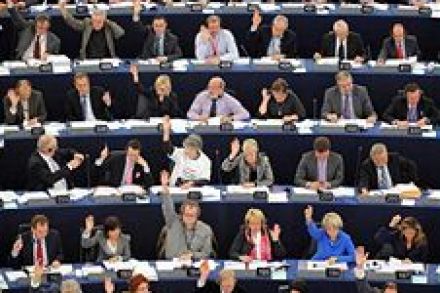
A quiet but important change to Britain’s political landscape took place in Brussels on Wednesday. The European Parliament passed a motion to increase the EU Budget by 5.9 percent, dashing, for the moment, government hopes that the EU might share in its citizens’ austerity. Labour’s MEPs were central to the motion’s success – 10 (one of whom glories in the name Michael Cashman) out of 13 voted against the Conservative-backed amendment to freeze the EU Budget.      As Alan Johnson took his feet and, like a gamey slim-line Falstaff, began to condemn public sector cuts, Labour MEPs saddled the over-stretched taxpayer with £900m in extra contributions – more than the odd nurse could have been saved with that tidy little sum.

To the victor the spoils

The government must be doing something right with its aid policy: several NGOs absolutely hate it. Talking to the Guardian, Patrick Watt, Director of Save the Children and sleeping disciple of the Moral Compass of Kirkcaldy, has criticised the government’s decision to direct aid funding to conflict resolution. He says: ‘What is the real driver of aid allocation? Is it poverty, is it need and the ability to use money effectively or is it the agenda of the National Security Council? We do need to have a balanced approach to aid allocation that reflects the principles of the 2002 International Development Act which stipulates that all aid should be for poverty reduction.’ Put simply, Watt doesn’t get it.

Why the Tories didn’t win

Courtesy of John Rentoul, Tim Bale, professor of politics at the University of Sussex, offers this appraisal of the 2010 election: 'For all the talk in opposition of decontaminating the Tory brand, of making the party more tolerant and inclusive and less ‘nasty’, the key task facing Cameron when he took over in late 2005 was reassuring voters that the Conservatives could be trusted on welfare and public services.  All the market research suggested that this was the sine qua non — a necessary if not a sufficient condition — of a return to office. When the global financial crisis hit and Britain’s budget deficit ballooned, however, this task remained unfinished and work on it practically ceased.

Shadow Cabinet or Cabinet of the Weird?

The real problem for the Labour Party with the election of Ed Miliband is not the man himself, who is easy to like and, by instinct, a centrist politician from the New Labour tradition (however hard he tries to disown it now). No, the difficulty is the oddness of it the whole business. If the brother versus brother leadership contest had not been enough to cause the nation to raise a collective eyebrow, now we have the bizarre spectacle of a husband and wife taking the jobs of shadow home and foreign secretaries. This is just dead weird.  Every professional couple knows how difficult it is to hold together two careers and a family life.

A cul-de-sac of Gordon Brown’s making

Earlier in the week, Liam Fox gaily described the Prime Minister as his ‘closest ally’ – a statement which aroused a little cynicism. But it seems that Fox was not exaggerating. According to the FT, Cameron now backs the navy’s grand blue-water strategy. Cameron’s about turn is striking: the last time the National Security Council convened he supported David Richards (he still does to an extent, pledging that army troop numbers will not be cut). The strategic arguments have not changed, which suggests that the politics has. Fox’s letter was one thing, the Clyde shipyards another.

This is not a 10p tax moment

Last night, one minister came up to me nervously and asked, ‘is this our 10p tax moment?’ He was talking, obviously, about the decision to take child benefit away from households with a higher rate taxpayer in them.   My answer was no. The comparisons with Brown’s removal of the 10p tax rate miss a crucial point: Brown tried to hide what he was doing. In his final Budget statement to the Commons, the abolition of the 10p rate wasn’t even mentioned. Instead Brown boasted about a 2p reduction in the basic rate, to huge cheers from the Labour benches.   By contrast, the Tories have been upfront about the fact that there are losers from this change.

Taxing issues

Today was a reminder of the tax change that would give Tory re-election chances a massive boost, raising the threshold at which the higher rate kicks in. Indeed, electorally dealing with this is far more important than the abolition of the 50p rate and has been made more so by the decision to link the withdrawal of child benefit to the higher rate. During Gordon Brown’s time at the Treasury, the number of people paying the higher rate almost doubled - principally because of fiscal drag, Brown didn’t link the threshold to earnings. This means there are a whole slew of people paying higher rate tax who are comfortably off but are not members of the super rich by a long stretch.

Double deficit

What's at the heart of the row over defence funding? George Osborne hinted at it today when he told the Telegraph that “frankly, of all the budgets I have seen, the defence budget was the one that was the most chaotic, the most disorganised, the most overcommitted”. The problem is that during the Labour years, various accounting scams were deployed to shunt costs further into the future - but this was not matched by resources. So they would, for example, delay an order by two years. There would be a price to pay for this delay, but it would be a cost that came after the election so Labour didn't mind. (One must remember that HM Treasury behaved disgracefully under Brown's instructions, concealing debt and adopting a 'scorched earth' strategy).