Germany

Germany’s growing extremism problem

On 2 June 2019, a German politician was found lying in a pool of blood outside his home in Hesse. He had been shot in the head at close range with a .38 Rossi revolver. Walter Lübcke, the 65-year-old leader of Kassel city council, who had been a vocal supporter of Germany's immigration policy, had been assassinated by a German member of the British neo-Nazi group Combat 18. On Tuesday, his killer was sentenced to life in prison. Lübcke’s murder is the most extreme example of Germany’s increasingly alarming relationship with immigration, anti-Semitism, and fanatical politics.
France needs Britain more than ever

‘What is grave about this situation, Messieurs, is that it is not serious’, was how General de Gaulle addressed his cabinet following the attempted putsch des généraux in April 1961. That could equally apply to recent Franco-British ructions over fishing rights in the Channel Islands. It is mere gesture politics, for all the French retaliatory threats to cut off the electricity supply to Jersey, the British dispatch of two Royal Navy vessels and the French countering with two patrol boats. Behind the facade France and Britain are serious military and diplomatic allies bound by important and wide-ranging security treaties that go beyond just Nato.

Britain’s golden diplomatic opportunity

‘The world’s changed quite a bit,’ was Domic Raab’s fitting, if somewhat understated, opening remark at the G7 meeting of foreign secretaries this week. The first in-person meeting of the alliance in two years saw masked dignitaries, elbow bumps and distanced discussions behind plexiglass screens. But two members of the Indian delegation still ended up testing positive for Covid. Beyond the immediate challenges of the current crisis, Raab’s words seemed prescient. Quite a bit has changed since the G7 last met in France in 2019. Britain has left the EU and is no longer paralysed by parliamentary deadlock. President Biden has replaced Donald Trump in the White House.

Berlin has always been a Faustian metropolis

From our US edition

Each time I return to Berlin, the wonderful, awful city where I spent the best days of my misspent youth, I pay a sentimental visit to Grolmanstrasse, where my German grandparents used to live. There isn’t much left to look at. Their apartment block was destroyed in 1945 in the Battle of Berlin. The site where it stood is now occupied by a children’s playground. For me, that empty space seems to symbolize the way Berlin has changed — mainly for the better, but at enormous human cost. So much has vanished — not just the buildings, but also the people who inhabited them. For my children’s generation, Berlin is a party town. For me, it’s a city full of ghosts. It is these ghosts that keep bringing me back to Germany’s battered, bombastic capital.

berlin

Putin’s on manoeuvres – are we ready?

‘What follows plague?’ I asked a medieval historian at the start of the pandemic. ‘War,’ he replied. In recent days, this remark has seemed worryingly prescient: 120,000 Russian troops are massing on the border with Ukraine, China is aggressively increasing military activity across the Taiwan Strait and Iran has responded to Israel’s successful sabotage of its nuclear facility by declaring it will enrich uranium to close to the level required for a nuclear bomb. The West — and specifically the new US President — is being tested. Those who want an end to the western-led rules-based system are pushing to see what they can get away with.

Is Germany about to go Green?

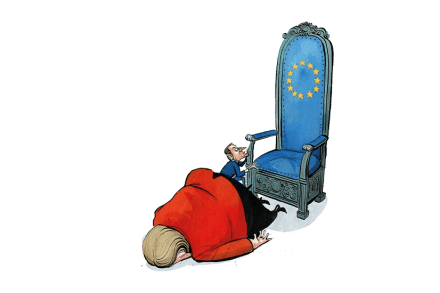
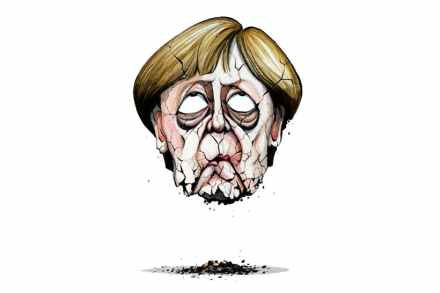
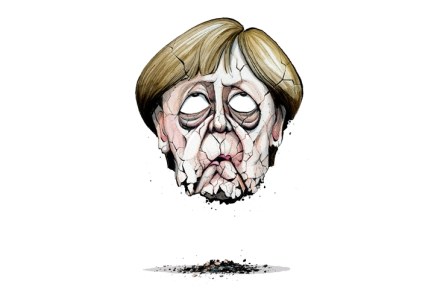
Angela Merkel never quite managed to appoint a successor. Her 16 years at the helm of Europe’s largest democracy has seen every potential challenger either annihilated or neutered. For all her motherly charms, Mutti Merkel is a merciless political operator. The Christian Democratic Union and its Bavarian sister, the Christian Social Union, seem to have settled on a political incompetent to lead them into September’s federal elections. Armin Laschet is, at least for now, set to become the bland, monotone heir to Merkelism — the result of a stitch-up that may yet unravel. Pandemic-stricken Germans are growing tired of the CDU: roughly a quarter of its voters have melted away since the start of the year. Meanwhile, the country’s Green party is surging.

Why Merkel’s successor could be a disaster for Germany

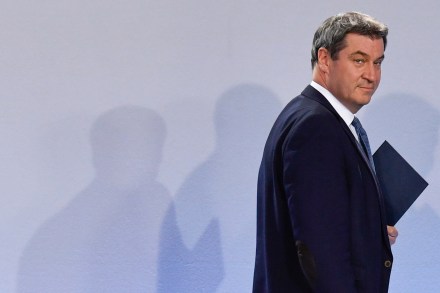
‘The die is cast,’ said Markus Söder in a press conference yesterday as he stepped back to allow his rival Armin Laschet to run as the chancellor candidate for the conservatives in Germany’s upcoming election. This ominous phrase was carefully chosen by a man who thought a disastrously wrong decision had been made by the CDU elite. Söder was by far the most popular chancellor candidate, and had a 20 point lead over his conservative competitor in the polls. Söder, the minister-president of Bavaria, won his own state and the wider German public over with his straight-talking and decisive action during the pandemic.

France’s growing German scepticism

Britain's favourite Frenchman, Michel Barnier, is in the Calais region today where he will address a conference about his part in Brexit and perhaps give a further indication as to his presidential aspirations. The EU's chief Brexit negotiator was described in yesterday's Le Figaro as the man who can 'unite the right' and in doing so present a credible alternative to Emmanuel Macron and Marine Le Pen in 2022. Barnier presides over a political initiative called Patriotes et européens and he explained its concept to Le Figaro: 'Patriot and European, this means that I believe in the force of the nations, the respect of national identities and France as a country of influence at the head of the European nations.

Britain is in danger of repeating its post-war mistakes

From our US edition

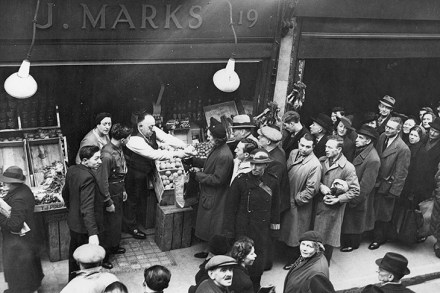
In search of wisdom about how an officious government reluctantly relaxes its grip after an emergency, I stumbled on a 1948 newsreel clip of Harold Wilson when he was president of the Board of Trade. It’s a glimpse of long-forgotten and brain-boggling complexity in the rationing system. ‘We have taken some clothing off the ration altogether,’ he boasts, posing as a munificent liberator. ‘From shoes to bathing costumes, and from oilskins to body belts and children’s raincoats. Then we’ve reduced the points on such things as women’s coats and woollen garments generally and... on men’s suits.’ Does this remind you of anything?

Ghosts of the past: The Field, by Robert Seethaler, reviewed

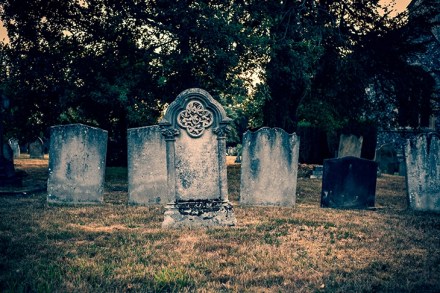
Give dead bones a voice and they speak volumes: George Saunders’s Lincoln in the Bardo was clamorous with the departed having their say. Edgar Lee Masters, 100 years earlier, startled the American literary world with Spoon River Anthology, poems that were miniature autobiographies of the occupants of a small Illinois graveyard. Now, The Field by the Austrian novelist Robert Seethaler has the post-lifers of a German town delivering their own epitaphs. In a neglected corner of an old cemetery a man sits on a bench, listening to the people whose resting place this is. Who they were. The lives they led. Not damned souls from Dante’s circles, or creatures in limbo, but local citizens, focusing on a moment that shaped their life, or the moment it ended.

Merkel’s radical lockdown plan could quickly backfire

In its flailing response to the Covid crisis, the German government appears to have finally given up on federalism. Angela Merkel's latest idea is to introduce nationwide ‘emergency brake’ measures to combat rising case numbers, replacing a patchwork system across the 16 federal states. But will it help bring Germany's third wave under control? Legal changes to grant the federal government unprecedented power to enforce coronavirus regulations in all states have been backed by ministers. The final obstacle for the German Infection Protection Act is parliament. If Merkel's plan is approved, it will mark a big change in the way Germany is governed. It will also make it clear that Merkel is increasingly desperate for answers.

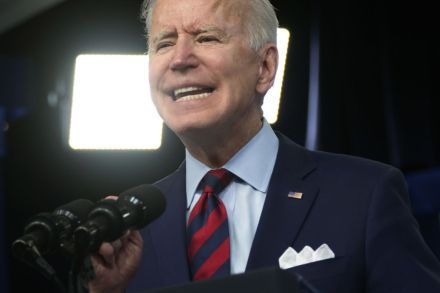
Biden’s backhanded bid to kill Nord Stream 2

Washington, D.C. is universally known as a town divided, a place where compromise and dialogue are often sacrificed at the altar of competing agendas. But on one issue, at least, there is consensus: the 764-mile Nord Stream 2 pipeline that will pump Russian natural gas into Germany is a project that must be stopped. And the United States needs to use all of the economic and diplomatic tools at its disposal to do it. In both congressional testimony and in meetings with Nato allies, U.S. Secretary of State Antony Blinken has reiterated the official U.S. view that Nord Stream 2 is 'a bad deal' for Europe, a potential cash windfall for Russia, and a potential geopolitical coup for Vladimir Putin.

Berlin has been bounced into accepting Sputnik

Munich has had enough of the vaccine chaos in Berlin and Brussels. In a surprise announcement on Wednesday, Bavaria’s minister president Markus Söder stated that he would sign a preliminary purchase agreement for the Russian Sputnik vaccine. The leader of the Bavarian Free State explained that he would pre-order two and a half million doses of Sputnik V in the hope of receiving these by July. Söder, who is a potential candidate to replace Merkel, was keen to stress that this was dependent on regulatory approval by the European Medicines Agency.

Merkel’s blundering lockdown U-turn

During her 16 years in office, Angela Merkel has produced a couple of memorable sentences that will be imprinted into her legacy. She added a few more on Wednesday, when she announced that the government rescinds plans of a radical Easter shutdown, saying: ‘This mistake is my mistake alone.’ Merkel’s CDU is rapidly losing the support of voters — their approval rating has dropped 9 per cent to just 26 within a week It is quite remarkable to see a leader taking the full blame for what has been perceived as a hasty and impetuous decision. Merkel and Germany’s 16 state premiers had agreed on a radical lockdown over the Easter holidays in yet another attempt to curb the rise of coronavirus infections.

Merkel declares a ‘new pandemic’ as Germany locks down again

A year on from the onset of the Covid crisis, Angela Merkel had grim news for Germans this morning: our country is in the midst of a 'new pandemic'. 'The British mutation has become dominant,' she warned, as she announced a strict new lockdown, which will shut almost all shops and churches over Easter.  The new lockdown rules were thrashed out in a tetchy 12-hour meeting between the chancellor and Germany’s state premiers. It used to be EU summits that prevented Merkel from catching some sleep. Not any longer. The leaders struggled to find common ground on an approach to contain the spread of coronavirus, amidst a worrying spike in infections which has seen cases climb to 7,500 a day.

Could the Green party revive Germany’s fortunes?

The BMWs and Mercs will be banned from the autobahns. People will only have electricity when there is enough of a breeze to keep the windmills turning. And the factories will be on a three-day week, while the airports will be converted into organic farms. Most businesses, and of course conservatives of any sort, will be nervous at the increasingly likely prospect of the Greens taking charge in Berlin later this year. But they shouldn't be. In fact, they would be a huge improvement on Angela Merkel’s chaotic twilight years. As she heads towards retirements, Merkel’s legacy is looking very tarnished. The CDU is slumping in the polls. It has made a mess of Covid-19, imposing a botched vaccine procurement programme on the whole of Europe that has come badly unstuck.

Europe’s reckless caution over AstraZeneca

The first smear campaign against AstraZeneca, when Emmanuel Macron falsely claimed at the start of the year that the jab was ‘quasi--ineffective’ in over-65s, did serious damage to public confidence in the Oxford vaccine across Europe. The latest concerted action by the leaders of Germany, France, Italy, Spain and the Netherlands may have destroyed it altogether. The decision temporarily to ban Astra-Zeneca originated in the German health ministry, which was spooked by reports of cerebral venous sinus thrombosis, and was blindly followed by other European leaders. This is a scandal whose roots are political, not medical, and it will have terrible consequences.

Germany’s vaccine debacle goes from bad to worse

Germany's decision to stop using the AstraZeneca Covid vaccine has been condemned internationally. It has also gone down badly with Germans. Once again, the country's health minister Jens Spahn is under fire.  A year into the pandemic, Germans are fed up with what they see as a government which is too cautious to use its only weapon out of this crisis. Even before the suspension of the vaccine this week, the rollout was painfully slow. While Britain has issued 22million doses, Germany is lagging way behind: only 9.3million of its people have received their vaccinations. This latest hold-up will only further slow down the vaccine programme. And Germans fear that this means the anticipated end of most corona-related restrictions by summer is now more and more unlikely.

Support for Merkel’s party is crumbling

On Sunday, Angela Merkel’s Christian Democratic Union of Germany (CDU) suffered a historic election defeat in their former heartlands of Baden-Württemberg and Rhineland-Palatinate. ‘The state elections struck deep at the heart of the union of the CDU and CSU,’ said Markus Söder, leader of the CDU’s Bavarian sister party, the Christian Social Union. To an increasingly frustrated public, the ruling parties in the capital look tired and devoid of ideas. There is no incentive for Merkel and her cabinet to turn things around. After 16 years in government and on the brink of retirement, she has become a lame-duck chancellor. Some German journalists have even begun to call the whole sorry saga ‘the duck tales’.

The mask scandal threatening to destroy Merkel’s legacy

In Germany, masks have been one of the least controversial elements of this pandemic. Most people have accepted that they have to be worn in the supermarket or on public transportation. But now these items of PPE are at the centre of a full-throttle political scandal that risks badly damaging Angela Merkel’s Christian Democrats in this important election year. The Christian Democrats Georg Nüßlein and Nikolas Löbel are accused of profiting from government deals to purchase face masks. Löbel is alleged to have received £200,000 in payments as part of a state purchase of masks, while Nüßlein is accused of making £500,000 through a consultancy firm.