George orwell

We’re all thought criminals now

From our US edition

I’m disappointed that Bari Weiss has resigned from the New York Times and not just because she was one of the few voices of reason on the paper. A while ago, I flew to New York at Bari’s request to be interviewed by her for a forthcoming profile of a group of maverick writers and intellectuals in what was billed as a follow-up to her famous piece on the ‘Intellectual Dark Web’ — a kind of Junior College branch. Among those to be featured were the African American essayist Coleman Hughes; the Australian editor-in-chief of Quillette, Claire Lehmann; and the Swedish columnist Paulina Neuding. We spent an enjoyable afternoon together at the Times building on Eighth Avenue, having our photographs taken and being wined and dined by Weiss in the boardroom.

bari weiss anti-semitism

Is this the end of history?

From our US edition

Midway through Hemingway’s The Sun Also Rises, there occurs this exchange between two characters: ‘“How did you go bankrupt?” Bill asked. “Two ways,” Mike said. “Gradually, then suddenly.”’ The process of civilizational bankruptcy takes a similar course. Casual, seemingly isolated attacks on the fabric of civilization feel at first like so many harmless insect bites. A speaker is shouted down. A statue is vandalized or removed. A college course once deemed essential is rebaptized as offensive: first it is pilloried, then it is canceled. People start quoting Tocqueville’s warning that in a democracy, as large inequalities dissolve, small inequalities are magnified, growing both rancid and rancorous.

end history

Pure poison: BBC1’s Talking Heads reviewed

The big mistake people make with Alan Bennett is to conflate him with his fellow Yorkshireman David Hockney. But whereas Hockney’s art is generous, warm, bright, life-affirming, Bennett’s is crabbed, catty, dingy, insinuating. The fact that the BBC-led establishment keeps telling us he’s a National Treasure tells us more about the BBC-led establishment than it does about Bennett. Bennett is typical of the English intelligentsia Orwell anatomised in his ‘The Lion and the Unicorn’ essay: ‘It is always felt that there is something slightly disgraceful in being an Englishman and that it is a duty to snigger at every English institution, from horse racing to suet puddings.

Society isn’t systemically racist. It is systemically woke

From our US edition

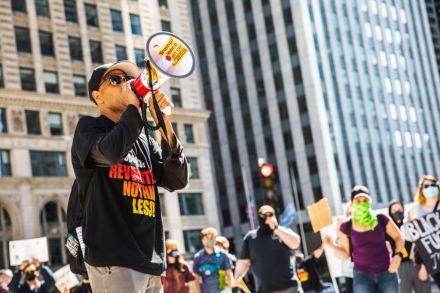
Structural, systemic, systematically — we’re hearing these words a lot at the moment. Racism isn’t individual. It is structural or systemic. So are poverty or injustice. People aren’t just oppressed or tortured; they are systematically oppressed or tortured. This is the language of Black Lives Matter and some of the noisier Democrats, and it’s telling. It comes from Marxist academia and the Black Power activism of the 1960s, and it evokes the radicalism of that time, which is generally now regarded as having been on ‘the right side’ of history. These words are also helpfully vague — nobody knows precisely what they mean — which means you can stress them without being contradicted.

systematically

There’s nothing equal about this virus

Filthy germ-laden townsfolk were out and about on the footpaths near my home on Easter Sunday, dragging with them their awful, mewling children. I got the dog to harass them and occasionally shouted out: ‘These are local paths for local people. Clear off.’ One youngish father — lightly bearded, self-satisfied smirk, probably a sticker on his car window saying ‘-Refugees welcome here’ — even had the nerve to ask me for directions to the nearest train station so that he might return to his squalid Remainer tenement. I directed him and his family through a field which was fecund with manure and full of restive bullocks. The child — four or five years old and already gobby and full of itself — was wearing a bright red T-shirt.

No lockdown, please, we’re Swedish

Uppsala Who would have thought that Sweden would end up being the last place in Europe where you could go for a beer? We have, in our normalcy, suddenly become an exotic place. Other countries are closing their cities, schools and economies, but life in our corner of the world is surprisingly ordinary. Last weekend I went to the gym, met up with friends, and sat in the spring sun at outdoor cafés. My foreign friends are stunned. They can’t fathom that there are still people enjoying the fruits of civilisation, as if the natural reaction to pandemics is to embrace totalitarianism. And they wrestle with another conundrum: how on earth did Sweden end up being the final bastion of liberty?

Coronavirus shouldn’t be used as an excuse to expand the state

Since this is the nearest most of us have ever got to living under the Blitz, I’ve been re-reading George Orwell’s The Lion and the Unicorn. Written in London in 1940, it begins with the famous line: ‘As I write, highly civilised human beings are flying overhead, trying to kill me.’ The first part of the book, titled ‘England Your England’ contains more quotable lines per page than anything not written by Shakespeare. It is here that Orwell explains why he loves Britain, warts and all. The rest of the book, in which he makes the case for 'democratic socialism’ is maybe less well known, but is characteristically clear and unambiguous.

America is socialist, dummy

From our US edition

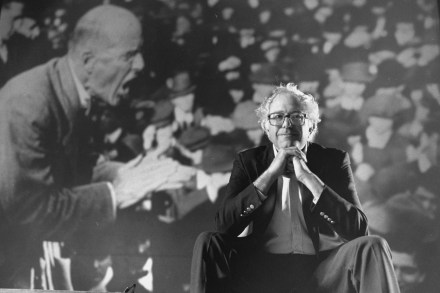
It’s widely agreed that Bernie Sanders fell short in the Democratic primary because he described himself as a socialist. As a movement, socialism has never had mass appeal in America. Even at its strongest, in 1912, it garnered fewer than one million votes for presidential candidate Eugene Debs, who was trounced by Woodrow Wilson. More often, Americans have used the word ‘socialism’ as a synonym for communism, to signify everything America doesn’t stand for. Pundits put Sanders’s failure down to his attempts to give the word a positive spin. On the other hand, a dispassionate glance at American history shows that Uncle Sam has already gone a long way down the road of democratic socialism.

socialist

Finding the Lost Girls

From our US edition

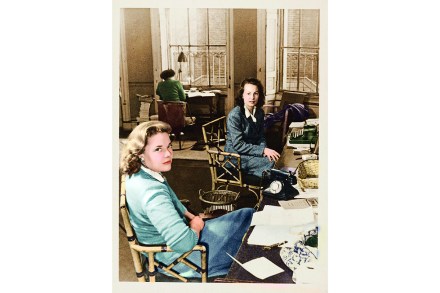
This article is in The Spectator’s February 2020 US edition. Subscribe here. Encapsulations of a particular art-world demographic nearly always fall wide of the mark. Just as there were plenty of people on hand in the 1950s to protest that the Angry Young Men were neither especially angry nor exclusively male, so countless chroniclers of interwar social life complained that the Bright Young People were neither bright nor young. But the critic Peter Quennell’s phrase ‘Lost Girls’ to describe the gang of female twenty-somethings who worked on the magazines and populated the parties of Blitz-era literary London carries an unmistakable tang of conviction.

lost girls

Wells farrago: gaslighting the Invisible Man

From our US edition

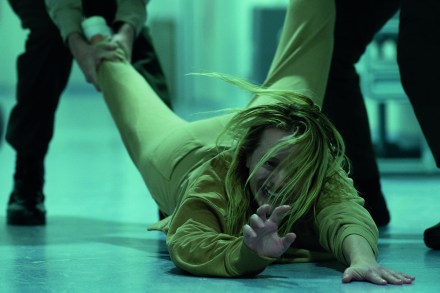
This article is in The Spectator’s February 2020 US edition. Subscribe here. ‘To many young people nowadays,’ H.G. Wells sighed in 1934, ‘I am just the author of The Invisible Man.’ He meant the movie, not the novel. George Bernard Shaw might have said something similar, only at greater length, had he lived to see the improvements by which Alan Jay Lerner turned Pygmalion into My Fair Lady. But would Wells recognize the latest variation on his 123-year-old character at all? This Invisible Man is not much interested in invisibility or men, or men who happen to become invisible. Elisabeth Moss is Cecilia Kass, a harassed woman trapped in an abusive relationship with a sociopathic tech bro.

wells

What would George Orwell make of Brexit?

In the London Review of Books this month, James Meek wrote a long article about Jacob Rees-Mogg and his ‘curious duality’ in being both a high Catholic, fogey Brexiteer and a founder of Somerset Capital Management, which the author sees as globalist and ruthless. The piece is elegantly done, but entirely sneery. It makes not the slightest attempt to enter into the Mogg’s (or any Brexiteer’s) mind with any sympathy. I was thinking about this because the LRB’s publicity emphasised that Meek is an Orwell Prize winner. How we need an Orwell on the subject of Brexit.

The royals should embody virtue – not signal it

ONE should not be censorious if the Duke and Duchess of Sussex fly in private jets to their holidays, though one cannot help laughing when they combine this with exhortations to save the planet. There is, sadly, no royal yacht nowadays (a new one would be a good make-work scheme post-Brexit), and we are not a civilised enough country to leave them and their baby alone if they were to travel on public transport. But they are making two mistakes. The first is to go somewhere hot, sunny and celebrity-filled for their break. One of the secrets of the Queen’s popularity is that she has almost never been seen sunbathing with the rich and famous. The worm of public envy never stirs when she spends her summers in Scotland. Her Balmorality is impregnable.

Novel explosives of the Cold War

One autumn night in 1991, I stood on the rooftop terrace of a tacky villa in Saranda once owned by Albania’s Stalinist dictator Enver Hoxha, beside three elderly former SOE officers who were returning to Albania for the first time since 1945. In an image that summed up the waste and the horror of the Cold War, David Smiley stared out over the dark water at the lights of Corfu, from where, on a similar night in October 1949, he had sent a group of dissidents, code-named the ‘Pixies’, to launch an insurgency — and wiped his eye in silence. Smiley’s men had been ambushed as they landed, and then killed, on the tip-off from Kim Philby, the highest Russian agent to infiltrate British Intelligence, and in charge of anti-communist espionage.

Time warp

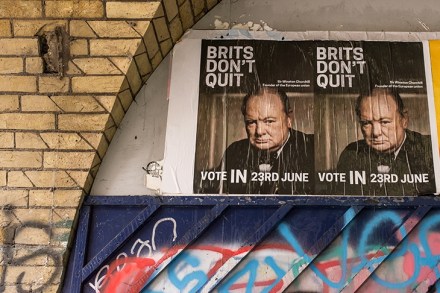
How we love bringing history into our political debates. It may seem strange in a country where so little history is taught at school, but perhaps that makes it easier. We grab hold of vague notions of the past for a Punch-and-Judy brawl. There could hardly be a better example of this than Brexit, in which we skim through the whole of our history to search for analogies to batter the other side with. The Roman empire, the Norman conquest, the Wars of the Roses, the British Empire, appeasement, the second world war, Suez… Leavers have fulminated against ‘traitors’ who deserve the Tower for flouting Henry VIII’s assertion of sovereignty. Remainers have accused Leavers of being racists, imperialists, indeed, worse than Nazis.

Two sides to every story

Maybe the equality inspectors at the corporation didn’t get the chance to vet Richard Littlejohn’s series for Radio 2, The Years that Changed Britain Forever, before it was broadcast on Sunday. Maybe the first programme (produced by Jodie Keane) was an accurate reflection of the year it focused on, 1972. But the most striking thing about it was not so much Littlejohn’s thesis, by which he declared that politically, culturally and musically it was a pivotal year in our national history, determining events that followed much later. No, it was his selection of music to accompany his thoughts about how the miners’ strike of 1972 led to the three day week, which led to the general election that destroyed Edward Heath and brought Arthur Scargill to national prominence.

Watch out

I was recently treated to a small taste of the real China. It was in the incongruous setting of a vast conference centre in east London, directly under the flight path of City airport. On assignment for the BBC, I found myself wandering the stalls of Europe’s largest international security technology exhibition, filming for a new series on criminal justice. As soon as I arrived in the main exhibition hall with the production team, we were greeted by roving cameras, high-definition displays, drones and every variety of audio and video surveillance kit. All bar a handful of stands were manned by Chinese representatives, smiling politely, if somewhat stiffly, as we approached them.

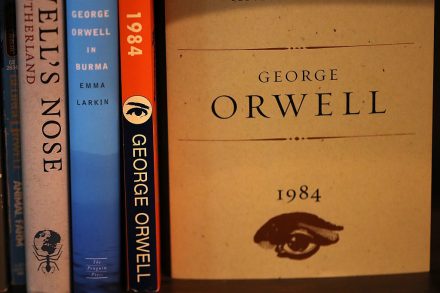
Nineteen Eighty-Four is not a guidebook for the present day

From our US edition

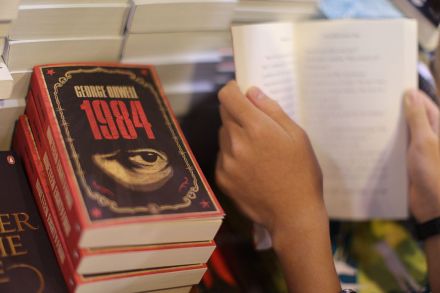
Is there a literary cliché more dull than saying of some old yellowing book that it is 'as relevant today as it was when it was written'? This month marks the 70th anniversary of George Orwell’s Nineteen Eighty-Four. Journalists on both sides of the Atlantic – to whom Orwell is a holy patron saint – have clacked out lengthy tributes (and entire whole books) to St Orwell’s most famous work. What, they ask, does Nineteen Eighty-Four mean today? Well my answer, for whatever that’s worth, is: nothing. Nineteen Eighty-Four has nothing new to say to us and we have almost nothing new to say about Nineteen Eighty-Four. Realistically, we have very little left to say about George Orwell too.

nineteen eighty-four

The problem with the new Animal Farm

From our US edition

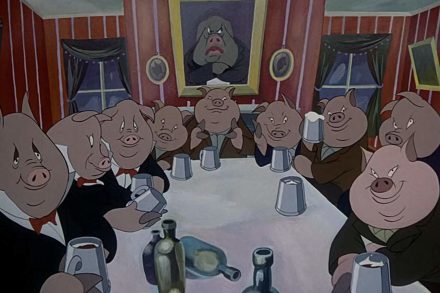
Netflix have acquired the film rights to George Orwell’s totalitarian fable Animal Farm (1945). Napoleon, Snowball and all the other commies at Manor Farm are getting rebooted by British director and actor Andy Serkis. He has animal form, having played an ape in Planet of the Apes remake. The producers are promising to bring the novella to the screen with motion-capture technology, ‘in a thoroughly contemporary fashion.’ It’s too early to tell whether, given a plot-line involves a dictatorial pig’s insistence on building a giant wall, Serkis’s version will resist the obvious parallels with Trump’s America.

animal farm

Brave New World Revisited, revisited

From our US edition

When the West’s Days of Reckoning came in 2016, we naturally turned to George Orwell, master of modern dystopia, to make sense of Trump, Brexit and the return of the far-right in Europe. We took to the streets — or rather Twitter — crying, ‘It’s just like 1984!’ Dystopia had made a comeback. We lapped up The Handmaid’s Tale, Black Mirror and Blade Runner 2049 with gleeful horror. Our concern shot Orwell’s novel to the top of Amazon’s chart. These are cautionary tales for dangerous times. Stories of science-fictional wastelands, malevolent totalitarian governments and vengeful AI that warn us of what we might become. Yet we often ignore Aldous Huxley’s Brave New World. This is curious.

aldous huxley brave new world

A drizzle of nature writers

A parliament of owls. A gaggle of geese. A convocation of eagles. But what is the generic term for the army that has recently advanced over the literary landscape? Perhaps a drizzle of nature writers? Here they come, heads down in the rain, turning out their pockets for the samples of fungi and moss they have collected on the outskirts of our cities. Bookshops now have whole tables dedicated to contemporary British nature writing. The first wave of this literary phenomenon was far more cheerful: the late lamented Roger Deakin sitting in his pollarded hornbeam and imagining himself at sea; Richard Mabey, the godfather of it all, with his wonderful Flora Britannica; Robert Macfarlane striding across wild places with lyrical intensity; Helen Macdonald eulogising her hawk.