Fracking

Power failure | 21 July 2016

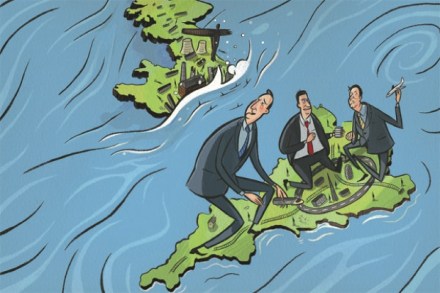
Fracking is a British tradition. Since 1969 more than 200 sites have used hydraulic fracturing ‘without environmental catastrophes’ according to Dick Selley, an emeritus professor of geology, writing in the programme notes to Fracked! by Alistair Beaton. The satire takes the opposite view and regards fracking as a wicked novelty inflicted on rustic innocents by Big Oil, which hopes to steep the country’s aquifers with radioactive water and massacre all its customers at the same time. That’s the business plan, apparently. We meet a pootling granny (Anne Reid), who reluctantly leads a campaign to stop Deerland Energy from plastering southern England with horrible drilling platforms.


Hollande equals Thatcher? Not quite, Monsieur le President, but keep trying

Have you ever tried discussing the merits of gun control with a Texan, or of deregulated labour markets with a Frenchman and his Belgian cousin? The prejudices involved are much the same. Many Americans believe that guns in the home and the pick-up truck are their best protection against violent attack, and that the 13,286 US gunshot deaths last year would have hit an even higher number if gun ownership was more restricted. Likewise, French trade unionists believe a 35-hour working week combined with laws restricting any company that is a going concern from making redundancies are the best protection of their economic wellbeing, rather than a root cause of the fact that more than 3.5 million of their compatriots are unemployed. That’s 10.

The best things in the world spring up by accident

Since no one has bothered to ask what my must-read book of last year was I’m going to tell you here: it’s Matt Ridley’s Evolution of Everything. I don’t think it has appeared on nearly so many recommended lists as his previous bestsellers Genome and The Rational Optimist, nor has it been so widely reviewed. And I have a strong inkling as to why: its message is so revolutionary as to alienate pretty much everyone across the spectrum, from Christians and Muslims to corporate bosses, historians, feminists, educationalists and conspiracy theorists, from Greens and socialists all the way across (if there’s a difference) to Conservatives like George Osborne and David Cameron.

Power shortages in Britain’s energy network are shameful

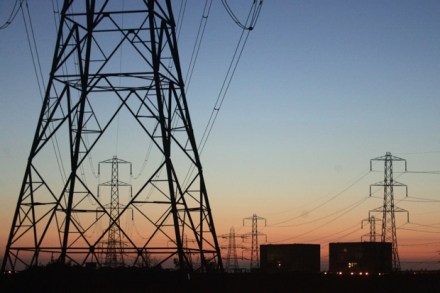
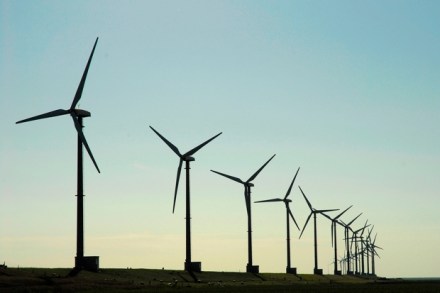
Last Wednesday, following what National Grid casually referred to as ‘multiple plant breakdowns’ of a number of power stations – desperate attempts had to be made to find back-up power supplies to keep the lights on throughout the evening. It was a clear demonstration of the dangers of the UK’s outmoded power network and successive failures of policy. And before anyone starts bleating about the government’s slashing of wind and solar subsidies, the wind wasn’t blowing and the sun wasn’t shining, so they were unable to help out at a time of crisis. As a result, there was little spare power to cover the gap. This meant that at one point, electricity was being sold for £2,500 per megawatt.

The left love to pick and choose which scientific research they trust

There has been predictable frothing at the suggestion by Professor Averil Macdonald, Chairwoman of UK Onshore Oil and Gas, that more women than men oppose fracking because women are more prone to follow their gut instinct than the science behind fracking. I am going to keep out of that debate, not because I fear for my chances of landing an honorary fellowship – if Tim Hunt’s experience is anything to go by, the world of academia will fall in on Professor Macdonald -- but because I am more interested in what fracking tells us of the attitude of the left towards science. Over the past few years the left has tried to establish itself as the defender of scientific reason.

The Living Wage is nifty politics – but let’s see more help for small business too

What is George Osborne’s Living Wage? Is it a ploy to shift cost from the taxpayer to the employer by reducing in-work benefit claims; or a sop to Tory MPs who were bombarded with angry questions about earnings inequality during the election, as well as a neat way of turning one of Labour’s few effective lines of attack? Or is it a principled act of fairness, acknowledging that the lowest earners bore the brunt of the recent recession? Knowing how the Chancellor operates, it is probably all of the above except the last: he is, as Sir Samuel Brittan once remarked, ‘one of those people who do the right things without knowing why’. Either way, new research from the Resolution Foundation indicates that the cost of the Living Wage — £7.

Vivienne Westwood pays an unwelcome visit to David Cameron’s house

While politicians are currently debating the Assisted Dying Bill in Parliament, Dame Vivienne Westwood has decided there is a more pressing matter that ought to be on the news agenda. The eco-minded fashion designer is on her way to David Cameron's house in a massive tank. Alas, it's not a friendly visit. Westwood has hired out the fuel-guzzling machine in order to protest about fracking outside Cameron's Chadlington home, in his constituency village: Dame Vivienne Westwood's anti fracking tank rides to David Cameron's house in #Witney. #HeartNews pic.twitter.com/oRRn50ibBg — Thames Valley News (@HeartThamesNews) September 11, 2015 It's not the first time Westwood has taken part in a bizarre stunt in her quest to stop the government from fracking.

Get fracking

Over the past week, the government has finally made a decisive move to kickstart a fracking industry in Britain. Licences have been issued for shale gas exploration and the planning process streamlined so that in future, if local councils fail to make decisions within 16 weeks, the communities secretary will step in and adjudicate. It’s excellent news that the years of prevarication over shale seem finally to have come to a close, and greatly to the credit of our Climate Change Secretary, Amber Rudd, and Communities Secretary, Greg Clark. But the dismally slow speed at which our much-vaunted ‘shale revolution’ has taken place will end up costing this country.

Fracking Lancashire

That democracy is a superior form of government to any other goes without saying. But in order to function, it has to be conducted in such a way and on such a scale as to ensure that the people or their elected representatives are making decisions based on genuine alternatives. With this week’s decision by Lancashire County Council to reject a second application for fracking on a site near Blackpool, something has gone seriously wrong. An important national issue has been allowed to be settled according to purely local concerns.

Contagion of a different kind as Greece wriggles off the hook

The clear winner in the Greek crisis is the author of The Little Book of Negotiating Clichés, whose royalties must have been pouring in as the clock ticked towards midnight while European leaders took positive steps back from the brink and found themselves speaking the same language, perhaps because they were reading from the same page. But assuming this predictable dance results in terms that Prime Minister Tsipras can persuade his comrades to accept before the IMF’s default deadline and the moment when the Greek banking system can no longer seek life-support from the European Central Bank — which is all still quite a big assumption — who will be the loser?

Why are renewable technologies held to a different set of standards?

The House of Commons’ Environmental Audit Committee wants a moratorium on fracking so that what it calls the ‘huge uncertainties’ of its impact on the environment can be resolved. If they hadn’t noticed, we already have had a moratorium on fracking. All activity ceased in 2011 after a couple of minor earth tremors near Blackpool were linked to exploratory drilling by Cuadrilla in the area. What the company now wants to do – and in which it is being frustrated at present by Lancashire’s planners – is to resume exploration, having changed their procedures in response to the tremors. If there are ‘huge uncertainties’ over fracking, how would they ever be resolved without testing the technology?

Why aren’t fracking companies drilling offshore, rather than on land?

The city of Denton, Texas, doesn’t often make the news, but last month it did: it became the first city in the US – by a margin of 59 per cent to 41 per cent – to vote to ban fracking. Is the US love affair with shale ending? The industry has not been its own best friend, James Ball, special advisor to Tachebois Ltd, told the Spectator Energy Forum this morning. He asked the audience – made up of a large number of professionals from the oil and gas industry – how many had watched Gasland, the US documentary by Josh Fox which helped to form negative public view of the industry. None had. ‘See, that’s problem,’ he said.

Why Vladimir Putin’s threats about cutting off Europe’s gas supply are all bluff

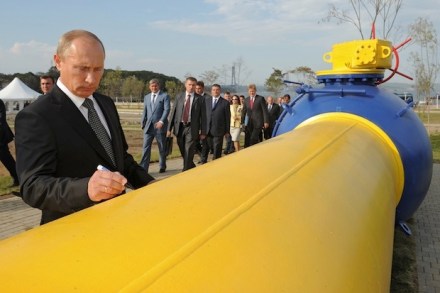
Has the West found a secret new weapon in its battle with Putin’s expansionist ambitions: reversible gas pipelines? Putin has never made a secret of his willingness to use energy as bludgeon against his neighbours. In 1999, the year before he became Russian leader, he wrote a pamphlet making the case that energy exports provided the means by which his country’s greatness could be restored. Putin’s behaviour over Ukraine has been typical. Over the past 15 years Russia has constructed a network of pipelines which can be used to bypass Ukraine. Starve Ukraine of energy, goes Putin’s thinking, and it might be forced back into Russia’s fold.

The man who could sell the British public on fracking

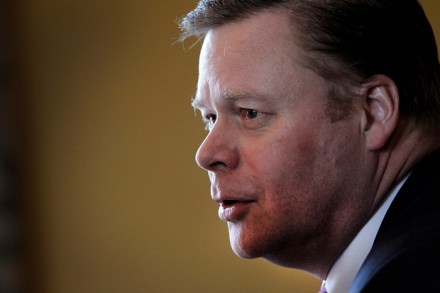
Iain Conn, who will succeed Sam Laidlaw as chief executive of Centrica, would have been a dead cert for the top job at his current employer, BP, were it not for the Deepwater Horizon oil rig disaster in the Gulf of Mexico in April 2010. The subsequent PR fiasco terminated the BP career of the then chief executive Tony Hayward — who seemed crushed by the episode, but recovered to make a double fortune at Genel Energy and Glencore. Had Hayward served a full term, Conn (BP’s head of refining and marketing) would almost certainly have followed him. As it was, BP found it more politic to appoint an American, Bob Dudley, to repair relations in Washington while simultaneously arm-wrestling with the Kremlin-connected oligarchs who were BP’s co-investors in Russia.

Presumption against fracking in our beautiful countryside is welcome

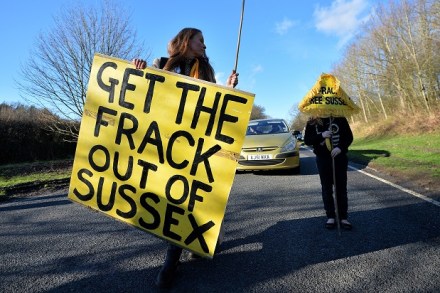
The government's announcement today that fracking will not take place in National Parks and Areas of Outstanding Natural Beauty save ‘in exceptional circumstances and where it can be demonstrated they are in the public interest’ is a welcome and sensible move. It may indeed be in the national interest to exploit a new source of energy, but these landscapes are specially protected in the national interest, too. The government states that countryside ‘adjacent’ to these protected areas will also be covered by the policy. That will be a relief to the residents of Wisborough Green and Kirdford in my constituency, two villages in beautiful countryside close to the South Downs National Park which have faced the prospect of drilling.

The return of oil price anxiety is a timely reminder to get fracking

‘Iraq turmoil sends crude oil prices to nine-month high’ is the sort of headline that used to send shivers down economists’ spines, especially if it appeared on the same page as ‘Europe faces gas shortage as Russia cuts Ukraine supply’. How worried should we be at the current turn of events in the energy world? Since Iraq’s new insurgency kicked off, the price of a barrel of Brent Crude has blipped from $105 to $115 — nothing to panic about — but the more pessimistic analysts are talking of a further $30 rise if Iraqi oil flows of 3.6 million barrels a day (representing about 4 per cent of global demand) are seriously disrupted.

Lord Howell offends the North of England again — but does he have a point?

Oh Lord Howell, you’ve done it again. Offending the North of England once wasn’t enough, so he’s had a second go — warning today that the Conservative party will lose votes in their heartlands if fracking goes ahead. In an online article for the Institute for the Analysis of Global Security, George Osborne’s father-in-law lambasts the government’s fracking plans: ‘Trying to start in southern England, and in the home counties, or in rural and countryside areas anywhere, north or south, is a guarantee of longer delays, higher costs and increased hostility from both green left and countryside right.

The lefty liberals may be losing their hold over the arts world

If you happen to be reading this column at breakfast, I’d recommend you skip to something more agreeable like Dear Mary and save mine till a bit later. It concerns the ugly details of one of the most revolting mass murderers in US history. His name is Kermit Gosnell — a doctor who ran a particularly dodgy clinic in Philadelphia specialising in late-term abortions for mostly poor black women. When police raided it in 2010, they encountered a scene of quite appalling horror. In a flea-ridden, blood- and faeces-stained basement, Gosnell had been operating on women using unsterilised equipment, killing babies well over the legal term limit, sometimes by sucking out their brains with a machine.

You, too, can be a shale profiteer

It might not be something you want to mention in the Half Moon Inn in Balcombe, or around any of the other communities where people are getting anxious about shale gas explorers ripping up the countryside with their drills and pipelines. But if shale is the tremendous source of wealth that David Cameron insists it can be for this country, how do you go about investing it? After all, if there are fortunes to be made, there is no reason not to claim your share. There is no longer any question that shale gas is a major industry. In the US, where it is most advanced, it is already worth $76 billion annually, according to its trade association, and by the end of next year that will have grown to $118 billion.