Foreign policy

Two reasons Putin thinks he can weather sanctions

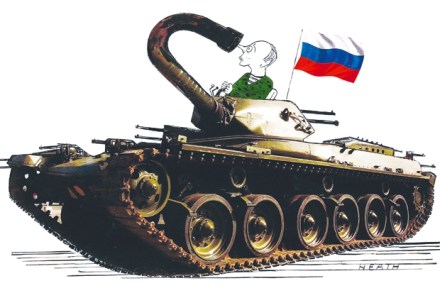
The nature of the Russian attack on Ukraine, striking across the country and not just concentrating on the territory claimed by the so-called breakaway republics, shows Vladimir Putin’s confidence that he can weather whatever sanctions the West imposes. This is not an assault designed to sit in any kind of grey area, but an unambiguous invasion — which the West has always made clear would bring forth the maximum set of sanctions. This is not an assault designed to sit in any kind of grey area Putin’s confidence is driven by two things. First, as I say in the magazine this week, Russia has been preparing to face expanded sanctions since the annexation of Crimea in 2014.
Putin must look at the West and laugh

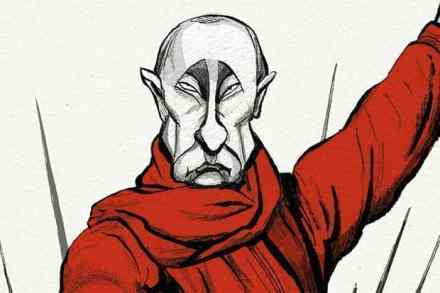
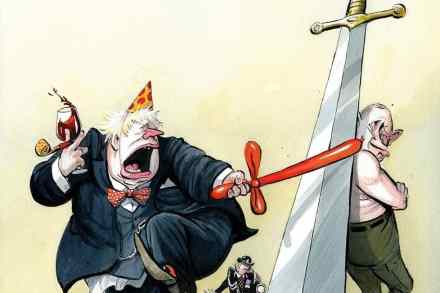
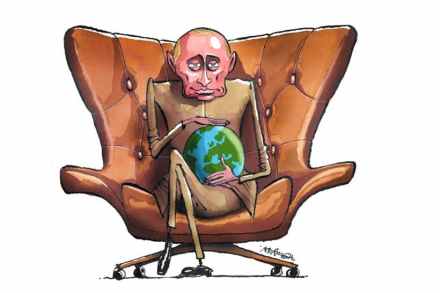
Whatever the West’s response to Russia’s attack on Ukraine’s sovereignty, the crisis demonstrates the limitations of western politics and policy across the board. If Vladimir Putin understands any demographic better than the Russian people, it is the governing class of the West: that Harvard-Oxbridge-Sciences Po axis of toweringly smug and practically interchangeable global-liberals who weep for international norms they weren’t prepared to defend. Their ideas and their sanctions are tired because they are civilisationally tired. Putin knows this, but none of the rival ideologies aiming to replace liberalism have anything better to offer.

Putin may yet resist a full-on invasion

The west is still in the dark on what Vladimir Putin will do next. The Russian military build-up on the Ukrainian border continues but in televised meetings with Sergey Lavrov, his foreign minister, Putin was told that there is a case for ‘continuing and intensifying’ diplomatic discussions with the West. For Putin — who smarts at what he sees as the humiliation of the end of the Cold War and the decline of Soviet power — there is a satisfaction in watching the West scramble to respond to his actions. The Biden administration wanted to prioritise competition with China, but Putin is succeeding in forcing him to concentrate on European diplomacy — something that will please both Moscow and Beijing.

Ukraine’s plight paints a bleak vision of Europe’s future

It is tempting to view Vladimir Putin as a Cold War relic: a former KGB officer who hasn’t got over the fall of the Soviet Union, which he called the ‘greatest geopolitical catastrophe of the century.’ But, as I say in the Times today, what is happening on Ukraine’s border isn’t a throwback to the Cold War. Rather, it is a preview of Europe’s future. Since Nato’s creation, European security has rested on America’s involvement. But Europe is now a secondary concern for the US; Asia and competition with China is the most important challenge facing Washington now. The horribly messy US withdrawal from Afghanistan was justified on the basis that it would free up resources to focus on China.

No one should celebrate the decline of America

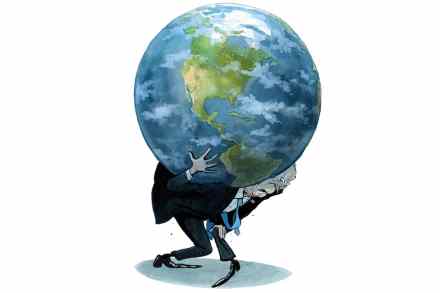
Where is America? Like an old friend who hasn’t been in touch for years, you wonder if its silence is lost interest or if it just got too busy. America used to be everywhere, the dominant voice in world affairs, a desirable friend and a much-feared enemy. It intervened (and, yes, interfered) whenever it felt its interests or values were threatened. Often its involvement was unwanted and sometimes it didn’t improve matters, but there was a reliable solidity to it, a sturdiness born of military might, prosperity and national self-belief. It could be admired or reviled, but it had to be reckoned with. America shies away from it all now. Observe how Joe Biden alternates between stark warnings and unintelligible ramblings on the prospect of a ground war in Europe.

Does the world want America ‘back’?

American foreign-policy strategists used to promulgate doctrines. Now they dream up slogans. ‘America is back’ is the jingle under which the Biden administration has been conducting — or marketing — its post-Trump, post-Covid diplomacy, much as ‘Go big’ has been its jingle in domestic matters. The problem is, being ‘back’ can mean a number of different things. It can mean a sweet and tender reunion. It can also mean barrelling through the front door after a four-day bender hollering, ‘Anything to eat?’ Joe Biden’s advisors were confident of an effusive welcome. Maybe too confident.

Biden’s coming year of paralysis

From our US edition

The first workday of 2022 and already Washington, DC has been paralyzed by snow. That isn't saying much, given that half an inch is enough to shut things down around these parts. As a kid growing up in Connecticut, I remember countless snowy mornings when I'd wake up early, pad downstairs, turn on the listings, only to be devastated to learn that school was only delayed by half an hour. Cut to DC, where they'll close the schools because it's cold outside. So it goes in our thin-blooded nation's capital. And in fairness, the fact that many federal employees are still working from home has mitigated the paralysis somewhat. Still, a city needs to move in order to work, and it's there that the literal gets at something figurative.

China is right to laugh at the west

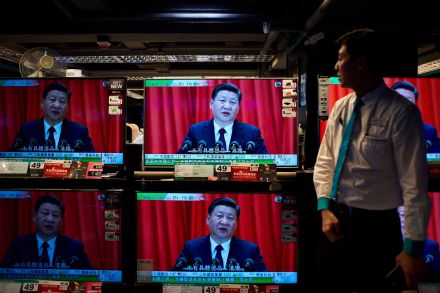
Signs of the enervating weakness of the west’s governing elites aren’t that hard to find but the case of the Winter Olympics may be the most demeaning. The UK and Canada have followed the US and Australia in announcing a diplomatic boycott of February’s games in Beijing over China’s human rights record. It’s a crushing blow to the communist dictatorship: Xi Jinping has been unable to sleep or dress himself since learning that the deputy head of the British mission will be skipping the mixed doubles luge final.

Joe Biden is making the world a more dangerous place

Less than a year into the Biden presidency the world suddenly is a very chaotic place. The hasty and botched US exit from Afghanistan has created a terrorist-led state. Iran is ploughing forward with its nuclear plans. Russia has leverage over European energy supplies. Communist China is no longer hiding its totalitarian nature and global ambitions. And yet the US, UK, Germany and other major democracies seem more concerned about climate change and what may or may not happen 100 or more years from now than tackling the very serious threats to the free world’s national security today.

There is no Russia-China axis

You should be careful what you wish for, because you might just get it, so the old cliché goes. In diplomacy at the moment, it seems you should be careful of the threats you prepare for, because you may end up producing them. There is a growing trend in the West towards treating Russia and China as some single, threatening ‘Dragonbear’ (a reference to the two countries' national animals). This underrates the very real tensions between Moscow and Beijing, but risks pushing them even closer together. The most recent case in point was Nato secretary-general Jens Stoltenberg’s interview in the Financial Times, in which he criticised ‘this whole idea that we either look Russia, or to China… because it goes together.

What Liz Truss didn’t say

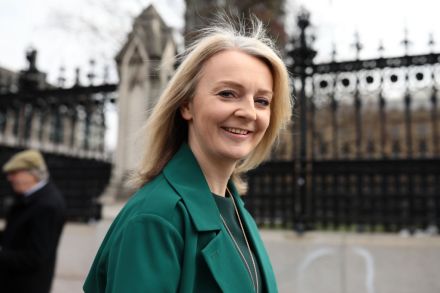
As the big winner of the reshuffle, Liz Truss's appointment as Foreign Secretary set the cat among the pigeons. Truss is the first Conservative woman to take on the brief and cuts a rather different figure to her predecessor Dominic Raab who was, by comparison, publicity shy. Since her promotion, there has been a non-stop stream of Twitter and Instagram posts documenting her meetings in New York, Mexico and Westminster. Today in Manchester, Truss gave her first speech to a domestic audience on what she wants to achieve.

Raab faces an Afghan grilling from MPs

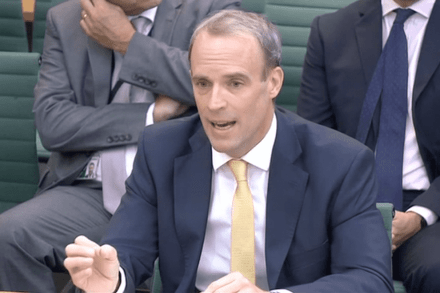
After a week of hostile briefings over his future as foreign secretary, Dominic Raab appeared before MPs this afternoon to face the music. As a blame game gets underway in Whitehall over the chaotic response to the Taliban takeover of Afghanistan, Raab has found himself in the firing line. One government source suggested his handling of the crisis meant he 'has about as much chance of being in a top four position by next spring as Arsenal' when it comes to a cabinet reshuffle. This afternoon, Raab came out swinging — defending his department's handling of the situation and pointing blame in the direction of others.

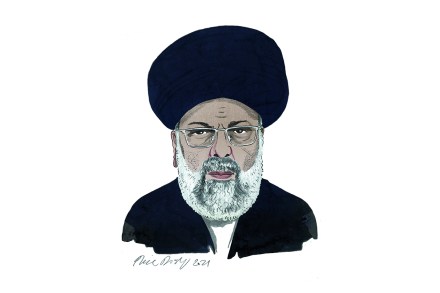
Iran’s president is a mass murderer

From our US edition

The US and other western countries are faced with a dilemma: how to bring to justice a man with the blood of thousands on his hands when you have to do business with him. Ebrahim Raisi’s path to the presidency of Iran is strewn with corpses. He comes to office this month already under American and European sanctions for the mass murder of prisoners in 1988. Some 5,000 may have been killed, though we can only guess at the true number of dead. It was a crime against humanity in the strict legal meaning of that term. At an earlier stage in his career, Raisi is said to have personally supervised the torture of dissidents, but in the 1988 case his responsibility was bureaucratic. He was a grim fanatic, eager to carry out orders. He was — and remains — Iran’s hanging judge.

raisi

Labour’s foreign policy is still stuck in the Corbynite past

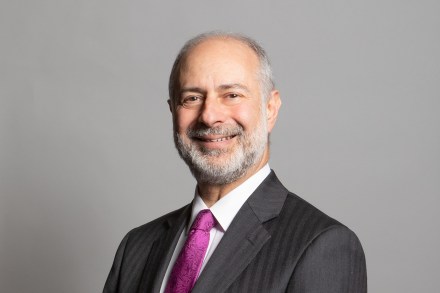
I went to my first live political event this weekend, organised by the big tent ideas festival, with actual people in a room together as opposed to talking to each other through their computer screens. It felt like taking a trip back to 2019. Unfortunately, some of the contributions from the speakers felt a little like a throwback to that time as well, particularly in the case of Fabian Hamilton, Labour’s shadow minister for peace and disarmament. Hamilton was speaking about the UK’s foreign policy, and his contribution revealed how little the Labour party really have changed since Corbyn stepped down as leader – despite the party’s ‘under new management’ message.

Biden and Putin have left Britain out in the cold

It would probably be wrong to say that Joe Biden and Vladimir Putin got on like a house on fire. But the results of the Geneva summit, which observed all the rules of Cold-War era summitry – from the venue to the formality of the arms-control and confidence-building agenda – far exceeded the deliberately doom-laden forecasts. In the space of around four hours at the Villa La Grange, the leaders of the United States and Russia effectively normalised relations that for the best part of four years had been bouncing around at rock-bottom, and dangerously so.

MPs question Johnson’s plan for Global Britain

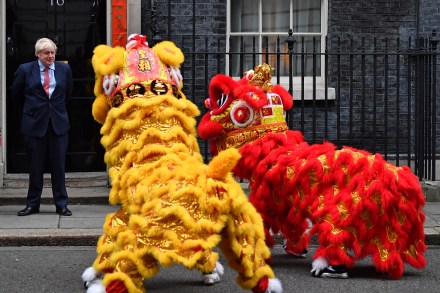
Boris Johnson still has a journalist's ear for snappy phrases — levelling up, an oven-ready Brexit, Global Britain. The PM attempted to flesh out one of those headlines on Tuesday with his integrated review — so called because it ties together foreign and defence policy alongside trade and international aid.  The 100-page document — designed to set the course for 'Global Britain' over the next ten years — identifies Russia and China as the UK’s two biggest international challenges. The former is described as an 'active threat', a dangerous rogue state, while the East Asian country is seen instead as a 'systemic challenge'.

Brexit Britain should take a stand on Venezuela

The United Kingdom has an opportunity to become a more significant player in Latin America while setting an example for other European countries. Venezuela is an important test case of how truly 'global' post-Brexit Britain wants to be. Latin America has not seen a meaningful British presence in over 100 years. In colonial times, Britain was one of the leading powers with interests, particularly in the West Indies. In the 1820s, it supported the independence movements from Spain and built trading relationships with the newly formed countries. After most British business interests were sold to fund the country’s efforts in world war one, Britain largely disappeared as a major player, with only occasional spikes in interest, such as the 1982 Falklands war.

Why does Keir Starmer always play it safe?

Keir Starmer’s keynote speech at the Fabian conference today was focused almost completely on foreign policy. The thrust of the Labour pitch was that Starmer is ‘pro-American but anti-Trump’. Given Corbyn’s tendency to see the United States at the Great Satan, this marks a huge shift in Labour’s foreign policy outlook. However, the speech was also classic Starmer and not in a good way: correcting the most obvious mistakes from the Corbyn era but going absolutely no further. I should take a moment to applaud Starmer for at least pivoting Labour back to a foreign policy position that is sensible and won’t stand in the way of the party trying to win elections again.

Will the Beirut blast change Britain’s foreign policy?

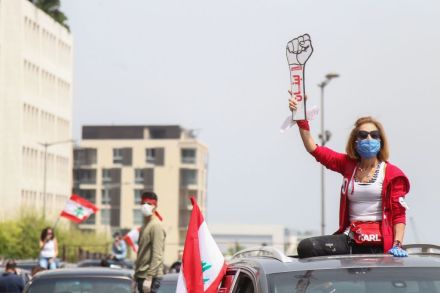
What should the British government do to help Lebanon recover from the Beirut explosion? Ministers say they are working to provide the Lebanese government with technical support and financial assistance, but they are coming under pressure from senior Conservative colleagues to use the disaster as a turning point in the way Britain approaches the Middle East generally. Tobias Ellwood, chair of the Defence Select Committee, and Tom Tugendhat, chair of the Foreign Affairs Committee, have both called for Britain to take a more active role in the region, or risk seeing hostile states such as Iran and terrorist groups filling a 'vacuum'. These two MPs have been instrumental in pushing Boris Johnson to toughen his approach to China in recent months.

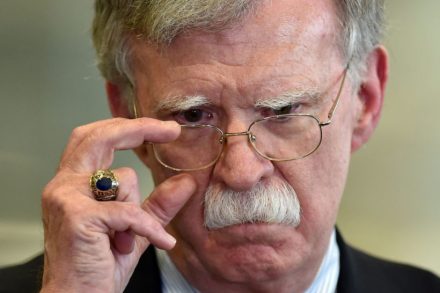
John Bolton is gone — Boltonism isn’t

John Bolton is out. It was a long time coming — Trump resisted hiring him in the first place, passing him over in favour of a military man, H.R. McMaster, at first. Bolton is a near-synonym for war and regime change, a hawk’s hawk. That was an obviously awkward fit for a president who got elected by campaigning against America’s Mideast wars. But just because John Bolton is gone doesn’t mean Boltonism is. Secretary of state Mike Pompeo is hardly less hawkish, just less principled. And Pompeo is the worse for mixing human rights-moralizing with his bellicosity: he represents an opportunistic confluence of humanitarian hawkishness and neoconservatism.