Food

Hell is a motorway service station

From our UK edition

If OPM had released an antithetical response to their 2000 magnum opus ‘Heaven Is a Halfpipe’, I’m certain it would have been called ‘Hell Is a British Service Station’. Had this song been made, I think it would have gone a little something like this: ‘If I die before I wake / I’ll spend eternity in a Welcome Break / ’Cause right now on earth, I can’t do jack / I’m at a service station and my tyre’s flat / Now hell would be a Roadchef / With a Costa bacon bap / And hell would be the toilets / After a curry at Watford Gap.’ Admittedly, the lyrics could do with some workshopping, but you get the point.

How to cater for the dreaded Ozempic Christmas guest

From our UK edition

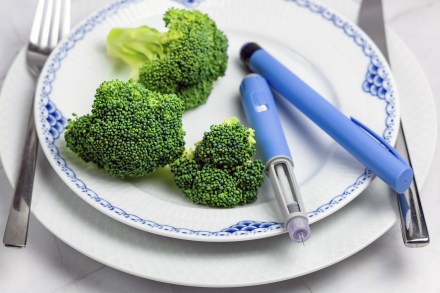
A close relation of mine is taking Ozempic. I shan’t name them or give anything else away other than to say this: they are set to ruin our Christmas lunch. They know it, and we know it. Welcome to British Yuletide 2025 – a country where more than 1.5 million people are estimated to be using GLP-1 agonists such as Ozempic, Mounjaro and Wegovy, with the vast majority (90 per cent) obtaining the drugs privately. NHS analysis of Ozempic hotspots reveals Leicester, Thurrock in Essex and the Wirral to be where users congregate. Clearly, they haven’t done an analysis of private users in Oxfordshire where I live.  This being so, we are locked in a curiously modern etiquette conundrum.

Table manners are toast

From our UK edition

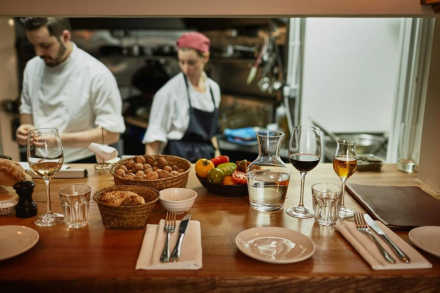
Food courts appear to be everywhere in London at the moment and, for reasons too boring to go into here, I found myself at three of them across the capital in the space of four days last week. (Yes, before you ask, I am beginning to question my life choices as a result.) Not that there is anything innately wrong with food courts as a concept, of course. If you’ve been to one, you’ll know the drill, which is essentially that they are semi-industrial spaces lined with vendors plying all manner of street food from locations that aren’t too challenging to the average British diner.

What makes money ‘short?’

I heard on the wireless a reference to the growing number of small political parties getting funds from short money. I’m afraid I let it slide past me as one of the many things about money that I don’t understand. Short is an extremely productive element in English vocabulary. Short-haul journeys preceded by decades the invention of airplanes. The unlikely sounding shorthorn carrots have been with us since the 1830s. The Americans favor short hundredweights, which are only 100lb instead of the Imperial 112lb; worse, the standard ton is consequently a short ton of 2,000lb, a long way off the metric tonne, to which British tons approximate.

Survival here is about logistics: Disneyland Paris reviewed

From our UK edition

Alcoholics know that hell is denial, and there is plenty at Disneyland Paris in winter. This is a pleasure land risen from a field and everyone has after-party eyes, including the babies. The Disney hotels operate a predictable hierarchy: princesses at the top, Mexicans at the bottom. We, the Squeezed Middle, are at the Sequoia Lodge with Bambi, where I learn that I like canned birdsong, and that is fair. You don’t consume dream worlds, because that is not their nature. They consume you. We stand in the Magic Kingdom and stare at Mickey Mouse-shaped food and a fake Bavarian castle – it’s Ludwig’s, not Sleeping Beauty’s – painted pink. Disney culture is impregnable: hence the fortress. It only needs – it only feeds on – itself.

A right royal travesty: Lilibet’s reviewed

From our UK edition

Elizabeth II was a god and a commodity: now she is gone it is time for posthumous exploitation. Lilibet’s is a restaurant named for her childhood nickname at 17 Bruton Street, Mayfair, on the site of the house where she was born. It was inevitable that Elizabeth II would eventually get a personal restaurant. Princess Diana ate in the Café Diana – English breakfasts and kebabs – on the Bayswater Road and George VI is the inspiration for the superb Guinea Grill – mostly sausages, or rather it is the sausages I remember – near Lilibet’s. Because that is what the British do to our monarchs and their intimates. We eat them and call it love.

I’m a Christmas pudding convert

From our UK edition

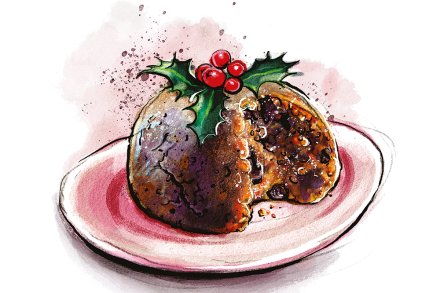
I used to be a Christmas pudding denier. I couldn’t see the attraction of a dense pudding made mostly of currants; frankly, I’d rather have a trifle. Of course, I was wrong: I was judging Christmas pudding by poor examples, those that sat on the edge of a Christmas lunch tray at school or were half-heartedly doled out by other pudding sceptics (I’m looking at you, Mother). My conversion came about thanks to a party – a Christmas pudding party. Not a party for eating Christmas puddings but rather one where the guests made Christmas puddings. It was hosted by my friend Kate and I went along out of love for her, rather than love for the pud. Under Kate’s keen eye, and following her great-granny’s recipe, we creamed kilos of butter and sugar in a big plastic tub.

The glory of gravy

From our UK edition

In Robert Louis Stevenson’s Treasure Island, when Ben Gunn is found by Jim Hawkins, sunburnt and wide-eyed after three years of being marooned on the island, the first thing he asks Hawkins for is cheese: ‘Many’s the long night I’ve dreamed of cheese – toasted mostly.’ As a greedy person prone to daydreaming, I’ve often wondered what my ‘cheese – toasted mostly’ would be. A dozen oysters? A cold negroni in a fluted tumbler? A perfect quivering soufflé? I think it’s gravy. That’s my desert island dream, the idea I can’t shake, the touchstone I’d return to. I’d take gravy in any form: thick and rich, made from meat scraps, a thin, boozy jus whisked up from pan scrapings, even the ‘from granules’ stuff, stirred in a plastic jug moments before serving.

Charleston notebook: following an English country band through the Holy City

My impression of Charleston, a city I’ve been visiting since my late teens, is that it is oddly more European than American. Real Charlestonians, they say, have more in common with their cousins across the pond than with their compatriots in America’s big cities. I've found that to be true. I’m here for the birthday of one such real Charlestonian, my friend Toto. A former White House staffer, Toto now works in the private sector, but he is destined for a return to politics – his great grand uncle was an accomplished South Carolina statesman and Toto, as he puts it, "feels a deep sense of purpose and mission to ensure South Carolina continues to be the greatest state in union".

The rise of the performative chef

From our UK edition

Let me introduce you to the performative chef. The performative chef is a man. He is between 23 and 29 years of age. Both of his arms are covered in fine-line tattoos. His favourite tattoo is a quote from Philip Larkin that reads: ‘They fuck you up, your mum and dad. They may not mean to, but they do.’ His parents are in fact lovely people, but he’ll never tell you that. He sports a mullet (or buzzcut depending on the season). He rides a fixed-gear bike to work. He exclusively wears oversized clothes. He talks to every stranger that will listen about getting an eyebrow piercing. He studied classics at a Russell Group university, not that it matters; he did the degree just because it was something to do.

‘The food is not the point here’: Carbone reviewed

From our UK edition

People say that Carbone is Jay Gatsby’s restaurant – Gatsby being the metaphor for moneyed doomed youth – but it is something more awful and, because people are asleep, no London restaurant has been this fashionable since the Chiltern Firehouse a decade ago. It lives in the basement of the former American embassy in Grosvenor Square, which is now the Chancery Rosewood Hotel. I thought this building would smell of fear, of why-can’t-I-have-a-visa-please? The truth is that it does, but that fear is now a commodity: you can be the person saying no-visa-for-you. (‘Uniquely yours,’ says the advertising copy. It means it.

How Trader Joe’s became a way of life

A young woman recently approached me as I stood outside Trader Joe’s on the corner of 93rd Street and Columbus Avenue in Manhattan. “Excuse me,” she said, “I’m visiting from the UK and I’m just wondering if there’s anything worth seeing around here.” This is not an unusual occurrence. It’s always tourist season in New York. People come for the cherry blossoms in Central Park, for the magic of the Rockefeller Center Christmas tree and for the vague hope of running into Timothée Chalamet at a downtown brunch place. They even come in the sweltering heat of summer when I, personally, would rather be anywhere else – ideally somewhere without the pungent smell of hot garbage and misplaced ambition.

trader joe's

Anne of Green Gables perfected the kitchen mishap

There’s something wickedly entertaining in reading about other people’s kitchen debacles, whether actual or fictional. They’re just so relatable. The jelly that won’t jell in Louisa May Alcott’s Good Wives is cruelly hilarious, but the best culinary catastrophe in classic fiction, for my money, is in Anne of Green Gables. Stylish guests, including the upper-crust Mrs. Chester Ross, are dining at Green Gables and our ebullient Anne is on her very best behavior. All goes well until Marilla arrives with the pudding and a pitcher of pudding sauce. On spotting the pudding sauce, our heroine’s eyes grow wide and terrified.

kitchen mishap

Is this the end of the French croissant?

Occasionally, a French person reveals – without any malice or superciliousness – that they run on an alternative operating system from us Brits. And on an entirely different motherboard from our American cousins. Over the years of gathering supporting anecdotes, a surprising theme has emerged: butter. Take my first visit to Paris, more than 30 years ago. I innocently asked for butter with my croissant. Simple answer: “Non.” Naturally, I remonstrated. The waiter retorted: “A croissant eeez butter!” And, in fairness, he had a point. Upon biting into said viennoiserie, I had to concede: it was nothing like the dry grocery store versions I was used to. Moments later, a small pot of raspberry confiture was graciously placed on my table.

croissants

Franco Zeffirelli’s slice of paradise in Positano

If you say the name Franco Zeffirelli to anyone under about 40, you’re likely to be met with bemusement. Find any opera or film lover over that age, however, and you will be greeted with a warm exclamation – “Ah!” – followed by a recitation of the Italian director’s greatest achievements. From his emergence in international culture in the 1960s with his seminal film of Romeo and Juliet to his legendary work on stage with such operatic titans as Maria Callas and Plácido Domingo, Zeffirelli became synonymous with tasteful, intelligent productions of the classics, all of which made him, for a time, the best-known cultural figure in Italy. It is fair to say that Zeffirelli, who died in 2019, didn’t always get it right, personally or politically.

How to get Britain eating healthily again

From our UK edition

Another week, another government offensive against childhood obesity. This time it’s a fresh round of pleas for new levies on junk food. And right on cue, out come the sympathetic pundits with a familiar lament: the poor simply can’t afford to eat well. Carrots are unaffordable and broccoli is a luxury that only the middle class can stretch to. It’s a predictable narrative. It’s also wrong, or at least, far from the whole truth. I say this having lived the messy reality of fostering, where I’ve had the privilege, and sometimes pain, of stepping into lives different from my own. For more than 20 years, I’ve cared for children pulled from homes where parenting skills are scarce and where ‘dinner’ might consist of a handful of sweets and a packet of crisps.

How to make five dinners for £5

From our UK edition

No matter how much the cost of convenience food rises, the idea that it’s still cheaper than cooking fresh food at home somehow refuses to go away. People can fool themselves as much as they like. But it’s (overpriced) pie in the sky.  To be economical, choose chicken thighs over breast; lamb shoulder over leg. Veg offcuts such as broccoli stalk (for soups) and ginger peel (to flavour Asian stock). Leftovers for egg fried rice. Stale bread for croutons. The freezer is your friend: not just for peas and berries, but spinach and an ice cube tray of leftover wine for cooking too. Oxo over refrigerated supermarket stock; Bird’s over fresh custard; lard over butter. It's handy to also use ingredients that don’t differ wildly between basic and premium versions.

Bagels that even New York can’t beat: Panzer’s Delicatessen reviewed

From our UK edition

That Panzer’s Delicatessen in St John’s Wood is called Panzer’s – for the instrument of Blitzkrieg – is mad, until you remember that Jews love to eat near catastrophe, and then it is merely funny. I love Panzer’s so much I am reluctant to share it, but we need all the friends we can get. I keep telling non-Jewish friends: when we burn, you will burn with us. Though I mean it as consolation, they tend to run. St John’s Wood has always existed on the edge of hysteria. Edwardian psychopaths put their mistresses here, and I once went to a children’s birthday party where Peppa Pig couldn’t park, and there was a fight with recriminations. The high street sells corsetry and facial reconstruction.

Go to Cicoria for the food, stay for the opera

Smart Italian restaurants in cultural destinations are like buses: you wait ages for one and suddenly two come along at once. I recently praised Locatelli at London’s National Gallery. Returning to the city, it is the turn of Cicoria at the Royal Ballet and Opera, Covent Garden; a joint under the aegis of Angela Hartnett, well-known for her upscale restaurant Murano in Mayfair, her casual chain Cafe Murano and her frequent appearances on the box. Surprisingly few of the world’s great opera houses have given much thought to catering, although things are improving. I ate very well recently at Madrid’s Teatro Real and you can push the boat out with caviar at the Met in New York.

cicoria
chinese banquet

How to survive a Chinese banquet

When heading to China on a business trip, I was somewhat bemused to be warned about the banquets I would be attending. Do not sit next to the host, I was told. I was to find out why. Learning the rituals of banquets is an essential part of doing business in China. I was treated to at least one every day on a ten-day trip around the country – and sometimes two or three. There is no such thing as a casual business lunch. Any meal will turn into a semiformal event held in a private room and hosted by the most senior person in the organization. The meal starts slowly, with a few rather unappealing cold dishes laid out on a lazy Susan that sits on a round table, though initially no one sits down.