Food

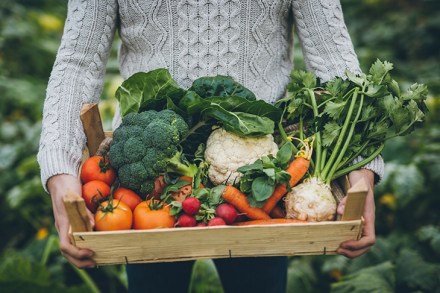
Letters: In defence of organic food

A note about manure Sir: I am afraid Matt Ridley shows a lack of understanding about agriculture in general and organic production in particular in his argument against organic food (‘Dishing the dirt’, 24 July). Livestock production has involved the use of animal faeces — or farmyard manure as it is called when mixed with straw — ever since livestock was first housed in the 1800s. Bacterial infections are due to poor hygiene in the slaughter and processing chain, not how animals are fed, grass is produced, or the use of manure, which is an important by-product. Bean sprouts being infected with E.coli is probably down to poor hygiene of
A Damascene moment in London: Imad’s Syrian Kitchen reviewed

Imad’s Syrian Kitchen is an eyrie off Carnaby Street, a once-famous road which seems to exist nowadays to sell trainers to tourists who have fallen, as if by wormhole, out of the Liberty homeware department with its pathological dependence on florals. No matter. Nearby, in Kingly Court, which is like Covent Garden before it fell to Dior and Apple, more interesting things happen: the sort of things that London, so sunken, needs. Kingly Court is charming because it invokes an ancient coaching inn — London was once filled with them — and it is, due to the presence of independent eating houses, still palpably bright, pleasing and alive. The restaurant

Organic food isn’t better for us – or the environment

It is mystifying to me that organic food is still widely seen as healthier, more sustainable and, most absurdly, safer than non-organic food. Following the publication of part two of Henry Dimbleby’s National Food Strategy last week, the organic movement was quick to suggest that organic food and farming offer a way to achieve the strategy’s vision. ‘The recommendations of the National Food Strategy offer genuine hope that by embracing agroecological and organic farming, and adopting a healthier and more sustainable diet, we can address the climate, nature and health crises,’ said Helen Browning, chief executive of the Soil Association, Britain’s most vocal organic lobbying organisation. Browning also highlighted the

Al fresco dishes to serve outside

We have all become rather used to socialising outside. Thanks to the pandemic, for perhaps the first time in our national history, al fresco dining has become the norm well outside of the summer months. We shivered under wraps for the last nine months only to finally be allowed to socialise indoors once more just at the moment when we’re all keen to light up the barbecue and enjoy the warmth outdoors. Nothing compares to the pleasure of a lunch or dinner en plein air in the summer months. It sharpens the appetite and provides happy opportunities for people or garden watching when the conversation bores. Sometimes you can even

Madeleines: the miniature French cake that majors on flavour

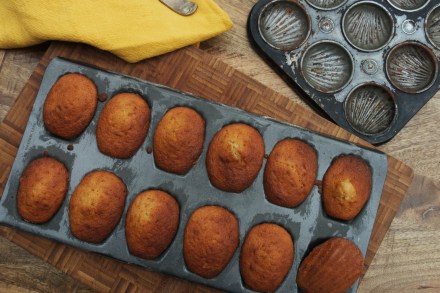
In one sense, a madeleine is simply a small cake. In fact, it’s an extremely classic cake, made with the genoise method. But there’s more to a madeleine than that: the proportions of madeleines, their miniature nature and scalloped shape, mean that they have a perfect contrast between their slightly sticky, almost crisp outside, and impossibly light and soft interior. Traditionally they are made with browned butter, which does what browned butter does best, bringing depth and complexity to a straightforward sponge. The dark muscovado and honey in the recipe elevate these little sponges from a miniature cake into something really special. The holy grail when madeleine making are those

A salt and sugar tax doesn’t make much sense

What is the point of the National Food Strategy? When Henry Dimbleby was hired as Britain’s ‘food tsar’ several years ago, the idea was to develop some blue sky thinking and to have someone look at the issue with a fresh pair of eyes, but when he produced his first report last year, it contained the same generic, flat-pack, bone-headed, nanny-state recommendations that every other voice of the establishment had been calling for. So predictable were his conclusions that the government had already committed itself to implementing most of them by the time it was published and he resorted to moaning about Percy Pigs to give himself an angle. The

Gala pie: a dish that deserves an audience

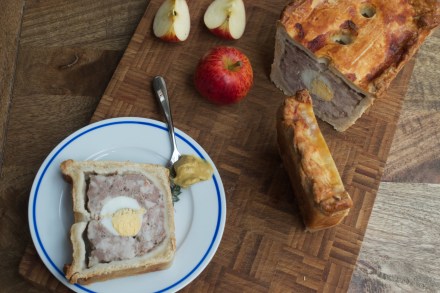
Some dishes are just meant to be shared. I’m not talking about those items you buy on a hangover from the corner shop that sanctimoniously declare ‘meant for sharing’ or ‘share size’ on their passive aggressive packaging (I’ll be the judge of that, cheese and onion crisps and chocolate fingers). I mean something that you’ve invested energy and love into, something which demands to be passed around, praised and enjoyed; something impressive and delicious. A homemade cassoulet. A perfect chocolate cake. A batch of scones. A gala pie. The moment of cutting into a gala pie, and revealing the perfect row of eggs suspended in meat minced by your own

An utterly convincing dreamworld: The Ritz reviewed

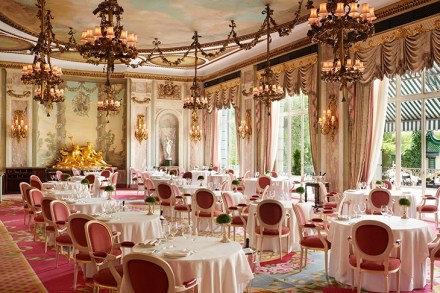
The Ritz is still here, and still gaudy. No grand hotel in London feels quite so complete, if pink; as if it landed like a Tardis on Green Park. There is no real life here, and there shouldn’t be. Each guest travels with their own novella. There are jewels in the window and brides on the stairs. Lady Thatcher died here, in a corner suite. Don’t ask which one. They won’t say, to discourage ghouls, party hacks and perverts. You cannot know if you are sleeping in her bed, and that is not even the oddest thing about the Ritz. The staff, who dress like toy soldiers, are charming in

Boris's 'lobster law' is ridiculous

Sometimes, there is only one conclusion to be drawn – that somehow, the calendar is stuck. Though days appear to pass, it is still April 1. The latest example of April foolishness concerns shellfish. A Bill on animal rights is currently going through the House of Lords, and the government seems minded to accept an amendment which would acknowledge that crustaceans and molluscs are sentient beings and therefore must have rights. In the case of lobsters, this would mean that they could no longer be cooked by being thrust, still alive, into boiling water. As it happens, there is a good culinary case for putting lobsters into cold water and

With Jack Whitehall

18 min listen

Jack Whitehall is an actor and comedian, however during the pandemic he has also started a food blog, FoodSlut. On the episode, he talks to Lara Prendergast and Olivia Potts about his public love of McDonalds, his secret love of The Ivy and the time he once saw a man attempt to make a grilled cheese with his feet.

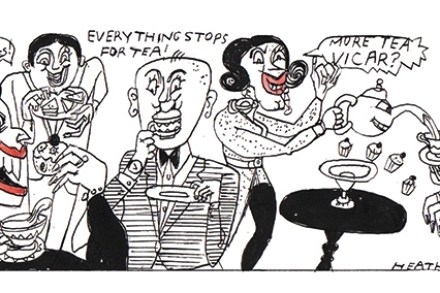
Cake expectations: afternoon tea has gone OTT

The other day, I came across a description of afternoon tea written by Alfred Douglas in 1920: ‘Two kinds of bread and butter, white and brown, cucumber and tomato sandwiches, cut razor thin, scones, rock buns and then all the cakes — plum, madeira, caraway seed — the meal had about it the lavishness of a Victorian dinner.’ There are a few things about this feast which I find striking. It includes two kinds of bread and butter. Sliced bread and butter never features on the modern table but a century ago, people used it to fill themselves up; it took the edge off your appetite. Note also the simplicity

The best food podcasts

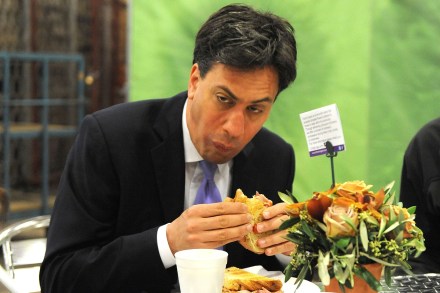
You have to hand it to Ed Miliband. After bacon sandwich-gate, he might never have eaten in public again, but there he was, wolfing down cod and chickpeas, eggs and Za’atar on the chart-topping podcast Table Manners with Jessie Ware. Presumably he thought that audio would be a fail-safe medium in which to redeem himself. No cameras, no aggressive questioning (the show is co-hosted by singer Jessie Ware and her mum Lennie), no risk. Suffice it to say he underestimated this one. An early part of the conversation, in précis, ran like this: ‘What’s your go-to dish?’, ‘I’m a recipe-box follower and a recipe follower.’ ‘Which recipe books?’, ‘That’s a

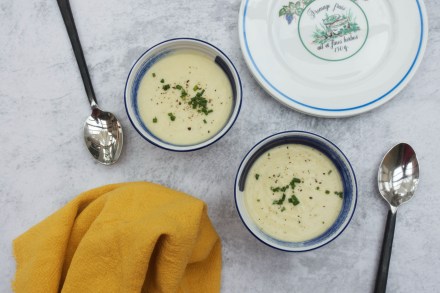
Vichyssoise: a cool soup for balmy days

I have never been a huge fan of cold soup. It has always seemed to me to be contrary to everything good about soup: soup is inherently warming and cheering. It demands large portions and an accompanying doorstep of bread. Who on earth would want to chill it down and serve it in tiny portions – and without bread and butter? Madness! Historically, I have made an exception for gazpacho and salmorejo on the basis that they hail from hot countries, and that they aren’t thickened with dairy. But I drew the line at what I thought of as hot soups served cold. Vichyssoise was doubtless the worst of them: give

Harry Potter meets Ikea: Backlot Cafe reviewed

Harry Potter is a fictional orphan locked in a cupboard by his aunt and uncle, after which he discovers a magical world and a better class of nemesis than his ugly suburban relatives. It seethes with class. The Dursleys are lower-middle-class, golf-club-haunting gammons. I suspect their MP is Dominic Raab, and I suspect they vote for him. The improved nemesis ‘Lord’ Voldemort is half landed gentry and heir to a Jacobean manor house on a hill. Harry Potter is world famous, and so people want to join him in suburban misery (we are near Watford), though in a slightly larger cupboard: the vast prop room in a former sound stage

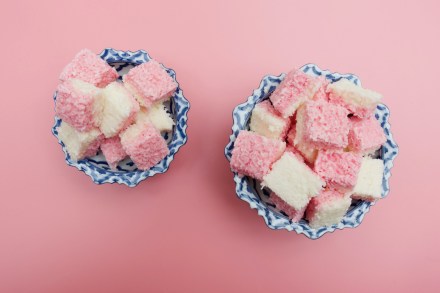
Coconut ice: a no-bake treat made for the heat

I don’t know about you, but I find that many of the things I enjoy eating most in the summer, those things I crave when the weather is blazing hot or just plain muggy, still require some level of cooking. Those chilled soups, or sticky ribs, or even ice creams still mean standing over a hob or a barbecue or turning on the oven. Mostly, I embrace it: a hot means to a greedy end. As someone who finds relaxation in baking and cooking, I’m not big into no-bake dishes. I’m willing to turn the oven on if it means soft, baked fruit that I can chill and serve with

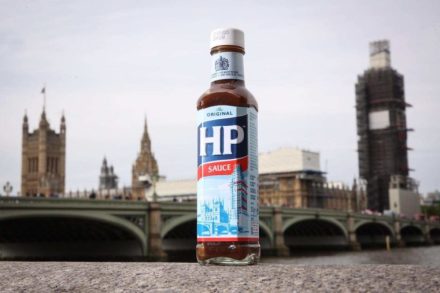
The very British history of HP sauce

HP Sauce is a glorious thing. The French may have their five, gastronomic Mother Sauces but we in this sceptered isle have HP and that’s what counts. Because nobody wants a pool of hollandaise with their Full English. It first appeared on our dining tables in the late nineteenth century and has since grown to account for three-quarters of sales in our brown sauce market. Its story begins in 1884, when a Nottingham grocer, Frederick Gibson Garton invented the sauce in his pickling factory in New Basford (later also the home of Cussons Imperial Leather soap). It was a classic culinary product of Empire, with tomatoes, tamarind, dates, molasses and

Swedish meatballs: a taste of Ikea at home

It’s thought that meatballs were brought to Sweden by King Charles XII. After a disastrous attempt to invade Russia in 1709, he fled in exile to the Ottoman empire. There he fell for a dish very similar to the Swedish meatballs we now know and, when he returned from exile five years later, he took those meatballs back with him. The meatballs grew in popularity and eventually became so closely associated with the country, that they took on the ‘Swedish’ name. But it would be disingenuous to write about Swedish meatballs and not mention that bastion of storage, that flatpack palace: Ikea. It’s no exaggeration to say that Ikea brought

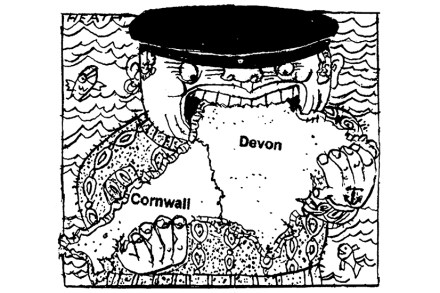
What makes a pasty Cornish?

This week, world leaders are doing what countless Brits do every summer: unpacking their bags in a charming corner of Cornwall. The G7 summit — Joe Biden’s first, and Angela Merkel’s last — is taking place in the resort town of Carbis Bay, a stone’s throw from St Ives. Between the speeches and the roundtables, will the world leaders find time to tuck into Cornwall’s proudest and most popular export, the Cornish pasty? Boris Johnson talked about the region’s industrial history in the run-up to the event: ‘Two hundred years ago Cornwall’s tin and copper mines were at the heart of the UK’s industrial revolution and this summer Cornwall will

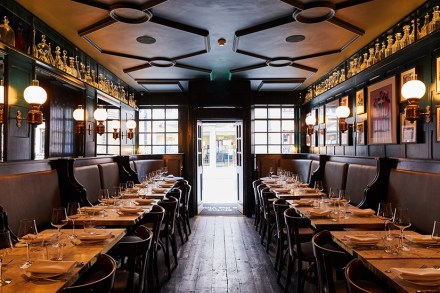
A careful parody: Noble Rot Soho reviewed

Noble Rot sits in Greek Street, Soho, on the site of the old Gay Hussar, which squatted here from 1953 like a rebuke. Some people loved this Hungarian ‘left-wing’ restaurant, with its terrible food, its library of Labour-themed political biographies, its raging cartoons and fond memories of Harold Wilson. But you can’t eat political biographies — not if you have taste. An attempt to save it by a ‘Goulash Collective’ failed, because the Gay Hussar was a themed restaurant whose theme — a sort of politicised London Dungeon — ran out. In an exquisite metaphor, it closed in 2018, at the height of Jeremy Corbyn’s self-hating — and self-thwarted —

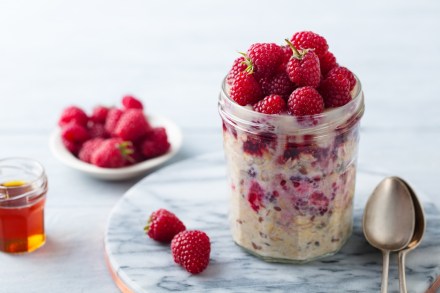
A fresh start: delicious twists on breakfast

The chance to enjoy a proper sit-down breakfast ­– or even, I daresay, the occasional breakfast in bed – on a weekday has been one of the (few) perks of lockdown. If I’m going to be under year-long house arrest then I’m going to have a three-minute egg on a Monday dammit. But as return to the office beckons for many of us, carving out time for brekky will become trickier. I’ve always been envious of the effortlessness and speed with which Romans take their breakfast: cappuccino and cornetto eaten standing at the bar counter. Somehow gulping down cornflakes or Weetabix standing in front of the mirror whilst shaving doesn’t