Food

Japanese food is overrated

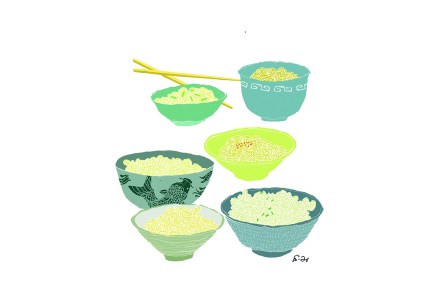
After twenty-three years in Japan, I have concluded that the much-lauded, worshipped even, cuisine is overrated. And I am getting a little tired of being told how awe-inspiringly wonderful Japanese food is, often by people whose only experience is high-end sushi or designer tempura in a showpiece Tribeca eatery, a world away from the standard fare available on the backstreets of Shibuya. Part of the problem is that much of what delights the Japanese about their food is unrelated to its actual taste.

Japanese

Turkey isn’t the only option for a Christmas feast

From our UK edition

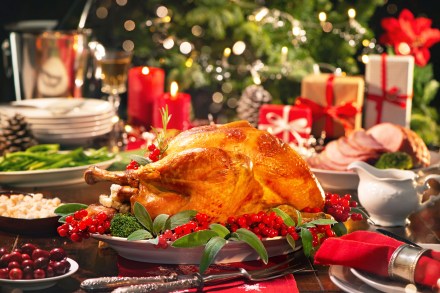
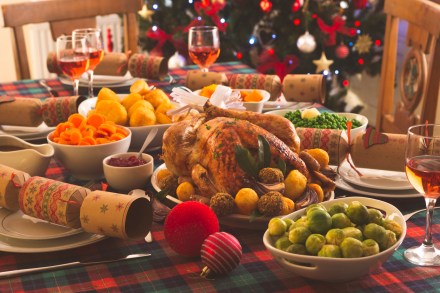
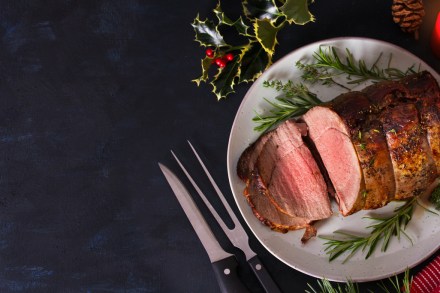
Christmas is coming – but if the geese are getting fat, the turkeys aren’t terribly happy, cooped up indoors on account of avian flu. Around half of the free-range birds produced for Christmas in the UK have been culled or died due to the illness, according to the British Poultry Council – and for those that remain, the government’s anti-infection measures mean they aren’t ranging anything like as freely as before. Some butchers, including the Ginger Pig chain, have announced they aren't selling turkey at all. So if we can’t get a happy turkey, what should we be eating on Christmas Day? Turkeys might seem like the stalwarts of the Christmas feast but they are, after all, New World birds, so latecomers to the festive table in these islands.

The full English is a breakfast to be proud of

From our UK edition

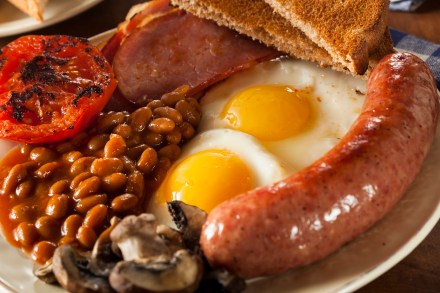
The British playwright Somerset Maugham once said that ‘to eat well in England you should eat breakfast three times a day’. I think he meant it as a jibe, but we should take it as a compliment. Our breakfast is as powerfully evocative of England as any part of our cultural heritage. In The Lion and the Unicorn, stirred to patriotism amid the country’s daily bombardment in the Blitz, George Orwell opined that English civilisation was ‘somehow bound up with solid breakfasts and gloomy Sundays, smoky towns and winding roads, green fields and red pillar-boxes. It has a flavour of its own’. That flavour is of sizzling bacon, straight from the pan. Rare is the Englishman who doesn’t have strong views on how they like it: toasted bread or fried? Mushrooms or tomatoes?

The Menu serves up clever and tangy social commentary

Several years ago, after I passed the bar exam, my wife and I went to dinner at Pineapple and Pearls — probably Washington, D.C.’s second swankiest restaurant. I recall eating some excellent duck, as well as imbibing a selection of craft cocktails served in ever-more exotic glasses and alembics. But what I remember most was dessert: a single gooseberry lacquered with honey. Yes, a single berry. (We ordered Domino’s when we got home.) The Menu is a lacerating bit of social commentary that doubles as a satire of this kind of fine dining — not all that surprising a blend, given the presence of Adam McKay on the production team.

How to eat frites the Belgian way

From our UK edition

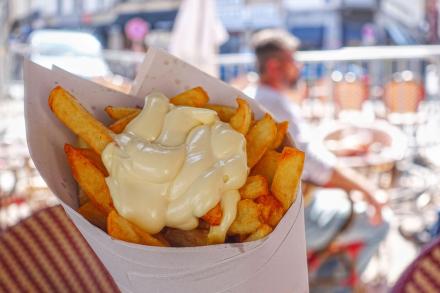
Many things about Belgium are impenetrably mysterious to the incoming foreigner: the commune system, which language to use, how to politely eat moules. But few are as cryptic as the menu of sauces that accompany Belgian frites. Ketchup, tartare, barbecue and mayonnaise seem fine. But what is Samourai? Andalouse? Mega?  Unlike many great Belgian things that have successfully been exported (Trappist beer, chocolate, Tintin, speculoos biscuits, Audrey Hepburn), frites can only be experienced on home turf. And my, aren’t they so Belgian. First, the friteries or fritkots in Dutch – chip shop kiosks found wedged on to street corners and in city squares – are totally egalitarian and the service is totally grumpy.

Three cheers for Branston Pickle

From our UK edition

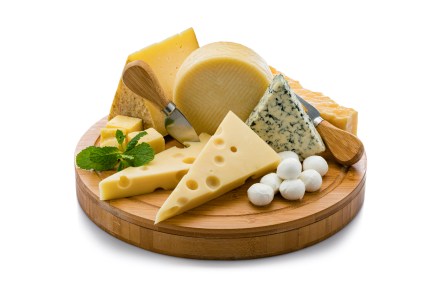
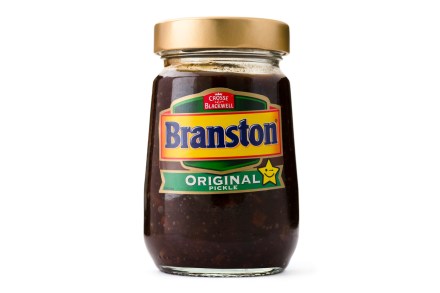
There is no shortage of foodstuffs (or people) jostling for admission into the hallowed hall of ‘national treasures’. Perhaps the best litmus test for right of entry is time-proven popularity, and appeal across class and generational divides. No mere passing flavour of the month or millennial indulgence. Something that unites us all in affection. Branston Pickle ticks the boxes. Branston and cheddar cheese were made for each other. Like jam and clotted cream, or rhubarb and custard; brought together they become more than the sum of their parts. One brings fruity tartness in perfect juxtaposition to the other’s creamy richness. Many a grand dinner party features an elaborate cheeseboard accompanied by membrillo and pickled figs.

Lucius Beebe knew how to live

There are some characters who infuse literature and life with disproportionate zest. The nature of their vocations is less relevant than the fervency they bring to the job, which is what makes them stand up off the page and sail through time. Lucius Beebe, who kept a Rolls-Royce and a Bentley, favored bowler hats and evening dress and wrote a column for the old New York Herald Tribune in the 1930s and then for Gourmet until his death in 1966, sits high up on my list of zestful characters who go the distance: militantly old-fashioned, never out-of-date. The association with the estimable, sadly deceased Gourmet justifies talking about Beebe under the food heading as much as any other, even though he did not always write about food as such.

beebe

I’ve found the only gastropub worth eating at

From our UK edition

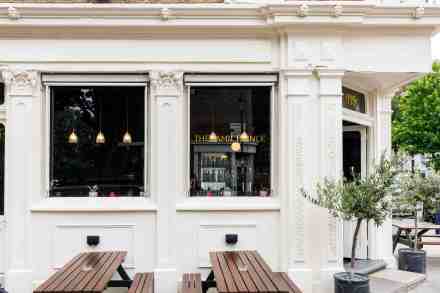
The gastropub, an invention of the early 1990s, is a terrible idea. They burst on to the scene when breweries were made to sell off many of their pubs for a song to make way for competition, encouraging Marco Pierre White wannabes to snap them up and replace cheese sandwiches and pork scratchings with kidneys on toast and anything that could be put together in a kitchen the size of a shoebox. Many of them have food prepared off-premises but charge restaurant prices. There are no proper tablecloths, the glasses are made to survive if dropped on concrete floors and it all feels a bit like going round to your friend’s house for a substandard dinner party.

Serving up a Half Baked Harvest feast

As one of eight children, I feel deep kinship with others who come from big families. Bunk beds, hand-me-down clothes, abject chaos at dinnertime — these are the staples of big-family life. Tieghan Gerard, the author of the food blog and cookbook series Half Baked Harvest, is one such kindred spirit. She comes from a family of ten, and began cooking as a tween to help with frenzied mealtimes. She soon started creating her own recipes for a food blog, which became three bestselling cookbooks and a four-million-follower Instagram. Her big-family backstory blends with her wholesome, rustic aesthetic: feeding a crowd, after all, involves creativity, resourcefulness and well-loved tools. I hoped I’d recognize some high-volume cooking tricks in Half Baked Harvest: Super Simple.

harvest

Why we should be tucking into tongue and turnip

From our UK edition

It seems our course is set. Food prices are rising at the fastest rate in more than 40 years, taking the average family’s yearly grocery bill over £5,200 – and there’s no relief in sight. Lord Woolton would be rubbing his hands at a situation so ripe for his ingenuity and optimism – and perhaps his namesake pie and the national loaf might find themselves resuscitated before long. But his 1945 call for ‘a simpler diet’ of bread, potatoes and vegetable oils won’t help much in 2022. According to the Office for National Statistics, ‘low-cost’ everyday staples are seeing the greatest price rises of all, with the average cost increasing by 17 per cent in the past 12 months.

The comfort and joy of a treacle tart

From our UK edition

‘Come along, kiddie-winkies! Come and get your treacle tart,’ the Child Catcher trills in Chitty Chitty Bang Bang, to lure children away. The youngsters are particularly taken with the idea of treacle tart, and it’s not difficult to imagine why: unapologetically sweet and sticky, it’s irresistible to small, greedy hands. It’s easy to dismiss treacle tart as a nursery food. But that, of course, is part of its charm. It’s the Platonic ideal of a childhood treat, and a byword for comfort. In Harry Potter, the love potion Amortentia smells of whatever someone loves most in the world; to Harry, it smells of broomsticks, Ginny Weasley’s hair and treacle tart, the first dessert he ever ate at Hogwarts.

Echoes of John Lewis: Piazza at Royal Opera House reviewed

From our UK edition

The Piazza is not a piazza – a realisation which is always irritating – but a restaurant in the eaves of the Royal Opera House, now restyled and open to those without tickets to the opera or ballet. If it were honest, Piazza would name itself Attic or Eaves, but the Garden, as idiotscall it, has long been a slave to delusions of the most boring kind. (It is no longer a garden in the wreckage of Inigo Jones’s square. I wish it were.) I would be happy to dine in a restaurant called Eaves – my favourite hotel is a hole in a wall by the Jaffa Gate in Jerusalem and my favourite restaurant was a man with a fish in Jamaica – but, in London, even attics are not what they ought to be.

Has the Aga had its day?

From our UK edition

A whole chicken, not so much roasted as burnt to a crisp. Charred potatoes. Carrots so blackened they were welded to the pan. And don’t even get me started on the Yorkshire puddings, which resembled lumps of coal, still smoking amid the debris. Only once have I failed (catastrophically I might add, and in front of my entire extended family) to cook an edible roast dinner. And I blame the Aga. Long a middle-class status symbol, Agas – in varying shades of duck-egg blue and volcanic red – can be found in country piles, cosy cottages and even the odd city kitchen. Devotees rhapsodise about the cast-iron cookers, which cost upwards of £10,000, stay on 24/7 gobbling up energy and require specialist cookbooks to conquer their idiosyncratic ways.

Keto no-no

I recently got engaged. After the celebratory Champagne and indulgent restaurant meals my fiancé and I enjoyed in our month of post-betrothal bliss, reality set in: soon I must fit into a wedding dress. Of course, dresses come in all shapes and sizes, just like brides. But have you seen the price of a wedding photographer lately? I’d like to look my best. These days, the main weight-loss food trend seems to be the ketogenic diet. Like the Paleo and Atkins diets, eating keto means cutting carbs. Unlike these other diets, keto isn’t high in protein; it’s high in fat. The idea is that depriving yourself of carbs and protein will cause your body to burn fat for energy — starting with the bacon and eggs you ate for breakfast and ending with your thighs.

keto

The delicious joy of cooking for one

From our UK edition

I like to think of myself as the hostess with the mostest. A combination of my Type A personality, Jewish feeder tendencies and coming of age at the peak of Nigella’s Domestic Goddess era means I can’t resist pulling out all the stops if I'm having people over. (A theme! Welcome cocktails! Ingredients sourced from far-flung corners of Waitrose!) And yet the truth is, there’s no one I’d rather cook for than myself. It wasn’t until my late teens that I properly learnt my way around a kitchen. My mum always did all the cooking at home, so it was only when I moved 100 miles up the M1 to university that I finally had the impetus to explore.  My early attempts were pretty dismal; raw-in-the-middle jacket potatoes stand out as a particular low point.

Are you man enough to eat raw offal?

The dominant wolf gets the liver, at least according to the podcaster Joe Rogan. In one episode, a bodybuilder called “CarnivoreMD” (real name Paul Saladino) tells him: “If you eat liver, you get to be an alpha male... or alpha female.” Offal has taken a markedly macho turn in recent years. No longer consigned to memories of the postwar school cafeteria, organs have become the preferred food of a certain type of gym bro. The word “offal” implies wastage — from the Middle Dutch for offcuts — but it can also be a delicacy. Foie gras is only the most obvious example. For the most part, though, the West has become squeamish about what was once called “variety meat.” But a new wave of offal-lovers is reviving an interest in organs.

offal
cake

Cake for a world turned upside down

My mother, although an excellent cook, never baked. She left that to her Swedish mother, Anna, who lived with my grandfather in an apartment my father built for them over our garage in Weston, Connecticut. Anna, as I’ve written before, was a gifted baker, especially when it came to Swedish breads. I can’t remember when my mother suggested I might make my father’s birthday cake. Or why the task had been handed down to me. I was only nine or ten, but my mother was well aware that I loved to watch Anna bake, and that my curiosity needed constant nourishment. Rural Weston had no bakery in its small-town center, nor did neighboring, cosmopolitan Westport. In the 1950s, powdered cake mixes came to Westport’s Gristedes supermarket.

zucchini

The postmodern horror of zucchini ‘apple’ crumble

There are some very bad people out there. Call me naive, but while I always vaguely knew this to be true, a chance discovery the other day really brought it home. I was scrolling idly through internet recipes and then, suddenly, stark and horrible, there it was — zucchini “apple” crumble, advertised as a method of successfully “tricking your family” into eating vegetables while conveniently using up overgrown zucchinis from the kitchen garden. “If they don’t see you making it, they’ll never know it’s not apple!” urged the author, evidently an agent of the dark side. My eyes widened with horror. My soul curled like a leaf in protest. But then the calming voice of reason intervened.

If Blairism were a carvery: the Impeccable Pig reviewed

From our UK edition

Labour is 30 points ahead, and in honour of this I review the Impeccable Pig in Sedgefield (Cedd’s field), a medieval market town and pit village south of Durham. It is Tony Blair’s former constituency and Camelot, but nothing lasts for ever. Blairism had pleasingly flimsy beginnings. Sedgefield had yet to choose a Labour parliamentary candidate when a young lawyer sat in a borrowed car outside the house of John Burton, head of the Trimdon Labour Club, on 11 May 1983, thinking he should drive back to London.

What to eat in game season

From our UK edition

Game is a perfect refutation to the sort of militant vegan campaigners who go around placing floral tributes on packaged meat. So long as shoots are responsibly conducted, game is as environmentally sustainable and ethical as meat-eating gets. But this year looks set to be a tough one for parts of the industry. Chiefly because of a severe outbreak of avian flu in France, gamekeepers in the UK have struggled to source enough birds to rear (90 per cent of partridge eggs and 40 per cent of pheasant eggs are imported from or through France). By some estimates up to 70 per cent of partridge shoots and nearly a third of planned pheasant shoots may be cancelled this year.