Food

In praise of farm shops

From our UK edition

As a city-dweller for 34 years, I am used to the hustle and bustle of other people. Cars, sirens, strangers chatting in the street: it’s the background noise of everyday life, a comforting reminder that you’re never alone. So when I moved to the Suffolk countryside in April last year, I found it a bit of a shock. Pregnant, freelance, with a husband often in London for work, I had a two-year-old for company, few friends and a big empty house overlooking fields, sky – and not much else. It's a 20-minute drive to the nearest town, and there’s nothing but a ramshackle pub in walking distance. We switched to online shopping for convenience, so I didn’t even have the weekly trip to the supermarket to fall back on.

The art of menus

From our UK edition

There is, of course, no endeavour, no craft, no profession, no trade that neglects to ‘reflect society’. This is a commonplace. The collective narcissism of considerate builders, for instance, claims that hod carriers and brickwork reflect society. The contention of Menu Design in Europe is kindred. Graphic artists, restaurateurs, decorators and chefs have, through two centuries, expanded their capabilities according to the milieux in which they have practised. Menus are, then, not merely functional lists, they are self-advertisements, exhibitions, seductions and, occasionally, desirable objects that are apparently collectible. Indeed this book has the unmistakable feel of an obsessive’s scrapbook, a completist’s trophy.

A chef’s tips to cut food waste – and your bills

From our UK edition

Food waste is suddenly the subject on everyone’s lips. A combination of environmental concern and biting inflation has propelled an issue that was already rising up the public consciousness on to centre stage. Some supermarkets are dropping ‘best before’ labels on fresh produce, and this month the British Frozen Food Federation launched a campaign to highlight the virtues of freezing to save money. The issue even gained a mention in the first televised debate of the Tory leadership contest at the end of July, when Liz Truss stated: ‘I am naturally a thrifty person. I like saving money and it also helps the environment. It’s about using less, wasting less, particularly food waste which I think is a massive problem in this country.

Fit for a king: kedgeree is the most regal of all Anglo-Indian dishes

From our UK edition

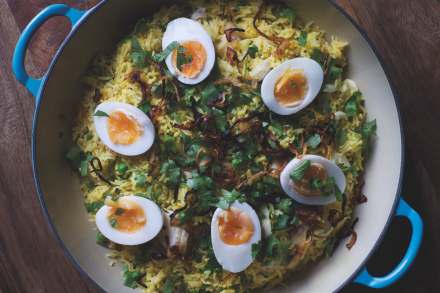
How does the saying go? ‘Eat breakfast like a king, lunch like a prince and dinner like a pauper.’ Well, if you’re looking for the highest possible status of breakfast, then kedgeree is the dish for you. Bran flakes just don’t quite scratch the same itch. Kedgeree cannot be casual; it requires time, both for preparation and enjoying, and it makes breakfast an occasion. It came to our breakfast tables (or mahogany sideboards) in Victorian times, brought back to Britain by returning colonial officers. It was served in silver chafing dishes, set alongside steaming urns of porridge. Kedgeree is a rice-based dish, flavoured with curried spices and cooked with smoked haddock, onions and boiled eggs.

The truth about cooking with an air fryer

From our UK edition

The phone rang, and on the other end of it was my father. ‘We’ve been thinking,’ he announced before we’d even exchanged pleasantries, ‘you need to get an air fryer. It’s the solution to these energy hikes.’ As a chef and writer with a couple of bestselling cookbooks under my belt, I was of course already familiar with the air fryer phenomenon. The countertop gadget, billed as more energy efficient than regular ovens, has been much hyped as a cost-saver as we face a winter of rocketing bills. But I’d quickly dismissed it as a fad.

Try them while you can: London’s best pop-up restaurants

From our UK edition

There’s something quite delicious about a deadline. The prospect that if you don’t book now you might never get to try the dish of the moment is enough to pull in queues and queues of customers. But in most cases the attraction of a pop-up eatery is not solely hype. Some of these temporary dining rooms offer the chance to sample the oeuvres of up-and-coming chefs – often those at the cutting edge of cuisine but without the resources for a permanent gig yet. Others give seasoned chefs an opportunity to test new concepts outside the constraints of an established space. Plenty of pop-ups have popped up in London this year as rising costs and post-Covid uncertainty deter some chefs from opening permanent locations.

I’ve finally learned to love baked cheesecake

From our UK edition

I used to be a baked cheesecake sceptic: I didn’t feel they were worth the effort when other cheesecakes required you simply to stir together some ingredients and bung them in the fridge. My thinking was: why waste your time? Was the result really worth the extra effort? In turns out that yes, it was. It is. I just hadn’t ever eaten a really good cheesecake. That changed on a visit to San Sebastián. La Viña is a small bar and restaurant serving pintxos (the Basque version of tapas), but it is best known for its ‘burnt’ baked cheesecake. Inside, you feel as though you’re in a cheese shop that has recently suffered a fire: the walls are lined with shelves on which sit rows of cheesecakes, slowly cooling in their charred baking-parchment wrappers.

What Soho House has got right: Electric Diner reviewed

From our UK edition

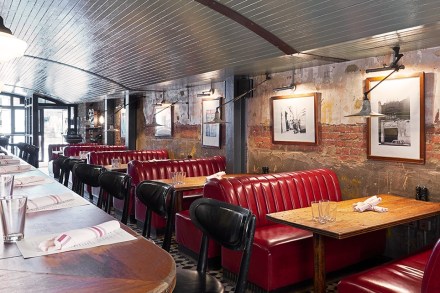
Electric Diner is from the Soho House group, which has done terrible things to private clubs, luckless farmhouses, domestic interior design and even its own restaurants. The Ned, its City hotel with ten restaurants, is genuinely insane, like Thorpe Park for people who are scared of roller-coasters; and no restaurant for adults should sell fishfinger sandwiches, even at Babington House, a Soho House hotel which is Clown Town for grown-ups but near trees. But Electric Diner is much finer: the sort of restaurant that attacks its parent with a spade, like Oedipus.

Order, order: MPs’ favourite restaurants

From our UK edition

Westminster is often described as a village, and like most villages it has a clutch of good pubs and a decent curry house down the road. But beyond that the area isn’t overly blessed with places to eat, drink and be merry. There’s little in the way of bars (except in hotels and the Palace of Westminster itself), let alone nightclubs. The closest of those is in Embankment – Players and Heaven are favourites (though such is the paucity of choice that Michael Gove clearly felt the need to go all the way to Ibiza to bust his moves). As for restaurants, the slim choice means there is a small group of favoured haunts, and you can be confident that there’ll be a table of political friends (or rivals) a mere onion bhaji’s throw away.

In praise of British lamb

From our UK edition

In one of Roald Dahl’s lesser-known short stories, ‘Lamb to the Slaughter’, the guilty Mrs Maloney tempts police officers into enjoying a spot of supper while they’re at her house hunting for the weapon used to kill her husband. That's the hell of a big club the guy must've used to hit poor Patrick, one of them was saying. The doc says his skull was smashed all to pieces just like from a sledgehammer.That's why it ought to be easy to find.Exactly what I say.Whoever done it, they're not going to be carrying a thing like that around with them longer than they need.One of them belched.Personally, I think it's right here on the premises.Probably right under our very noses. What you think, Jack?

How to eat and drink your way around the Dubrovnik Riviera

From our UK edition

‘I hope you’re hungry,’ crows a fisherman, setting down a plate piled high with freshly shucked oysters. They say you should face your worst fears head on. Well, here I am addressing mine – but I never thought it would be done in quite so idyllic a spot. I’m in Mali Ston, a small, picturesque town on Croatia’s Pelješac peninsula, about an hour’s drive from Dubrovnik. It’s 9.30 a.m. and many shops are still shuttered, but already Game of Thrones fans are out in force, taking selfies along the hillside’s 14th-century network of towers and fortresses. (The three-and-a-half-mile walls doubled as King’s Landing and the Eyrie in the fantasy drama.

Eating well at a time of inflation

Inflation having topped 9 percent this summer, Americans are looking for ways to cut their spending. Rising prices at the grocery store are impossible to avoid, but we can learn to adjust. There’s no better inspiration than M.F.K. Fisher. Fisher, a food writer who hung around with Julia Child and James Beard during her lifetime, felt the pain of wartime rationing acutely. Her 1942 book How to Cook a Wolf addressed the problem of hunger — “the wolf on the doorstep” — with a few clever recipes and a great deal of philosophy. Survival of the crisis, she predicted, would require first and foremost an attitude of abundance. Fisher ascribes virtues like honesty, dignity and nobility to simply prepared foods.

garden

On constant gardening

Let nobody sneeze at the horticultural arts. Francis Bacon devoted a moderately famous essay to the topic, beginning by pointing out that the very first garden designer was Almighty God. The garden, Bacon argues in his 1625 treatise, offers the purest of human pleasures. As a civilization approaches its peak, its creative geniuses tend to focus on perfecting architecture before finally, at the apex of its development, turning to the art of the garden. With a name like Bacon, Sir Francis might be pardoned for devoting especial attention to the kitchen garden, whence hail so many excellent pairings for salt-cured pork — roasted cabbage with bacon and pine nuts, for instance, or the inseparable bacon, lettuce and tomato.

London’s best tasting menus

From our UK edition

Once the preserve of only the fanciest of fancy restaurants, the tasting menu has come into its own post-pandemic. Set menus make economic sense for cost-cutting restaurateurs and their harried staff, of course – but customers benefit too, with no nasty surprises or bust-ups when the bill arrives. And for those of us who suffer from perennial food envy, tasting menus remove the gut-wrenching anxiety of having to choose between the 'succulent hand-glazed cod' and the 'succulently foraged kobe beef' – both it is. But pairing multiple dishes with distinctive wines and then placing them in some kind of coherent order takes real skill – so who does it best?

Among the best puddings I’ve ever eaten: Richoux reviewed

From our UK edition

Cakeism is offering the voters everything they desire, knowing you will never give it to them because you live in a haunted mirror in which the only thing that matters is your survival. This duplicity is important to understand, because the road from Cicero to Caesar is so short it may lack potholes. Cake is less urgent, but at least cake won’t lie to you. And here is Richoux, still filled with cake, if you can afford it. It is, for many people, marvellous and theoretical cake. Richoux was a cake shop on Piccadilly – a street I can never eat in without thinking of Alexander Litvinenko sitting, doomed, in Itsu, when it still pleased Vladimir Putin to kill people individually – for so long it was forgotten. It is 113 years old, or one seventh of Yoda.

Wiltons vs the Ritz: who wins the great grouse race?

From our UK edition

‘Bang! Bang! …Thud.’ It’s Friday 12 August, better known to tweedy types as the Glorious Twelfth, and the inaugural grouse on the West Allenheads estate in Northumberland has met its maker. The 26°c temperature yields a slow morning, with the moorland birds reluctant to come out of the shade and the beaters and guns mopping their brows, yearning for elevenses. After the first drive, the bagged game is slung in the back of a Defender and divvied up in the gun room. And now the real challenge begins. Imagine a sort of Beaujolais Run, except instead of getting Gamay wine from France to Fleet Street, our mission is to dispatch grouse from Hadrian’s Wall to SW1. The destination for ten brace – i.e. 20 birds – is Wiltons on Jermyn Street.

A great chef at his best: Lisboeta reviewed

From our UK edition

In 2014, Nuno Mendes, a chef from Lisbon by way of Wolfgang Puck’s kitchens and his own Viajante in Bethnal Green, opened a restaurant at the Chiltern Firehouse hotel. This is a redbrick Edwardian castle in Marylebone, which used to be a fire station, but no longer is. This restaurant was skilful: both blessed and cursed. I thought it was Gatsby’s house, inhabited by people looking for something they would never find because it does not exist: self-acceptance through the incitement of jealousy, which is the emotional purpose of being rich. People went for the empty pleasure of being seen at the Chiltern Firehouse because the prime minister David Cameron, among others, came for Caesar salad with chicken skin, which was presumed to be interesting like he was.

A diplomatic sweetener: the power of marmalade

From our UK edition

It took Paddington Bear to solve the age-old mystery of what the Queen keeps in her handbag. When Her Majesty pulled out a marmalade sandwich during the pair’s sketch at the Platinum Jubilee concert this summer, it did more than just tickle the audience. It also served to remind us of our national love affair with marmalade. Long before Paddington developed a taste for it, the preserve had been a stalwart of British popular culture, from Jane Austen (where Lady Middleton applies marmalade as balm for her daughter’s scratch) to Evelyn Waugh (where, in Brideshead Revisited, Charles Ryder eats ‘scrambled eggs and bitter marmalade with the zest which in youth follows a restless night’) – not to mention Samuel Pepys, Agatha Christie and Ian Fleming.

From jellyfish crisps to sea moss smoothies: are you brave enough to eat the new sea food?

From our UK edition

Dipping my toes in the Irish Sea on a family holiday last week, I encountered something slimy, muddy-brown and decidedly squelchy. I managed to flick it off my foot with minimal squealing and thought no more of it. But, looking back, perhaps I missed a lucrative opportunity – or a tasty treat for the kids’ dinner. For my beach find was in fact Irish moss, also known as ‘sea moss’ or ‘carrageen moss’ – the latest cult ingredient among experimental foodies, health-conscious celebrities and social media aficionados.

When did ‘best before’ dates begin?

From our UK edition

An idea past its sell-by date Waitrose has announced the removal of ‘best before’ dates from many food products. – The idea of printing dates began with Marks & Spencer in the 1950s, but only for use in the stockroom. They first appeared in the company’s shops in 1970 and were named ‘sell-by’ dates from 1973, launched with an advertising campaign saying: ‘The sell-by date means that St Michael foods are fresh.’ There was also a TV advert which featured Twiggy. – The concept was quickly adopted by other supermarkets after evidence that shoppers liked the reassurance of a date.