Food

In defence of British food

From our UK edition

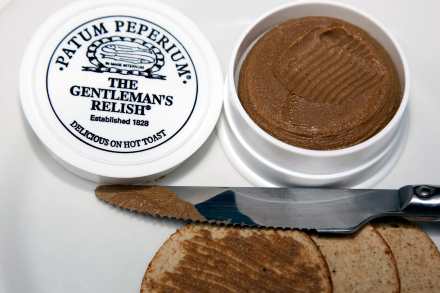
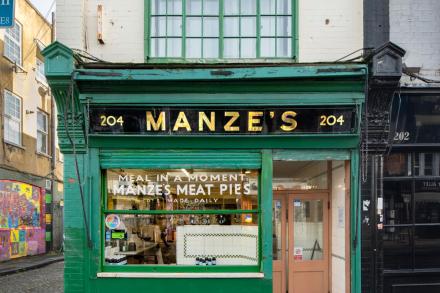
Recently in Spectator Life Rob Crossan laid bare ‘the unpalatable truth about British food’ – namely that it is, er, in some establishments he’s been to, done badly. Leaving aside the fact he’s looking for his fish and chips in the wrong place (outside the M25 it wouldn’t be such a struggle), encountering a few dodgy versions of British fare is not a good reason to sit idly by and allow our culinary heritage to disappear. British food can compete with the world's best – if we allow it to. In many ways we have had to develop a thick skin when it comes to the loss of treasured bastions of food and drink.

The real reason you hate vegans

From our UK edition

Just when it seemed as though January in Britain couldn’t get any bleaker, along came ‘Veganuary’. Cue loads of puny, blue-haired wokerati spending this month preaching about how we should give up on two of man’s greatest pleasures – meat and cheese. If you’ve been finding it irritating, you’re not alone. In surveys of public opinion, vegans are hated more than any other group, with the exception of drug addicts. So when a chef tells the newspapers that he’s banned vegans from his restaurant, or a magazine editor jokes that they should be killed, do you feel justified in allowing a smirk of amusement to cross your face? After all, in an era when we are supposed to have obliterated all our prejudices, despising vegans still feels deliciously permissible.

Ship shape: Normandie, the biggest French restaurant of all

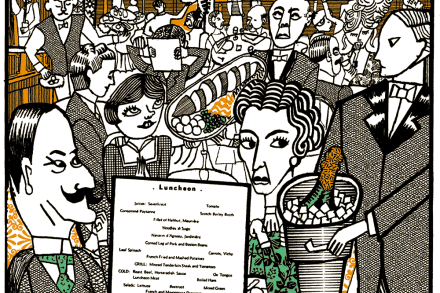
These pages recently carried a lament for the little French restaurant, and the loss from the cities they once graced of a certain element of gentility and, yes, class. On the same subject, let us consider another era when class was valued more highly, and which produced the classiest, and the grandest, French restaurant of all. This requires a journey. In July 1936, a Chicago family, relations of mine, embarked on an unrushed two-month European vacation. A meticulous Thos. Cook & Son-Wagons-Lits, Inc. itinerary routed them first to France, then Italy, Switzerland, Germany, Holland and finally to England. It was a thoroughly first-class affair.

French

Is ‘legacy’ an insult?

From our UK edition

‘Why can’t you have legacy tomatoes?’ asked my husband. ‘There are plenty of heritage tomatoes.’ He might well ask. Heritage tomatoes, usually called heirloom tomatoes in America, are cultivars valued for flavour lost in many modern hybrids. They include the Black Krim from the Crimea and the delicious Raf, grown in Almeria, its name an unromantic acronym from Resistente al Fusarium, since it is resistant to a fungus. Only since the 1970s has heritage been used as a label for things of historical, cultural or scenic interest. The fashionable term was applied in 1983 to the new quango English Heritage. Like heritage, a legacy was something we were glad to inherit. Prime ministers did not want to resign without leaving one.

The offal truth? Organs are delicious

From our UK edition

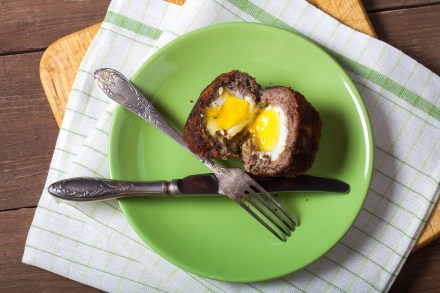
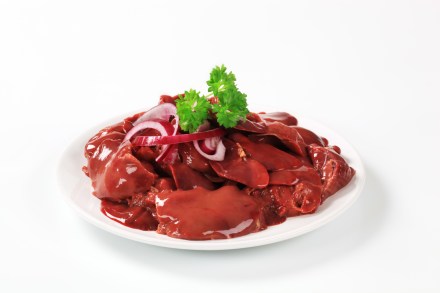
I’m sure my mum would forgive me for saying this, but cooking is not one of her many strengths. Raising three children, and with a husband who worked shifts in a steel mill, she was feeding people round the clock, so cooking became a necessity rather than a pleasure – as it will have been for the majority of working-class women in the 1960s and 70s. Since this was before convenience food really hit the shelves, things were cooked from scratch, and in winter, steak and kidney suet pudding was on the menu in our house most weeks. As were liver and onions, mince and potato pies and anything else cheap and cheerful, usually involving lots of animal fat and parts. The sweet, creamy texture, gamey and pungent, was a delight.

How to eat like a president

From our UK edition

John F. Kennedy opted to serve New England lobster, Ronald Reagan a California-inspired garden salad – and James Buchanan 400 gallons of oysters. Held at Statuary Hall in the US Capitol, the inaugural luncheon for a new president is as much part of inauguration day as the swearing-in ceremony and the inaugural address.  Nixon enjoyed pineapple slices topped with cottage cheese and washed down with a glass of milk First time around, in 2017, Donald Trump’s inaugural meal featured dishes including Maine lobster and Gulf shrimp. But for those not on the guest list to find out what he serves tomorrow (McDonald’s ice cream, perhaps?), there are plenty of other opportunities to eat like a president in Washington DC.

Partridges and the slow death of Chelsea

From our UK edition

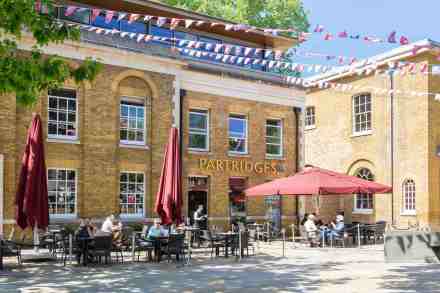
Partridges, purveyor of ‘nice things for the larder’ to the well-heeled, will close the doors of its Chelsea shop for the last time next month. After 53 years of serving SW3 delights such as ox tongue, macadamia nuts and glace cherries, the shop, run by the Shepherd family and in possession of a royal warrant, will soon carve its last slice of wafer-thin mortadella. Its landlord, the Cadogan Estate, has thanked Partridges for helping to ‘make Chelsea so special’. What Cadogan Estates omits to say of course, is that a branch of Whole Foods, that artisan behemoth beloved of American bankers and vegan, coeliac Gen Z-ers, is soon to take its place down the road.

The victory of Instagram over food: Gallery at the Savoy reviewed

From our UK edition

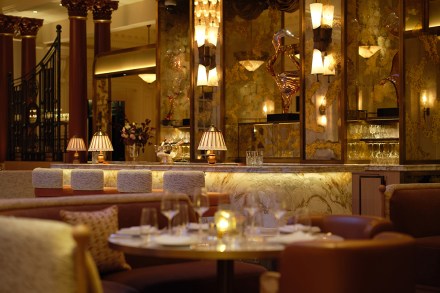
The Savoy Hotel is a theatre playing Mean Girls with a hotel attached to it, so you can expect it to both dream and fail. That is a polite way of saying that its new restaurant, Gallery, is not a success, but the Savoy will survive it. Though it didn’t survive the Peasants’ Revolt. It burned down, courtesy of medieval far-leftists who I would suspect were less annoying than modern far--leftists. They could hardly be more so, and I’m sure Geoffrey Chaucer, who wrote some of the Canterbury Tales on this site, would agree.

The unpalatable truth about British food

From our UK edition

Last year a friend who lives in Lyon came to visit me in London. It was only her second trip to the UK and she was determined to venture deep into our indigenous food culture. ‘So, where can I get good fish and chips?’ she asked me. Now, if I was a citizen of Vienna and she was asking me where to find really good sachertorte, I suspect I wouldn’t struggle to reel off myriad cafes. If I lived in Athens and was questioned about where to get decent souvlaki, I would probably have a list as long as Hercules’s personal meat skewer. But fish and chips? In London? I could, in all good conscience, recommend only two places in which, during my quarter of a century in the capital, I’ve had a half decent chippie tea.

Why I’m obsessed with Farming Today

From our UK edition

Farming Today airs at an undignified hour each morning on Radio 4. On the few occasions I’ve caught it live I have felt, first of all, relief that I am not a farmer; second, inadequacy; and finally, a surge of evangelism for the farmer’s way of life. I am now reaching the conclusion that getting up early enough to listen to Farming Today is the very least we can all do. Listening to Farming Today helps dispel the romance of living off-grid By no means will everything discussed on the programme hold relevance for your life. One feature last week was dedicated to a project to preserve ten acres of salt marsh downstream from Totnes. Another recent episode explored the Lakeland barns being saved for cultural heritage.

Not worth its salt: Wingmans reviewed

From our UK edition

I see this column as an essay on cultural polarisation: artisanal butter can only take you so far into wisdom. I cower in Covent Garden, mourning Tory romanticism, and stare, cold-eyed in St James’s, at oligarchic mezze. Sometimes I eat by mistake. I couldn’t get into the fashionable noodle place in Soho, whose Instagram-made queue stretched to Cambridge Circus on Saturday night. It reminded me of the crowds at royal weddings: both camp for dreams. So, I went to Wingmans instead.  Wingmans – it lost the apostrophe, it’s a decadent age – calls itself ‘London’s best wings’. They are chicken wings, not angel wings, and this is Pottersville, not Bedford Falls. (Some people think Pottersville is more fun and that may be, but not here. This is not a wonderful life.

How Eastern Europe is leaving Western Europe behind

I'm in the tiny riverside town of Virpazar, in the little Balkan country of Montenegro; and under the white geisha face of a late summer moon I am warily ordering the celebrated local delicacy. It is carp — caught from the nearby, slivovitz-clear waters of Lake Skadar (biggest lake in the Balkans!). But what makes me wary is the preparation. The carp is apparently marinated, and served cold, with boiled potatoes and greens. Cold slimy fish with hot spuds and spinach? It sounds like some nightmare culinary “specialty” from the old communist bloc (of which Montenegro was once a part, within Yugoslavia). I’m veteran enough to remember a few of these. “Famous” flatbreads that came with rancid lard.

Eastern

Save our Stilton!

From our UK edition

On 2 October 1814, a grand feast was held at the Hofburg imperial palace during the Congress of Vienna. Famed French chef Marie-Antoine Carême was charged with cooking and didn’t disappoint. But when it came to the cheese course, a lively argument broke out among the assembled statesmen, each advocating for the superiority of their national cheese: the Italian for Stracchino, the Swiss for Gruyère, the Dutchman for Limburger, and so on and so forth. The UK foreign secretary, Lord Castlereagh, championed Stilton. French foreign minister Talleyrand snapped an order (‘Send the despatches to the chancellerie’) and a large piece of Brie de Meaux was duly brought out: ‘The Brie rendered its cream to the knife. It was a feast and no one further argued the point.

The many faces of Oxo cubes

From our UK edition

It is now not unusual to find ‘bone broth’ in the refrigerated sections of supermarkets or delis, on sale for more than £7. Who can afford this stuff? If you have the time to make your own stock then all credit to you. But if not, the concentrated stock in little cubes or tubs is perfectly acceptable. Knorr and fancy upstarts such as Kallo pose as the superior products. But Oxo has stood the test of time. In a flooded stock market, their cubes remain my choice. Beef is the classic (the name ‘Oxo’ is thought to come from the word ‘ox’). Retailers seem to have taken the lamb version off the shelves, though the brand says they’re working on getting it back. The company has moved with the times, a few years ago launching the first vegan cube.

Stuff the turkey: try capon or partridge for Christmas

From our UK edition

‘It was a Turkey! He never could have stood upon his legs, that bird. He would have snapped ’em short off in a minute, like sticks of sealing-wax.’ (A Christmas Carol.) And there is exactly the problem with festive fowl. In most cases, we get turkey. And usually we get it far too big, which leads to all the problems of using the thing up over the course of a week. It may have been fine for Bob Cratchit’s large family but for most people, the mammoth turkey isn’t the way to go. A turkey is a fine bird (one of the trinity of actually useful things, with potatoes and tomatoes, to come out of the European discovery of America) – but it’s not the only option.

Something out of a Spectator reader’s dreams: The Guinea Grill reviewed

From our UK edition

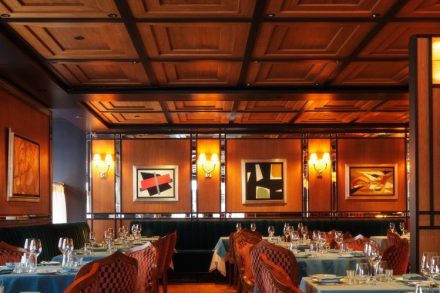
Back to the past: it’s safer there. There is a themed restaurant dedicated to George VI of all people, near Berkeley Square – a sort of Rainforest Café for monarchists who won’t sink to the Tiltyard Café at Hampton Court. I was looking for a restaurant my husband might like – Brexit, meat, maps of the Empire at its height in colour – and I found the Guinea Grill in Bruton Place. George VI isn’t a vivid monarch. He lived in the shadow of queens – one Mary, two Elizabeths – and on film he is always crying, or dying. In The Crown (Jared Harris, marvellous) he lost his lung. In The King’s Speech (Colin Firth, good, but handsome) he lost his happiness. I like to think George was tougher and less pitiable than the chronicles suggest.

Bring back suet!

From our UK edition

Stir-up Sunday may be behind us, but it’s not too late to make your Christmas pudding – and do you know what that means? Yep, sourcing decent beef suet. Suet is the king of fats. It adds to the pudding’s keeping quality, texture and flavour. My recipe calls for half a pound of suet (see below for the recipe in full – it was my great-aunt’s) but the good stuff is hard to find. You can get pellets of suet in a packet from supermarkets, but the real thing, grated into light flakes, is another story: much nicer and lighter. Some inferior recipes suggest butter instead, but good as butter is, it just doesn’t cut it for a Christmas pudding. Suet is the hard creamy fat around the beef kidney.

Ideal for winter: The Dover reviewed

From our UK edition

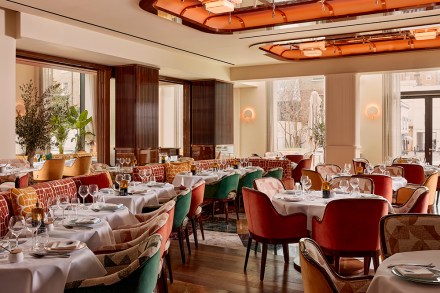
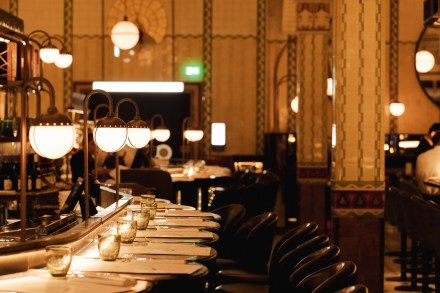
For British people, America is an idea brought by cinema, and The Dover, the New York Italian bar and restaurant in Mayfair, meets a version of it. It’s not quite the ballroom in Some Like It Hot, not quite Rick’s Café in Casablanca, but it’s as close as you will find near Green Park Underground, and that has a charm to it, because Americans can speak. It’s from Martin Kuczmarski, formerly of the once preening, now ragged Soho House. He has named his company Difficult Name. There’s a message there, and a story, and it made a glorious restaurant with the tagline ‘A good place to be since 2023’.

How to host the perfect Christmas party

Cool guests, hot food; cool music, warm hostess: the recipe for the perfect party, and the motto of Perle Mesta, one of the most successful postwar Washington hostesses. Good King Wenceslas, a model host of even greater status, lived out this motto in legendary style centuries earlier. His guests were cool, if not downright frozen; their host was warm of heart (and sole, as the page discovered on treading in his footprints). The food was hot, for the king ordered up pine logs along with the flesh and wine. As for the music, the rude wind’s wild lament must have been on the cool side — though jollier tunes would surely have prevailed once the king and his fellow diners made it back to the royal fireside.

Christmas
Paris

Catching my breath in Paris

September felt like a long month — and I needed to escape London. The Spectator had just been sold — and while the transition from one editor to another brought excitement, it was also exhausting for everyone. Paris felt like the perfect retreat. And of course, the Eurostar is the fastest — and most enjoyable — way to get there from London. A friend of mine lives near the Gare du Nord, and as she was in London for a night, I borrowed her keys, jumped on the train and arrived in Paris as evening fell. Alone and hungry, I made my way to Les Deux Gares, a stylish hotel nestled between Gare du Nord and Gare de l’Est. Designed by Luke Edward Hall, whose aesthetic is unmistakably English, the restaurant inside is quintessentially French — and superb.