Food

Something to relish: in praise of Patum Peperium

From our UK edition

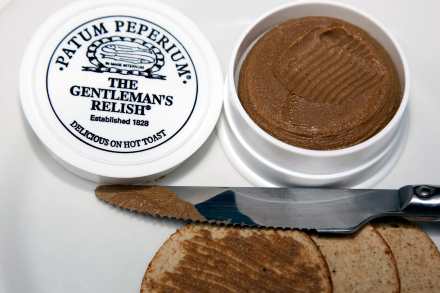
In a social media age, certain ingredients – long esteemed by those in the know – suddenly burst on to the scene. One morning we woke up to all the supermarkets stocking Mutti tinned tomatoes. Ortiz sardines and Perello Gordal olives are now in the limelight. I wonder – given the current zeitgeist for all things umami – whether Patum Peperium (Latin: ‘peppered paste’) could be next. Then again, the ‘Gentleman’s Relish’ – an anchovy paste made with butter and spices – isn’t for everyone. Much like Marmite, it has embraced this contentious reputation: ‘Dividing opinions since 1828’ it declares in its branding. After almost 200 years on the scene, it has started popping up in trendy spots, like a debonair rake sauntering into a party fashionably late.
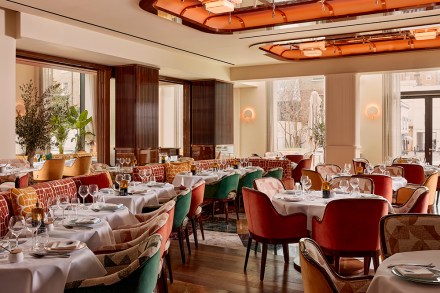
The tiramisu is one of the loveliest things I’ve eaten anywhere: La Môme London reviewed

From our UK edition

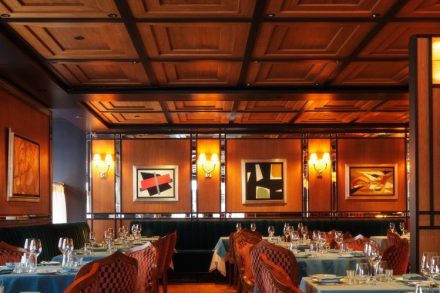
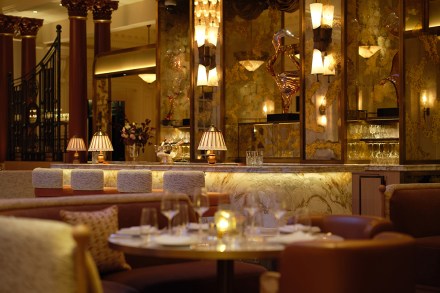
La Môme is the new ‘Mediterranean’ restaurant at the Berkeley, Knightsbridge’s monumental grand hotel. It has changed, as all London’s grand hotels have changed: it is Little Dubai in the cold and the chintz is on the bonfire. Fairy lights hang from the awning of the entrance, as if in an eternal Christmas. I barely recognise it, though I ate an impersonation of a mandarin in its overwrought Instagram-friendly bakery two years ago, and it was inferior to a real mandarin. I cling to that. Designers must keep busy: this means grand hotels are always getting renovated – it’s life of a kind. The lobby feels gold, though that may only be an impression.

The real benefit of wind power? Lobster for all!

From our UK edition

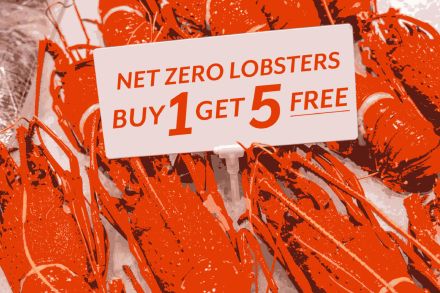
In a world of bewildering uncertainty and breakneck change, where a pack of butter now costs about the same as a small family saloon in the 1950s, there is at last some good news to cheer the soul. It concerns the lobster, that culinarily appealing crustacean which has sustained us nutritionally since the Stone Age – albeit in recent times mainly for the wealthier sort. Suddenly, the lobster has got the wind in its sails. It’s thanks in no small part to Britain’s rather quixotic, headlong dash to become, seemingly, the only net-zero country in the world, and the enormous wind turbines that have been springing up off our shores to help this take place. Because – would you believe it?

The Caviar Kaspia experience

It’s been almost 100 years since Arcady Fixon, a refugee from the Russian Revolution, opened the doors of Caviar Kaspia on Place de la Madeleine in Paris, and began beguiling his fellow exiles and the crème of Paris society with the exotic flavors of his homeland: shiny black caviar, served with blinis or potatoes, and ice-cold vodka. After being passed down through family hands, Caviar Kaspia is now owned by the charismatic entrepreneur Ramon Mac-Crohon, who has ensured that the place has lost nothing of its prerevolutionary charm: Nicolas II’s seal sits alongside antique porcelain in a display cabinet, and Nicolas Swertschkoff’s Troika, depicting a Russian horse-drawn sledge moving through snow, still hangs in the dining room.

A pint, a punch and a scotch egg

From our UK edition

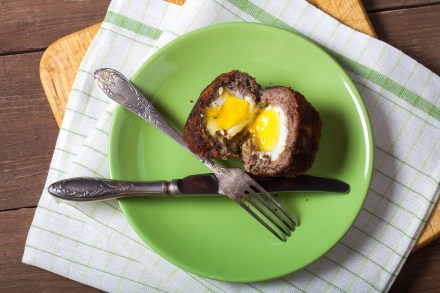
My local gastropub, which is very popular, serves a hot, freshly made and runny-yolked scotch egg. It's billed as a ‘Cackleberry Farm Scotch Egg with Maldonado Salt’ because part of hospitality is marketing. If you just chalk up ‘scotch egg’ on a board, it doesn’t entice the appetite in quite the same way. But call it ‘œuf écossais enrobés de chair à saucisse’ and serve it on a cracked slate tile – you’ve got yourself a stampede. A couple who live in the village visited the pub and ordered two of them. Shortly after being served, the husband of the couple returned the plates to the bar and asked the staff to reheat their partially eaten scotch eggs. The landlord explained that he could not reheat them once they had been partially eaten.

In defence of lard

From our UK edition

It’s somewhat risky to make the case for lard for a publication whose cookery columnist is the author of a book on butter. But so be it. Because lard has generally been at best overlooked and at worst openly maligned, and that is madness. The cost of cooking oils has rocketed in the past couple of years – sunflower oil has trebled in price, olive oil doubled. Butter is much dearer too. Yet inexplicably no one has suggested lard might step in to save the day. The cheapest pack of butter at Tesco will currently cost you £1.99. A block of lard is 50p. It has long been a slight object of ridicule. A ‘tub of lard’ is somehow crueller an insult than the Shakespearean ‘fat as butter’.

Spanish

Why did Spain leave behind such terrible food?

I can still remember it: probably the worst seafood dinner of my life. A slice of fish that was simultaneously cold, hot, dry, crumbly and rubbery, surrounded by overcooked vegetables and accompanied by a mysterious whiff of cigarette smoke. It was so repellent that even though I was famished, I summoned the waiter, returned the dish and retired to my room, there to endure a dinner of Pringles from the minibar. What made it worse was that I was in a celebrated fishing port. All I had to do was look out the window and I could see trawlers bringing in some of the world’s finest fish from some of the planet’s richest seas. It was dismaying, saddening, deflating and left me starving. What it was not, however, was surprising.

How to get a table at Audley Public House

From our UK edition

The Audley Public House is on the corner of North Audley Street and Mount Street in Mayfair, opposite the Purdey gun shop where you can buy a gun and a cashmere cape, because the world has changed. The Audley is a vast pale-pink Victorian castle, and it meets Mayfair in grandeur and prettiness. If the Audley looks like it could puncture you with an ornamental pinnacle, it also seems frosted with sugar – but that is money. This is the tourist Mayfair of the affluent American imagination: the pharmacies and grocers have gone, replaced by fashion (Balmain, Simone Rocha) and the spirit of Paddington Bear. Woody Allen shot Match Point in the Audley, and that is the most normal thing about it now.

Why are we going nuts for pistachio?

From our UK edition

You could be forgiven for thinking you’d walked into Oz: in the past couple of years, the whole world has gone green. Pale green, to be precise. Suddenly, pistachio is everywhere: it's in our pastries, our chocolate, our coffees, our puddings, and even showing up in perfumes, paint charts, scented candles and on our fashion runways. Where has this sudden lust for pistachio come from? In one way, pistachios are old news: they’re an ancient crop that has grown in the Middle East and been used as an ingredient in Middle Eastern and Mediterranean cookery for as long as can be remembered.

Can you still afford to eat out?

From our UK edition

Many of us will remember, misty-eyed, how things changed around the turn of the century. How Britain ceased to be a nation brutalised by rationing and rissoles and instead blossomed into a utopia of celebrity chefs, endless food TV and a population seemingly willing and able to eat out most nights of the week. We no longer regarded ourselves as poor cousins to European nations with ‘cuisines’ – hell, Michelin stars glittered from every orifice. We had the uncalibrated zealotry of converts. In the years following the pandemic, UK hospitality came blinking back into the light, adopted a collective fixed grin and the can-do attitude of small businesspeople, and did some amazing things while trying to get back to that prelapsarian state of glory.

Is a soul the only thing unavailable in Harrods?

From our UK edition

The Harrods bookshop, which I browse for masochistic reasons, is mesmerising: an homage to the lure of ownership. The first book I find is called, simply, 150 Houses. Is that enough? Then I find Luxury Trains, the Porsche Book, the Lamborghini Book and the Jaguar Book. Then I find a book designed for a lifelong self-guided tour of the world of James Bond, who is a fictional British civil servant. Then I find books called Dior, Balmain, Prada and Gucci. I didn’t know they did words. I want to tell you that the Harrods bookshop is entirely advertorial for the life I can’t afford, but that would be unfair. Because I also find a copy of Mansfield Park in the same colours as a Minion: custard yellow and bright blue.

I can’t stand Stanley Tucci

I love Italian food, and I love food writing and TV shows, so you might think I’d love Stanley Tucci. And yet I find him creepy and his recipes are rubbish. I can’t be the only one. The actor, who I first saw in the brilliant film Big Night, about a Jersey Shore Italian-American restaurant, is probably best known for The Devil Wears Prada, a film I adore. His character in that film did wind me up, but it took a while before Tucci himself got on my nerves. I suppose it began with him coming over all chef, like he’s the new Anthony Bourdain. I kept being told to watch his TV series where he travels around Italy, but the sight of his smug face on my screen turned out to be more than I could bear.

Stanley Tucci

In defence of British food

From our UK edition

Recently in Spectator Life Rob Crossan laid bare ‘the unpalatable truth about British food’ – namely that it is, er, in some establishments he’s been to, done badly. Leaving aside the fact he’s looking for his fish and chips in the wrong place (outside the M25 it wouldn’t be such a struggle), encountering a few dodgy versions of British fare is not a good reason to sit idly by and allow our culinary heritage to disappear. British food can compete with the world's best – if we allow it to. In many ways we have had to develop a thick skin when it comes to the loss of treasured bastions of food and drink.

The real reason you hate vegans

From our UK edition

Just when it seemed as though January in Britain couldn’t get any bleaker, along came ‘Veganuary’. Cue loads of puny, blue-haired wokerati spending this month preaching about how we should give up on two of man’s greatest pleasures – meat and cheese. If you’ve been finding it irritating, you’re not alone. In surveys of public opinion, vegans are hated more than any other group, with the exception of drug addicts. So when a chef tells the newspapers that he’s banned vegans from his restaurant, or a magazine editor jokes that they should be killed, do you feel justified in allowing a smirk of amusement to cross your face? After all, in an era when we are supposed to have obliterated all our prejudices, despising vegans still feels deliciously permissible.

Ship shape: Normandie, the biggest French restaurant of all

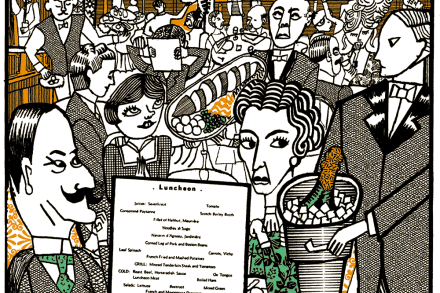
These pages recently carried a lament for the little French restaurant, and the loss from the cities they once graced of a certain element of gentility and, yes, class. On the same subject, let us consider another era when class was valued more highly, and which produced the classiest, and the grandest, French restaurant of all. This requires a journey. In July 1936, a Chicago family, relations of mine, embarked on an unrushed two-month European vacation. A meticulous Thos. Cook & Son-Wagons-Lits, Inc. itinerary routed them first to France, then Italy, Switzerland, Germany, Holland and finally to England. It was a thoroughly first-class affair.

French

Is ‘legacy’ an insult?

From our UK edition

‘Why can’t you have legacy tomatoes?’ asked my husband. ‘There are plenty of heritage tomatoes.’ He might well ask. Heritage tomatoes, usually called heirloom tomatoes in America, are cultivars valued for flavour lost in many modern hybrids. They include the Black Krim from the Crimea and the delicious Raf, grown in Almeria, its name an unromantic acronym from Resistente al Fusarium, since it is resistant to a fungus. Only since the 1970s has heritage been used as a label for things of historical, cultural or scenic interest. The fashionable term was applied in 1983 to the new quango English Heritage. Like heritage, a legacy was something we were glad to inherit. Prime ministers did not want to resign without leaving one.

The offal truth? Organs are delicious

From our UK edition

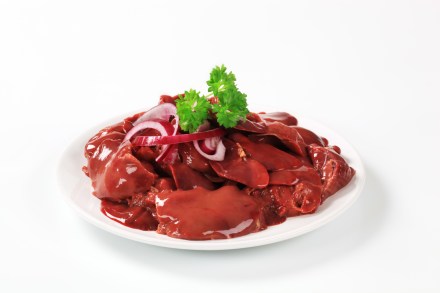
I’m sure my mum would forgive me for saying this, but cooking is not one of her many strengths. Raising three children, and with a husband who worked shifts in a steel mill, she was feeding people round the clock, so cooking became a necessity rather than a pleasure – as it will have been for the majority of working-class women in the 1960s and 70s. Since this was before convenience food really hit the shelves, things were cooked from scratch, and in winter, steak and kidney suet pudding was on the menu in our house most weeks. As were liver and onions, mince and potato pies and anything else cheap and cheerful, usually involving lots of animal fat and parts. The sweet, creamy texture, gamey and pungent, was a delight.

How to eat like a president

From our UK edition

John F. Kennedy opted to serve New England lobster, Ronald Reagan a California-inspired garden salad – and James Buchanan 400 gallons of oysters. Held at Statuary Hall in the US Capitol, the inaugural luncheon for a new president is as much part of inauguration day as the swearing-in ceremony and the inaugural address.  Nixon enjoyed pineapple slices topped with cottage cheese and washed down with a glass of milk First time around, in 2017, Donald Trump’s inaugural meal featured dishes including Maine lobster and Gulf shrimp. But for those not on the guest list to find out what he serves tomorrow (McDonald’s ice cream, perhaps?), there are plenty of other opportunities to eat like a president in Washington DC.

Partridges and the slow death of Chelsea

From our UK edition

Partridges, purveyor of ‘nice things for the larder’ to the well-heeled, will close the doors of its Chelsea shop for the last time next month. After 53 years of serving SW3 delights such as ox tongue, macadamia nuts and glace cherries, the shop, run by the Shepherd family and in possession of a royal warrant, will soon carve its last slice of wafer-thin mortadella. Its landlord, the Cadogan Estate, has thanked Partridges for helping to ‘make Chelsea so special’. What Cadogan Estates omits to say of course, is that a branch of Whole Foods, that artisan behemoth beloved of American bankers and vegan, coeliac Gen Z-ers, is soon to take its place down the road.

The victory of Instagram over food: Gallery at the Savoy reviewed

From our UK edition

The Savoy Hotel is a theatre playing Mean Girls with a hotel attached to it, so you can expect it to both dream and fail. That is a polite way of saying that its new restaurant, Gallery, is not a success, but the Savoy will survive it. Though it didn’t survive the Peasants’ Revolt. It burned down, courtesy of medieval far-leftists who I would suspect were less annoying than modern far--leftists. They could hardly be more so, and I’m sure Geoffrey Chaucer, who wrote some of the Canterbury Tales on this site, would agree.