Execution

The tragedy of Sir Walter Ralegh’s impossible quest

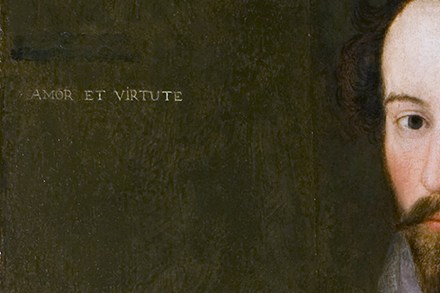
I remember little of my two years at boarding school, where I arrived aged eight, apart from the cloaks. Red, green, blue and yellow, for the houses of Ralegh, Nicholson, Gordon and Wellesley. They were called after generals, we were told, and of the four, Ralegh’s name is the best known. But why? I take a short survey of my colleagues. They all know the name but not why they know it. It is a curious fame to have, and perhaps David Gibbins’s book will do something to give it substance. Sir Walter Ralegh (Gibbins’s choice of spelling, as opposed to Raleigh, Rawleigh, Ralley and other versions in the elastic Elizabethan way with names) was more than a military commander.
Thomas More’s courage is an inspiration for all time

Three years ago, when memories of the final series of HBO’s Game of Thrones were still fresh, Joanne Paul published The House of Dudley, a gripping account of three generations of the Dudley family, whose efforts to seize the crown from the Tudors, as I noted in these pages, made the machinations of the Lannisters and the Starks look tame. Now, hard on the heels of the final instalment of the BBC’s adaptation of Hilary Mantel’s Wolf Hall trilogy – and with a revival of Robert Bolt’s A Man for All Seasons opening in the West End in August – Paul has published another book equally attuned to the zeitgeist.

At last we see Henry VIII’s wives as individuals

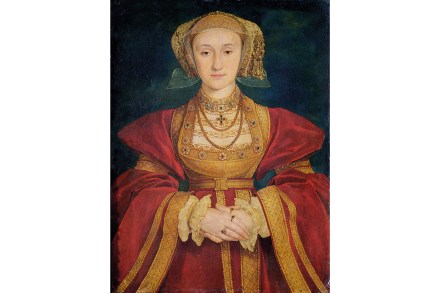
Divorced. Beheaded. Died. Divorced. Beheaded. Survived. Nearly 500 years after the death of Henry VIII, can there be anything new to say about his queens: Katherine of Aragon, Anne Boleyn, Jane Seymour, Anne of Cleves, Katherine Howard and Katherine Parr? Does the world need another book about this sextet? The answer to both questions, as this elegantly written and sumptuously illustrated volume makes clear, is a resounding yes. Published to coincide with the National Portrait Gallery’s exhibition of the same name (20 June-8 September), Six Lives is a collection of concise, accessible essays written by experts with specialist knowledge of Tudor painting, music, jewellery, manuscript illumination and book binding, among other topics.

Sir Roger Casement never deserved to hang

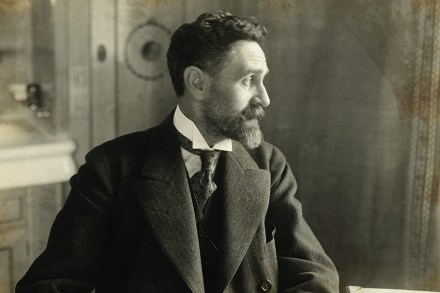
Telling the story of Sir Roger Casement’s life is a challenge for any biographer. In the land of his birth, he is remembered as a national hero. His remains lie in the Glasnevin Cemetery in Dublin beside the graves of Daniel O’Connell and Charles Stewart Parnell. He is there because he was hanged in Pentonville Prison in August 1916 as one of the leaders of the Easter Rising. The awkward fact that Casement had become opposed to the Rising and had tried to prevent it does not fit either the heroic Irish narrative of his life or the official English account of the wartime traitor who died on the gallows.

Victims of a cruel prejudice: the last two men to be executed for sodomy in England

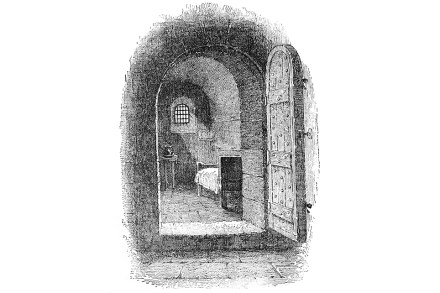
Seventy-three prisoners were condemned to death at the Old Bailey in 1835 at a time when there were more than 200 capital offences on the statute book. Nevertheless, all had their sentences commuted apart from two: James Pratt and John Smith, who were convicted of ‘the detestable and abominable crime’ of sodomy. The indictment stated that the accused had been ‘seduced by the instigation of the devil’ ‘The love that dare not speak its name’ may forever be associated with Alfred Douglas and Oscar Wilde, but the same reticence was clearly evident in the first half of the century.

The men of blood get their comeuppance in Revolutionary France

Colin Jones’s hour-by-hour reconstruction of the fall of Maximilien Robespierre, the French revolutionary most associated with the Terror, is inspired by Louis-Sébastien Mercier, who believed that only by getting ‘up close’ to the ‘infinitely small’ details would it be possible to understand the truth about a Revolution that was stranger than fiction. Mercier (1740-1815) was an early science fiction novelist, a journalist, politician and Parisian. He was not an eyewitness to the fall of Robespierre because he was in prison in 1794, one of 73 moderate members of the governing Convention who had been arrested and held as ‘Robespierre’s hostages’.