Europe

More bad economic news for the government

Presently, the waves of bad news are as relentless as biblical plagues. The latest trade figures show that Britain’s trade gap opened in December; the seasonally adjusted deficit stood at £9.2bn, a rise from £8.5bn in November. There are plenty of explanations as to why the export-led recovery failed to jump customs, despite the comparatively weak pound. The various acts of God couldn’t have helped and the continuing financial crisis on the continent will have further eroded demand.   However, the government will realise that these figures indict its growth strategy. As the ONS graph below indicates, the trade deficit is a persistent problem and one feared by the British Chambers of Commerce.

Parliament is expected to deny prisoners the right to vote

These are hard times for the government and there is no respite. Today, parliament will debate a prisoner’s right to vote, in accordance with the wishes of the resented European Court of Human Rights. The Guardian’s Patrick Wintour writes what many suspect: on the back of a free vote, the House will deny prisoners the right to vote in all cases and outlaw compensation claims. Such a result would seem a set-back for the government, which was thought to favour a limited franchise on prisoner voting. If it became law, then the government would apparently be at odds with the ECHR - precipitating an ignominious procession of grasping lags, searching for compensation at Strasbourg.

Irish to block EU integration

In continental lore, it is Britain that is often seen as the greatest impediment to EU integration. The government's EU Bill initially caused horror in the rest of Europe. Would Britain have to vote for each treaty change, even those needed to enlarge the Union? Before the text of the bill became clear, every self-respecting eurocrat spat the name 'Britain' over their lait russe. Even now, they are not best pleased. But in future it may not be Britain, but Ireland that will block any further EU integration. For Ireland is turning a lot more eurosceptic. The role of the euro in Ireland's decline remains a subject of debate. In eurosceptic circles, there is wilful ignorance of the role played by Ireland's politicians. Much better, it seems, to blame the euro alone.

Bringing rights back home

Thursday’s debate on the backbench motion on prisoner voting tabled by Jack Straw and David Davis is set to be a real parliamentary event – a rare occasion where the will of the elected legislature might just make a big difference.  The real news will not be how many endorse the ban, but which MPs – aside from those abstaining Government Ministers and Denis MacShane – choose to bow to Strasbourg.   MPs preparing to speak out against Strasbourg are now armed with a powerful academic case.  A new Policy Exchange report authored by the political scientist Michael Pinto-Duschinsky – Bringing Rights Back Home – outlines how the UK can address the growing problem of conflicts between judges and politicians in human rights cases.

General Hague, attack

William Hague must be feeling that the incoming rounds are coming closer and closer. The Spectator, The Daily Telegraph and now The Times (£) have each allowed their pages to be used as Forward Operating Bases from which to launch attacks against the coalition's foreign policy. Even in the coalition's own ranks, dissatisfied foot-soldiers (and a even a few senior officers) think that General Hague has lost his appetite for the fight. Tories talk about a man whose defeat in 2001left a permanent wound, and how the Christopher Myers fiasco left another gash. The government's equivocal response to events in Egypt has provoked fresh criticism, while the army of eurosceptics, once Hague's Praetorian Guard, no longer trust their commander.

Come on Europe; support the freedom you claim to love

The Middle East is being rocked to its authoritarian core, as pro-democracy protesters defy Hosni Mubarak’s regime for the eighth day in a row. They want an end to his 31-year-rule and, to judge by their continued defiance, are unlikely to accept anything else than his departure. The events, however, have placed European governments in a quandary. Should they back the protests? Support what has been a friendly regime? Or sit uncomfortably on the fence, talking about the need to show restraint and start reforms but standing back from actually supporting regime change, in case the transition becomes violent or the outcome problematic? So far, it looks like the EU prefers sitting on the proverbial fence.

A Wind of Change down Arab Street?

I wish I could be more enthusiastic about the events in Egypt and Tunisia – but, as I say in my News of the World column (£) today, the citizens of the Arab world all too often have a choice between a Bad Guy and a Worse Guy. Egypt looks like its choice is between the status quo, the Muslim Brotherhood or a military coup. This is not a 1989-style revolution, there is no Arabic equivalent of Scorpions singing Wind of Change. Successful revolutions normally have a well-organised alternative government, with a clear route towards democracy. Where is the Egyptian Lech Walesa, or the Tunisian Vaclav Havel?

Cameron’s gloomy brand of optimism

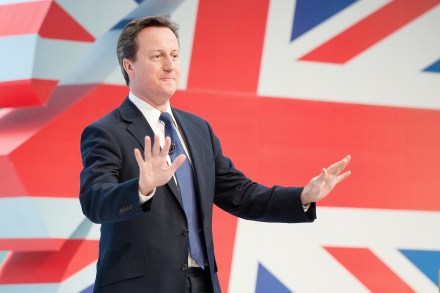
A weird, sprawling kind of speech from David Cameron in Davos this morning. It started off on an unusually, if expectedly, gloomy note: all talk of Europe's debt-induced decline in the face of competition from India, China and Brazil. And he emphasised, of course, that Britain would, and should, stick to its current trajectory of "tough" deficit reduction. But it's where it went from there that was more striking still. Cameron contrasted his position with that of "the pessimists". These people, he claimed, have a charter which includes propositions such as, "we in Europe are incapable of solving our debt and deficit problems," and, "we're attached to liberal values that are leaving us far behind the juggernaut of authoritarian capitalism".

Thank you, Nacia Anastazja Brodziak

Today is Holocaust Day. A day to remember the horrors of the past. But it should also be an occasion to recall the moments of hope and the people - and peoples -  that personified that life-saving hope. Like Nacia Anastazja Brodziak who took in my fleeing grandparents, hid them from the Nazis in her tiny Warsaw flat and for five years pretended they were her Catholic cousins from the countryside. I went to see her more than a decade ago. I wanted to thank her. It is actually hard to thank someone without whom neither I nor my father would have been born. Today is a way to do so again - in one's prayers, or thoughts. It is also a day to thank peoples. The selflessness that individuals showed during World War II was also shown by a few nations.

The government must continue to liberalise Europe’s market

For a long time, the terms of Britain's Europe debate has been about the merits - or otherwise - of membership. This has occluded discussion about the need to promote a deregulated and economically liberal single market, for which the Conservatives have fought so successfully since Britain joined the then EEC in 1973.   Now Lord Brittan has shown the way. In a speech to Business for New Europe, he takes aim at the many illiberal practices that hamper economic development across Europe and hurt British business: “Portugal still has rules governing the minimum distance requirements between driving schools; and in Greece, directors of dancing schools need to live within a set distance of the school!

The Irish government folds

Yesterday, Brian Cowen resigned; today his government has imploded. The Green Party, which was bolstering Cowen’s ruling coalition (if such a phrase is applicable in this instance), have left the government. The Fianna Fail-led coalition is now two votes short of a majority, and therefore the finance bill may not pass in its current form. If that is so, Ireland may return to the precipice on which it found itself a couple of months ago, and its principal creditors and trading partners with it. But there is more to this than balance sheets. In his statement, the leader of the Greens said that the people had lost confidence in the political process. It’s hard to demur.

Hague hasn’t lost his mojo

There has been no shortage of depressing news for the Tories lately. But, the other day, Benedict Brogan wrote a lengthy post about William Hague that must have made particularly unpleasant in-flight reading for the Foreign Secretary as he jetted around the South Pacific. It argued that: "In his absence – and even when he is back in Britain – Mr Hague is the subject of a whispering campaign among his colleagues, who say that the spark of ambition has died in his heart, and with it his effectiveness as the front man for the nation’s diplomatic effort. The Foreign Office has got its mojo back, just when Mr Hague has lost his.

Act 3 in the prisoner voting farce

An ingenious man, John Hirst. First he achieved the considerable feat of committing manslaughter with an axe; and he has since proceeded to cause governments no end of trouble. The prisoner voting saga is nearing its end and a fug of ignominy is descending on the government. The BBC reports that the coalition is to dilute its policy of enfranchising prisoners serving less than four years. Now ministers will be seeking to enfranchise only those serving a year or less. This u-turn is the result of the alliance between Jack Straw and David Davis and the slew of assorted backbench dissent. Tim Montgomerie argues that this is yet another example of Downing Street’s inability to communicate with the parliamentary Tory party.

Remember this?

“We will want to prevent EU judges gaining steadily greater control over our criminal justice system by negotiating an arrangement which would protect it. That will mean limiting the European Court of Justice’s jurisdiction over criminal law…” That was David Cameron a year ago when he presented the Tories’ EU policy ahead of the General Election. As we all know, much has changed since then. The pledge to ‘repatriate’ powers has been dropped, a victim of the Coalition deal. But despite this, MPs now have a huge opportunity to make good on pledges to regain control over EU justice laws, and even to repatriate powers should they want to – without having to change a single comma in the EU Treaties. How?

Davis and Straw unite against prisoner voting rights

David Davis and Jack Straw have joined forces to resist the enforcement of prisoner voting rights, an emotive issue bequeathed to the hapless coalition by the previous government. Beside the obvious moral question concerning prisoners’ rights, Davis hopes to open a second front in the struggle over sovereignty with the European Union. He told Politics Home: ‘There are two main issues here. First is whether or not it is moral or even decent to give the vote to rapists, violent offenders or sex offenders. The second is whether it is proper for the European court to overrule a Parliament.’ Unless Davis has confused his articles, his second point is invalid. This decision has nothing to do with the European Court or the European Union.

The China arms embargo should be discussed – though not lifted

Today's Times splashed on the spat between Britain and EU foreign policy "czar" Catherine Ashton over the embargo barring arms sales to China. The embargo was put in place after the Tianamen Square massacre and has remained in place, largely at US insistence, ever since. But is it the right policy? The policy has not prevented China from becoming a military power — its annual defense budget officially stands at $70 billion, although the Pentagon believes the real figure to be twice as high. China is developing carrier-killing missiles that even NATO does not have, and will soon sell weapons rather than seek to import them. There is, of course, a moral argument: the sanctions were put in place because of China's human rights violations.

Party management issues

The trouble over the European Referendum Bill rather sums up the current state of the relationship between the Conservative party leadership and its more truculent backbenchers. The Bill was meant to be something to cheer up the troops. But it has ended up going down so badly that the whips have been left tearing their hair out and wishing that the government had never introduced it. Some of the policy differences between the leadership and the backbenches will never be resolved, particularly in coalition. But, as so often, a lot of the difficulties with this bill have been caused by poor communication and an inability to take proper soundings. The more one talks to Tory MPs, the more one is struck by how they feel that there is no proper feedback mechanism.

The new faces of Tory euroscepticism

Britain is avowedly eurosceptic. But euroscepticism is not homogeneous; there are different tones of disgust. Many decry further political integration; others oppose Europe’s penchant for protectionism; some are wary of the EU’s apparent collective socialism; a few are essentially pro-European but believe too much sovereignty has been ceded; others hope to redefine Britain’s cultural and political relationship with the Continent, as a bridge between the Old World and the Anglosphere; most see Brussels as an affront to elective democracy; and a handful just want out and vote UKIP. So it has always been – perhaps one reason why William Hague’s ‘ticking time-bomb’ has not yet exploded.

Opposing the EU Bill

The EU Bill is back in parliament today, amid speculation that Cameron has a Europe-fuelled rebellion on his hands. Despite the talk, the chances are that the Bill will go through Parliament wholly unscathed in its first test.   Today’s debate is about the so-called ‘sovereignty clause’ – or Clause 18 – within the EU Bill. Of the Bill’s 17 pages, the clause only takes up four lines, but has still managed to cause the most fuss (the vast majority of the text relates to the EU ‘referendum lock’).

The broken Lib Dem pledge that didn’t provoke riots

Coalition politics sure does throw up some peculiar situations. Take today's vote on the EU Bill. As part of the horse-trading that's going on around it, Tory Eurosceptics have put forward a series of amendments to mould the Bill more to their liking. Of these, the most striking is Peter Bone's suggestion that Parliament should legislate for a referendum, not on this minor constitutional change or that, but on whether we should leave the EU altogether. So far, so unsurprising. But the curious part of all this is that the Lib Dems once offered an in-out referendum on Europe themselves. If you remember back to the row over Lisbon, Clegg's get-out clause was what he called "a referendum on Europe with substance".