Matthew Elliott

The UK needs a referendum on the EU, or we won’t get a better deal

From our UK edition

In this morning’s Independent, a collection of Establishment names have broken cover and lobbied David Cameron to abandon his pledge to hold an EU referendum by the end of 2017. In a letter, whose signatories include former Tory Ministers, the CBI and Peter Mandelson, they bizarrely claim that the lesson from the Scottish referendum is that people should not be given a vote on the EU, for fear of creating ‘uncertainty’. The motivation of many of the signatories’ opposition to a referendum should not come as a surprise. Many are either former employees of the European Union or have in the past urged the UK to join the Euro – a currency that has doomed many of Europe’s economies to stagnation and crippling youth unemployment.

Boris Johnson lays down the gauntlet to David Cameron

From our UK edition

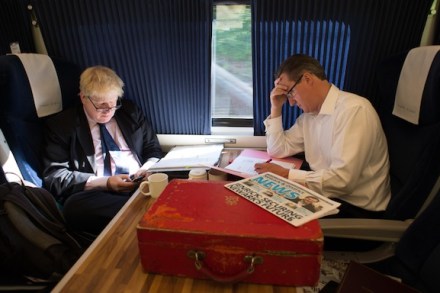
Much has been made of the news that Boris Johnson intends to return to parliament at next year’s general election. The announcement, made in the Q&A session after his speech about London, Britain and the European Union, has got Westminster all hot and bothered. But another of Boris’s answers in that session also deserves to be highlighted. Gerard Lyons’s report for the mayor sets out 8 key points of European reform, ranging from changing the relationship between the Eurozone and non-eurozone countries, to the completion of the single market, to halting unnecessary regulations. But Boris went much further than this when responding to a question from Peter Wilding, director of the in-at-all-costs campaign British Influence.

The reshuffle responded to the lessons of the European elections

From our UK edition

The talk before the reshuffle was all about the march of women into the cabinet, but the other story from yesterday's developments is the positioning of Eurosceptic voices in the Cabinet. Rather than focusing on the demographic composition of the Cabinet, it’s worth considering the beliefs of those in key positions. In the run up to the election next year, and maybe a 2017 In/Out referendum, those who believe that fundamental reform of the EU is necessary and aren’t afraid to consider the alternative if it fails, will occupy key seats at the top table. No wonder Michael Fallon said ‘it’s certainly a Eurosceptic cabinet’ on the Today programme this morning.

The British option – a business proposal for EU renegotiation

From our UK edition

Announcing the Balance of Competences review in July 2012, in which the Government launched a consultation of Britain’s membership of the EU, William Hague told MPs that 'we must take the opportunities for Britain to shape its relationship with Europe in ways that advance our national interest in free trade, open markets and co-operation…that should involve less cost, less bureaucracy and less meddling in the issues that belong to nation states.' Today, Business for Britain has published the first of several position papers that we are proposing as a means of re-balancing our relationship with Brussels under the Foreign Secretary’s terms.

Make sure you vote NO today

From our UK edition

Today I urge everyone who believes in our democracy to vote ‘no’ to the unfair and expensive Alternative Vote (AV) system.   The recent polls have been encouraging but you must remember that there is no turnout threshold today – any complacency and the UK could sleepwalk into a heavily flawed voting system that we would struggle to get rid of.   Instead of voting being clear, simple and effective like our current system, the Alternative Vote’s complex counting process breaks the principle of ‘One Person, One Vote’ which is the foundation of our democracy.

Why AV will cost £250 million

From our UK edition

Today the NO to AV campaign has published research showing that the change to AV will cost the UK an additional £250 million, and – judging by the Yes campaign’s panicky reaction – this charge has hit home. Our estimate represents the additional cost of AV. The government stated the referendum would cost over £90 million – less, admittedly, than if it were not combined with council elections – and the remainder comes from vote counting machines (£130 million) and voter awareness (£26 million). This is, if anything, a conservative estimate. For voter education, we have only set aside 42 pence per person, and we haven’t included the costs of additional polling stations, election staff or training.

Lessons from the midterms for the AV referendum

From our UK edition

Amid all the excitement of the US midterms, a small, local ballot took place which has important lessons for the UK’s referendum on the Alternative Vote – due to take place six months on Friday. Like us, America uses the straightforward first-past-the-post voting system for its thousands of elected offices – from local school boards and sheriffs to races for governors’ mansions and the White House itself. Their well-established primary system also gives voters a direct say in who the candidates should be – taking power away from the parties and making politicians more responsive to the demands of their local electorate.

Budget 2009: Cutting back the bureaucracy

From our UK edition

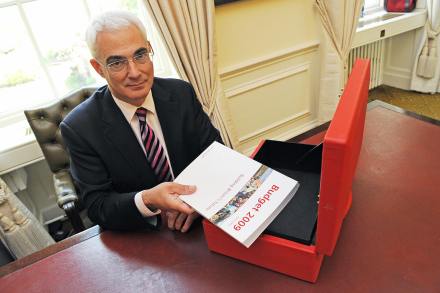
There is going to be some extremely bad news in the Budget.  Public sector borrowing is rocketing out of control, and is now expected to hit around £190 billion in 2010/11, and threatens to bury any recovery and create a double dip recession.  With their new 45p income tax rate, the Government have sadly already started to put in place symbolic measures that will do little for the public finances but will undermine Britain’s long term competitiveness.  Those measures will have to be backed up by big tax rises if the Government don’t put in place significant cuts in public spending.