Eu

Investors and savers are nervous about a Brexit vote

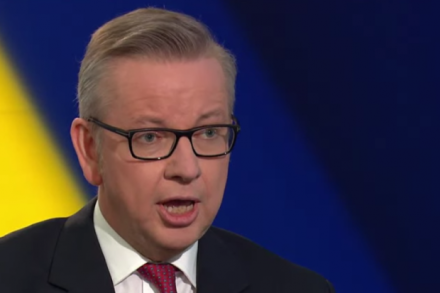
Is anyone else bored to tears of the mud-slinging and vitriol which has come to characterise the Remain and Leave campaigns? With more than three weeks to go until the European Union referendum vote, the Brexit argy-bargy is increasing in volume on a daily basis. Today’s shrill story comes from leading figures in the Vote Leave camp. Writing in The Sun, Tories Michael Gove and Boris Johnson and Labour’s Gisela Stuart (dubbed ‘The Three Brexiters’ by the red-top – there’s a fetching photoshop job if you want to check it out) say they want to be able to scrap VAT on fuel to help the poorest households. Immediately, Chancellor George Osborne hit back

The Guardian fails to practise what it preaches in the EU debate

Oh dear. Over the weekend, the Guardian ran an editorial on the EU referendum entitled ‘this campaign must show more respect for both facts and voters’. In the article — published on Saturday — the paper criticised the Vote Leave campaign for ‘recklessness’. They called on the Brexit camp to put an end to ‘deceptions’ such as the claim that we send the EU £350m a week: ‘It is now more than a fortnight since Boris Johnson and Nigel Farage began chugging around Britain in search of photo opportunities in their Vote Leave campaign battle bus. From day one in Truro, the bright red double-decker, which was built in Poland by a German company, has been

Boris ignores some basic points when he argues Brexit would cut fuel prices

Would Brexit mean cheaper fuel bills for Brits? That’s the claim made by Boris Johnson and Michael Gove today, who say that leaving the EU would let ministers get rid of VAT on gas and electricity. With all the bunkum being banded around over the referendum, it’s fair to say that the Brexit campaign do partly have a point on this. Under EU law, the UK is not allowed to charge less than five per cent VAT on fuel and power supplies. Boris argues as much in The Sun today: ‘Fuel bills will be lower for everyone,’ he says. So it seems that leaving the EU would hand back an

Post-Brexit Britain could cut net migration by 100,000 a year. Here’s how

The absence of an outline of a post-exit immigration regime is a serious gap in the Referendum debate. That need not be so. There is a fairly clear way ahead: to minimise disruption, while achieving control of numbers. The key element that needs to be controlled is migration for work (which accounts for the bulk of net EU migration). This could be sharply reduced if EU immigrants were subject to the same requirement for work permits as now currently apply to non-EU workers: the aim would be to reduce the overall scale of immigration without losing the economic benefit of highly skilled immigration. By doing this, net migration – 330,000

Angela Merkel and David Cameron fail to work out who’s in the driving seat

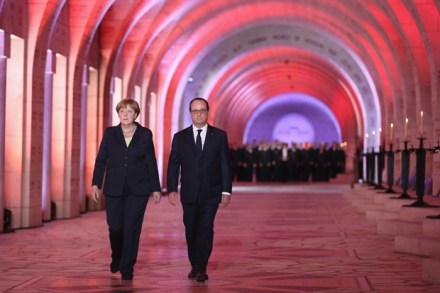
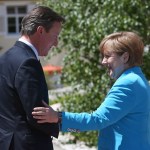
At times in David Cameron’s EU renegotiations, it’s seemed as though the Prime Minister struggled to be in the driver’s seat. Now evidence has come to light that confirms Cameron’s power struggle with one of Europe’s main leaders. Speaking at the Hay Festival, Neil MacGregor — the former director of the British Museum — let slip the difficulties he encountered when Angela Merkel and Cameron arranged a visit to see an exhibition he on German history from the past 600 years. Of all the objects in the exhibition, MacGregor thought the VW Beetle would make a great prop for a photo opp for the two leaders. Alas, it wasn’t to

What China’s pragmatism teaches us about the Brexit debate

Dr Johnson said that if anyone truly wanted to understand themselves, they should listen to what their enemies say about them. And whilst China is not an enemy of the EU, it is certainly highly critical of it. Why then did China’s President Xi Jinping wade into the Brexit debate and call on Britain to stay put? What would possibly make him support something that criticises his country on human rights, trade issues and market access? One reason is simply because, for all their differences with western democracies, Chinese leaders and policy makers are very pragmatic. They view Europe predominantly as an economic actor, not a security one. And as

Mervyn King hits out at ‘wildly exaggerated claims’ in referendum ‘debate’ – ‘the government has to take some responsibility’

Although Mark Carney has warned that a Brexit is the ‘biggest domestic risk to financial stability’, his predecessor Mervyn King takes a somewhat different approach when it comes to the impending EU referendum. The former Bank of England governor used an appearance today at the Hay Festival to hit out at the ‘wildly exagerated claims’ made in the run-up to the vote. ‘I wondered who would be the first to lower the tone,’ King joshed when asked whether he thought Britain should stay or go. While he declined to give his voting preference — on the grounds that it could make life difficult for Carney — King did let his disappointment

The week in EU deceptions

This has been another fine week for EU deceits, lies and misrepresentations. The chutzpah of the week award must go to Nicky Morgan who earlier this week ‘slammed’ Boris Johnson. Last month the former Mayor of London had urged gay people to vote to Leave the EU and specifically not to believe the lie that gay rights only exist in Britain because of the EU. As Boris pointed out, such rights come from ‘our courts and Parliament’ and not from Europe. Although this is a sectional argument, Boris was responding to an argument that can be heard across wider society. That argument claims that if Britain left the EU all

How Vote Leave plan to persuade the electorate that there are real risks to staying in the EU

The IN campaign’s plan for victory in this EU referendum is relatively simple.  ‘Do you want the status quo or the riskt alternative?’, is how one Cameron ally sums it up. To date, Remain—aided by the various government dossiers—have been pretty effective at pushing this message. That is why they are ahead in the polls. So, Vote Leave know that they need to push the risks of staying in, up the agenda. I write in The Sun this morning that their message in the coming weeks will be that ‘wages will be lower and taxes will be higher if stay in the EU’. Their argument will be that the continuing

The Spectator podcast: Brexit, and the return of political lying | 28 May 2016

To subscribe to The Spectator’s weekly podcast, for free, visit the iTunes store or click here for our RSS feed. Alternatively, you can follow us on SoundCloud. Are David Cameron and George Osborne using the same techniques of deceit deployed by New Labour in the run-up to the Iraq war? In his cover piece this week, Peter Oborne argues that’s just what is happening. He says that in their EU campaign, the Chancellor and Prime Minister have put dirty tricks back at the heart of government. But Matthew Parris in his column says that in politics there’s no point complaining about being lied to. That’s the cry of the bad

Vote Leave’s £50 million question

If you ask most people if they wanted to win £50 million, the answer would be: where do I sign up? That’s why Vote Leave has launched a competition this morning (here’ the link to enter) offering £50 million to anyone who can correctly predict the result of every game in this summer’s European football championship, if no-one scoops the whole prize,£50,000 will go the person who came closest. Why is the prize £50 million? Because that’s what Vote Leave say the UK sends to the European Union each day. Vote Leave hope that this competition will get one of its key messages, the cost of EU membership, out to

Purdah could give the Brexit campaign the boost it so badly needs

If you’ve become fed-up with half-baked Treasury statistics, the start of the purdah period is welcome news. The ban on Government and Civil Service resources being used to put forward the case for ‘remain’, means there will be no more of those. But with ‘remain’ having pushed ahead in the polls over the last few weeks, will this now help level the playing field? Based on how the Government has tried to press home the advantage of using its huge resources right up until the last moment, it seems that there are certainly jitters about that happening. Its rather cheeky report put out yesterday evening which suggested that Brexit would

The Spectator poll: Are You In or Out? Bob Geldof, Tim Rice & Joey Essex have their say

The Spectator’s EU Poll asked a fairly random group of well-known people how they’d vote in the EU referendum, and this is what they said: Sir Tim Rice, lyricist: ‘In 1975 I voted to stay in the Common Market from a standpoint of ignorance. In 2016 I shall vote to leave the EU, as a rebel without a clue. This is a gut reaction which I trust far more than the barrage of misinformation churned out by both sides of the campaign but overwhelmingly by the Remain camp. At least this time round I know I don’t know anything which is more than can be said for most of the

Plutarch and the EU

Boris Johnson argues that the current European Union is yet another failed attempt to replicate the golden age of a Europe united under the Romans. But how golden was it? The Greek biographer Plutarch (c. AD 100) thought it brought ‘peace, freedom, prosperity, population growth and concord’ but agreed that there was a price to be paid. In his essay on statecraft, he advised the Greek politician ‘not to have too much pride or confidence in your crown, since you can see the boots of Roman soldiers just above your head. So you should imitate an actor, who puts his own emotion, personality and reputation into a play but obeys the

Immigration dominates first BBC EU debate

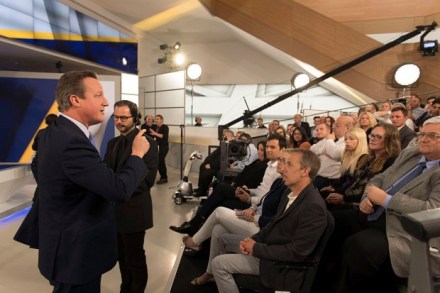
The Lincoln-Douglas debate it was not, but we have just had the first prime time TV debate of this EU referendum. With Alex Salmond and Alan Johnson for In and Liam Fox and the UKIP MEP Diane James for Out speaking to an audience of 18 to 29 year olds in Glasgow. Many in the audience wanted to complain about the tit for tat tactics of the two sides in this referendum campaign or to condemn the scaremongering by both sides; interestingly, they seemed very sceptical of the Treasury’s forecasts of economic pain if the UK left the EU. One audience member, though, seemed to object to the idea that

The Spectator podcast: Brexit, and the return of political lying

To subscribe to The Spectator’s weekly podcast, for free, visit the iTunes store or click here for our RSS feed. Alternatively, you can follow us on SoundCloud. Are David Cameron and George Osborne using the same techniques of deceit deployed by New Labour in the run-up to the Iraq war? In his cover piece this week, Peter Oborne argues that’s just what is happening. He says that in their EU campaign, the Chancellor and Prime Minister have put dirty tricks back at the heart of government. But Matthew Parris in his column says that in politics there’s no point complaining about being lied to. That’s the cry of the bad

Brexit, and the return of political lying

Sir John Chilcot’s report into the Iraq invasion, due to be published on 6 July, is expected to highlight the novel structure of government created by New Labour following its landslide victory of 1997. As Tony Blair started to make the case for war, he began to distort the shape and nature of British government in several ways — the most notable being the deliberate debasement of the traditional idea of a neutral, disinterested civil service. Under Blair, civil servants were told to concern themselves less with the substance than the presentation of policy. They were informed that their loyalty lay more with the government of the day, less with the

The power trap

Soon after the date for the EU referendum was set, Timothy Garton Ash published a piece in this magazine under the title ‘A conservative case for staying in’. He was followed by Ian Buruma, attacking the idea that, having left the EU, the British would be more free. And then, after the Obama visit to London, there was Anne Applebaum, assuring us that the US had ‘excellent reasons’ for being opposed to Brexit. Like the little boy at the back of the street brawl in the old Punch cartoon, I want to ask: ‘Is this a private fight, or can any former foreign editor of The Spectator join in?’ Tim

If I were in charge of Leave, here’s what I’d say…

It may be too late. But with only about three weeks before our referendum on EU membership I am itching to take the leadership of the Leave campaign. I could do them a power of good. Two serious objections may be raised to my bid. First, I couldn’t chair a parish meeting, let alone a snakepit of warring Leave enthusiasts. Secondly, I certainly don’t think Britain should leave the European Union. Setting these disqualifications aside, however, as a former speechwriter and politician I see so clearly the strategic direction the Leave campaign should set if they are to stand an outside chance of winning — and a much greater chance