Kerry Brown

Porn Britannia, Xi’s absence & no more lonely hearts?

From our UK edition

47 min listen

OnlyFans is giving the Treasury what it wants – but should we be concerned? ‘OnlyFans,’ writes Louise Perry, ‘is the most profitable content subscription service in the world.’ Yet ‘the vast majority of its content creators make very little from it’. So why are around 4 per cent of young British women selling their wares on the site? ‘Imitating Bonnie Blue and Lily Phillips – currently locked in a competition to have sex with the most men in a day – isn’t pleasant.’ OnlyFans gives women ‘the sexual attention and money of hundreds and even thousands of men’. The result is ‘a cascade of depravity’ that Perry wouldn’t wish on her worst enemy.

Why do people join the CCP?

From our UK edition

36 min listen

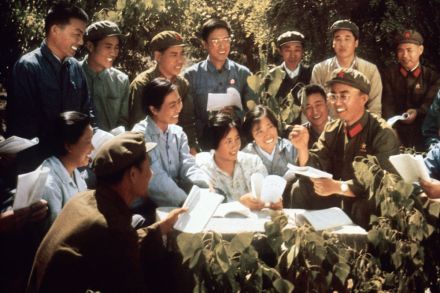
At last count, the Chinese Communist Party has 98 million members, more people than the population of Germany. Its membership also continues to grow, making it one of the most successful and resilient political parties of the last a hundred years, perhaps with the exception of India’s BJP, which boasts 180 million members. And yet the CCP's track record is strewn with bloody crackdowns and systematic persecution. So what would drive someone to join the CCP, and what accounts for its success? Do party members today all support the atrocities committed by their government? I think these are important questions to ask, because without understanding the answers to them, one couldn’t understand China’s modern history or its society today.

The new vandals

From our UK edition

31 min listen

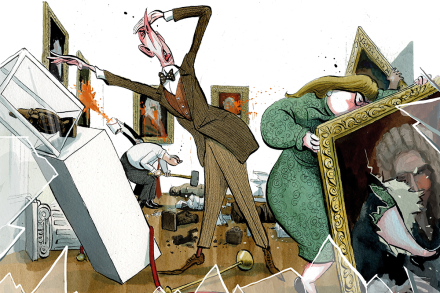
This week: In his cover piece Douglas Murray writes that museums are turning against their own collections. He is joined by the historian Robert Tombs to discuss whether a culture of self-flagellation is harming British museums (00:56). Also this week: For the magazine The Spectator’s assistant editor Cindy Yu writes that the tune is changing in China. She is joined by Professor Kerry Brown, director of the Lau China Institute at King’s College London to consider what the recent protests could mean for the Chinese Communist Party (13:24). And finally: Nicholas Lezard writes in The Spectator about how to beat London's expanding Ultra Low Emissions Zone. He is joined by journalist Tanya Gold to investigate an elegant loophole in the plans (24:56).

How the Cultural Revolution shaped China’s leaders today

From our UK edition

54 min listen

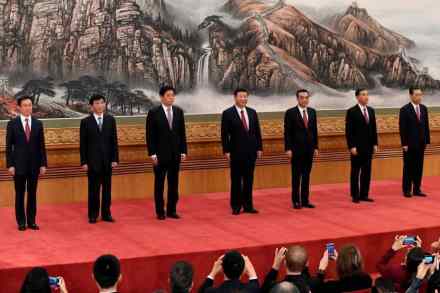
All eyes are on the Communist leadership this year, as the months count down to autumn’s National Party Congress, where Xi Jinping may be crowned for a third term. But how much do we really know about the Party’s leadership? In particular, can we better understand them through looking at the experiences that they've had?Take Xi Jinping, who is what is known as a 'princeling' – his father was the Communist revolutionary Xi Zhongxun, one of the Party's early cadres. Growing up, the younger Xi would have been steeped in Communist lore. Yet his father's downfall, at the hands of a paranoid Mao, as well as the Cultural Revolution must have humbled the young man. He spent seven years doing manual labour in the Chinese countryside as one of the 'sent-down youths'.

What China’s pragmatism teaches us about the Brexit debate

From our UK edition

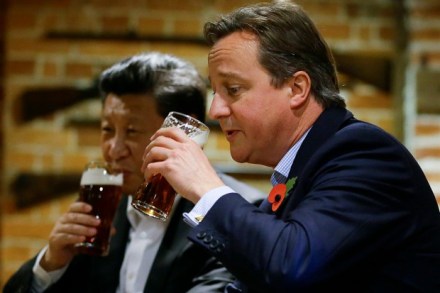
Dr Johnson said that if anyone truly wanted to understand themselves, they should listen to what their enemies say about them. And whilst China is not an enemy of the EU, it is certainly highly critical of it. Why then did China's President Xi Jinping wade into the Brexit debate and call on Britain to stay put? What would possibly make him support something that criticises his country on human rights, trade issues and market access? One reason is simply because, for all their differences with western democracies, Chinese leaders and policy makers are very pragmatic. They view Europe predominantly as an economic actor, not a security one. And as a single market with common rules, protocols and regulations, the EU matters to them.

The Taiwanese view on Ukraine

From our UK edition

35 min listen

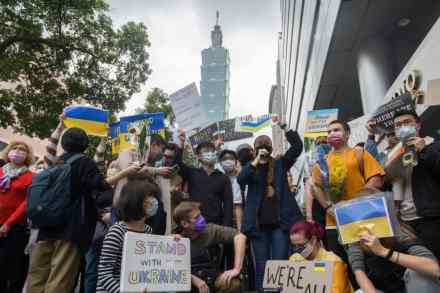
Taiwan is not Ukraine. But despite the very important differences in their situations, the Russian invasion can still shed much light on Taiwan's future. Even many Taiwanese think so – and have followed the developments closely, with solidarity marches held for Ukraine, protests at the Russian embassy and the Ukrainian flag lighting up Taiwanese buildings.On this episode of Chinese Whispers, my guests and I discuss the mainstream take on Ukraine (and also the not so mainstream – such as the view that America can't be relied upon, given it hasn't despatched troops to Ukraine). I'm joined by Brian Hioe, editor of New Bloom, an online magazine covering youth culture and politics in Taiwan, and Professor Kerry Brown from Kings College London, author of The Trouble with Taiwan.

Is anyone still communist in the Chinese Communist Party?

From our UK edition

41 min listen

'Scratch a communist, you’ll find a nationalist underneath’, Professor Kerry Brown, the director of the Lau China Institute at King's College London, tells me on this episode. Together with Professor Victor Shih of UC San Diego, we talk about what drives the Chinese Communist Party (hint: it's not communism), what membership means today and the policy disputes that happen behind the scenes. And: as it prepares to mark its first centenary this year, will it still be around in another fifty years?

Battle royal: Harry and Meghan’s brand of revenge

From our UK edition

36 min listen

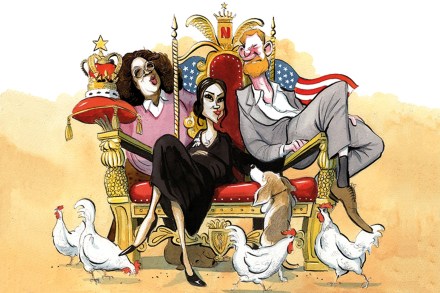
Is it fair to blame Meghan for the Royal Family's problems? (00:55) Why is China censoring a book of Dante's poetry? (12:40) Would you go to moon? (24:50)With The Spectator's US editor Freddy Gray; The Spectator's restaurant critic Tanya Gold; author Ian Thomson; Kerry Brown, professor of Chinese Studies at King's College London; The Spectator's commissioning editor Mary Wakefield; and Spectator columnist Matthew Parris.Presented by Cindy Yu.Produced by Max Jeffery, Natasha Feroze and Matthew Sawyer.

What does Beijing want with Hong Kong?

From our UK edition

27 min listen

The year-long Hong Kong protests seem to have come to an abrupt end - as China introduces a draconian national security law that punishes criticism of the Chinese government. On the podcast, Cindy Yu talks to academic and former diplomat Kerry Brown and Hong Kong journalist Jennifer Creery about what China wants with the city, and where this will end.

Hong Kong protesters are making things easy for China

From our UK edition

The world is watching Beijing as it watches Hong Kong. There are nervous expectations that troops will be deployed in the region, as they were in Tiananmen Square thirty years ago. Were this to happen, it would be seen as proof that an era of malign Chinese enforcement had begun. Xi Jinping and his colleagues know that if they take drastic action, a new narrative will take hold about China’s draconian instincts. So instead, the Chinese government is deliberately holding back. It helps to understand the philosophy behind this approach. In Daoist tradition, the term ‘wu wei’ translates as ‘inaction’ – the art of simply doing nothing.