Erdogan

Erdogan’s Islamist mobs know that their moment has finally arrived

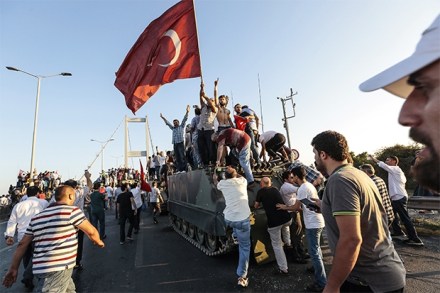
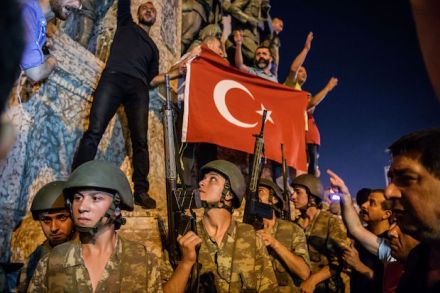
Late on Saturday night, just 24 hours after the attempted coup, hundreds of supporters of President Erdogan swarmed into Taksim Square – the pulsating heart of secular, modern Turkey – to celebrate their victory with shouts of Takbir - ‘Allahu Akbar’, meaning ‘God is Great’. Already the story – so hard to piece together – was being put in stone by the AKP mob. ‘We are here to tell the world that we won, and we are the real Turkey. This is a victory against those traitor Gulenists.’ Fethullah Gülen, an Islamic cleric based in Pennsylvania, was once a key ally of Erdogan but relations have been fraught for several years. Erdogan has accused Gulen of being behind the coup.
The story behind Boris Johnson’s ‘President Erdogan’ poem

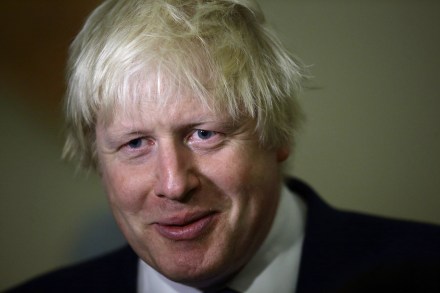
Boris Johnson is by no means short of a bob or two but when I challenged him to create a limerick for The Spectator’s President Erdogan Offensive Poetry Competition (prize £1,000) he was unable to resist. Naturally, during his interview with me and Urs Gehriger, for the Swiss weekly Die Weltwoche – which I call the Swiss Spectator – the subject of the migrant crisis - and the EU’s recent German-driven deal with Turkey to stop the migrant tide from the east - cropped up. And so too did the criminal prosecution in Germany of the comedian Jan Böhmermann, for a poem accusing President Recep Tayyip Erdogan of getting his rocks off with goats.

Portrait of the week | 12 May 2016

Home David Cameron, the Prime Minister, made a speech in the British Museum warning of war if Britain left the European Union: ‘And if things go wrong in Europe, let’s not pretend we can be immune from the consequences.’ George Osborne, the Chancellor of the Exchequer, said that if Britain left, house prices would go down. The government changed its policy, announced during the budget, of turning all schools into academies. The government changed its policy of denying admission from Europe of unaccompanied children originating in countries such as Afghanistan and Syria. Mr Cameron was heard on television to say to the Queen at Buckingham Palace: ‘We’ve got some leaders of some fantastically corrupt countries coming to Britain.

The Spectator podcast: Erdogan’s Europe

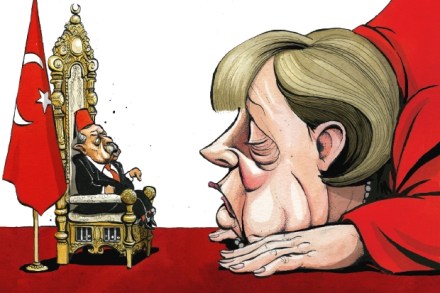
To subscribe to The Spectator’s weekly podcast, for free, visit the iTunes store or click here for our RSS feed. Alternatively, you can follow us on SoundCloud. Has Erdogan brought Europe to heel? In his Spectator cover piece, Douglas Murray argues that the Turkish President has used a mixture of intimidation, threats and blackmail to do just that and throw open the doors of Europe to Turkey. Douglas says Erdogan is a ‘wretched Islamist bully’ who has shown just how the EU works. But in pushing Europe around, is Erdogan now more powerful than Merkel, Juncker and Cameron? And how does the Turkish PM's resignation this week changed the country's relationship with the EU? Isabel Hardman speaks to Rem Korteweg, from the Centre for European Reform.

Letters | 5 May 2016

The EU gravy train Sir: Despite his splendid forename, your deputy editor Freddy Gray has a very tenuous grasp of human nature. Having accurately detected a simmering voter mutiny across much of Europe and the UK, he decrees that those heartily sick and tired of being constantly lied to and thus treated with contempt by the EU gravy-train-riding establishments must be either extreme right-wing or mad (‘A right mess’, 30 April). Actually, we are neither. Does he really believe it to be coincidental that 95 per cent of the UK establishment (there are still a few good ’uns in the mix) are screaming, desperate that their gravy train not be derailed by mere electors?

Turkey’s triumph

Update: Since this article was published Ahmet Davutoglu has resigned as Turkey’s Prime Minister. Reports suggest this comes as a result of a rift with President Erdogan caused by the increasingly ‘Presidential’ nature of Turkey’s politics. Is Turkey part of Europe? For most of our civilisation’s history, to have even asked such a question would have been to invite derision. The Ottomans were kept out of Europe not by some early-onset prejudice, but by the armies of Europe having to beat back their repeated invasions. The question became slightly more plausible a century ago with the rise of Ataturk and the modern Turkish state (one of the only successful efforts to reconcile the Islamic religion with state power).

What does Davutoglu’s resignation mean for Turkey and the EU?

Ahmet Davutoglu’s resignation comes at a sensitive moment for the EU’s migration deal with Turkey. Why did the prime minister fall from the sultan’s favour, and what does it mean? Over the past few weeks Davutoglu appeared increasingly worried about the hollowing out of his position. He had every right to be frustrated. In late April his grip on the AK party was weakened, as party bosses decided to stop him from appointing provincial party executives. Davutoglu has been, of course, head of government and head of the ruling AK party in name only. The real chief sits in a 1000-room presidential palace overlooking Ankara.

Introducing ‘The President Erdogan Offensive Poetry Competition’

Nobody should be surprised that Turkey’s President Recep Tayyip Erdogan has instituted effective blasphemy laws to defend himself from criticism in Turkey.  But many of us had assumed that these lèse-majesté laws would not yet be put in place inside Europe.  At least not until David Cameron succeeds in his long-held ambition to bring Turkey fully into the EU. Yet here we are.  Erdogan’s rule now already extends to Europe. At the end of last month, during a late-night comedy programme, a young German comedian called Jan Böhmermann included a poem that was rude about Erdogan.  Incidentally the point of Mr Böhmermann’s skit was to highlight the obscenity of Turkey already trying to censor satire in Germany.

Desperate straits

 Istanbul Shops in a rundown neighbourhood sell fake life jackets to refugees planning to brave the Aegean Sea. Last year, nearly 4,000 refugees died trying to make this journey. ‘But what am I to do?’ says Erkan, a shopkeeper, as he pushes me out of his shop. ‘I tell them they are fake but the poor souls continue to buy them. The genuine ones don’t sell so well.’ We’re in the suburb of Aksaray, the makeshift centre of the smuggling trade in the city. Here the language is Arabic and the restaurants are Syrian. A town square serves as a hub for migration brokers. This is where dreams are sold. Each night, hordes of Syrians fill the area, their lives on their backs, preparing for the dangerous journey ahead.

Cameron’s support for Turkey’s EU membership should worry us all

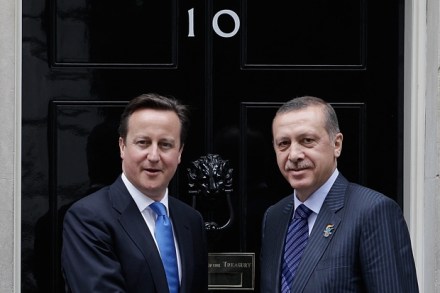
David Cameron this morning claimed that people who wish to leave the EU are 'taking a risk with people's jobs, taking a risk with families' finances.' Well then let us consider an even bigger risk that David Cameron is taking. In a visit to Turkey in 2010 our own Prime Minister announced that he would do everything he could to ensure Turkey entered the EU. Speaking as a guest of the country's Islamist Prime Minister, Recep Tayyip Erdogan, our own PM said, 'Turkey deserves its place at the top table of European politics - and that is what I will fight for.' Since then he has indeed been fighting to get Turkey into the EU.  This is despite Turkey doing everything it can to demonstrate that it has no place in the EU.

When the EU is no longer able to bribe Turkey, the blackmail will begin

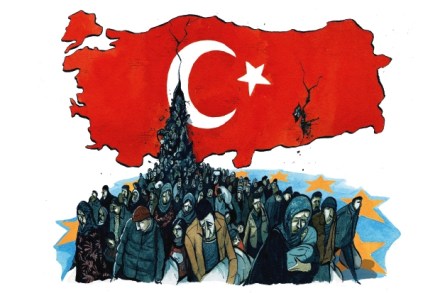
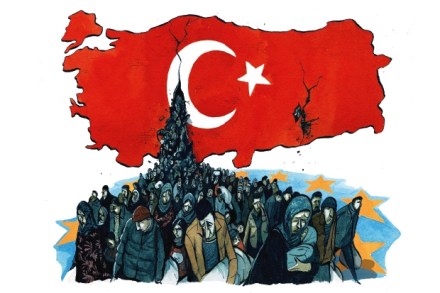
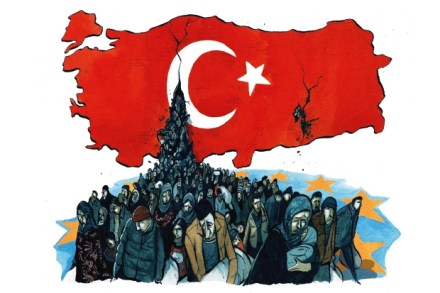
As James Forsyth mentioned earlier this week, things could get much worse in Turkey. Indeed, they will. Europe’s hope that Turkey will continue to soak up migrants is at best naive; at worst, irresponsible. Europe desperately needs Turkey to serve as a migrant waiting room on its borders. In exchange, it has offered an acceleration of the EU admission process. In November, Turkey was promised visa-free travel to the Schengen zone by 2016. In December, after five years of standstill, negotiations concerning economic and monetary policies linked to Turkey’s EU membership were reopened. This entire deal rests on the peculiar idea that, if given the chance, Turkey would be a Europhile with the zeal of a convert.

How the migrant crisis could get much worse

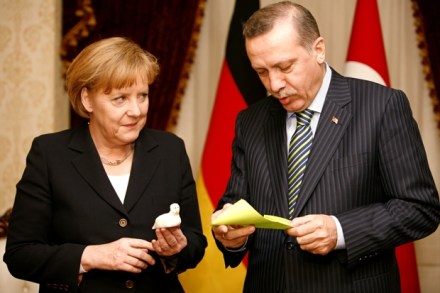
Angela Merkel gave a defiant interview last night in which she defended her handling of the refugee crisis. She declared, ‘I have no Plan B’—worryingly, I suspect this is true. But how much worse the refugee crisis could become worse is made clear in leaked minutes of a meeting between the President of Turkey Recep Tayyip Erdogan and Donald Tusk and Jean-Claude Juncker. As Bloomberg columnist Marc Champion points out, Erdogan is determined to get far more out of the EU than the 3 billion Euros it is currently offering. He tells them that if the offer is for only 3 billion, the conversation might as well end there: "We can open the doors to Greece and Bulgaria anytime and we can put the refugees on buses.

Putin’s great game

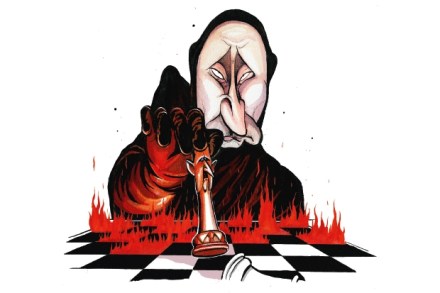
[audioplayer src="http://rss.acast.com/viewfrom22/putinsendgameinsyria/media.mp3" title="Putin's endgame in Syria"] Listen [/audioplayer] Russia’s bombing of the city of Aleppo this week sent a clear message: Vladimir Putin is now in charge of the endgame in Syria. Moscow’s plan — essentially, to restore its ally Bashar al-Assad to power — is quickly becoming a reality that the rest of the world will have to accept. America, Britain and the rest may not be comfortable with Putin’s ambitions in the Middle East, or his methods of achieving them. But the idea of backing a ‘moderate opposition’ in Syria has been proved a fantasy that leaves the field to Putin and Assad.

Turkey can’t cope. Can we?

[audioplayer src="http://rss.acast.com/viewfrom22/thenextrefugeecrisis/media.mp3" title="Laura Pitel and Migration Watch's Alanna Thomas discuss the second migrant crisis"] Listen [/audioplayer]In Istanbul, signs of the Syrian influx are everywhere. Syrian mothers sit on pavements clutching babies wrapped in blankets; children from Homs, Syria’s most completely devastated city, push their way through packed tram carriages begging for coins. Arabic adverts offer rooms for rent. It’s almost inconceivable how many Syrians Turkey has taken in as refugees — around 2.5 million of them so far. That’s almost three times the number who have sought refuge in Europe. And while the Turks are hospitable, Turkey has more than any country should bear.

Turkey’s climate of fear

   Istanbul Few AK party supporters hanker after the Isis way of life: for many of them, it would be a death sentence Turkey is less and less a democracy, more and more a paranoid one-party state. If you don’t believe that, look at what happens to those who draw attention to the government’s failures and crimes. The editors of Cumhuriyet, a centre-left broadsheet, have been delivering their editorials from jail since November. A statement issued this month by the Izmir Society of Journalists claimed that 31 journalists were in prison while 234 were in legal limbo awaiting trial. Over the course of last year, they added, 15 television channels had been closed and 56 journalists refused accreditation.

Iran may have the upper hand in the Middle East’s power struggle

It isn’t just Iran who have been angered by the execution of Shia cleric Nimr al-Nimr. Protests have erupted in Bahrain, Lebanon, Pakistan and Iraq, all places where the 1400-year-old Shia-Sunni divide remains a faultline. Iran’s reaction may seem uncompromising, with Ayatollah Khamenei tweeting: ‘The unjustly spilt blood of this martyr will have quick consequences’; but they have also sounded a note of caution. President Rouhani called for the arrest of the mob who stormed the Saudi embassy buildings. Perhaps he knows that, in the long run, Iran’s star is rising and the Saudis’ is falling.

Portrait of the week | 5 November 2015

Home The all-party Foreign Affairs Committee urged David Cameron, the Prime Minister, not to press ahead with a Commons vote on British air strikes against Islamic State positions in Syria. At its conference, Scottish Labour adopted a policy of opposition to Trident renewal, though Kezia Dugdale, its leader, remained in favour, while the Labour party in the United Kingdom as a whole favoured retaining the nuclear deterrent, though its leader, Jeremy Corbyn, opposes it. Britain was smothered in fog, except in Wales, where temperatures on 1 November reached a record 22˚C. A man had his ear bitten off in a pub in Aberystwyth on Halloween.

Portrait of the week | 11 June 2015

Home David Cameron, the Prime Minister, said of the EU referendum: ‘If you want to be part of the government, you have to take the view that we are engaged in an exercise of renegotiation to have a referendum and that will lead to a successful outcome.’ This caused a certain amount of uproar, with newspaper headlines saying things like ‘PM: Back me or I will sack you.’ Mr Cameron the next day said: ‘It’s clear to me that what I said yesterday was misinterpreted.

Portrait of the week | 20 November 2014

Home David Cameron, the Prime Minister, said: ‘Red warning lights are once again flashing on the dashboard of the global economy.’ He then offered £650 million to a ‘green climate fund’. In a speech in Singapore, Mark Carney, the Governor of the Bank of England, said that fines for banks over rigging foreign exchange rates showed that ‘it is simply untenable now to argue that the problem is one of a few bad apples. The issue is with the barrels in which they are stored.’ Official figures showed that the number of British Army reservists has been boosted by a recruitment drive in the past year from 19,290 to 19,310. Friends of the Earth went to law to secure the future on the river Otter of a family of beavers living wild there.

Kurds can pull off miracles, but they need help against Isis

The Kurds can pull off minor miracles when they need to. They require active support, however, now they are at the centre of the global struggle against the self-styled Islamic caliphate, Isis. Recent history shows the Kurdish potential. Eight years ago in Iraqi Kurdistan, there was much talk about oil and gas reserves. Some thought it was all hot air; their oil sector is now huge and has driven another once impossible dream - rapprochement with Turkey, which needs vast energy supplies to fuel its growing economy. Energy could even fuel Kurdish independence. However, a longer history hangs over the Kurds. Nearly a century ago, Kurdish hopes of a single nation-state were snuffed out. Some say they weren't ready, others say they were betrayed.