Richard Galustian

The West has totally misjudged the situation in Libya

From our UK edition

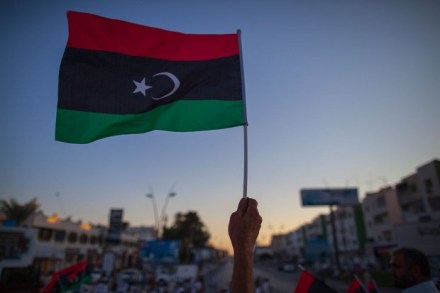
Libya’s former Prime Minister Dr. Mahmoud Jibril has become the first senior leader of its Arab Spring revolution to call time on the country’s new western-backed government, saying 'the chances of success are very slim'. This apparent failure hasn't been caused by a lack of support, which has poured in from London and Washington in a bid to get the Government of National Accord (GNA) to stand up and walk on its own two feet. It was also hoped that by doing this, a fix could be found for the twin problems of Islamic State and mass migration. But Dr Jibril, who helped steer the country through its brutal uprising against Muammar Gaddafi, says foreign powers made a mistake by installing an unelected regime without popular support.
Iran may have the upper hand in the Middle East’s power struggle

From our UK edition

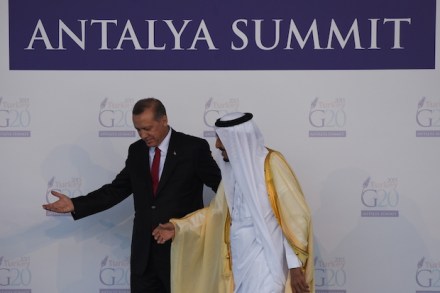
It isn’t just Iran who have been angered by the execution of Shia cleric Nimr al-Nimr. Protests have erupted in Bahrain, Lebanon, Pakistan and Iraq, all places where the 1400-year-old Shia-Sunni divide remains a faultline. Iran’s reaction may seem uncompromising, with Ayatollah Khamenei tweeting: ‘The unjustly spilt blood of this martyr will have quick consequences’; but they have also sounded a note of caution. President Rouhani called for the arrest of the mob who stormed the Saudi embassy buildings. Perhaps he knows that, in the long run, Iran’s star is rising and the Saudis’ is falling.

What’s the plan in Syria? Yesterday’s debate gave us few answers

From our UK edition

David Cameron may now have his bombing mandate, but he still has no strategy. The PM’s ‘hope for the best’ rhetoric yesterday was distinctly un-Churchillian: ‘I know that will take a long time and that it will be complex,’ he said, ‘but that is the strategy, and we need to start with the first step, which is going after these terrorists today.’ It is not much of a plan, and those in the know know it: from defence chiefs – some of them friends of mine – giving anonymous briefings, to Parliament’s own foreign affairs committee, and even the voters, whom polls show swinging ever further away from air strikes. They are right to be sceptical. The vagueness of the plans was shown in the references to Iraq.

Putin knows what he’s doing in Syria. Cameron is just flailing

From our UK edition

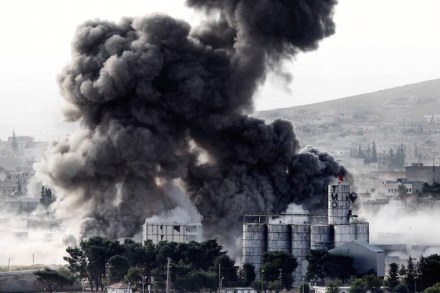
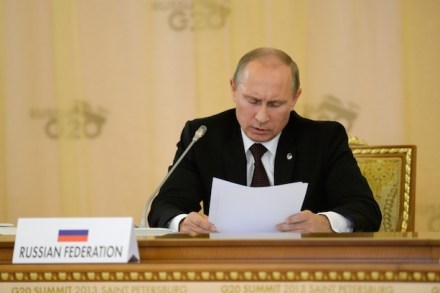
When MPs vote this week on Syria, they will have to decide whether intervention is right in principle. But there is another question: Will air strikes actually make a difference? As a defence and security contractor who has spent much of the last few years in Libya, I have serious doubts whether anything can be achieved without boots on the ground. The combined use of all the countries’ air forces alone will never eradicate ISIS anywhere without a coordinated ground effort. Putin understands this: Russia is making airstrikes while letting Assad's Syrian Army mop up on the ground. By contrast, Cameron’s proposed involvement seems pointless and meaningless. He wants to act from behind, with a relatively insignificant number of aircraft compared to America, Russia and France.