Egypt

Cairo Diary: it’s the economy, stupid

Whether revolutions devour their own children often depends on the ability of a post-revolutionary government to deliver political freedom, jobs and services. Egypt is no different. If the economy opens up, then the country's transition to democracy is likely to continue. If not, then anything can happen. So, which will it be? The stock exchange has reopened and is doing better than many expected. The government is bullish about growth, but it is hard to see where it will come from. Tourists, who account for a major part of the economy, are staying at home. Hotels are empty and BA is cancelling flights due to lack of passengers. The uncertainty about Egypt's future economic path is also deterring investors.

Cairo Diary: will Egypt help in Libya?

Nothing would help the international campaign against Colonel Gaddafi as much as the Egyptian military — and therefore Egypt — swinging in behind the UN-authorised effort. It would be one of the few things that would make the Libyan dictator worry and could push fence-sitting loyalists towards the rebel cause. Materially, it could also be important; with the Libyan resistance reluctant to receive Nato help, Egypt could be very helpful as a conduit for weapons, intelligence and even on-the-ground military support. A post-combat mission would also be greatly aided by Egyptian involvement or leadership.

Cairo Diary: curfew

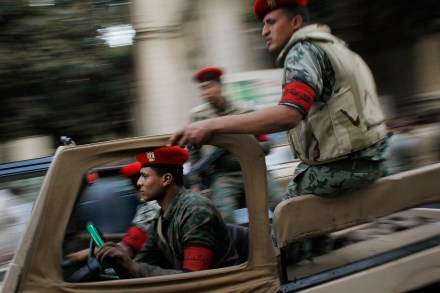
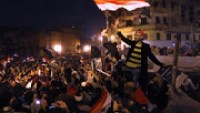
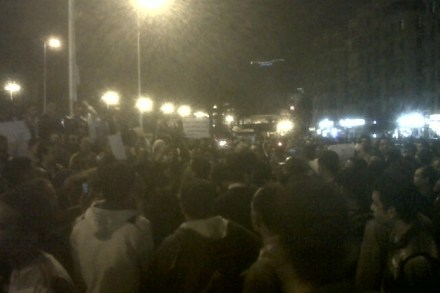
Driving through post-revolution Cairo at night is eerie. The normally busy streets are deserted, most of the city's  squares and roads are blocked by military checkpoints, and dark clad figures slip in and out of the shadows. Breaking the curfew may result in a six month sentence, or worse. Come dawn, however, the city springs to life, looking like it has done for millennia — busy, noisy, lively. This tale of two cities — one cowered, quiet and run by the military, and another that is lively, chaotic and civilian — is perhaps a tale not only of Cairo, but of Egypt in the midst of an ongoing transition. For though Hosni Mubarak has gone, the military underpinnings of his 30-odd year regime are more powerful than ever before.

Web Exclusive: HolyBookers 1 – Facebookers 0

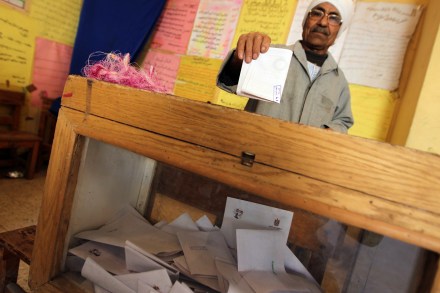
Cairo The Facebook and Twitter revolutionaries are taking a beating at the hands of the Brothers. The results of Saturday’s referendum are now out and they point to a simple truth: the internet was fine as a tool for gathering a few hundred thousand youths in Tahrir Square; but it is largely irrelevant as a means of winning elections across large swathes of Egypt, where three-quarters of the 83 million population have no internet connection at all. On a massive turnout, and in the fairest vote in the country’s modern history, 77 per cent of Egyptians sided with the Muslim Brotherhood in saying “Yes” to a quick and dirty patch-up of the existing Constitution.

The Arab League adds its weight to the calls for a no-fly zone

We're pushing for a no-fly zone. France is pushing for a no-fly zone. And now the Arab League is pushing for a no-fly zone too. The news fresh out of Cairo is that the organisation has voted in favour of restricting airspace above Libya. It will now push the UN to do the same, which is a considerably more proactive than the stance it adopted earlier this week. While one vote doesn't really seal anything, this is potentially a crucial moment. NATO has made regional support a key condition of a no-fly zone – and now it has it, officially. Those who have been sniffing around for alternatives to the UN and its resolutions will regard this as a positive step.

Tehran’s latest provocation

The people of Egypt and Libya may have swung the spotlight onto their respective countries – but it is a spotlight that Iran is keen to exploit. Two of their warships have just passed through the Suez canal en route to Syria, the first to do so since 1979. They were given clearance by Egypt's new military stewards a few days ago. On one level, Tehran's actions are unimpeachable: Egypt cannot forbid access to Suez unless it is at war with the country at sail. But they are also, of course, designed to provoke. Why choose to do this now, other than to suggest something about the new latticework of power, and of power relationships, in a turbulent Middle East? Israel, for its part, is less than impressed.

Is David Cameron about to have one of his Garibaldi moments?

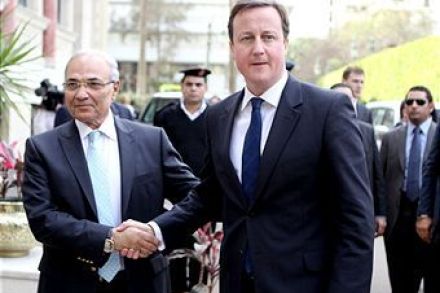
To date, this government has not had much of a foreign policy. Where there should have been grand strategy there has been trade promotion. But this appears to be changing. It is certainly striking that Cameron is the first western leader to visit post-Mubarak Egypt. Cameron himself is, normally, at the realist end of the foreign policy spectrum. But, as one close friend observes, one of the most important things to grasp in understanding the Prime Minister is that Garibaldi is one of his great heroes. As Cameron told Charles Moore, he admires Garibaldi’s ‘romantic nationalism'.

The Bahraini challenge

The debacle in Bahrain cuts close to the British bone. The Ministry of Defence has helped train at least 100 Bahraini officers and supplied a range of equipment to the Gulf state. Egypt was important because of its regional role and ties to the United States. But there was no link to London, anymore than there was one to Paris or Berlin. Bahrain is different. Only a few months ago, British officials were applauding the Khalifa dynasty for taking steps towards democracy. But the fact is simple: the steps were insufficient – not by British standards, but by Bahraini ones. It should serve as a wake-up call to the Foreign Office and those in government with close ties to Bahrain.

Eastern promises | 18 February 2011

Events in Bahrain are yet another reminder of why the supposed choice between stability and democracy is a false one. The idea that in the medium to long term backing a Sunni monarchy in a Shiite majority country is a recipe for stability is absurd. If this was not enough, by backing the minority monarchy the West is ensuring that, for obvious reasons, the opposition to it will become radicalised and anti-Western. The West is where it is. It, sadly, cannot start again from scratch in the Middle East. But it cannot allow itself to continue being the allies of those who brutally repress the aspirations of their own peoples - a policy that would ensure this troubled part of the world grows even more hostile to Western interests.

Iran’s turn

Revolutions are exciting when they happen to other leaders. When they target the government you lead, then they become decidedly less appealing. That seems to be Mahmoud Ahmadinejad's view. Only last week the Iranian President told the Egyptian protesters that they had the right to express their own opinions. The Iranian regime's short-sighted glee, however, has quickly turned to fear. And it shows: the regime has unleashed the police onto protesting crowds in Iran, killing one and wounding several. Unlike Hosni Mubarak, Iran's leaders know what it is like to be a revolutionary movement - and they have used their inside knowledge to lethal effect. Like Lenin and Stalin, they have taken revolutionary paranoia into government.

Developments in the Middle East are beginning to affect Europe

After yesterday’s spontaneous clean-up operation on the streets of Cairo, protestors gathered at Freedom Square today to maintain the revolution’s momentum. There have been minor developments, with the army and its interim civilian administration dissolving President Mubarak’s gerrymandered parliament, preparing the way for an election in the future. The timetable for that election remains a mystery – something about which the international community, led by President Obama and assorted European leaders, is questioning without yet expressing concern.

The World’s Egyptian dilemma

In a few weeks, the World Bank will issue its Development Report, a document of canonical importance to the DfiDs of the world. But the recent events in Egypt will make it useful reading for laymen too. The reason: it shows empirically - having looked at hundreds conflicts in hundred of countries - that young democracies are much more vulnerable to conflict than either mature democracies or authoritarian states. This means that when fostering transition, the international community encounters faces a dilemma: do we push for stability, or do we push for democracy? We may not be able to get both, in the short term. In the long term, democracy is more stable than authoritarian rule. But in the short term, there are sharp trade-offs that have to be confronted.

It is time for the West to get on the right side of history in Egypt

The fall of the Mubarak regime marks the end of an inglorious chapter in the history of the West. The decision to back a dictator in Egypt in exchange for stability has proved to be as flawed strategically as it was morally. The challenge for the West now is to get itself on the right side of history in this part of the world. Something that not been helped by the Obama administration’s short-sighted slashing of the US’s democracy promotion budget for Egypt.  There are understandable concerns about whether or not the Egyptian military will ever hand over power. The New York Times reports that neither the field marshal nor the lieutenant general who are now effectively running the country are instinctive reformers or democrats.

And more from the world’s press on Egypt

Here are a few more pieces from around the world on the Egyptian revolution and its aftermath. Andrew Neil: More about the Muslim Brotherhood. Charles Krauthammer says a freedom plan is not enough, America needs a freedom doctrine. Foreign Affairs: Who are rest of the Egyptian opposition? Bikyamasr: Israel’s take on Egypt’s new army government. The Middle Eastern Media Research Unit reacts critically to Obama’s intervention. Washington Post: A power vacuum in the Middle East. The Diplomat: Echoes of Cairo In Tehran. Silk Road Economy: What drought in China means for politics in Egypt. PS: If any CoffeeHousers see other pieces worth noting, do please link to them.

A new dawn for Dubya?

Who is the unsung hero of the Egyptian revolution? Why, the 43rd President of the United States of course. (And, presumably, Tony Blair as well.) Reuel Marc Gerecht leapt to praise Bush in the pages of The New York Times. ‘President George W. Bush’s decision to build democracy in Iraq seemed so lame to many people because it appeared, at best, to be another example of American idealism run amok — the forceful implantation of a complex Western idea into infertile authoritarian soil. But Mr.

Which way will Egypt turn?

The world is full of jubilation this morning, and I wish I could join in. Perhaps we are indeed witnessing Egypt on its way to democracy, thereby inspiring a similar wave of uprisings in the Arab world. It’s not hard to be mesmerised by the prospect of the Arabs rejecting the dictators foisted on them by the West in the name of security, and choosing their own democratic future. The ‘Wind of Change’ narrative is one we in the West are familiar with, as memories of the 1989 revolutions are still fresh.   You can see the Egyptian events in two ways.

A region in flux

The kaleidoscope has been shaken in the Middle East and it is impossible to know where the pieces will settle. Watching the scenes, one’s inclination is to be hopeful. But as Jeffrey Goldberg notes the challenges facing any new Egyptian order are immense. One thing that is clear is that the autocrats of the Arab world are nervous. The Washington Post reports that the king of Bahrain is giving every family there $2,700 in an attempt to appease opinion before a planned day of protest on Monday. The Algerian government is offering to lift the state of emergency the country has been in for the past 19 years and the Syrians have stopped trying to ban Facebook and Twitter. In Egypt, it seems that Mubarak’s statement on Thursday night was made in spite of reality.

Expert witness

Recent events in Egypt have exposed not just the chasms in our understanding of what’s been going on in the countries of the Middle East, but also the effects of changes in how the BBC is spending the licence fee on reporting ‘fast-breaking’ stories. Recent events in Egypt have exposed not just the chasms in our understanding of what’s been going on in the countries of the Middle East, but also the effects of changes in how the BBC is spending the licence fee on reporting ‘fast-breaking’ stories.

Why the heck not?

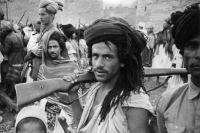
Philip Hensher recounts how a handful of British mercenaries in the 1960s, headed by the Buchanesque Jim Johnson (pictured above), trained a rag-tag force of Yemeni tribesmen to defeat the full might of the Egyptian army in a conflict that Nasser later referred to as ‘my Vietnam’ ‘Enormous fun and a tremendous adventure,’ one of the participants called it afterwards, voicing the sentiments of every British soldier running amok since the beginning of time. Probably there were soldiers under Boadicea who said exactly the same thing. This little known story from the very end of the imperial adventure is redolent of cheek, bravado and the undertaking of a challenge for no other reason than thinking ‘Why the heck not?