Egypt

Will David Cameron stand up for persecuted Christians?

From our UK edition

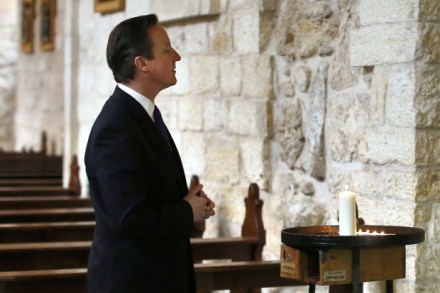
Last week, David Cameron surprised a number of people when, during a pre-Easter gathering at Downing Street, he spoke about religion. Not religion in general, the all-faiths-and-none diversity-speak of the political class, but his own Christian faith. James Forsyth writes about the implications in this week’s magazine. But what was most surprising was that the prime minister went further by saying that ‘our religion’ is the most persecuted in the world and that ‘I hope we can do more to raise the profile of the persecution of Christians’. He added: ‘We should stand up against the persecution of Christians and other religious groups wherever and whenever we can, and should be unashamed in doing so.’ This is quite a development.

Portrait of the week | 27 March 2014

From our UK edition

Home David Cameron, the Prime Minister, said that inheritance tax ‘shouldn’t be paid by people who’ve worked hard and saved and who bought a family house’ and that this would be addressed in the Conservative manifesto. Two opinion polls after the Budget, by Survation for the Mail on Sunday and by YouGov for the Sunday Times, had put Labour one percentage point ahead of the Conservatives. Nineteen Labour movement figures wrote to the Guardian warning the party not to hope to win the election on the basis of Tory unpopularity. The rate of inflation fell from 1.9 to 1.7 per cent, as measured by the Consumer Prices Index, or from 2.8 to 2.7 per cent as measured by the Retail Prices Index. The government said it would sell another 7.

Is Hamas finally losing its grip on Gaza?

From our UK edition

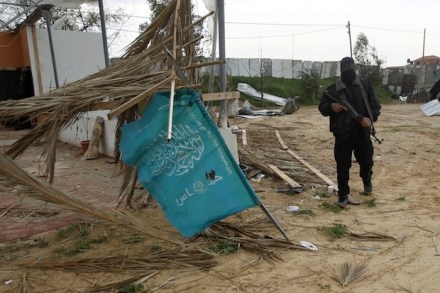
 Gaza City Tattered green Hamas flags still flap above the streets in central Gaza and posters of its martyrs hang in public spaces. But these are tough times for the Hamas government, and not just due to the recent flare-up in tensions with Israel. In December last year, they cancelled rallies planned for the 26th anniversary of their founding, an occasion celebrated ever since they seized power here in 2007, and though usually secretive about their financial affairs, they revealed a 2014 budget of $589 million, with a gigantic 75 per cent deficit. So, what’s gone wrong for Hamas? Just a year ago, it seemed to be enjoying a honeymoon here.

If Ukraine’s protests were a revolution, why wasn’t the Stop the War march?

From our UK edition

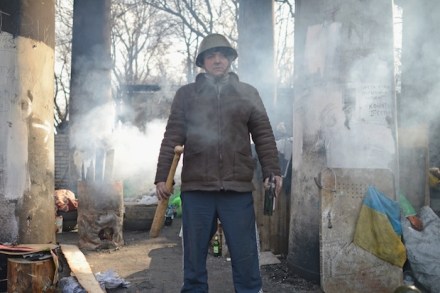
It’s ages since I last went on a decent demo and had a bit of a dust-up with the pigs. I should get out more, there’s a lot of fun to be had, throwing stuff at the police and shouting things in a self-righteous manner. I think the last one I attended was in the very early 1980s, in Cardiff. Sinn Fein was marching through the centre of the city in support of its right to maim and murder people, and the National Front decided to march against them. As a consequence, the Socialist Workers Party’s most successful front organisation, the Anti-Nazi League, insisted that it had a right to march against the fact that the NF were allowed to march, and that was the section I was in.

Portrait of the week | 30 January 2014

From our UK edition

Home Britain’s gross domestic product grew by 1.9 per cent last year, the most since 2007, according to the Office for National Statistics. The last quarter’s growth was 0.7 per cent, a little less than the 0.8 per cent of the previous quarter. In the fourth quarter of 2013, construction actually declined by 0.3 per cent, and economic output was still 1.3 per cent less than in the first quarter of 2008. Ed Balls, the shadow chancellor, promised in a speech that Labour would restore the 50 per cent rate of tax on higher earnings.

From Nasser to Mubarak — Egypt’s modern pharaohs and their phoney myths

From our UK edition

Reporting Egypt’s revolution three years ago, I had a sense of history not so much repeating itself as discharging sparks which seemed eerily familiar. Smoke was billowing into my hotel bedroom from the building next door, the headquarters of the Mubarak dictatorship which protestors had set alight; yet also visible from my balcony in Cairo that night were the flickering lights of Zamalek, the island of privilege in the River Nile where my father grew up before fleeing the flames of the Nasser regime on a flying boat in 1956. At last comes a book which links the coups and revolutions witnessed by father and son. The Cambridge sociologist Hazem Kandil has produced a compelling history of Egypt’s 60-year power struggle.

Portrait of the week | 16 January 2014

From our UK edition

Home David Cameron, the Prime Minister, said that English local authorities would be allowed to receive all the business rates collected from shale gas schemes, not just the 50 per cent they’d expect. Total, a French company, said it would invest about £30 million in drilling two exploratory wells in Lincolnshire. To head off higher borrowing rates, the government announced that ‘in the event of Scottish independence from the United Kingdom, the continuing UK government would in all circumstances honour the contractual terms of the debt issued by the UK government’. The annual rate of inflation, as measured by the Consumer Prices Index, met the target set by the government for the first time since November 2009, when it fell to 2 per cent (from 2.

The only people thriving in post-revolution Egypt — tomb raiders

From our UK edition

 Cairo Hook nose, blue chin, Arab headdress: the tomb robber resembled a villain from a Tintin comic. His friend was packing a big pistol and behind them it was sunset over the pyramids at Dahshur, south of Cairo. Looting’s been rife in Egypt since antiquity — but there has been an alarming acceleration since the 2011 revolution, and Hook Nose and Big Pistol are in up to their respective necks. I met them as they were about to set off for a night’s work: excavating holes in tombs right up to the foot of the famous Black Pyramid outside Cairo, built around 2,000 bc by a Pharaoh called Amenemhat III. Hook Nose was cock-a-hoop about his profession. ‘The police let me do whatever I want,’ he said.

The silence of our friends – the extinction of Christianity in the Middle East

From our UK edition

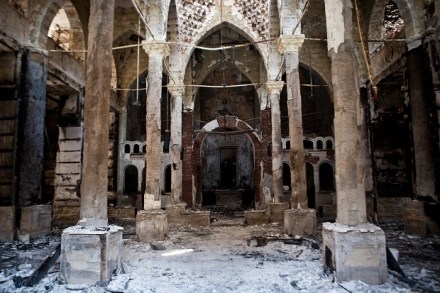
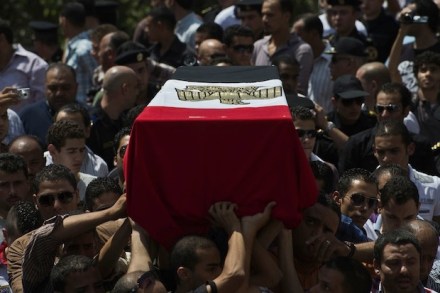
The last month and a half has seen perhaps the worst anti-Christian violence in Egypt in seven centuries, with dozens of churches torched. Yet the western media has mainly focussed on army assaults on the Muslim Brotherhood, and no major political figure has said anything about the sectarian attacks. Last week at the National Liberal Club there was a discussion asking why the American and British press have ignored or under-reported this persecution, and (in some people's minds) given a distorted narrative of what is happening. Among the four speakers was the frighteningly impressive Betsy Hiel of the Pittsburgh Tribune-Review, who has spent years in Egypt and covered Iraq and Afghanistan.

Aidan Hartley: I have been shot at and bombed so why do I fear a pyramid?

From our UK edition

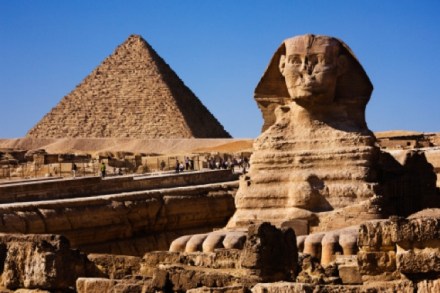
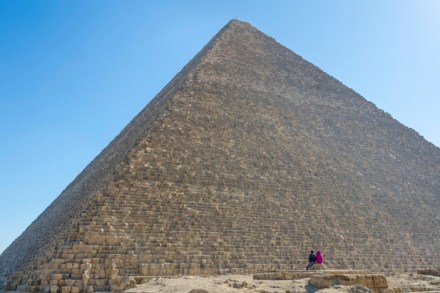
It was towards dusk by the time we had given the tourist police the slip and started climbing the pyramid of Mycerinus at Giza. It was Sebastian Barry-Taylor and I and we wore white linen suits. The 4ft blocks were easy enough to scale because erosion of the limestone had in the 4,500 years since construction weathered cavities or broken off corners so that there were plenty of hand- and footholds. We climbed quickly, looking down at the fat policemen in the desert shaking their fists up at us — but we did not rush it. To slip or stumble would be very dangerous because I could see that once one started falling down that slope there was nothing to stop one from bouncing all the way down. We did not care. We feared nothing.

Ancient and modern: Modern Egypt vs ancient Athens

From our UK edition

Whatever problems Greeks and Romans faced, a politicised priesthood was not one of them. They might have made three observations on Egypt’s current plight. First, though Roman emperors were autocrats, the plebs regularly expressed their displeasure at them, sometimes in street riots, over matters like food shortages. But they did so fully expecting the emperor to respond. Only very rarely did he fail to do so. He was not that stupid: for all his power, he knew he had to keep the plebs onside. This basic insight seems to have escaped the fanatic ex-president Morsi. Second, the most important consequence of the Athenian invention of democracy was to generate a politics in which decisions were reached not by force but by public persuasion.

William Hague: Egypt turbulence could last for years

From our UK edition

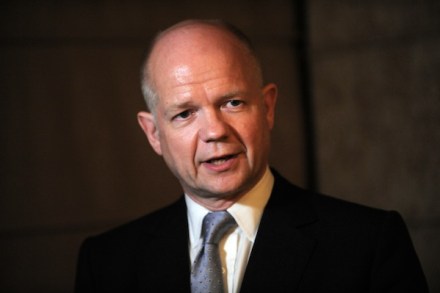
William Hague's interview on the Today programme this morning included the gloomy warning the the turmoil in Egypt is unlikely to end soon. He said that 'there may be years of turbulence in Egypt and other countries going through this profound debate about the nature of democracy and the role of religion in their society, but we have to do our best to promote democratic institutions, to promote political dialogue and to keep faith with the majority of Egyptians who just want a free and stable and prosperous country'. The turmoil means he has to choose his words carefully on the coup: it is difficult to condemn the actions of the current government, and equally difficult to condemn the actions of another group that may come to power as the churn continues.

How the Egyptian army handed the Muslim Brotherhood a victory

From our UK edition

You don’t have to be a supporter of the Muslim Brotherhood’s clerical fashion to recoil at the draconian treatment of its members yesterday. Indeed, some reports now suggest that more than 500 people were killed with thousands more injured. By conspiring against it the army has inadvertently handed the Muslim Brotherhood a remarkable victory. Before he was forced from office, Mohammed Muris’s administration was failing in almost every respect. That is why ordinary Egyptians railed against it with the slogan ‘bread not beards.’ Even when those protests intensified there was value in letting Mursi’s administration run a little longer, if only to illuminate the full extent of its shortcomings.

The Muslim Brotherhood’s fight for existence

From our UK edition

Speak to members of the Muslim Brotherhood and you get a sense of just how imperilled they feel. Ever since Mohammed Mursi was overthrown, members of the group have come to believe they’re engaged in a fight for the Muslim Brotherhood’s existence. Indeed, there is a popular perception among Brotherhood members that the entire movement’s trajectory will be determined by what transpires in Egypt now. Western governments have traditionally indulged themselves with the fantasy of a stratified Brotherhood consisting of ‘extreme’ and ‘moderate’ elements. This view confuses strategic pragmatism with ideology. Focus on the group’s core beliefs and what you’re left with is a unified movement striving for the same Islamist endgame.

A Stone in the Shade, by Violet Powell – review

From our UK edition

Evelyn Waugh once recalled the anguish with which he greeted Edith Sitwell’s announcement that ‘Mr Waugh, you may call me Edith.’ I experienced similar misgivings on the occasion, some years ago, that Lady Violet Powell suggested that I might like to call her ‘Violet’. It was not that Lady Violet — Violet — made the least fuss about her title (‘as unswanky a Lady as could be imagined’, Kingsley Amis once declared); merely that she was the relict of a man whose eye for the social niceties made Lady Catherine de Bourgh look like a bumbling amateur. It was as if George Orwell, knocked into at some Fitzrovian party, had invited you to call him ‘Eric’.

Who is optimistic about the Middle East now?

From our UK edition

This weekend’s closing of US embassies in the Muslim world and the British embassy in Yemen combined with the warning to Americans about overseas travel is another reminder that the Islamist terrorist threat has not gone away. But the relative calmness with which this news is being treated is a reminder that the politics of the situation is very different now than it was ten years ago. One of the things that has changed is that it is hard to find anyone who is optimistic about the Middle East anymore. The Iraq War was borne out of optimism, the neo-cons were convinced that the Middle East could be democratised. But that optimism has now gone.

Egypt’s Muslim Brotherhood should have learnt from Nasser

From our UK edition

Egypt used to be good at revolutions. When Gamal Abdel Nasser’s Free Officers overthrew the monarchy in July 1952, hardly a shot was fired in anger, and jubilant crowds took to the streets of Cairo chanting ‘Long live the revolution’. Even the deposed King Farouq seemed to agree that Nasser had done the right thing. As the doleful monarch prepared to sail off into exile aboard the royal yacht Mahroussa from Alexandria, to the resounding echo of a 21-gun salute, Farouq cryptically remarked to General Muhammad Naguib, the head of the Egyptian armed forces, ‘You’ve done what I always intended to do myself.’ The creation of the Egyptian republic was not entirely without suffering.

Mind your language: The springs before the Arab Spring

From our UK edition

Two hundred and forty-years ago next Tuesday, Thomas Gray was buried in his mother’s grave in Stoke Poges churchyard. In his ‘Ode on a Distant Prospect of Eton College’ (published 1747), he had written of gales (presumably lesser ones, scarcely registering 8 on the Beaufort scale) that seemed ‘redolent of joy and youth’ and able ‘to breathe a second spring’. The phrase second spring was picked up by John Henry Newman, in 1852, to describe the re-establishment of the English Catholic hierarchy under Cardinal Wiseman. This was ‘a national commotion, almost without parallel, more violent than has happened here for centuries’, he declared.

Tunisia is not following Egypt’s path

From our UK edition

In recent days Tunisia has seen major unrest after the assassination of opposition leader Mohamed Brahmi. Faced with growing unrest over a faltering economy and rising violence by extremists, Tunisia’s moderate Islamist led government is facing its biggest test. But this is not Egypt. Nascent democracies in the region are not acting in a uniform fashion. Each has political and socio-economic issues that make them unique. But what unites the new democracies in the region is an urgent need to accommodate the religious and secular communities in their new democratic systems. Many thought the Arab uprisings would marginalise religion’s impact in those countries. But this simply isn’t the case. The revolts were not about Islam.

What the Arab world really wants

From our UK edition

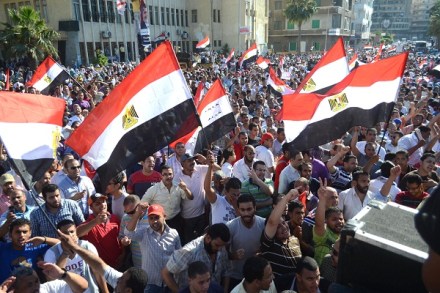
Two years ago, the West thought it recognised what was happening in the Arab world: people wanted democracy, and were having revolutions to make that point. Now, recent events in Egypt have left many open-mouthed. Why should the generals be welcomed back? Why should the same crowds who gathered in Tahrir Square to protest against the old regime reconvene to cheer the deposing of their elected president? Could it be that the Arab Spring was about something else entirely? I believe so. The Arab Spring was a massive economic protest: a demand that the poor should have the basic rights to buy, sell and make their way in the world.