Egypt

Is Mursi really trying to build links with Tehran?

From our UK edition

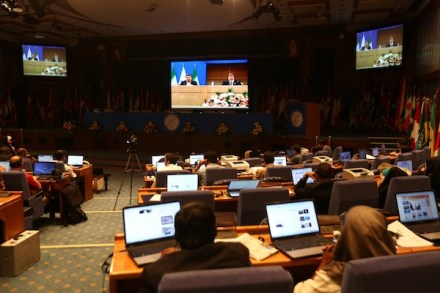
Trying to read the tea leaves on Islamist politicians is notoriously tricky. What else could explain why so many Middle East observers have misinterpreted Mohammed Mursi’s decision to visit Iran later this month as confirmation that Cairo's Islamists are seeking closer union with Tehran? These fears are misguided. Egypt has not had any official diplomatic relations with Iran for more than thirty years and Mursi’s visit will not change that status quo. He won’t be conducting a state visit but will instead be attending a meeting of the Non-Aligned Movement, a group formed to promote the interests of developing nations during the Cold War. Egypt currently holds its rotating presidency. The trip has been on the cards for months.

Mursi shores up his powers

From our UK edition

The confrontation between military brass and Muslim Brotherhood in Egypt came much sooner than expected. Mohammed Mursi has effectively sacked the head of the armed forces, Field Marshal Mohamad Hussein Tantawi, and Chief of Staff Sami Annan, in the hope of asserting his authority. Relations between the army and president have been strained for months because the Supreme Council of the Armed Forces enacted a number of measures to preserve their influence over Egyptian politics. Tantawi ensured, for example, that the SCAF had control over the drafting of Egypt’s new constitution and also appointed himself as Minister of Defence. This was widely seen as a pre-emptive move to guard against an Islamist takeover. Mursi has outmanoeuvred the army on all this.

Memoir of an Islamist

From our UK edition

It was a surreal experience to meet Maajid Nawaz for the first time. I had known of him for years and admired his bombast. He was a hero — not just my hero — but a hero to hundreds of young Islamist radicals. 'Woah, this is the brother in Egypt, isn’t it?' said an erstwhile comrade, listening to a cassette in my badly beaten Peugeot 106 as we drove through Bradford. That brother was Nawaz and it explained why neither of us had met him at that time. In late 2001 Nawaz had travelled to Egypt to learn Arabic as part of an undergraduate degree at SOAS but was now being detained in one of Mubarak’s notoriously brutal political prisons.

Clinton’s Cairo visit reveals limits of US influence

From our UK edition

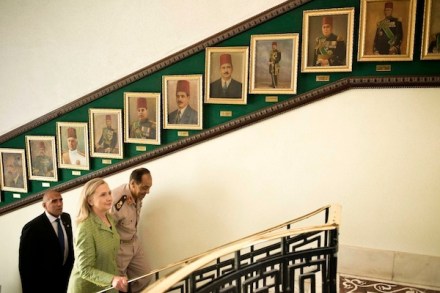
Hillary Clinton is holding talks in Israel today after a turbulent weekend in Egypt, ending a diplomatically fraught trip with little obvious benefit. Officially, Clinton was there to open the American consulate in Alexandria after it closed in 1993 due to budget cutbacks, but the subtext was to manage the conflicting aspects of America’s strategic interests in the country. Clinton met with Mohammed Mursi, a member of the Muslim Brotherhood who is now Egypt’s new President, assuring him of the ‘full authority’ of his office. This was a subtle endorsement at a time when Mursi finds himself locked in tug-of-war with the Supreme Council of the Armed Forces for power. The latter has so far prevented him from forming a civilian government or convening parliament.

Plus ça change in Cairo

From our UK edition

Don’t expect Cairo to become Kabul now that the Muslim Brotherhood’s presidential candidate, Mohammed Mursi, has been sworn into power earlier today. There are real fears, of course, about the future of Egypt under an Islamist president and it’s foolish to whitewash Mursi as either moderate or benign. The Muslim Brotherhood is a deeply reactionary and dangerous group, but Mursi will find it extremely difficult to implement the more radical aspects of his agenda.   Officially, the Brotherhood has said it will respect all existing treaties – a subtle attempt to placate fears about Egypt’s future relations with Israel.

What can the West do about the turmoil in Egypt?

From our UK edition

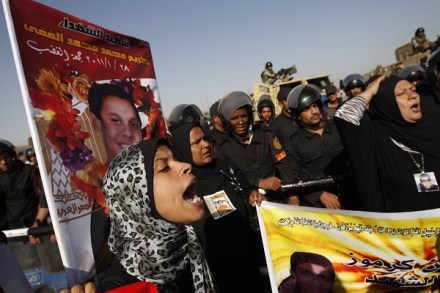
The situation in Egypt remains perilous, as protests mount against the military government which has delayed announcing the result of last weekend’s vote. Preliminary estimates, overseen by a panel of judges, put the Muslim Brotherhood ahead by 900,000 votes. But this is being contested by former Mubarak henchman, Ahmed Shafiq. Election monitors are examining more than a hundred alleged cases of multiple election fraud. This is the latest popular grievance against the military government, which has prorogued parliament, deferred parliamentary elections and suspended rights of demonstration in recent weeks.

Fears of a coup in Egypt

From our UK edition

Chaos and confusion are mounting in Egypt tonight, where the country’s constitutional court has ruled that laws governing parliamentary elections are invalid. It follows that the Egyptian parliament must be dissolved, by the interim government led by the Supreme Council of the Armed Forces. And the constitution must be rewritten before the presidential run-off on Saturday.  The court also ruled that Ahmed Shafik, a former prime minister under Hosni Mubarak, could stand in that run-off, overturning a law that barred members of the previous regime from election. Shafik welcomed the decision, which leaves him free to challenge Mohamed Morsi, the Muslim Brotherhood’s representative. The message from the Brotherhood is one of defiance.

When spring doesn’t turn into summer

From our UK edition

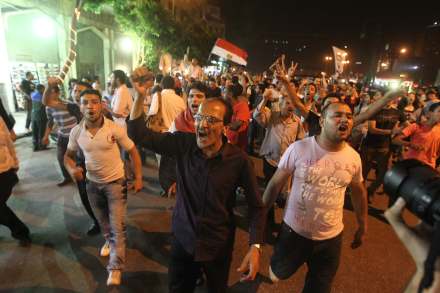
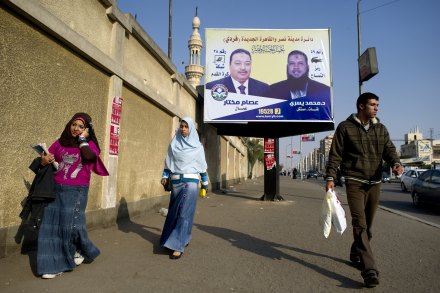
A high-ranking member of Hosni Mubarak’s disgraced government, or someone from the Muslim Brotherhood? It’s hardly an enviable choice — but that is the choice facing Egypt in next month’s Presidential election, after the official results of the preliminary vote were released yesterday. For obvious reasons, neither candidate much appeals to the freedom-loving younger generation that set the country’s revolution a-rolling in the first place. So, overnight, we’ve seen a return to protests, anger, fire, etc. This is still an immensely divided polity. As grim as the situation is, it will come as little surprise to Spectator readers (or to anyone, really).

Spirit of place | 21 January 2012

From our UK edition

There are two ways of viewing the changes sweeping through the Arab world in general and Cairo in particular. There is the significance of individual events, such as the moment that the Tunisian street trader Mohamed Bouazizi set himself alight and lit the fuse on protests that brought down the government of President Ben Ali. And there is the bigger picture, one that looks back at the years of economic decline, decades of abuse, mismanagement and corruption. In this long awaited book, the London-based Egyptian novelist Ahdaf Soueif gives us two very different views of individual events, a tale of two halves.

Person of the year: The Islamist?

From our UK edition

Last week, Time Magazine named ‘The Protestor’ as its Person of the Year. Myself, I'd be tempted to bestow the honorific upon ‘The Islamist’. For, in the spirit of the Time award, it is the Islamists, rather than the revolutionaries, who are now in the ascendancy in the Middle East. Governments in Morocco, Tunisia, Libya and Egypt are all now partly ruled by democratically-elected, if relatively moderate, Islamists. Next year will be about how they manage their newfound power. It will be not about ‘political Islam’, but ‘governmental Islam’. Many wonder if there is such a thing as moderate Islam, and whether all Islamist governments tend towards theocratic rule. Now we are in a position where time will tell.

Russia looms significant across 2012

From our UK edition

The Christmas weekend was, I'm sure you noticed, rich with political incident. And yet, from continued turbulence in the Middle East to continued turbulence in Chris Huhne's career, few things stood out as much as the protests against Vladimir Putin in Russia. They were, by most reasonable estimates, the largest in that country since the fall of the Soviet Union. And they add to the wave of disgruntlement that has been swelling since even before this month's disputed parliamentary elections. The wave, of course, hasn't broken yet. But few seem sure about how far it will travel and how much change it will wreak.

We can’t ignore the persecution of Christians in the Middle East

From our UK edition

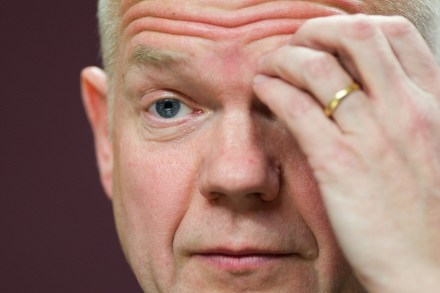
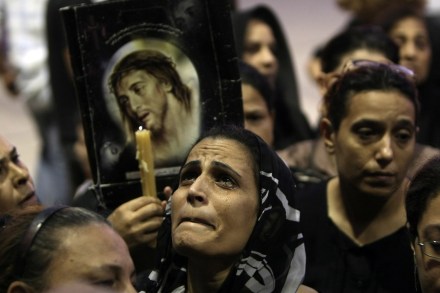
William Hague has transformed the Foreign Office in his 18 months in charge. He inherited a system hardwired with the dynsfunctionality of the Labour years, and it’s almost fixed. But not quite. It has not yet woken up to the wave of what can only be called ‘religious cleansing’ in the Middle East, which I look at in my Telegraph column today. Here’s a rundown of my main points. 1) The killing has begun, and could get worse. In Iraq, about two thirds of its 1.4 million Christians have now fled — being firebombed by the jihadis. Last year, gunmen entered a Baghdad church and killed 58 parishioners. To go to church in Iraq, which Christians have been doing for two millennia, now means risking your life.

Learning to live with Islamists

From our UK edition

Islamists have won a landslide in Egypt, with the Muslim Brotherhood and the ultra-Conservative Al Nour party winning some 60 per cent of the votes cast. Future rounds of elections may benefit them further, as they take pace in more rural and conservative areas. Their success should be a surprise to nobody. Egypt is a conservative Muslim society. Islamists have been far better organised than the ragtag revolutionaries that ousted Hosni Mubarak, having run million-person charities for decades. They also benefit from being seen as un-corrupt and having been opposed to Mubarak for years. Further, they have been able to run on a simple slogan ‘Islam is the Solution’ without having to demonstrate why.

Worrying developments in the Middle East

From our UK edition

It’s been an eventful , if worrying afternoon in the Middle East. First, the initial Egyptian election results confirm the expectation that Islamist parties would dominate the first round of elections: they've taken more than 50 per cent of the vote. Douglas Murray wrote a Spectator cover story two weeks ago on how the Arab Spring is turning to winter; it is required reading. Events in Iran are much more disturbing, though. Iran claims to have shot down an US drone in the east of the country and added further threats about further retaliation for the incursion.

Egypt may have voted, but don’t celebrate just yet

From our UK edition

Many thought the day would never come. Even as recently as yesterday, some doubted it would happen. But today Egyptians went to the polls in the country's first parliamentary elections since Hosni Mubarak's fall, hoping to take a first step toward democracy. Under a complex electoral system, voters picked both party lists and individual candidates. The final results are due by 13 January 2012. As it stands, the Muslim Brotherhood, Egypt's largest and best organised group, along with Salafists, are expected to do well in the vote — after all, Islamists did prosper in the elections in Morocco and Tunisia. But it is not assured.

Mubarakism after Mubarak

From our UK edition

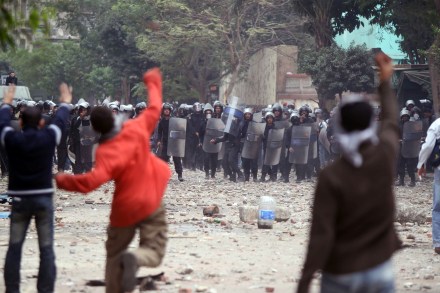
The future of Egypt has been hanging in the balance since Hosni Mubarak was toppled. Now there is real cause for concern, as scores of protesters clash with state security forces. The problem, above all, is military overreach. Stuck in a 1960s view of itself, and keen to preserve their money, status and power, the military has been thwarting the process of change. Since Mubarak's fall they have continued behaving how they always have and worse — arresting protesters, muttering about US-led conspiracies, demanding extra-constitutional rights and clamping down on dissent. Worst of all, the West has been all to willing to take them at their word.

Saif Gaddafi captured — but what now?

From our UK edition

Remember when Saif Gaddafi was the Anointed One of those who wanted a freer, more liberal Libya? Now, he's at the mercy of militiamen in the city of Zintan, having been captured today. It leaves Abdullah al-Senussi, the former intelligence chief, as the most infamous member of the old regime still on the run. The details of the capture are still hazy, like so much else during Libya's revolution. What's striking is that, unlike his father, Saif Gaddafi appears to have been unharmed by the process. Reuters are sure they spoke with him earlier today (although the man wouldn't confirm his identity), and the only wounds he was carrying were, he claimed, sustained during a Nato air strike, ‘one month ago’.

Do Muslims vote Islamic?

From our UK edition

The electoral success of Tunisia's Islamist Ennahda party and the likelihood that the Muslim Brotherhood will do well in Egypt's forthcoming elections has heightened fears in many quarters. Will Islamic parties always dominate such contests in the Middle East? The electoral success of the Islamic Salvation Front in Algeria, the Justice and Development Party in Turkey and Hamas in Palestine suggest the answer is yes. But looking at a broader data set – that is, the entire range of elections in which Islamic parties have taken part – reveals a different picture. Islamic parties have stood for elections in more than 90 elections in more than 20 countries. But as scholars Charles Kurzman and Ijlal Naqvi argue in a fascinating study entitled "Do Muslims Vote Islamic?

Saving Private Shalit

From our UK edition

It's difficult for the outside world to understand the huge significance that Gilad Shalit's release, this morning, has for Israel. A soldier captured by Hamas five years ago, he has become a huge cause célèbre — to the extent that black cabs in London were even commissioned with his picture on it. Books that he wrote aged 11 were printed and bought in their thousands by Israelis. He was wanted back so badly that Israel has agreed to release 1,027 Palestinian prisoners, among them hardcore terrorists. Events stemming from the Arab Spring have made both sides eager to do a deal, which experts say might contribute — even if in a tiny way — towards that ever-elusive peace settlement.