Egypt

Egyptian coup underlines America’s diminishing influence in the Middle East

From our UK edition

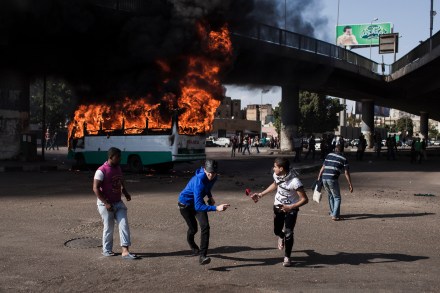
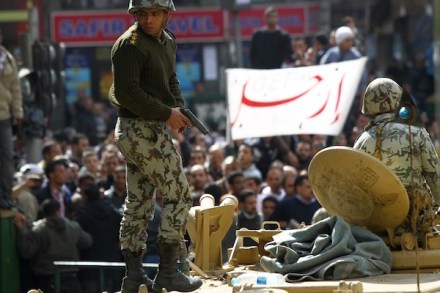
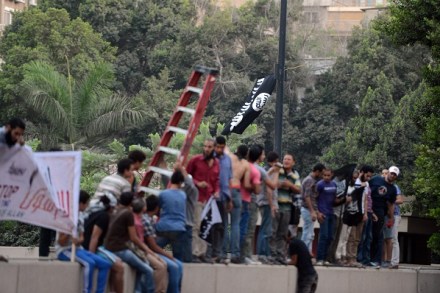
This week's coup in Egypt leaves President Obama’s administration in an awkward position. Although the State Department has insisted it remained neutral in the dispute, American taxpayers have been supporting the Egyptian armed forces since 1948 with more than $70 billion in military and economic aid. A further $1.3 billion of military aid is budgeted for next year. Obama has now instructed officials to review American aid commitments to Egypt. There is a delicate balancing act to be played here. Neither Obama nor the State Department called yesterday’s events a ‘coup’ because there are legal implications restricting U.S. aid to countries where an elected head of state is overthrown by a military coup.

Egypt shows us that elections aren’t enough

From our UK edition

Democracy and holding elections are not the same thing. There could be no better demonstration of this than the experience of Egypt. Protesters who two years ago gathered in Cairo to force a dictator out of office, and to win the right to replace him with an elected governmentS, are back — this time to demand the resignation of the president whom they elected. The likely result is, by popular demand, a return to what preceded the Arab spring of 2011: a military dictatorship, for a period at least. From a western perspective this is inexplicable: why would people want to risk their lives to overthrow a military-backed president, only to come back two years later to reverse what they seemed to have achieved?

Hague stays vague on Egyptian coup

From our UK edition

William Hague was as circumspect as he possibly could be about the situation in Egypt in his Today interview. He insisted that Britain would work with whoever was in power in the country: 'We recognise states, not government and of course we recognise the state of Egypt and we have to work with whoever is in authority in Egypt, we have to do that for the safety of British nationals, we have to do that because there are so many British companies there, so there isn't really any question of not recognising a particular government.' Hague has very little choice, but there are also precious few rewards for a Western country that tries to ally itself with one group or another in these situations. There are plenty more twists and turns to come for Egypt.

Egypt’s institutions are so weak the army is all that’s left

From our UK edition

There’s a joke doing the rounds in Tahrir Square which goes like this: ‘Nasser, Sadat, and Mubarak all tried to destroy the Muslim Brotherhood, but only Mursi succeeded’. As protests against the world’s oldest Islamist party intensify, the Brotherhood is now learning the price of power after decades of being confined to the political wilderness. On the one hand there are very obvious reasons for the current discontent. Egypt’s fortunes have tanked since the revolution with its economy stagnating, rising inflation, increased corruption, and the near disappearance of its tourist industry. For all those invested in the revolution that swept away Hosni Mubarak it was never meant to be like this.

PMQs sketch: Another wretched day for Ed Miliband

From our UK edition

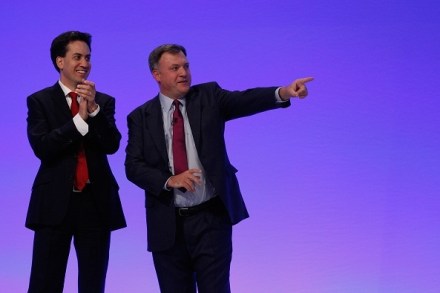
Today Ed Miliband headed for the favourite destination of faltering leaders: abroad. Any crisis-stricken banana republic will do. At PMQs the Labour leader decided that Egypt would fit the bill. Knitting his brows into a gap-year frown of munificent superiority, Miliband asked the PM to tell us how Britain is encouraging President Morsi ‘to secure a negotiated settlement in advance of the army deadline.’ Yes, Ed. Absolutely. The whole of Tahrir Square is hanging on your every word. Cameron might have come clean at this point and told us what Ed was playing at: ‘I may not save Egypt from its looming civil war but its looming civil war may save me.’ Cameron didn’t, however. Bogus statesmanship is a plague no politician is immune to.

Ed Miliband and David Cameron get personal in PMQs

From our UK edition

When Ed Miliband began at PMQs by asking about Egypt, it looked like he was going to do six high-minded questions on foreign affairs and thus dodge the political attack the Tories had lined up for him. But that wasn’t Miliband’s plan, after a couple of questions on Egypt he shifted to education. I suspect that by the end of session, he wished he stuck to what’s going on in Tahrir Square. For Cameron took the return to domestic politics as an opportunity to relentlessly batter Labour over its links to Unite and Unite’s behaviour in Falkirk. Cameron and Miliband went at each other with real needle. There was a level of personal animus between the two of them that you don’t normally see.

Alexandria, by Peter Stothard – review

From our UK edition

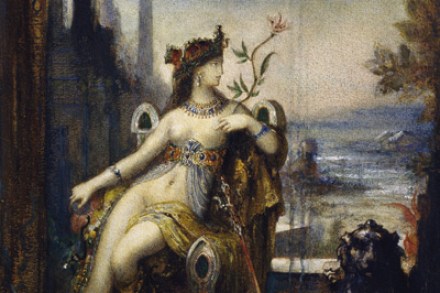
This subtle, mournful book is many things. It is a diary of three weeks spent, during the tense winter before the outburst of the Arab Spring, in off-season Alexandria, where nothing comes ‘except birds to the lake, most of them when they have lost their way’. It is also a series of fragments rescued from Peter Stothard’s rich life as Essex schoolboy, Oxford student, Times editor and lifelong classicist. Another part, but only a small one, is a history of Cleopatra — and the story of Stothard’s seven previous, failed attempts to write about her. Classical scholars, however, will recognise this book for what it really is.

Red Nile, by Robert Twigger – review

From our UK edition

When Bernini designed his fountain of the four rivers for the Piazza Navona in Rome in 1651 he draped the head of the god of the Nile with a loose piece of cloth, to denote the fact that its source remained unknown. Tracing the sources of both the Blue and the White Nile would become one of the most heated and consuming of all Victorian quests and the adventures and tribulations of the men — Petherick, Stanley, Baker, Bruce, Burton, Speke — and one woman, Baker’s Hungarian slave wife, Florenz, have provided rich material for many generations of writers.

Bassem Youssef’s arrest is just one example of the attack on free speech in Egypt

From our UK edition

Bassem Youssef is better known as ‘Egypt’s John Stewart’. He is a 39 year old cardiologist who made his name with an online comedy programme styled along the lines of The Daily Show. Ever since Egypt’s revolution in 2011 Youssef has attracted a large following in the Middle East, making fun of religious and political figures. With both of those features merged somewhat toxically in the country’s ruling Muslim Brotherhood, there was almost a sense of inevitability about Youssef’s arrest last week on charges of insulting Islam and the President. Youssef’s case has generated a lot of international attention but there are scores of arrests like his. Consider Ali Qandil, a stand-up comedian who appeared on Youssef’s show.

Thinly veiled threats

From our UK edition

No one could ever accuse Shereen El Feki of lacking in courage. To spend five years travelling around the Arab world in search of dildos, questioning women about foreplay and anal sex, is not a task many writers would relish. Sex and the Citadel is a bold, meticulously researched mini Kinsey Report, rich in anecdote and statistics. El Feki’s father is Egyptian and a devout Muslim, her mother a Welsh Baptist, who converted early to Islam. An only child, with fair northern features, she grew up in Canada and was raised as a Muslim.

Morsi uses emergency laws he once decried as dictatorial

From our UK edition

The emergency law has returned to Egypt less than two years after Hosni Mubarak was ousted from power, when Mohammed Morsi reintroduced it to curb unrest which claimed 33 lives over the weekend. It is a remarkable move given that the law epitomised much of what was wrong with Mubarak’s administration and fuelled the anger against him. Provisions in the law allow police to detain suspects indefinitely, often with little evidence; subvert constitutional rights; and curb press freedoms. Mubarak used these laws throughout his thirty year rule. The Muslim Brotherhood is sensitive to accusations of authoritarianism despite Morsi frequently revealing his proclivity for repression.

BBC begins to see that the Arab Spring has not sprung

From our UK edition

Hugely exciting Ten O Clock News last night on the Arab Spring – or ‘Arab Uprising’ as the BBC now prefers to call it, the word Spring usually being associated with nice things like lambs and daffodils. They had George Alligator in Egypt and Lyse Doucet in Tunisia and some other bloke somewhere else. I like Lyse Doucet, she’s less credulous than most. George Alligator, in a piece which was largely a string of clichés, said that Egypt’s democracy was ‘a work in progress’, at which point I fell off the sofa in hysteria.

Mursi has divided Egypt in two with his authoritarianism

From our UK edition

The thing about Islamists is that they just can’t help themselves. Mohammed Mursi’s stock was riding high in certain quarters shortly after he slapped down Hamas in Gaza and avoided a full-scale confrontation with Israel. Foreign policy panjandrums in London and Washington who tout fashionable theories of a ‘moderate Muslim Brotherhood’ felt vindicated in their convictions, arguing the group is really just an Arab version of European Christian Democrats. Yet so attracted is the Brotherhood to the clarion call of reaction that after the ceasefire, Mursi instantly seized the moment to reveal his proclivity for authoritarianism.

Israel under Islamist siege

From our UK edition

I have a piece in the Wall Street Journal (Europe) today on the pyrrhic ceasefire between Israel and Hamas. Also - this week’s magazine carries a cover piece by me on the change that is happening in the region. As though determined to prove me right, the new Egyptian President has – with the praise of Hillary Clinton and Ban Ki-Moon still ringing in his ears – made certain declarations of intent: ‘Egypt's President Mohammed Mursi has issued a declaration banning challenges to his decrees, laws and decisions. The declaration also says no court can dissolve the constituent assembly, which is drawing up a new constitution. President Mursi also sacked the chief prosecutor.

The Gazan conflict poses a dilemma for Mohammed Morsi

From our UK edition

As tensions between Israel and Gaza continue to flare, the real story is what’s happening in Cairo. The conflict represents an acute crisis for the Muslim Brotherhood, which knows the West has long been apprehensive about how it would conduct itself with regards to Israel. So far, the Brotherhood has been in no rush to give a definitive answer, offering instead a mix of sabre-rattling and olive branches. Its hand is now being forced. Internally, the Brotherhood is divided over the Gaza conflict. Hard liners see this as an excuse to tear up the peace treaty, reassert Egyptian pride, and impose themselves on the conflict.

‘Arab Spring’ is a misnomer

From our UK edition

What do you do when confronted with a prejudice so strong it takes your breath away? In my case, I did what was immediately necessary. I took a deep breath to replenish lost oxygen, and moved on. It wasn't the time or place to take on this particularly ugly example of intolerance; but it is an intolerance which needs to recognised. I was giving a lecture at a charity that trains journalists from around the world. Some are already making their way in the industry and are expected to do well. I was talking about my theory that the term 'Arab Spring' actually clouds our understanding of what has been happening in the region over the past 18 months.  From the Egyptian coup d'etat onwards, I've argued that calling these events the 'Arab Spring' automatically frames them as positive.

Party conferences: a vapid kind of hell

From our UK edition

As I may have intimated last week, political conference season is a particular kind of hell. Most of us just are not diverted by faked class warfare or efforts by Ed Balls to be more ‘butch’ than David Cameron. Anyhow – whilst the few remaining members of political parties come together to remind the rest of us why we want nothing to do with them, here are some things that are actually happening. 1).

The Muslim Brotherhood’s rank hypocrisy

From our UK edition

Western media and governments which are currently white-washing the Muslim Brotherhood should take note of the following, a classic example of the organisation’s traditionally forked-tongue way of working. Ahram Online carries the story which relates the recent rioting across North Africa and the Middle East. After the attack on the US Embassy in Cairo on Tuesday, the Muslim Brotherhood’s official English-language twitter yesterday tweeted: ‘We r relieved none of @USEmbassyCairo staff were harmed & hope US-Eg relations will sustain turbulence of Tuesday’s events.’ The US Embassy tweeted their thanks in the following way: ‘Thanks.  By the way, have you checked out your own Arabic feeds?  I hope you know we read those too.

How Iranian media saved Ahmadinejad from embarrassment

From our UK edition

If you ever needed an indication of how the media spouts the propaganda of authoritarian regimes like loyalist apparatchiks faithfully repeating the party line then look no further than Iran. Coffee Housers will remember that last week I highlighted the damning speech given by Mohammed Mursi in Iran during the Non-Aligned Movement conference where he took the opportunity to slam the Syrian regime, describing it as having lost its legitimacy. Mursi’s grandstanding caused some embarrassment to Ahmadinejad given Iran’s unconditional support for Bashar al-Assad – but that’s where the embarrassment seems to have stopped.

Mursi’s mischief and muscle in Iran

From our UK edition

It is not uncommon for new leaders of new nations to flex their muscles. And in spite of its millennia of history as a nation, this is precisely where Egypt now finds itself. It has hosted its first free and fair democratic elections, and, for the first time, has a civilian occupying the Presidency. In this new nation, reborn for the umpteenth time, Mohamed Mursi is busy showing off the Brotherhood’s sinews. He landed in Tehran today, a move the Ahmadinejad government had touted as a diplomatic coup. No Egyptian leader has visited the country in more than three decades, and relations have been little more than frosty at the best of times. But as I suggested on Coffee House last week, Mursi was not headed there to prostrate himself before the Ayatollah's authority.