Edward snowden

Tulsi Gabbard avoids the landmines

From our US edition

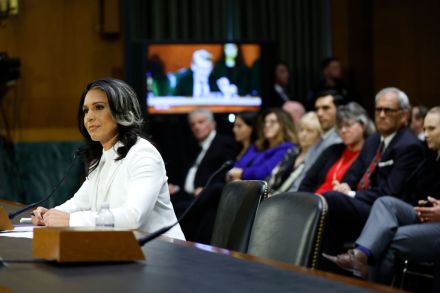
Tulsi Gabbard has been roundly described for weeks as the Trump cabinet nominee with the most narrow path to approval, with multiple media sources suggesting that she does not have the Republican votes to win should she even get out of the Senate Intelligence Committee. But if that is the case, it wasn’t on display in her performance before the committee today — not in her presentation, her chosen backers, nor in the lines of questioning from Republican members. It has been widely suggested that two senators, Todd Young of Indiana and Susan Collins of Maine, could potentially break with Trump by siding against Gabbard in the behind-the-scenes vote on her nomination.
Gabbard

The coming fight over the government’s surveillance powers

From our US edition

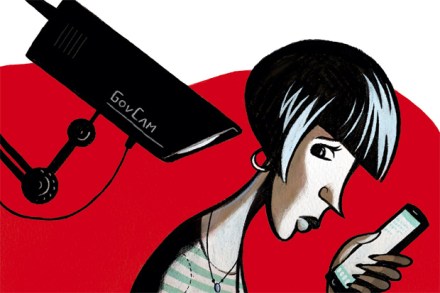
You've been warned: a fight over the government’s ability to spy on its own citizens is coming to Congress. Section 702 is up for renewal again in December. Section 702 grew out of an illegal post-9/11 program called Stellarwind, exposed by NSA whistleblower Tom Drake. It refers to a provision of the Foreign Intelligence Surveillance Act (FISA) that was enacted in 2008. It authorizes the government to collect the communications of non-Americans located outside of the United States for the purpose of obtaining foreign intelligence information. But the program also allows for the incidental collection of information about Americans who may be communicating with the targeted foreigners.

Trump might be Edward Snowden’s last chance at freedom

From our US edition

There was speculation that more pardons could be on the horizon after President Trump recently pardoned his former national security adviser Michael Flynn. Some members of Congress are encouraging Trump to grant the boldest clemency currently being discussed: NSA whistleblower Edward Snowden. Democratic congresswoman Tulsi Gabbard tweeted on November 27, one day after the Flynn announcement, '@realDonaldTrump Since you’re giving pardons to people, please consider pardoning those who, at great personal sacrifice, exposed the deception and criminality of those in the deep state.' Her tweet linked back to a post from October promoting her legislation that would drop US charges against both Snowden and Wikileaks’s Julian Assange.

snowden

Trump should pardon Edward Snowden

Edward Snowden says that he didn’t mean to end up in Russia when he fled after leaking secrets from his job at the United States National Security Agency (NSA). He writes in his autobiography, Permanent Record, that he agonised about where to go. Europe was impossible because of extradition. Africa was a ‘no-go zone’ because the US ‘had a history of acting there with impunity’. Eventually, he went to Hong Kong and after hiding out there for a short time, he made a dash for Ecuador in hope of getting asylum. But the US cancelled his passport and, in what we’re told was an unfortunate coincidence, he got stuck in Sheremetyevo airport in Moscow as he changed planes.

In defense of treason

From our US edition

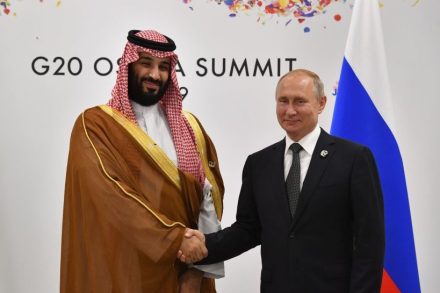
The recent G20 meeting in Osaka and its surrounding events provide a sad view of the emerging New World Order: Trump exchanging love messages with Kim Jong-un and inviting him to the White House, Putin jovially clapping hands with Prince Mohammed bin Salman, and so on, with Merkel and Tusk, the two voices of old European reason, marginalized and mostly ignored. This NWO is very tolerant: they all respect each other, no one is imposing on others imperialist Eurocentrist notions like women’s rights. This new spirit is best encapsulated by the interview Putin gave to the Financial Times on the eve of the Osaka summit, in which he, as expected, lambasted the ‘liberal idea’ claiming that it ‘outlived its purpose.

treason

Question time | 8 December 2016

If you were to see one film about American whistle-blower Edward Snowden — there is no law saying you have to, but if you were — then the film you want is probably Laura Poitras’s 2014 documentary Citizenfour rather than this biopic from Oliver Stone. It’s being sold as a ‘pulse-pounding thriller’ but oh, if only it were. Instead, it’s psychologically thin, tiresomely hagiographic and doesn’t answer any of the questions you’d like it to answer. Certainly, my pulse failed to oblige and if yours doesn’t behave similarly, I’d be most surprised.

Tangled web | 30 June 2016

Mike Bartlett’s curious blank-verse drama Charles III became an international hit. His new effort examines the cut-throat world of dark-web espionage. An American traitor named Andrew (Edward Snowden presumably) is hiding out in a Moscow hotel. Enter a flirty, giggling Irishwoman played by Caoilfhionn Dunne, who claims to be British and who teases Andrew over his betrayal of his homeland’s secrets. She evinces an interest in Oscar Wilde and the pair lock horns over footling minutiae. Andrew points out that Barbie dolls are called Sindy in the UK and this seems to demonstrate his familiarity with Britain. But he fails to spot the false cadences of her accent and he doesn’t query her use of the strange term ‘British Metropolitan Police’.

Inside the Ecuadorian embassy with Julian Assange: Risk reviewed

'This film would not have been possible without the following encryption tools,' is one of the least expected film credits I can think of. But then again, Laura Poitras’s Risk is not exactly your run-of-the-mill documentary. After her Oscar-winning Citizenfour, a gripping hour-by-hour account of Edward Snowden’s NSA surveillance disclosures from his Hong Kong hotel room, Poitras’s latest is an intimate portrait of WikiLeaks founder and editor-in-chief Julian Assange. Poitras started filming Assange at work in 2010 and her film follows the whistleblower’s mission and his various legal travails since then. As a result, Risk is far less dramatically sensational than Citizenfour, which unfolds over the course of several history-making days.

Life in a glass house

‘First and last I was, and always would be, an American,’ Jeremy O’Keefe, the professor narrator of Patrick Flanery’s new novel, insists, with just the kind of pedantic over-emphasis that makes the reader suspicious. Equally dubious is the way he talks. Having spent the last decade at Oxford teaching and writing a book about the Stasi, O’Keefe’s speech is now an odd mixture of affectation and deracination (‘helicoptering’, ‘faux-artisanal’). On his return to New York he finds that he is ignored or mistaken for an Englishman — something which affronts him as much as his Oxford colleagues, with ‘their exclusionary quality’, refusing to accept him as one of their own. His memory, too, is in doubt.

Safety first | 21 January 2016

This week brings to a close an absurdly overblown cause célèbre. The Court of Appeal ruled that David Miranda’s detention at Heathrow three years ago under the Terrorism Act was lawful. He had been part of a professional operation leaking classified information to the Guardian, which compromised British and American national security. Yet the judgement was hailed as a victory for Miranda because the court also noted that the Terrorism Act didn’t include sufficient protection for journalists carrying sensitive information. It asked Parliament to look again, in order that it be compatible with the European Convention on Human Rights — even though, in this case, there was no breach. This magazine is a staunch defender of press freedom.

Why should we listen to Benedict Cumberbatch on Syrian refugees?

Because I just don’t know what to think about the Syrian refugee crisis — not even after Simon Schama’s powerfully cogent argument on Question Time the other week, where he explained that if you don’t want to house them all in your guest bedroom you’re basically a Nazi — I thought I might pay the scalps a couple of hundred quid or so to see Benedict Cumberbatch as Hamlet at the Barbican. Apparently the really exciting bit isn’t anything he does as the Dane but rather Shakespeare’s rarely performed postscript where Hamlet comes back to life in the terrifying form of a preening, hectoring Old Harrovian luvvie to berate the groundlings for their uncaringness. ‘A pox on the politicians!

The end of secrecy

Gordon Corera, best known as the security correspondent for BBC News, somehow finds time to write authoritative, well-researched and readable books on intelligence. Here he explores the evolution of computers from what used to be called signals intelligence to their transforming role in today’s intelligence world. The result is an informative, balanced and revealing survey of the field in which, I suspect, most experts will find something new. He starts with an event that took place 101 years ago next month, when the British dredger Alert set off from Dover in the early hours to cut the German undersea telegraph cables.

Spy if you must, but don’t give the game away

The Snoopers’ Charter. I ought to care about this. I’m a sort of libertarian. I believe in personal freedom. I’m a trustee of Index on Censorship. The state as Big Brother is everything I’ve always fought in politics. So why can’t I quite summon the requisite indignation? Why do I find all this Edward Snowden stuff vaguely irritating? Why does the crusading column for the Times, railing against state surveillance, somehow keep failing me, though time and again I’ve opened my laptop and tried to make a start?

Portrait of the week | 18 June 2015

Home Talha Asmal, aged 17, from Dewsbury, West Yorkshire, died in a suicide bomb attack on forces near an oil refinery near Baiji in Iraq, having assumed the name Abu Yusuf al-Britani. A man from High Wycombe, Buckinghamshire, Thomas Evans, 25, who had changed his name to Abdul Hakim, was killed in Kenya while fighting for al-Shabab. Three sisters from Bradford were thought to have travelled to Syria with their nine children after going on a pilgrimage to Saudi Arabia. Britain had had to move intelligence agents, the Sunday Times reported, because Russia and China had deciphered documents made public by Edward Snowden, the CIA employee who has taken refuge in Russia. Payments expected by customers of the RBS group of banks failed to enter accounts overnight.

Mass surveillance is being undermined by the ‘Snowden effect’

We are in the middle of a Crypto war again. Perhaps we have always been in the middle of a Crypto war. Since the 70s, the right and ability to encrypt private communications has been fought over, time and again. Here in the UK, Cameron’s re-election has prompted reports of a 'turbo-charged' version of the so-called ‘Snoopers’ Charter’, extending further the powers of surveillance that the whistleblower Edward Snowden described as having 'no limits'. Two nights ago, the US Patriot Act expired. With it, at least officially, elements of the NSA’s bulk surveillance programme expired too.

Snowden now faces the traitor’s fate – worship from hipsters and Hollywood

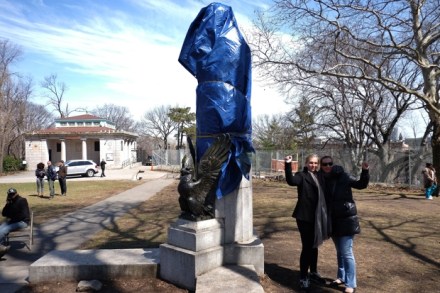
New York Brooklyn is the hipster heaven of New York, which is perhaps why it was there that a bust of Edward Snowden was unveiled yesterday.  Not that it stayed long.  The bust of the former National Security Agency contractor was put on a pedestal sometime on Monday with the word ‘Snowden’ glued on the base at the Prison Ship Martyrs' Monument at Fort Greene Park.  It was taken down a few hours later by parks and recreation employees. I don’t want to read too much into this, but the brief deification and bringing down of Snowden’s image does seem apposite.

What are we willing to do to make our intelligence agencies’ job easier?

Ottawa. Sydney. Paris. Copenhagen. Four major Western cities attacked in five months by Islamist terrorists and all committed by perpetrators with lengthy histories of criminal activity. When the next terrorist attack occurs, there will be those that demand to know why intelligence agencies failed to watch the perpetrators closely enough (as was the case with the murder of Drummer Lee Rigby). However, should we not also ask what we, as a society, are willing to do to make our intelligence agencies’ job easier? Consider the current debate surrounding communications data (the who, when, where, and how of a communication, but not the what – i.e. the content). Access to communications data is not so different to other long-standing forms of state interception.

‘Torture is torture’ ignores the complex nature of intelligence gathering

On Thursday I was on the BBC’s ‘This Week’ to talk about the CIA and torture. It is, for many reasons, perhaps the most gruesome subject possible. And not just because of the hideous allegations involved, but also because it is one of those subjects which people wantonly lose their reason over. Like a small number of other subjects in our society at the moment, it is one which people try wilfully to simplify, usually in order to show the world what a moral person they are and, by contrast, what immoral people their opponents are. I will use this post to set out some of my own views and certain objections to what seems to be the status quo debate on all this. Didn’t this week’s report showed the CIA to be torturing on an industrial scale?

Citizenfour: the paranoia of Snowden & co will bore you to death

In simple entertainment terms Citizenfour isn’t as interesting as watching paint dry. It is more like watching someone else watching paint dry. People with opinions on Edward Snowden tend to divide into those who think he’s one of the biggest heroes of all time and those who think he’s at least one of the worst patsies or traitors of all time. Either way it’s hard to imagine why either party would want to watch two hours of footage of him typing on a keyboard. And then typing some more. While the camera focuses on him from the other side of the keyboard. For a very long time. Neither is it obvious why we should wish to watch footage of him staring out of a window. Or gelling his hair.

The emergency surveillance legislation will make us safer

Isabel wonders whether it is a good thing that all main parties allied in passing emergency surveillance legislation into law yesterday. While it's true that legislation passed without any significant political objection can be bad news, this is one case where that rule does not apply. There are a number of reasons why the legislation was necessary. One was the European Court of Justice verdict from earlier this year that meant that this country and a large number of internet providers were at risk of entering a legally grey area. Far from being an ‘extension’ of powers, this bill is about the retention of powers which had been accepted until the European Court ruling put this into question.