Economy

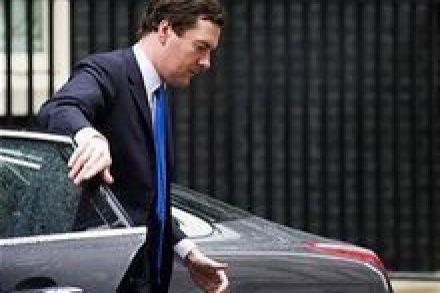
It’s turning into an extremely good week for Osborne

The gods are smiling on George Osborne. On Monday, he wrote an excellent article in the FT, explaining why he opposed the government’s fiscal plans and giving a brief sketch of his alternative vision. It was a short, sharp, shock article that contrasted with the tentative and nebulous announcements that characterised the Tory post-New Year slump. They were immediate benefits. On Tuesday, the EU Commission broadly supported the Conservative position on reducing public spending, and today a City AM poll indicated that 77 percent of a panel of City experts think that cuts must be made this year. Indeed, many panellists rejected Samuel Brittan’s contention, elucidated in last week’s Spectator, that the markets expect the continuation of current strategy.

The Chancellor’s debate is an opportunity for Osborne

So, we have a date for the Chancellor’s debate. Channel 4 News will host Darling, Cable and Osborne on Monday the 29th of March at 8pm.   I have a suspicion that George Osborne will come out of this debate rather well. He doesn’t have an expectations problem, unlike Cable, and is quick on his feet. Most importantly, the facts are on his side. It is also worth remembering, as one Tory MP reminded me earlier this week, that since becoming shadow Chancellor Osborne has never failed on a set-piece occasion.   One thing that Osborne must do in the debates is make sure he takes on Cable as well as Darling. Cable’s reputation is over-inflated and Osborne has an opportunity to score some points by highlighting the contradictions in Cable’s record.

Clarke and Osborne are working well

The Daily Politics featured a telling exchange between Stephen Timms and Ken Clarke. Their arguments were unclear and their hypotheticals relentless - they were debating deficit reduction. A football phone-in DJ had been invited onto the programme to adjudicate. After 7 minutes he broke his befuddled silence and declared, understandably, that Clarke and Timms were a turn-off to ordinary voters. Immediately, Clarke responded clearly and directly, making a case for reducing the deficit with reference to the chillingly close reality of Greece’s collapse. He avoided patronising, homespun economics; and simply delivered bald analysis and a statement of intent with his characteristic gusto. By contrast, Timms remained silent. Clarke is the Tories’ prize-fighter.

Osborne tries to kickstart a mature economic debate

David has already blogged about George Osborne and Jeffrey Sach's article in the FT this morning.  But it's worth returning to what is as clear and as unalloyed a statement of Tory policy on the public finances as you'll have seen over the past few months.   What I find most impressive about the article isn't so much its loose, perhaps nebulous, prescriptions for the economy - although they're sensible enough - but rather the way it acknowledges how some prominent academic and public figures hold a different view of things, and explains, in straightforward terms, why the Tories don't agree with them.  For instance: "The financial models underpinning the two camps differ.

Brown sets the stage for a scorched earth Budget

Gordon Brown must be feeling generous today, for he did the Tories two favours on Woman's Hour earlier.  David has already mentioned the first one: Brown saying that he would "keep going" as party leader even if Labour loses the next election, which ups the potential for more summertime Sturm und Drang on his own side.  But the second, as Ben Brogan points out, is his claim that the state of the economy makes it difficult for the government to detail any spending cuts.  The Tories will happily seize on that to justify their own "wait until we see the books" approach. More broadly, Brown's claim also sets the stage for next week's Budget.  The obvious insinuation is that it won't contain much by way of cuts or new deficit reduction plans.

Osborne colours the water blue

George Osborne has long been in the City’s crosshairs, and criticism peaked last week when less than a quarter of a City panel believe he has the mettle to be Chancellor. Today, Osborne fights back in the FT, with a piece co-penned by Jeffrey Sachs. The pair set out an argument for immediate ‘frugality’, rather than ‘cuts’, and damn Brown’s economic policy as short-term politicking: ‘We are sceptical that a sustainable economic recovery can be based on either reinflating the sectors that have declined or believing future job creation can come simply from the public sector payroll.

The Tories should ignore Byrne’s tax fantasy

Liam Byrne told The Daily Politics yesterday that Labour would reduce the deficit without raising additional taxation to that which is already planned. Iain Martin describes this pledge as being akin to a chocolate fireguard. He’s right. It’s less realistic than a Jeffrey Archer novel. As Andrew Neil notes, Labour plans to reduce £82bn from the deficit by 2014 with £19bn in tax rises and £38bn in cuts. They bank on economic growth eradicating the remaining £25bn. The government’s optimism for Britain’s economic prospects is touching but scarcely credible on the basis of 0.3 percent growth and the frightening trade deficit. Andrew Neil observed that Byrne was armed with books of notes and briefings.

Clegg’s conditions

Nick Clegg is the rage of the papers this morning. His interview with the Spectator is trailed across the media and the Independent has an interview where Clegg once again lists the four demands that would be his initial negotiating tests for backing a minority government. They are: - Raising the income tax threshold to £10,000 through taxes on the rich. - An education spending boost for the poorest in society through the 'pupil premiums'. - A switch to a Green economy, less dependent on financial services.  - Political reforms at Westminster, including electoral reform. What to make of that quartet? There is much that is sensible, much that is not, and still more that is unworkable.

The Budget will be on 24 March

So now we know.  Gordon Brown has just announced that the Budget will be on 24 March – which strongly implies an election date of 6 May.  Brown could dissolve Parliament on 6 April, the manifestos would be published on 12 April, and then we'd be into the campaign proper.  Which means even more speeches, polls and dread speculation than we're getting now. As for the Budget's general flavour, we'll probably get an idea of that today, too.  Brown's currently giving a speech in which he's brushing over recent tremors in the markets, to say that we are "weathering the storm; now is no time to turn back".  Which comes straight off the same old hymnsheet: let's stick to our current deficit reduction plan (such as it is), and turn up the spending taps this year.

Bring on the serious economic debate

Why does Britain fall for financial spin so often? The question goes well beyond the great confidence trick of Gordon Brown's ten years in the Treasury. I'm just back from three weeks in Australia. What’s always struck me in the years I’ve gone there is how different the newspapers/news shows/political debates are. They are well informed about macro-economics, and there is much less of the spin/personality culture of the mainstream media in the UK. Canada is exactly the same. Last week, the Canadian budget was published – a very clear and credible path to getting budget back to balance within three years.

Britain on the brink

It is a calculation that should fill all of us with an immense sense of dread: there is now a 72.2 percent chance of a hung parliament. Or so says Michael Saunders, Citigroup's chief European economist and the one man in the City everybody listens to when it comes to the interaction between parliamentary politics and the financial markets. His model, which incorporates the standard data about the Westminster first-past-the post system, and into which he has fed all of the latest polls, also suggests that there is just a 6.2 percent chance of strong Tory majority, a 19.1 percent chance of a weak one and 2.5 percent chance of a Labour majority.

Hague gives Hattie a PMQs kicking

Brown bunked off PMQs today, claiming a prior luncheon engagement with President Zuma of South Africa. Downing Street blamed the Queen for double-booking the PM. Can that be true? The head of state deprives the Commons of its democratic right to shout ‘Answer the question’ at a block of granite. Perhaps she had their best interests at heart. Hattie Harman, replacing the PM, turned up in a pair of alarmingly shrill pink glasses. Opposite her, William Hague wore a sober suit of inky blue. He looked ominously business-like as he aimed his first shot at her. Why had Brown cut the helicopter budget while the country was fighting two wars? This sent Hattie scampering to her dressing-up box of muddled phrases.

Who should be the Tory attack dog?

A persuasive passage (complete with a spiky, ministerial quote – highlighted) from Rachel Sylvester's column this morning: "There is growing concern among some Shadow Cabinet ministers and strategists about the increasingly aggressive tone Mr Cameron uses against Mr Brown. It is, they believe, no coincidence that the poll gap has narrowed as the Tory leader launches a series of increasingly vitriolic personal attacks on the Prime Minister. Last week, for example, by turning the bully into the victim, Mr Cameron seems to have simply solidified support for Mr Brown. There was a similar backlash to the Conservatives’ misleading 'death tax' poster campaign.

Market tremors

Forget the polls, the markets should be enough to give any of us a sharp dose of The Fear.  Exhibit A: Sterling, which has slumped below $1.50 today, for the first time in nine months, and on the back of what analyists are calling "deficit worries".  And Exhibit B: the UK Gilt markets, where rising interest rates suggest that investors are rapidly losing confidence in Britain's ability to pay back its debt, just as Coffee House's Mark Bathgate warned a few months back.  Check out the FT for the full story. Of course, I say "forget the the polls" – but this is all very poll-related.  The possiblity of a hung Parliament – and, with it, the possibility of political paralysis – is preying heavily on the minds of investors.

Hague warns the country: If you don’t vote Conservative this time, it will be too late to reverse Britain’s decline

As this morning papers’ show, the Tories know that their spring conference here in Brighton offers them a chance to change the narrative of this campaign, to get back on the front foot. William Hague’s speech, the first big set-piece of the event, tried to frame the choice facing the country at the election as being between ‘change or ruin’. Hague warned that if the country doesn’t return a Conservative government at this election, ‘it will be too late...too late to reverse the decline: the debt will be too big, the bureaucracy too bloated, the small businesses too stifled, the slope Britain is sliding down will be too steep.’ Labour will try and say that this language is shrill, a sign of Tory panic. But there’s a lot of truth to it.

Method in his madness

The car manufacturer Henry Ford dominates this remarkable book, managing, like Falstaff, to be its tragic hero, villain, and comic relief all at the same time. A gaunt, pacing figure, he conducted interviews while standing, believed in the values of small Main Street America (though his methods of industrial mass production destroyed these), and in pacifism, fitting out a ship to sail to Europe in an attempt to stop the Great War (though later he made billions out of armaments, and had machine-guns mounted on his factories while his paid thugs shot down hunger-marchers).

An interview packed with Brownies

Brownies galore in our PM’s interview with the Economist. So many, in fact, that I thought I do a quick Fisk:   The Economist: The big worry seems to be the deficit—the deficit. What should the message should be? Gordon Brown: I actually think that the first thing that we’ve got to do as a global community—and I said it this morning and I’ll say it again—is that the reforms of the global financial system are not complete. As far as Britain is concerned, we are dealing with a one-off hit as a result of globalisation. FN: Let us pause, here, to consider the brazenness. Brown’s policies pumped the UK economy up with the steroids of debt. The banking collapse hit us harder than any country because he took the wildest risks.

Back with a vengeance | 25 February 2010

All of a sudden, the Big Banks are Big Politics again.  And who'd have it any other way, on the day that the 84 percent taxpayer-owned RBS announced losses for 2009 of £3.6 billion?  And that's alongside a bonus pool for its staff of £1.3 billion.  Yep - however hard they try, the exorcists of Westminster just can't shift the ghost of Fred the Shred. In which case, there'll be plenty about bankers' pay, and about getting taxpayers what's owed to them, over the next few days.  And rightly so.  But I often feel that these issues detract from even bigger ones, such as how to ensure that there aren't similar shocks in future.  After all, the financial furniture is arranged pretty much identically to how it was a couple off years ago.

On our shoulders

Our politics is such a shallow game that any senior British politician who has read a book is apt to be considered cerebral, and if he has read two, feted as an original thinker. So I had never quite dispelled the suspicion that the nickname ‘Two-Brains’ might have been awarded to David Willetts for no better reason than that he knew his stuff, could talk like an academic, had a lively sense of the complexities of things, and sounded a little vague. I had wondered whether he might be one of those men to whom the learned footnote meant more than the useful conclusion. This book goes a long way towards dispelling such suspicions. The Pinch is a powerful personal credo, a mine of information, and a solid and remorseless argument.

The great bailout

Hank Paulson’s new book is called On the Brink, but it could well have been entitled Over the Edge. Hank Paulson’s new book is called On the Brink, but it could well have been entitled Over the Edge. The story of his role as US Treasury Secretary throughout the great banking crash of 2008–9 gives an impression of people being swept along by a swirling chaos of unexpected events, often completely out of control. ‘This is the economic equivalent of war,’ Paulson said in the middle of the financial crisis in 2008, scrambling to find a resolution for AIG before the insurance behemoth brought down the entire economy. Warfare is certainly what it felt like.