Economy

Tory ‘stick with us’ message boosted by IMF

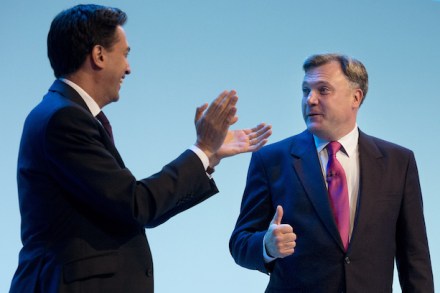
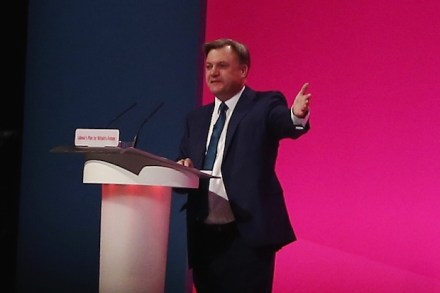
Poor old Ed Balls. He's been making predictions of doom that now appear to have gone too far and too fast. The latest blow to the Shadow Chancellor is that the IMF, which he went through a period of definitely liking a lot when its lieutenants started suggesting that austerity was 'playing with fire', has upgraded its growth forecasts for the UK by more than any other major economy. This map from the organisation's latest World Economic Outlook illustrates rather neatly how well the IMF expects the UK to do in comparison to other European economies. Obviously this doesn't mean that everything is fine and dandy and that everyone in the UK can enjoy golden sunlit uplands from now on. Balls is certainly one who isn't skipping through meadows of flowers with joy at the news.

America is not facing a debt crisis. Why pretend otherwise?

The maths of America’s financial problems are fairly simple. Every year the federal government spends more than it brings in so must borrow to fill the gap. This is fine when you’re young and healthy, with great prospects and you are borrowing to invest. But one day your lenders look at you and realise you’re not young and growing any more. You’re middle-aged and knackered. You are borrowing simply to spend and time is running out for you to pay back your debts. It’s an ugly moment for anyone, especially the most powerful country in the world. There are economists like Paul Krugman who argue that America is not like a household or a person. It can borrow and invest in ways unique to sovereign powers. Countries do not simply age and die.

Will David Cameron be sticking his finger up at Ed Balls after the latest service sector figures?

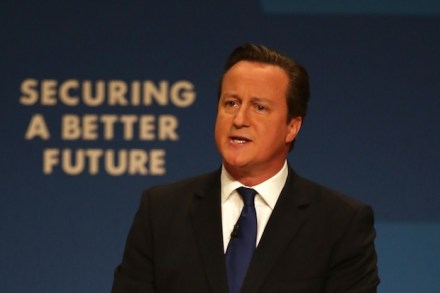
Yesterday David Cameron told the Tory conference that he had a new gesture for Ed Balls - a finger pointing upwards to indicate a stream of positive figures on the economy. You can almost imagine him doing it today at his desk in Downing Street after reading the latest figures on the service sector. Markit/CIPS' Purchasing Managers Index of activity recorded a level of 60.3, a slight decrease from August's seven-year high of 60.5, but enough to give the UK's best quarter for the services sector since 1997. Any number above 50 indicates growth. The level of growth, according to research from Citi's Michael Saunders, could be consistent with an annualised GDP growth rate of between 4 and 6 per cent.

View from 22 podcast special: the return of George Osborne

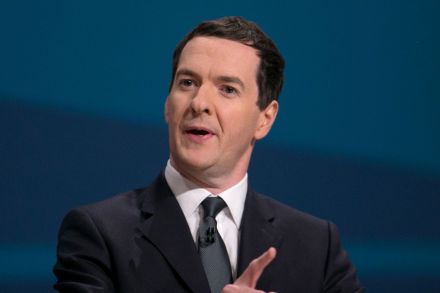
Fraser Nelson thinks it was the 'language of someone happy with the economy'. James Forsyth saw it as renewed hope for leading the Conservative party. On this special View from 22 podcast, we analyse George Osborne's speech to Tory conference this morning; whether the economic measures mentioned were sensible and what it says about the Chancellor himself.

The ghost of Gordon Brown stalks Ed Miliband’s dangerous business tax plans

Gordon Brown was notorious for complicating our already over-complicated tax system, and it seems that his former aide, Ed Miliband, wants to emulate the master. The danger is that Ed Miliband would do so against the backdrop of a vulnerable economy in a very mobile global market place. His latest idea is to put up corporation tax, arguing that this will “pay” for a freeze in business rates on small firms. In fact, the net burden on business will remain unchanged, so his tinkering would be little help to the small businesses that he allegedly wants to help. There are more devils in Miliband’s detail: the freeze would only apply to those properties with an annual rental value of £50,000 or less.

Ed Miliband’s seaside start

Ed Miliband’s interview on the Andrew Marr show neatly summed up the Labour leader’s problems in cutting through. Marr started with a series of questions about Miliband’s plans to change Labour’s relationship with the unions. This might be an important issue but it is hardly one of paramount interest to the electorate and every minute Miliband is speaking about this, he can’t be speaking about other things. The next distraction is the whole Damian McBride business. Indeed, Miliband telling Marr that he’d told Brown to sack McBride is the BBC News headline on the interview. Miliband also had to fend off a whole host of questions about why his poll ratings are so bad. Miliband did, though, try to keep bringing the interview back to the cost of living.

Lib Dem conference: Clegg isn’t fighting his activists, he’s just fighting a faction of activists

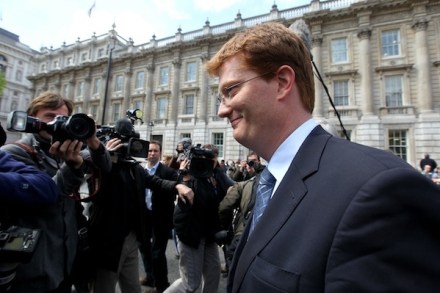
Nick Clegg's strategy of getting his party to approve his position on a number of contentious issues reaches its most awkward stage today, with the votes on the economy and taxes that are causing the greatest grief with activists. It's complicated by Vince Cable's plan to be a no-show at the economy debate in an attempt to hold onto his Jeremiah credentials. The votes are being billed as a clash between the leadership and its activists, but it's a little more complicated than that. Last night I attended a fringe held by Liberal Reform, a group in the party that campaigns for a market-based approach to policy-making.

Eeyore Cable undermines George Osborne by echoing his comments on the economy

Poor Vince Cable. He just can't help but brim with joy about the economy. He's often spotted skipping across Parliament square to the Business department, humming 'Oh, Happy Day!' under his breath at the latest set of GDP figures. George Osborne and Cable's Tory colleagues are always having to tell Vince to calm down a bit: he doesn't want to seem too complacent about the clouds lifting from the economy. But even such a joyful Lib Dem as Dr Cable must have been a little dispirited to read that everyone has written his speech this morning up as an attempt to undermine George Osborne. 'I think George Osborne's comments the other day were spot on!

Cameron wants to stop talking about ‘the crisis of our time’ as quickly as he can

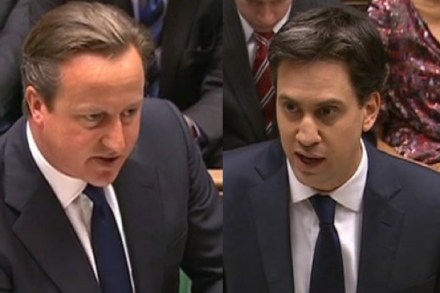
David Cameron’s statement to the Commons on the G20 wasn’t as lyrical as his response to Russia’s ‘small island jibe’. But it was a reminder of the needle that now exists between Cameron and Miliband. In previous times, these statements—which are far less tense affairs than PMQs—have seen a bit of badinage between the two front benches. But that has now gone. The statement was dominated by Syria, which Cameron called the ‘refugee crisis of our time’. When Cameron talks about his defeat in the Commons on Syria, he speaks very quickly, with no pauses between the words. It’s as if he wants to get talking about it over as quickly as possible.

George Osborne hits back on cost of living and trashes Plan B

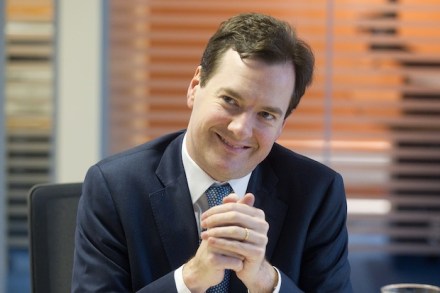
One of the Tories' real failings over the past few years has been to ignore the spores of a problem, and then wait until it has mushroomed into something they can't handle. Take the bedroom tax, food banks, or zero hours contracts: all of which Labour has managed to brand as a sign of the evil coalition's failure, complete with scary names, partly because ministers never bothered to frame these issues themselves. So this morning George Osborne attempted to trip up Labour in its latest charge against the Tories: the cost of living. And he got in before his opponents have made it up to full speed. It would have been tempting for the Chancellor to give a triumphant speech in which he teased and ridiculed his opponents now that things are going his way.

The coalition’s new case for HS2

The coalition government is preparing a new case for HS2. Concerned that public and political support for the project is slipping away, there’ll be a major effort to renew enthusiasm for it. In this new case, there’ll be far less emphasis on speed and far more emphasis on how HS2 is needed because the existing railway lines are full up. This marks a recognition inside government that the savings on the journey time to Birmingham, which are less than half an hour, are too small to act as a public justification for the project. Expect to see this new argument reflected in the Transport Secretary Patrick McLoughlin’s speech on Wednesday. I suspect that HS2 will retain the support of all three front benches in this parliament.

What use is a GDP recovery if living standards are stagnant?

Labour had better get used to headlines of economic upgrades. There’s about two dozen major forecasters out there, and each will take a turn to say that Britain’s doing better than they’d thought. To have such good news repeated will be a headache for Labour, as Iain Martin blogs today. But Labour are right to latch on to the caveat: the GDP number are not much use to someone facing a decade of wage stagnation. Words can be deceptive in economics: if you read ten news stories from ten forecasters talking about upgrades, it doesn’t necessarily mean things are getting better. The Treasury recently released five-year forecasts from the people it follows (pdf, here) and it’s not much better than the fairly glum forecasts from the Office for Budget Responsibility.

How much would Labour cost you?

Labour has decided that the cost of living is the best way to attack the Tories while it tries to fathom what its own policies are. This is a rich seam to mine, and the party wants to ask voters whether they are really any better off than they were five years ago. But Ed Miliband and his team may be reckoning without the energetic attack dog mood that the Tories are in at the moment. They are keen to fight Labour on this turf, too, rather than giving any ground. So confident are the Conservatives that rather than defend their record, they are also going on the defensive, launching Cost of Labour, a new website which estimates, based on personal circumstances, how much a Labour government would cost you. Like all CCHQ initiatives of late, it includes an all-important email field.

Is Ed Miliband a) hopeless, b) on course to become Prime Minister or c) both?

I have never quite understood Ed Miliband's appeal. He always reminds me of Cuthbert Cringeworthy from The Bash Street Kids. I find it hard to imagine him becoming Prime Minister. Something just feels wrong about that. I'm not alone in wondering about this. Brian Wilson, the former energy minister, wrote yesterday that Miliband still has a kind of credibility problem. People just don't think he's quite ready for the top job. They may not be able to say exactly why they're unimpressed by Miliband; they just know they are. Not so fast my friend, responds John McTernan today. Ignore all the chattering and blethering about Labour's slide in the polls and focus on the core picture: Miliband is still likely to be leader of the largest party after the next election. Everything is fine.

Why the happy Tories can’t relax after Labour’s bad summer

Last December, after one of the most brutal PMQs this Parliament has seen, David Cameron was walking through the corridors of the Palace of Westminster to address a 1922 Committee meeting. Ed Miliband had subjected the Prime Minister to a real savaging, and Labour backbenchers had loyally joined in, raising a constituent's suicide and describing Cameron's government as ‘grandeur for the few, the workhouse for the many'. It had been a bleak session. Heading for Committee Room 14, the Prime Minister bumped into a junior minister, who was keen to reassure him that everything would come out in the wash. He told Cameron that 'they can go for the emotional attack, and we can always come back at them with statistics'.

Cheery silly season puts Tories on even keel

Even if Help to Buy is contributing to a bubble rather than the sensible restructuring of the economy that politicians promised before they started trying to scale that particular mountain, there are still reasons to be cheerful about the economy for the Tories this morning, on top of the delight offered yesterday by Chris Bryant's antics. The Guardian's ICM poll finds today that the Conservatives' approval rating on economic competence has risen to 40 per cent from 28 per cent in June. Labour has only crept up five points in comparison, from 19 per cent to 24 per cent. There are clearly all sorts of reasons why the party shouldn't be hanging out the bunting for 2015 just yet (Paul Goodman has a good post on this here).

Argentina’s G-20 membership should be revoked

When Argentina appears in British public discourse, it is normally in relation to one of the two ‘f’s – football or the Falklands. The behaviour of President Cristina Kirchner’s regime towards the islanders is nothing short of disgraceful, and it is very encouraging to see the British government supporting the islanders in the strongest terms. The Falklands, for obvious reasons, are top of our agenda when it comes to discussion of Argentina, but this issue should not blind us from other major problems affecting this country as a result of Cristina Kirchner’s belligerence. Kirchner makes no secret of her refusal to play by the same rules as everyone else.

Tories go on the economic attack — Labour would cost Britain £50 billion

Would Labour destabilise Britain’s fragile economic recovery? The Tories are keen to convince the nation that Labour would, ahead of Miliband's expected offensive on the state of the economy and the cost of living. Positive growth forecasts, increasing construction and export figures  all add to the perception that the economy is on the up; but, as I discussed earlier this week, the mood in the country is still cautious and many people are struggling to make ends meet. Treasury minister Sajid Javid tackles this problem in the Telegraph today.