Doctors

The day the bishop hit me in the face

The bishop hit us in the face. That was the best thing about confirmation. When I was 12, along with every other boy in the school, I was formally prepared for the sacrament that marked our passage from infancy to adulthood. Confirmation lacks the festive atmosphere of a bar mitzvah where families enjoy booze, dancing and speeches along with the exchange of gifts. For us, it was a cheerless affair held in the vast, under-heated parish church where 200 fidgety 12-year-olds waited to receive the appropriate blessing from the bishop. He was called Cyril. We were familiar with his name from Sunday Mass when he was cited as an appropriate subject for our orations. ‘We remember our Bishop Cyril in our prayers,’ said the priest.
The NHS believes in fairness – they treat everyone with equal contempt

Edward Gibbon was troubled by a swelling in his lower abdomen. I have the same condition. ‘Wow. That’s huge,’ said my GP as he gazed at the affected area. ‘Huge?’ I said, trying to sound nonchalant. ‘I wouldn’t know. It’s the only one I’ve ever seen.’ My cyst has been expanding steadily for decades and I was told a few years ago that its intentions were peaceful. My new GP was trying to scare me, obviously. I don’t blame him. It’s dull work staring at sick bodies all day and he was trying to amuse himself with a spot of scaremongering. ‘You’ll need a scan within two weeks,’ he added. ‘Cancerous perhaps?’ I asked. He nodded with a sly grin.

The doctor will patronise you now

How a profession speaks to its subjects is always of interest to a writer, sometimes perversely so. Over the past few weeks a persistent problem with my foot worsened and appeared to take charge of things. (This isn’t going to be a piece moaning about ill health, I should reassure you.) The hospital took soundings of the ulcer, now turned into infection: first with a probe, then an X-ray, then an MRI scan, and finally the consultant manifested himself. The infection was in the bone and showed no sign of retreating under the antibiotics. It looked as if an operation was unavoidable, to remove – the consultant paused in his explanation – ‘We’re just going to take a kind of little nibble at the toe,’ he said. I regarded him levelly.

The ‘physician associate’ will see you now…

There is a war being waged in NHS hospitals. On one side are overstretched junior doctors in understaffed wards. On the other: physician associates (PAs) or, to use the more disparaging term, ‘noctors’.   Since 2003, non-medical graduates have been able to gain entry to hospital wards and GP practices if they complete a two-year clinical course that leaves them a ‘physician associate’ or ‘anaesthesia associate’. At first, PAs were rare – ten years ago there were fewer than 150 in England. Since the pandemic, however, the numbers have exploded. There are now approximately 4,000 PAs working in England and Wales.  PAs are supposed to help doctors with the time-consuming administrative work.

Who are the longest-serving Archbishops of Canterbury?

Arch rivals Justin Welby served longer as Archbishop of Canterbury than any of his four immediate predecessors, but others have served far longer. The longest since the Reformation was Randall Davidson, who held the position between 1903 and 1928, when he retired aged 80 – becoming the first not to die in post. Before the reformation, several Archbishops served stints of nearly three decades, but none so long as Thomas Bourchier, who was Archbishop between 1454 and 1486. Another long-serving Archbishop was St Dunstan, who held the post between 959 and 988, surviving to the age of around 80 in spite of having been beaten, bound and thrown into a cesspit in his youth. Digital divide How buoyant is the market for jobs in the digital sector?

I want to see a doctor – not do another NHS survey

Nye Bevan did not make old bones, and perhaps that’s just as well. According to a recent British Social Attitudes survey, 52 per cent of those polled are dissatisfied with the NHS, in particular with the difficulties in getting a GP appointment, with long A&E trolley waits and with huge delays for hospital appointments. All this, in spite of ever more money being chucked into its maw. If invited, I could immediately save the NHS a packet by dialling down the thermostat that has turned hospitals into Hotel Tropicana for bacteria, and by asking, wherever possible, patients’ relatives to provide food, thereby reducing the amount of unappetising slop that goes straight from plate to bin while the sick go hungry. But that is not my theme today.

Will public sympathy extend to the junior doctors’ strike?

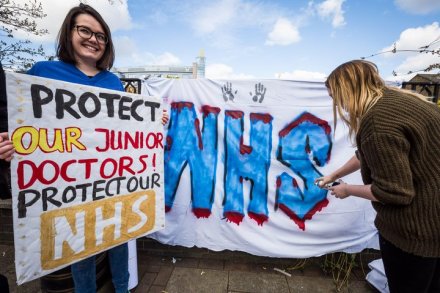
Next month, junior doctors in England will walk out for three consecutive days after an overwhelming majority voted to strike over pay and conditions. Just under 50,000 doctors were entitled to vote in the British Medical Association ballot, and 78 per cent did. Of the votes cast, 98 per cent voted in favour of strike action. The term 'junior doctor' refers to newly qualified foundation doctors, as well as all those doctors ranked in between, up until and including senior registrars. These doctors are hoping for a 26 per cent pay rise – a figure they say would amount to ‘full pay restoration’ after the BMA concluded that junior doctors have seen their real-terms wages fall ‘by more than a quarter’ since 2008.

A history of pioneering women doctors descends into Mills & Boon trivia

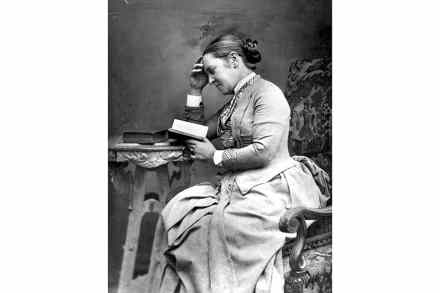
The first three women doctors on the medical register in the UK had not only to study harder than their male counterparts but also to contort themselves in almost impossible ways, jumping from city to city and country to country in order to gain the scientific knowledge and clinical skills that would allow them to progress. In fact, even after reaching standards where men could easily have graduated, they had to plead to be allowed to sit the exams. Of course, misogyny was not the only bigotry in the 19th century. To black slave-workers, these wealthy white women, who were encouraged to lead pampered lives rather than work in such a ‘male’ field, were lucky.

Medical emergency: general practice is broken

In March 2020, as the health service prepared for the first Covid wave, NHS England encouraged GPs to adopt a new system called ‘total triage’. The aim was to reduce the number of patients in clinics in order to protect GPs, their staff and patients themselves from the virus. If patients hoped this system was a temporary, emergency measure, they were wrong. Under ‘total triage’, patients had to provide far more details of their (sometimes sensitive and embarrassing) symptoms to a receptionist or on an e-consultation form. They would then be allocated a telephone consultation with their GP or another health professional such as a nurse, pharmacist or physiotherapist.

Sick jokes: why medics need gallows humour

Most jobs have their own joke books. If you’re outside the job, you don’t get the joke — and if you do get the joke, you’re on the inside; which is what the jokes are for. (It’s the same with all comedy: some, if not most, of the appeal of Stewart Lee is in being the sort of person who finds Stewart Lee funny.) But some jobs have joke books which, from the outside, are not just unfunny but actually offensive. Usually the most stressful jobs, those that involve the rawest emotions, have a gallows humour that is thought to relieve that stress. If you didn’t laugh, you’d cry. Or have to go to therapy. It’s been a mixed week for this sort of gallows humour.

Do you really need to see the GP in person?

Only later, perhaps even a decade later, as the pandemic of 2020-22 shrinks in our rear-view mirror, may we be able to assess its enduring consequences. So I am only speculating when I suggest that one of these may be the beginning of the slow death of general practice in the United Kingdom. And, no, this will not be a column attacking Britain’s GPs, whom I think to be mostly dedicated and hard-working men and women whose careers are demanding, whose work is difficult, and who are not paid excessively for the hours and expertise they bring to their vocation. Rather as with the class for which we use the generic term ‘politicians’, public discontent about ‘GPs’ is felt towards the generality.

Can doctors be ‘neutral’ on assisted dying?

The British Medical Association (BMA) has dropped its opposition to assisted dying after a landmark vote. In doing so, it marks a journey from professional principle onto the ethical fence. This is not the first time the BMA has declared itself neutral on the termination of post-natal human life. In 2005, the organisation voted to switch from opposition to neutrality on physician-assisted suicide but that position was overturned the following year amid charges that the policy shift had been achieved through an ‘extraordinary manoeuvre’ and ‘procedural tactics’. A decade later, in 2016, the body again rejected adoption of a neutral stance following a consultation with 500 association members and the general public.

Letters: In defence of GPs

Out of practice Sir: GPs are not ‘hiding behind their telephones’ (Leading article, 4 September). In-person appointments are the core of general practice, and practices have been delivering millions of them throughout the pandemic. GPs share patients’ frustrations with the limitations of telephone consulting, which can often take longer than a face-to-face appointment, and with longer waits to be seen. However, as with other areas of the NHS, practices continue to follow national infection control guidance to keep patients and staff safe. You talk of pubs and nightclubs reopening — but how many nightclubs force very sick people, many of them elderly and living with a number of long-term illnesses, into a confined space at the same time?

Has it really got harder to see a GP in person?

Floating vote Voters in St Petersburg were presented with three candidates all calling themselves Boris Vishnevsky, with two believed to have changed name and appearance to draw votes from the other. It is not the first time voters have faced a confusing choice: — In a Moscow city election in 2019 voters had the option of voting for ‘Alexander Solovyov’ — though it turned out not to be the Alexander Solovyov who was in prison at the time and barred from standing. — In the 2017 local election in Ferguslie Park, Glasgow, Conservative John McIntyre was elected, with many speculating that voters had meant to opt for an independent candidate called John Goudie McIntyre.

Pet project: how many dogs and cats are there in Britain?

Escape velocity The evacuation of Afghanistan was likened to the fall of Saigon on 30 April 1975. What were the logistics of that operation? — Although most US troops had left Vietnam, 5,000 civilians remained. Some left during the month, but ambassador Graham Martin gave the order to evacuate everyone only on 29 April. — The only available airbase had been shelled and there were no sea or land routes, so the only way out was by helicopter. In 24 hours 7,000 people were evacuated, including 5,500 Vietnamese citizens. Helicopters took off from the US embassy compound every ten minutes. — It was a 50-minute ride to US warships waiting off the coast.

It’s time for NHS GPs to stop hiding behind their telephones

Nye Bevan famously said that he was only able to persuade family doctors to support the creation of the NHS because he ‘stuffed their mouths with gold’. But at least he obtained good service from them — including home visits. Until Tony Blair awarded GPs hefty pay rises while allowing them simultaneously to opt out of night-time and weekend work, they were responsible for their patients’ care 24 hours a day, seven days a week — with practices often pooling resources to provide continuous cover. But the role of GPs has become increasingly unclear: do patients have a right to be seen in person? It was revealed this week that locum GPs are being offered £100 an hour to conduct telephone appointments from their own homes.

Why are doctors still hiding behind Zoom screens?

Where have all the GPs gone? Doctors were among the first to be double-jabbed, ahead of teachers in the queue precisely so they could resume seeing patients in the flesh. But while schools have long been back, GPs have retreated behind their laptops never to be seen again (at least not in the flesh). The stethoscope has been replaced by a headset — to the despair of patients with ailments that are hard to diagnose over the phone or via a laptop. In theory, GPs can claim normal service has resumed. In the pandemic the number of appointments almost halved to just over three million a week — in spite of attempts to keep healthcare running. The consequences of this drop can only be guessed at.

Health warning

Everyone agrees something dramatic has to be done to help the NHS. It is crumbling and the canary in the mine is general practice. I work as a psychiatrist but my GP colleagues are almost all frazzled, overworked and frustrated at not being able to give the care they want to their patients. They’re quitting in their droves. So it makes sense that politicians, desperate for a quick and easy answer to an overwhelming and complex problem, have leapt on technology as a solution. And, in particular, on  the idea of an app that offers a GP consultation via your mobile phone. In theory, it sounds great: the patient can dial up, speak to and (via phone camera) see a doctor, who could be anywhere. The poster boy is an app called GP at Hand, run by British start-up Babylon.

Doctor who? | 27 June 2019

Last October, Phil Coleman, a journalist on the Carlisle-based News & Star, went to cover the trial of Zholia Alemi, a 56-year-old consultant psychiatrist who was accused of forging the will of an 84-year-old dementia patient in an attempt to inherit her £1.3 million estate. During the trial, Phil realised this complex scam could not have been the work of an amateur fraudster, and suspected previous mischief. How right he was. It turned out that Alemi had been practising in the NHS for 23 years without a medical qualification. Originally from Iran, Alemi moved as a young woman to New Zealand where she claimed she had graduated in medicine from the University of Auckland in 1992.

Doctors cannot be neutral on assisted dying

The Royal College of Physicians will soon begin yet another consultation with its members on the subject of 'assisted dying'. The college is opposed to legalisation, but a minority are unhappy with this. They know there is no chance of persuading a majority to support such practices. So they are pressing for the college to declare itself neutral. Whether the law should be changed, they say, is a matter for society rather than for the medical profession. In one sense they are right. Whether the law should be changed to permit people to be supplied with lethal drugs to take their own lives is a social rather than a medical matter.