Doctors

Babylon’s NHS

Financial constraints combined with a shortage of staff have brought the NHS to a situation so desperate that it is proposing that doctors treat patients, not one by one, but in groups of 15 or more. It is good to see the NHS finally catching up with the cutting-edge thinking of the ancient Babylonians. Let the great Greek historian Herodotus (c. 490-c. 425 bc) explain... Herodotus travelled throughout the Near East as part of his mission to discover the deep origins of the conflict between Persians and Greeks that led to the famous Persian wars (490-479 bc). But he was also fascinated by human behaviour and assiduously recorded the customs of those peoples with whom he came into contact.

Admission of failure

I am in a good position to report from the NHS frontline, having been in hospital with pneumonia for just over a week from 28 December. I was admitted following an early evening visit from a district nurse to the home I share with my younger daughter, her husband and their three children. The nurse rang A&E to advise them of my impending arrival but warned us that there was a four-hour wait for an ambulance. My daughter therefore decided to drive me in, and we arrived at a packed casualty unit. I was desperate for oxygen and my daughter begged at the reception desk for me to be triaged to access some, with no success. At 11.30 p.m. I was finally examined and hooked up to an oxygen supply. I was found a bed in the admissions ward at 4 a.m., in an atmosphere reminiscent of a war zone.

Doctor of humility

Henry Marsh’s book Do No Harm (2014) was that rare thing — a neurosurgeon showing his fallibility in public and admitting to the great harm that good intentions can cause. It was a stunning, even revolutionary work, displacing doctors from their traditional ivory towers and showing them to be not only human and vulnerable to misjudgments, but also capable of self-admonishment and regret. At the time, I said it should be required reading for medical students. The follow-up, Admissions, continues the theme of self-examination. Marsh is an atheist, and in many ways his writing is like a secular confessional — hence the dual meaning of ‘admissions’.

At the cutting edge

There’s a graveyard inside Henry Marsh’s head, though you’d never guess it to look at him. There he sits in his elegant flat in a small castle on a small island in the Oxford Thames: 67, attractive, restless. There he sits with the world all around him: Persian rugs, French tapestries, Japanese prints and his beautiful blonde wife (the anthropologist Kate Fox) in a separate flat below. But the ghosts of past patients are never far away. Henry Marsh is a brain surgeon, celebrated for his skill in operating on patients under just local anaesthetic. He’s famous also for his astonishing memoir Do No Harm, to which he’s now written an equally remarkable sequel, Admissions.

Hippocrates’ prescription

Doctors are being urged not to tell patients what is best for them but to lay out the options and tell them to get on with it. Hippocrates (5th century BC) would have had his doubts. A key duty of the ancient doctor was, he said, ‘to help, or at least not to harm’. In this it was standard practice to involve the co-operation of the patient. As Hippocrates said, there were three components to the medical art: ‘the disease, the patient and the doctor. The doctor’s job is to serve the technical side; the patient’s is to co-operate with the doctor in combating the disease.’ Trust between doctor and patient was a key to that co-operation. Without it, patients ‘will not take medicine they dislike… and sometimes die as a result.

It’s no surprise fellow medics are turning against junior doctors

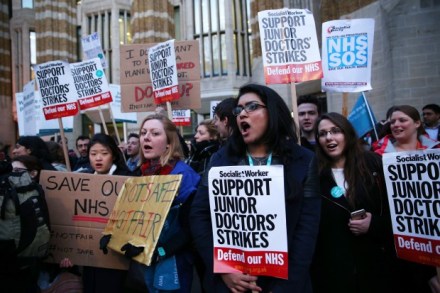
When the BMA announced a new round of strikes they will have been prepared for a backlash from certain quarters. The criticism yesterday from Jeremy Hunt and Theresa May, who accused striking doctors of 'playing politics', won't have come as a surprise. But what is different about this latest, unprecedented industrial action are the attacks on junior doctors now coming from fellow medics. For the Academy of Medical Royal Colleges to intervene as they did last night indicates a significant shift in this drawn-out dispute. Here's what they said in a statement: 'The Academy of Medical Royal Colleges is disappointed at the prospect of further sustained industrial action by junior doctors. We are acutely aware that the NHS is under extreme pressure at the moment.

Real life | 11 August 2016

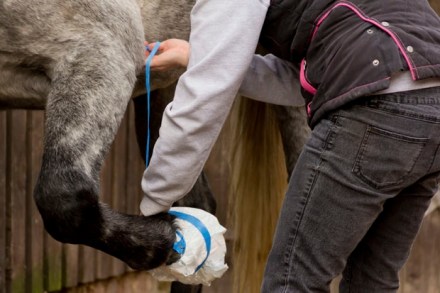
The builder boyfriend colicked for a week after eating a falafel kebab as he and I sat up all night with the colicking pony. And unlike the colicking pony, who was attended to by the vet and given intravenous Buscopan, the colicking builder boyfriend moaned and groaned in agony, untreated. If he had a GP he couldn’t remember who or where it was. He has not sought any kind of healthcare, nor seen the inside of a hospital, since a gang of thugs broke both his arms when he was a ten-year-old boy growing up on the mean streets of Balham. (That was the real Balham, before the independent hipster cafés came with their nut-milk lattes and sustainable sourdough fritters garnished with locally foraged pea-shoots.

Junior doctors deal blow to Government after rejecting contract. What happens now?

Just when it looked as though Britain's vacuum Government had enough on its plate, the junior doctors row - which many had hoped had finished - will now bubble on. BMA members have just voted to reject the Government's contract offer by 58 per cent to 42 per cent. The margin was convincing enough that the BMA's chair Johann Malawana, who proved an effective combatant against Jeremy Hunt during the dispute, has stepped down. In his letter, Malawana pointed the finger of blame at the Government, saying: 'I believe the fundamental breakdown in trust caused by the government's actions over the last five years has resulted in a situation where no solution is possible, particularly when a government is so keen to declare victory over frontline staff.

Diary – 26 May 2016

Why do we assume all doctors are good? We don’t think there are no bad cooks or bad plumbers. But everyone thinks their surgeon is the best in the world. Recommended to one such, I booked an appointment. He rattled off his spiel about the pros and cons of surgery, physio or jabs for a bad shoulder, while looking at the ceiling and at his watch. He waved away my scan: ‘I never look at those. Just heaving oceans of muscle. They all look the same.’ He favoured surgery, but I asked for a jab. It hurt like hell and made no difference. So I went to another ‘top of his profession’ consultant, who gave me a jab, while looking at the scan on a monitor to hit the right spot. It worked. After nine months, I can move my arm. Yippee.

Jeremy Hunt steps up war of words with junior doctors ahead of strike

Now that Jeremy Hunt has rejected a proposed cross-party pilot scheme for new junior doctors' contracts it seems this week's strike looks certain to go ahead. The industrial action is due to start tomorrow morning and junior doctors will walk out again on Wednesday, but the war of words for this week has already begun in earnest. The Health Secretary has fired the opening salvo in his letter to Dr Mark Porter. Hunt said the strike: ‘…seriously risks the safety of many who depend on the NHS’ Dr Porter, the BMA council chair, has been on Today defending the industrial action which will see junior doctors walking out and not providing emergency care for the first time in this dispute so far.

Death watch | 14 April 2016

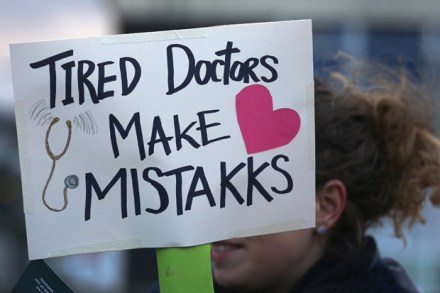
All this week Radio Five Live has been giving us an insight into what it is like not just to confront death every day but also to know that a minor error on your part might end a person’s life. In Junior Doctors’ Diaries on Sunday night, Habiba, Andrew and Jeremy took us inside their daily round, followed by updates throughout the week on Phil Williams’s night-time show. It’s been a timely reminder (politically motivated or not) of how much we need good doctors, and how sad it is that so many of them have felt driven to go on strike. Sad because it’s actually a reflection of how undervalued they have become, and of how little we understand about what they do.

Flying doctors

A few months ago, paramedics were on the brink of industrial action. They had legitimate grievances. Ambulance services were being run down, their staffing levels were dangerously thin — and the mismanagement (much of it exposed by Mary Wakefield in The Spectator) was horrendous. But in the end they stepped back from the brink — for good reason. It went against their nature to endanger lives, and in addition it would have been a tactical mistake. If a single patient died as a result of the strike, paramedics would have lost public sympathy. Should a nationalised health service really use the unwell as a bargaining chip? English doctors have not shown the same strategic foresight.

Portrait of the week | 4 February 2016

Home David Cameron, the Prime Minister, made a speech in Wiltshire about a letter from Donald Tusk, the president of the European Council, on Britain’s demands for renegotiating terms of its membership of the European Union. Mr Cameron said: ‘What we’ve got is basically something I asked for.’ In the House of Commons, Jeremy Corbyn, leader of the opposition, said: ‘It’s rather strange that the Prime Minister is not here…’ instead of ‘…in Chippenham, paying homage to the town where I was born.’ Mr Tusk proposed that in-work benefits for migrants might be subject to an ‘emergency brake’.

Death on the NHS

I’ve never understood the phrase ‘died peacefully’. Two weeks ago I watched my mother die, in the very same NHS hospital where I watched my father die almost ten years earlier. There was nothing peaceful about it, at least from my unwanted ringside seat. The end — acute pneumonia providing the final nail in a soon-to-be purchased coffin — was painfully slow. It dragged on and on and on. She struggled for her last breaths and appeared distressed, confused and frightened to the end. The last time I had been to St Helier hospital in south London was September 2005, as my father slowly slipped away. Naturally the memories came flooding back. And so did confusion. Ten years is a long time, especially in the NHS.

Portrait of the week | 21 January 2016

Home David Cameron, the Prime Minister, said that Muslim women must learn English, and that those who had entered on spousal visas would be told halfway through their five-year spousal settlement: ‘You can’t guarantee you can stay if you are not improving your language.’ He said that learning English had ‘a connection with combating extremism’. A heterosexual couple went to the High Court to claim the right to enter into a civil partnership. MI5, the security service, was rated as Britain’s most gay-friendly employer, following a survey by the organisation Stonewall. Mark Carney, the governor of the Bank of England, said: ‘Now is not the time to raise interest rates.

My surreal Christmas in hospital with a dangerously ill child

Ever since my teens I’ve hated Christmas, but last year something happened which made me change my mind. On 20th December, my teenage son was struck down by bacterial meningitis. No rash, no stiff neck. He’d been off school the day before but we all thought it was just a nasty cold. By the evening he seemed to be on the mend. He wolfed down a huge supper and sat up on the sofa, watching TV, tormenting his little sister. In the small hours he started throwing up. He became incoherent, then unresponsive. By the time the ambulance arrived he was like a statue. By the morning he was in intensive care, unconscious, wired up to all sorts of weird machines. Mercifully, he came round, quite suddenly, 24 hours later. I was by his bedside. I’d been awake for three days.

Letters | 19 November 2015

The NHS and politicians Sir: The NHS is indeed in need of fundamental reform, but Max Pemberton’s excellent article (‘The wrong cuts’, 14 November) exemplifies why politicians are least well qualified to conduct it. The public loves the NHS and has every reason to distrust political meddling. NHS England should become a public corporation with a five-year charter similar to that applying to the BBC. Of course politicians must decide the total budget and agree the strategic goals, but that is a far cry from deciding the pay and hours of every category of staff. Politicians have no managerial skills and should leave that to the professionals.

Here’s what’s wrong with the ‘public sector ethos’

An infuriating benefit of readers’ online comments beneath the efforts of a columnist like me is that as you read the responses an understanding dawns of the column you ought to have written. Some readers are stupid, unpleasant or obsessive; but most are not. As you learn their reactions you see where your argument was not clear, where you were short of information, and where you were simply wrong. But more than that, you sometimes tumble for the first time to where the nub of a problem that perhaps you danced around may lie. Last Saturday I wrote for the Times about the self-righteousness of spokesmen for public services threatened by government cuts; about veiled threats by the police to stop policing, and by barristers enraged by cuts to legal aid.

The weird truth about the word ‘normal’

‘Is Nicky Morgan too “normal” to be the next prime minister?’ asked someone in the Daily Telegraph. That would make her abnormally normal, I suppose, at least for a PM. ‘Who and what dictates what is normal?’ asked Justine Greening, the International Development Secretary, earlier this year, but, like jesting Pilate, did not stay for an answer. She posed the question because she does not like communities where ‘women normally stay at home, they normally get married very early, they normally wouldn’t vote, they normally don’t run a business’. They have been warned. Yet most people would prefer not to have an abnormal heartbeat, no matter how far out of the ordinary their opinions were.

What did ‘#IminworkJeremy’ Hunt actually say about doctors working weekends?

Well, it’s fair to say that Jeremy Hunt’s going to have a fun time at the next doctors’ conference he attends. There’s the #Iminworkjeremy trend on social media of furious doctors pointing out that they already work at weekends, and are not playing golf, as they believe the Health Secretary claimed. There’s the multiple petitions calling on the Health Secretary to resign, be sacked, or be subject to a vote of no confident in Parliament. And there are the furious op-eds from doctors who feel completely undervalued.