Diversity

Will the Netherlands’ gender quota experiment work?

Quotas are unpopular, especially in the liberal Netherlands. But next week its parliament is expected to impose a quota system to ensure major businesses employ more women at the highest levels. A law is being tabled in parliament which would force listed companies to have at least a third of women (or, indeed, a third of men) on their supervisory boards. Another 5,000 Dutch companies will need to come up with ‘appropriate and ambitious’ measures for increasing female leadership. Meanwhile a government website now showcases board-ready Topvrouwen (top women) to take up these posts.
The ancients were defined by actions, not attributes

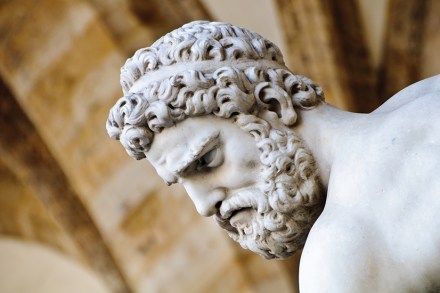
Diversity is ‘about empowering people by respecting and appreciating what makes them different, in terms of age, gender, ethnicity, religion, disability, sexual orientation, education and national origin’. If this means making their differences the most important thing about them, it fails to answer the question about what such empowering will enable them to do. A famous story about Heracles illustrates ancient priorities. He was on the cusp of manhood and wondering what path in life to take. Vice and Virtue approached him and made their different pitches. Vice (‘but friends call me “Happiness”’) offered a life of endless pleasure, Virtue something very different.

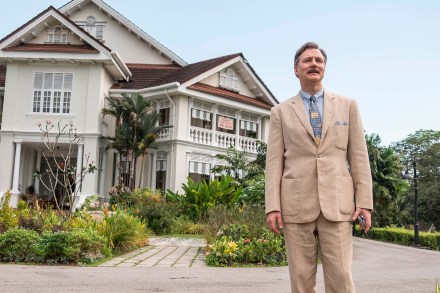
The TV we feared they’d never dare make any more: The Singapore Grip reviewed

‘Art is dead,’ declared Mark Steyn recently. He was referring to the new rules — copied from the Baftas — whereby to qualify for the Oscars your movie must have the correct quota of gay/ethnic minority/transgender/etc people. This, he argued, will lead to the kind of leaden, politicised, phoney art we associate with communist regimes in the Soviet era and which, not so long ago, we used to find eminently mockable. If British and American producers want to lose money on TV shows and movies that no one wants to watch, then good luck to them. All that matters is that there’ll be enough brave dissenters out there to say: ‘Sod the awards.

Hollywood’s transrace hypocrisy

From our US edition

It is an article of fashionable faith that genetic differences in sex are meaningless and malleable, but genetic differences in race are so profound and meaningful that they must not be tinkered with at all, even though race, we are told, is a ‘social construct’. Hence it is positively progressive to sneak a cheeky penis into a women’s changing room, providing the penis is attached to a ‘trans woman’. But it was despicably racist of the disgraced professor Jessica Krug, who was born white and Jewish, to have masqueraded as a woman of color.The gaps in this logic are so big that you could drive a bus through them, whether you’re sitting at the back or the front.

hollywood

Is Evensong too problematic to survive?

If only God had clearly decreed exactly what sort of music he wanted us to make in church. For uncertainty on this matter is highly problematic. If only he had said, for example, unaccompanied female voices on weekdays and an all-male choir on Sundays, with nothing composed before 1800 and no stringed instruments, except at Christmas. Or something else, similarly specific. The Calvinists of the sixteenth century decided that he had said something of this sort: no music at all, except for chanted Psalms. You can imagine the Dean of Sheffield Cathedral feeling a flicker of sympathy for this position. For Sheffield Cathedral has announced that its choir is not working and needs a fresh start.

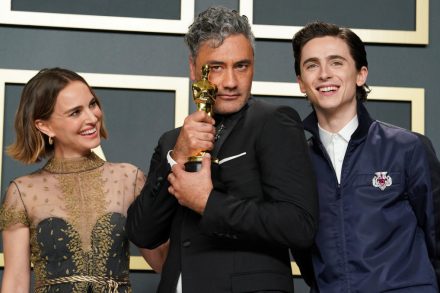
The Oscars and the triumph of Social Justice Realism

From our US edition

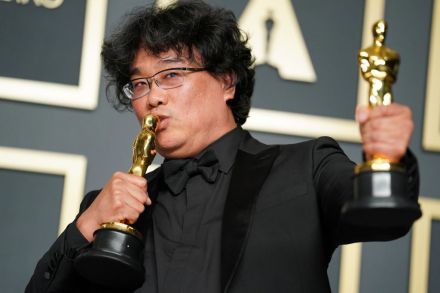
Today, politics is show business and show business is politics. Last week the Academy of Motion Picture Arts and Sciences announced new efforts to improve inclusion institutionally and for the Oscars themselves. A task force has been created to come up with new inclusion standards for Oscar eligibility by the end of July. The Academy’s president Dawn Hudson said: ‘The need to address this issue is urgent. To that end, we will amend — and continue to examine — our rules and procedures to ensure that all voices are heard and celebrated.’We have traveled a long way from 2003. Then, when Michael Moore made an overtly political acceptance speech about George W. Bush, he was forced off the stage as a result.

bong joon-ho oscars

Why ‘safe spaces’ are nowhere to be seen on Japan’s university campuses

A part-time lecturer and friend of mine was reported to his university last month for making ‘inappropriate comments’ in the teacher’s room. These comments, related to his sceptical views on man-made climate change. The accuser, another part-time lecturer irate at such heresy, clearly wanted my friend to be sacked. Had this been a British or American university, I would have gravely worried about my friend’s position. Luckily for him, it happened in Tokyo. So his job is safe. Why? I know exactly how this complaint will have been received: politely, of course, and with the Japanese equivalent of ‘Thank you for bringing this matter to our attention’. And I know what action will have been taken: absolutely none.

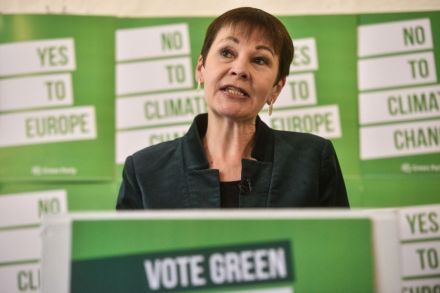
Caroline Lucas and the problem with diversity

As Caroline Lucas found out last week, there comes a moment when a defective ideology collapses under the weight of its absurdities. For the doctrine of diversity, the meltdown happened when the former Green party leader was forced to apologise for including no black people in her all-women fantasy Cabinet. Labour supporters were particularly angry at Lucas's omission of Diane Abbott. Why hadn't the shadow Home Secretary been included? Yet in leaving Abbott out, Lucas actually did Labour a favour. She showed, all too clearly, that even as a thought-experiment when you have controlled for sex, views on Europe, and position on the left/right spectrum, Diane Abbott still does not make the cut.

Viewpoint diversity includes conservative thought

From our US edition

Higher education is dominated by liberal professors and progressive impulses. Conservative professors like me are often apprehensive about teaching in the dominant method, lecture based classes. It’s in the humble seminar, with students and professor debating around a table, that viewpoint diversity can thrive, and discussions of conservative thought survive.Colleagues tell me that they are regularly afraid of the scenario when their class spirals out of control and blows up. In the safe-space, trigger warning, micro-aggression climate of the campus, a professor’s intentions and statements are easily mischaracterized.

viewpoint diversity

Diversity means culture, not race 

From our US edition

Americans have long thought that they are no different from other people, only freer and more fortunate. We pride ourselves on living independent lives in which we work out our personal destiny. We wish that everyone had these opportunities. But that individualist style of life is far less universal than most people think, and today it has come into question both at home and abroad. To recognize and address the reality of cultural difference is the leading challenge of our time. Individualism means daring to pursue our own goals and values. That culture is unique to the Western world: Europe and its offshoots, including America. It made Europe and then the United States unusually rich and powerful, so that they came to lead the world.

culture

The diversity agenda is killing cinema

The film world is atoning for its crimes against diversity. On screen, strong women are supplanting Disney princesses. Superheroes, once uniformly white and male, are turning multicultural. Gay intrigue is edging out heterosexual romance. Away from the camera, bankable stars force studios to employ minority personnel by adding 'inclusion riders' to their contracts. Film-makers must repent ancient mis-speaks, beg forgiveness and denounce peers accused of transgressions. Abuse allegations against Woody Allen may be unproven, but actors who have taken his shilling disown him and donate their tarnished earnings to #TimesUp. Unsurprisingly, the current awards season reflects these rectifications. Of the eight nominations for best picture Oscar, six boast diversity credentials.

Back to the USSR

Is it me, or is business becoming a teeny-weeny bit Stalinist? Common features include 1) Paranoia about political ideology; 2) Snitching; 3) Fatuous targets and metrics; 4) Unquestioning faith in technology; 5) Huge, economically unproductive bureaucracies; 6) Overinvestment in education; 7) Preference for theory over experience; 8) An obsession with rockets. An acquaintance in the US has been denounced for racial insensitivity for asking whether a colleague was Jewish. (Funnily enough, I was asked this all the time when I visited New York in the 1990s. I had to explain that my curly hair originates in a country that’s the same size as Israel, and with slightly annoying neighbours, but it’s called Wales.

The Spectator Podcast: the Diversity Trap

In recent days, Lionel Shriver has been in trouble. Her criticism of the publishing industry’s diversity drive has led to her marked as a racist and even dropped from a literary judging panel. She argued that ethnic quotas harm rather than help diversity - is she wrong? As Robert Mueller’s investigation continues, several dodgy links to Britain have surfaced that could bring down Trump. And last, in the age of MeToo, is sex becoming sexier? Find out at this week's Spectator Podcast. Do quotas help or hinder racial equality? That’s the big question we’ve been asking at the Spectator recently. Since we published Lionel Shriver’s critique of Penguin Random House’s diversity drive, she has been labelled a racist and even dropped from a literary panels.

When diversity means uniformity

I’d been suffering under the misguided illusion that the purpose of mainstream publishers like Penguin Random House was to sell and promote fine writing. A colleague’s forwarded email has set me straight. Sent to a literary agent, presumably this letter was also fired off to the agents of the entire Penguin Random House stable. The email cites the publisher’s ‘new company-wide goal’: for ‘both our new hires and the authors we acquire to reflect UK society by 2025.’ (Gotta love that shouty boldface.) ‘This means we want our authors and new colleagues to reflect the UK population taking into account ethnicity, gender, sexuality, social mobility and disability.

The Google ‘anti-diversity’ memo isn’t anything of the sort

Earlier this week, a technology website published an internal memo written by an employee of Google called James Damore criticising the company’s efforts to diversify its workforce. This is where-angels-fear-to-tread territory. The America technology sector has come under heavy fire for a number of years for failing to hire and promote enough women and Google is currently being investigated by the US Department of Labour for allegedly under-paying its female employees. But what makes this memo particularly controversial is that Damore takes Google to task for discriminating in favour of women. He begins by saying he is pro-diversity and accepts that one of the reasons women don’t constitute 50 per cent of the workforce in the tech industry is because of sexism.

The trouble with diversity training

Is diversity training snake oil? According to its proponents, women and minorities are not competing with white men on a level playing field when it comes to career advancement because of the ‘unconscious bias’ of their white male colleagues. The solution, if you’re the CEO of a large company, is to pay a ‘diversity consultant’ to train your managers to recognise and eliminate this bias. In America, it’s an $8-billion-a-year industry, yet a recent study in Australia suggests that, whatever is holding back women and minorities, it isn’t unconscious bias.

The BBC must address its lack of diversity – or risk losing viewers

Growing up in my Mum’s house, Wogan was king. Throughout the 1980s leading lights like Stevie Wonder, Diana Ross and Sammy Davis Jr sat on his sofa and - vicariously - in our living room in Tottenham too. As well as its historic duty to 'inform, educate and entertain', the principle of universality has always been at the very heart of what the BBC stands for. Our most cherished cultural institution is at its root a universal service that must reflect all of Britain by virtue of the simple fact that it is funded by all Britons. In a multi-platform, digital age where more content is available than ever before and is being consumed online, on demand and on the move, viewers can now flick between Netflix, Amazon Prime and a multitude of other sources at the click of a button.

Why is British dance training so poor? ‘Diversity’ is trumping quality

A very British thing happened at the dance industry conference last weekend. Three of the UK’s most celebrated contemporary choreographers said British contemporary dance training is not up to snuff. Foreign dancers were better trained from a younger age, they said, were fitter, readier, worked harder. That’s why they got more jobs in British companies than UK-trained graduates. The two instant results were (a) a chorus of outraged denial from the dance establishment and (b) the resignation of the chairman of Dance UK, the umbrella body and ‘voice of dance’, which staged the conference. Now, its chairman, Farooq Chaudhry, was certainly playing some fairly brutal politics.

Celebrating diversity means imposing misogyny

People talk about their commitment to equality and diversity so readily they must assume there is no conflict between the two. The phrase falls off the tongue as if it were an all-in-one package, and people can 'celebrate diversity' and support equal rights without a smidgeon of self-doubt. Until, that is, they have to make a principled choice. Then, whether they admit it or not, they find that they can believe in equality or they can believe in diversity, but they cannot believe in both. If this sounds like the start of a patient exploration of a delicate philosophical distinction, don't be deceived. There is nothing difficult to understand, and my patience with the double standards of multi-culturalism snapped long ago.

Labour’s mixed up views on race and diversity are driving voters away

In the past few weeks, Sadiq Khan has made a couple of interventions that show how hopelessly confused the Labour Party is on issues of race and diversity – and Ukip looms large in the background. First up, a couple of weeks ago, Khan made a Labour's pitch ethnic minority votes in a speech to Operation Black Vote. He said: ‘The fact is that if you are black or Asian in Britain today: you are significantly more likely to be unemployed. You will earn less and you will live a shorter life than your white neighbours.’ Invoking Policy Exchange’s recent ‘Portrait of Modern Britain’ report, he added: ‘Entire racial groups are significantly poorer, have lower educational achievements and worse life chances than their [white] neighbours’.