Diversity

We don’t need a ‘diverse’ coronation

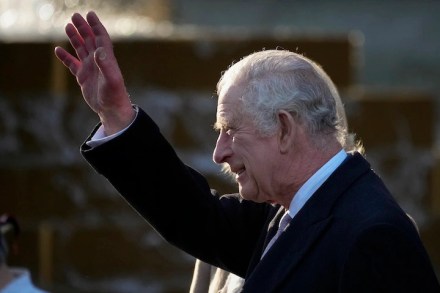
Refugees and the NHS, we are told, will be at the heart of King Charles’s ‘diverse’ coronation in May. You’d think that a thousand-year-old institution tasked with steering clear of controversy might seek to avoid such hot potatoes. But there is nothing unexpected about this royal foray into politics. LGBTQ+ groups will perform at ‘a star-studded concert at Windsor Castle’ as part of the celebrations marking His Majesty’s accession to the throne. A royal source told the Daily Telegraph the coronation ‘needed to be “majestic” but “inclusive” to reflect a diverse modern Britain’.  Unfortunately, this sounds like another example of the utterly banal EDI (equality, diversity, inclusion) events we’ve become used to in Britain.
harvard

Harvard’s diversity disgrace

From our US edition

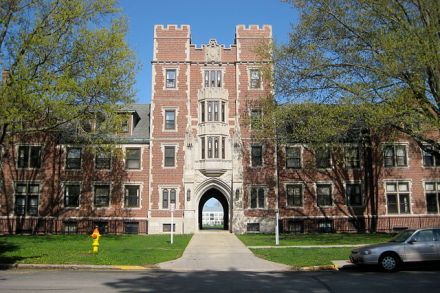
In 2014, the non-profit Students for Fair Admissions filed a lawsuit against Harvard University, alleging discrimination against Asian Americans in its admissions process — discrimination resulting from Harvard’s stated commitment to “a diverse class.” After defeats at the District and Court of Appeals level, the suit has arrived at the foot of the United States Supreme Court. The case will be argued in the 2022 term. Harvard’s reputation is not all that’s at stake. The case threatens to bring down the entire system of race-based affirmative action that dominates college admissions. Looking at the numbers, it’s easy to see why Students for Fair Admissions believe they have a case.

Down with the American morality police

From our US edition

When, oh, when will the United States catch up with Iran? Those bearded, bomb-building, Koran-quoting clerics — we underestimate them at our peril. They know enough, the ayatollahs, to get rid of their morality police who have for decades subverted Iranian civic life, as they've reportedly done this week after protests in that country continued. The morality police in Iran were known for harassing Iranians — women especially — who were deemed insufficiently devoted to Islamic purity. Yet when the morality cops apparently killed a young women for her gall in showing too much hair, public protests erupted. Morality is one thing, persecution is another, as the ayatollahs appear to have figured out. Morality requiring visible and painful enforcement can’t be sustained.

The City still runs on nepotism

When Liz Truss says she wants to give tax cuts to the wealthiest, she thinks she is making a moral argument. The rich deserve to keep their money because they are the best and brightest among us. They have succeeded on their own merit and not because of their class, sex or ethnicity. This, she believes, is a Thatcherite view of society. But the crisis that her government has imposed on Britain is as much due to her misreading of modern history as of her economic illiteracy. Her support for the City rests on a misunderstanding of how Thatcherism transformed the top of British society, as a new and devastating study shows. ‘Highly Discriminating: Why the City Isn’t Fair and Diversity Doesn’t Work’ by Louise Ashley leads a herd of sacred cows to the slaughter.

The tyranny of the specialists

From our US edition

We're all in major trouble anyway, so may as well throw another culture war onto the bonfire. How about this: specialists versus generalists. You can picture it now: the specialists refuse to fight except through a very esoteric discipline that only they understand and won't shut up about. While the generalists fight any way they can, on the beaches, on the landing grounds — and badly all around. The debate between specialists and generalists is an old one, and these days it isn't much of a debate at all. The specialists have all but routed their generalist foes, and are busy dictating terms (in extremely technical language with plenty of appendices).

science

Four vectors of danger for America and the West

From our US edition

Fifty years ago, everything seemed to be breaking down, kind of like it is now. In fact, it can feel like the 1970s redux. Searing issues of war, ecology, race, and “malaise” have never really disappeared. A silent majority, political schism, limits to growth, and price inflation — all are here. Yet there are new uncertainties too. Even to optimists, debt-induced fragility clouds the economic horizon. Investor Charles Munger notes that bitcoin actively undermines the Federal Reserve System; any gain comes from trading, not from creating products, crops or rents. As fantastic as non-binary sexuality, cryptocurrency points to additional contemporary follies.

Conservatives and culture

From our US edition

"The liberal conception of society,” the political philosopher Kenneth L. Minogue wrote in The Liberal Mind, “is... determined by the moral and political policies of modern liberalism. It has only a tenuous connection with sociological description.” As well as, we must add, the political realities of the nation state in the twenty-first century. (Minogue’s book was first published in 1963.) Today, liberal policies are the emotional expression, translated into political terms, of liberals’ utopian aspirations toward the complete “inclusion” of every one of society’s “communities” on precisely equal terms. Liberals will not recognize that this goal can never be achieved, and that a multicultural nation is a plain contradiction in terms.

culture

The diversity monster is loose

From our US edition

Monsters, of course, come in a variety of shapes and forms, but they have some deep commonalities. Among these are a voracious appetite, an affinity for darkness, and a talent for evasion. They are hard to kill and very dangerous, especially to the innocent and the naive. Often they inspire a perverse kind of worship. I have been thinking about monsters as I contemplate the Diversity, Equity, and Inclusion mandates that have swept through the nation’s schools, colleges, and businesses, and nearly every other institution of note. The National Archives has a “Diversity and Inclusion Program.” So does Major League Baseball. So does the American Public Gardens Association. One is hard put to find a significant public body that is not committed to DEI.

NASCAR is where free speech crashes and burns

From our US edition

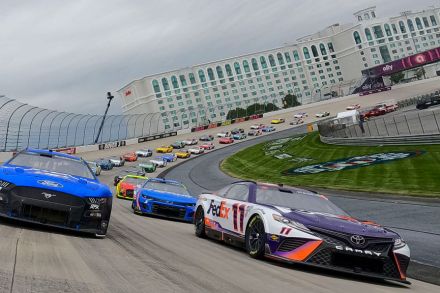
It’s Cinco de Mayo, and if you so much as think about using this day to indulge in Chili’s Margarita of the Month, I will have you undergoing sensitivity training faster than you can say “extra salt on the rim.” You see, applying a firm image to a person, thing, or group is wrong (even if it means massive profits for our Mexican neighbors by way of 335,000 gallons of tequila consumed on a single May 5). Or at least NASCAR thinks so, as the corporation plays politically correct whack-a-mole with drivers who say things they don’t like. The latest victim of almost-cancel culture is Denny Hamlin. Last Sunday’s race at Talladega Superspeedway ended with Kyle Larson “battling for the win approaching the start-finish line,” reports the Charlotte Observer.

The dangerous rise of academic diversity quotas

From our US edition

Who should be the custodians of science? For centuries, scientists themselves have been. Now, their custodianship is under threat. Science has long operated as a sort of guild, with the guild managing its own practice and traditions. This holds for the guild’s continuity: admission of aspiring members to the guild is controlled by the guild itself. For the sciences, aspiring members must clear a competitive series of hurdles: apprenticeship (graduate school), journeyman (post-doctoral fellow and assistant professor), then full membership (tenured professor). For the past few decades, science’s stewardship has been shifting into the hands of an arriviste managerial class with no idea what science is or any real respect for it.

The State Department’s woke surrender

From our US edition

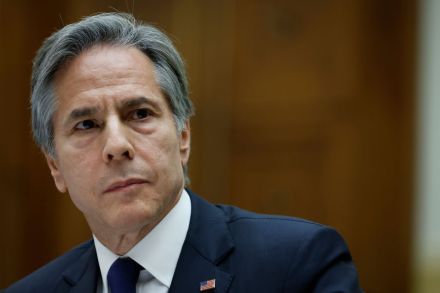
America's diplomatic corps is the latest victim of diversity uber alles. Choosing diplomats for the 21st century is now about the same process as choosing which gummy bear to eat next. But fear not, because the State Department assures us that America will have "an inclusive workforce that... represents America's rich diversity." At issue is the rigorous entrance exam, which once established a color-blind baseline of knowledge among all applicants and was originally instituted to create a merit-based entrance system. Until now, becoming an American diplomat started with passing this written test of geography, history, basic economics and political science, the idea being it was probably good for our diplomats to know something about all that.

Diversifying democracy

From our US edition

In 1790, George Washington wrote that “the establishment of our new Government seemed to be the last great experiment, for promoting human happiness, by reasonable compact, in civil Society.” Today, Yascha Mounk has reassessed Washington’s words. He proposes in his new book The Great Experiment that many Western nations are now conducting their own experiments. Never have so many nations tried to establish such diverse democracies, regimes that grant citizens of so many colors and creeds the same freedoms, opportunities and responsibilities. Mounk, a professor at Johns Hopkins University and the founder of the Substack publication Persuasion, is both hopeful and pragmatic about the experiment’s outcomes.

mounk

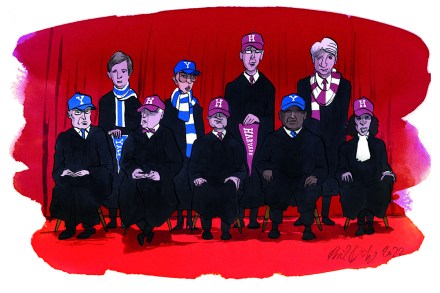
How the Supreme Court lost its real diversity

From our US edition

If you followed the nominations of Brett Kavanaugh and Merrick Garland, or the news after Stephen Breyer announced his retirement, you might have concluded that the country has never been more divided on what makes a good Supreme Court justice. Kavanaugh’s hearings were among the most divisive and brutal in history, but he at least had a hearing: Garland’s nomination was dead on arrival in the Senate. The selection of justices has become a preeminent political issue.

court

Too many scientists spoil the job market

From our US edition

In January, the American Association for the Advancement of Science released its 2021 annual report on diversity equity and inclusion, Nurturing Diversity, Equity and Inclusion in the Scientific Enterprise. The message? Those who are non-white, non-male, non-straight, etc., are apparently being barred from exploring science’s “endless frontier.” Such a thing could only come about if the sciences were governed by a kind of Jim Crow. For the good of science, this needs urgent correction. The AAAS will point the way. The claim seems odd.

Feminism has failed us

From our US edition

I’ve lost count of how many seminars I’ve had to sit through on Diversity & Inclusion, how many times I’ve been asked for my preferred pronouns and expected to discuss what I think ‘bringing my whole self to work’ really means. Conservatives mock these practices and complain that our lives seem to be dictated by a new moral order to which we did not consent. But we’re missing the forest for the trees. The problem with virtue signaling goes far beyond its annoying and unwelcome intrusions into our lives. We have been utterly hoodwinked. Or at least, I was. Sitting in my bathroom last week in the middle of my third miscarriage, blood, tears and expletives pouring out of me, I felt frustrated and stressed out.

progress

A defence of Jess Brammar

I noticed with interest that Gigalum island — off the Kintyre peninsula in Argyll — was up for sale for half a million quid or so. Nineteen rather barren acres, slightly warmed by the Gulf Stream. These little parcels of desolation quite often become available for purchase and I do wonder if Gigalum should be purchased by the state for the dumping of toxic waste. Gruinard island, further north, was used by the government during the second world war as a site for testing militarised anthrax, for example. My proposal for Gigalum is that it should be a repository for everyone in the country with the word ‘diversity’ anywhere in their job title.

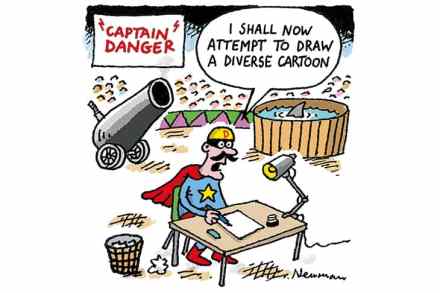
Can cartoons be both funny – and diverse?

Of the many challenges cartoonists face — rejection, money, drink, or lack of — one of the trickiest is the growing pressure to depict diversity. Nowadays readers often write to publications complaining about the dearth of ethnic minorities in our drawings and demand for cartoons to be more inclusive. It’s like being trapped in a bad political cartoon, walking a tightrope above a minefield. A quick survey of my colleagues in the Professional Cartoonists’ Organisation highlighted the following: Cartoons involve laughing at someone. If that person is black, you risk appearing racist; even including a BAME character in the background of drawing can lead to accusations of tokenism (‘background box-tickers’).

The American dream has no time for offal

From our US edition

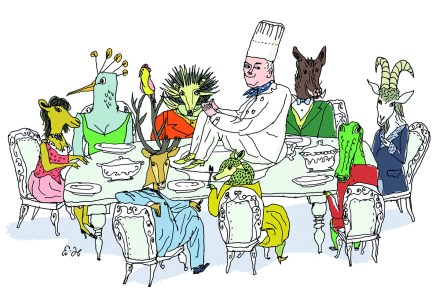
You can get goat in parts of New England. Consumers of Portuguese origin create a market unparalleled elsewhere in the US. In Boston, as I recall, Savenor’s used to sell camel and kangaroo. Few meats are too un-American for New York City. Ottomanelli, purveyors to whatever is left of the Four Hundred, still has venison of the quality they sold to the Upper East Side in the Gilded Age. Los Paisanos in Brooklyn stocks alligator, turtle and caribou. But the great days of the 1950s, when a club in New York served porcupine, caribou, muskrat and armadillo, are fled. With the closing of the American mind has come the narrowing of American appetites. Americans’ self-image is of enterprise, pioneering, innovation, adventure and the call of the wild.

offal

The end of the awards ceremony

From our US edition

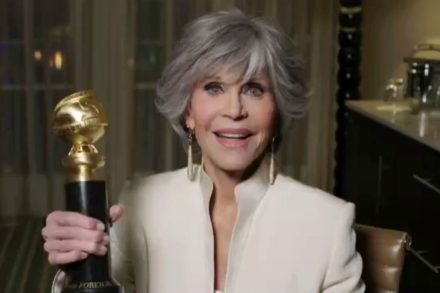
‘People of color were snubbed in major categories,’ announced Ricky Gervais, during his final kamikaze stint hosting the 78th Golden Globe awards in January 2020. ‘Nothing we can do about that, Hollywood Foreign Press are all very racist.’ Gervais’s words haunt the HFPA this week. The Hollywood institution behind the annual Golden Globes awards is floundering beneath an industry-wide wave of condemnation and cancellation, that culminated on Monday with NBC announcing they won’t be screening the  2022 edition.

awards

Why are the Oscars such a lousy guide to great cinema?

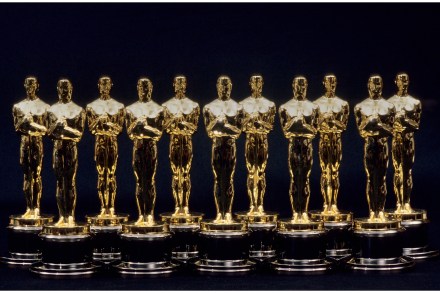
Chloé Zhao’s Nomadland, predicted to win big at this year’s Oscars, is not a terrible film. It’s a slight, sentimental Grapes of Wrath-ish journey through the Discourse, with essential Discourse stop-offs at an Amazon warehouse and the rust belt. It belongs in the New Yorker, not on screen. As with almost every film to win big since No Country for Old Men 13 years ago, you just think: the ‘highest honours in filmmaking’? For that? Amid all the change that’s being trumpeted at this year’s Oscars — more women directors, more ethnic minorities — the one thing missing is any discussion about why the awards are such a lousy guide to great cinema.