Democracy

The disgrace of Juan Carlos of Spain, a modern-day Don Juan

The life of Juan Carlos I, Spain’s 88-year-old former king, who reigned from 1975 until his abdication in 2014, falls into two parts: richly deserved triumph followed by richly deserved disgrace. Building on his 2004 biography, Juan Carlos: A People’s King, Paul Preston’s account of this extraordinary life is magisterial. The son of Don Juan de Borbon, the exiled heir to the Spanish throne, Juan Carlos was born in Rome in 1938. With a view to the eventual restoration of an authoritarian monarchy, he was sent to Spain, aged ten, to be indoctrinated in General Franco’s political tenets. He also had to endure the dictator’s long lectures on the mistakes made by previous Spanish monarchs.

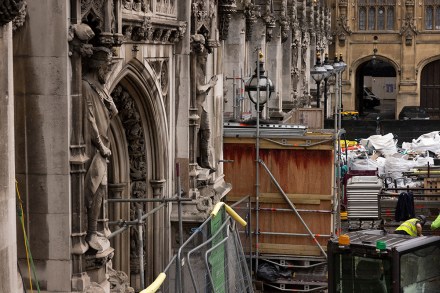
What does it say about Britain that the Palace of Westminster is crumbling?

Many political scientists are oddly uninterested in politics. Their fascination is at a level of theory; but the means through which decisions are made in practice, through specific conversations and arguments and accommodations between actual people, strike them as so much gossip – or, worse, journalism. Jan-Werner Müller, a professor of politics at Princeton, best known to general readers for his trenchant, well-timed and comfortingly short What Is Populism?, here wanders like a niche flȃneur through the territory in between the personal and the theoretical: the ways in which people and politicians are variously welcomed, channelled, liberated and constrained by their concrete environments.

Let’s ditch the idea of the ‘black vote’

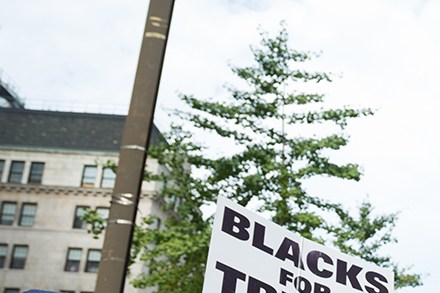
I long took for granted that US opinion polls break down respondents into white people, black people and Hispanics. But I’ve come to look askance at this convention. Reporting on political views by race now seems perverse. It implies that a citizen’s primary identity is grounded in skin colour, and it reifies a way of thinking about the American people that is regressive, divisive, inaccurate and downright un-American. I was reminded of this recent point of annoyance last week when the Supreme Court struck down a Louisiana congressional map that none too subtly contrived to create an additional majority-black district. (The district in question drizzled and blobbed diagonally from one northern corner of the state to the far southern one like a trail of ink on blotting paper.

With no coherent strategy, Britain seems perpetually adrift in the world

The British state seems perpetually befuddled. Every international crisis catches it in its sudden glare like so many headlights trained on a nervous rabbit hopping hopelessly around a motorway. One moment Russia is invading Ukraine, then Hamas attacks Israel, Israel flattens Gaza, America knocks out Venezuela, then attacks Iran, while all the time China leers over Taiwan. Each new event leaves us spinning. Whose side are we on? What do we want? How do we get it? We use grand words to navigate our way in the confusion: ‘the special relationship’; ‘the national interest’; ‘the rules-based order’. But if these once signified some grand story we could all relate to they now feel empty and confusing.

Britain’s decline is a threat to democracy

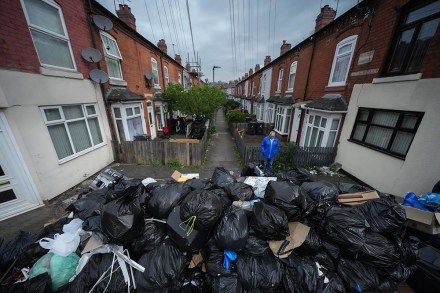
Democracy was born in the public square. The Athenian agora was the central meeting place of an engaged citizenry where business was transacted, social life flourished and a common direction for the people was determined. The idea of a public square – where individuals operate in a relationship of trust and shared endeavour – is embedded in the life of our democracy. But today, increasingly, our public squares are squalid, lawless, derelict spaces, as Gus Carter records in our cover piece. Shoplifters go unpunished, fly-tipping is unpursued, drug-taking and dealing are commonplace.

The age of the strongman, Tesla under attack & matinee revivals

35 min listen

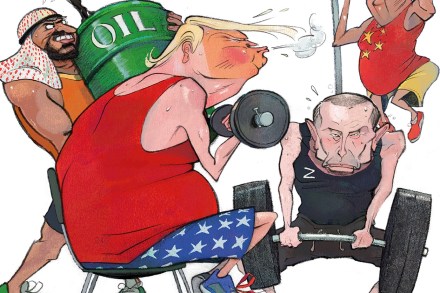
This week: welcome to the age of the strongman ‘The world’s most exclusive club… is growing,’ writes Paul Wood in this week’s Spectator. Membership is restricted to a very select few: presidents-for-life. Putin of Russia, Xi of China, Kim of North Korea and MBS of Saudi Arabia are being joined by Erdogan of Turkey – who is currently arresting his leading domestic political opponent – and Donald Trump, who ‘openly admires such autocrats and clearly wants to be one himself’. ‘This is the age of the strongman,’ Wood declares, ‘and the world is far more dangerous because of it.’  Despite their bombast, these ‘are often troubled characters’, products of difficult childhoods.

Rana Mitter on the legacy of Sun Yat-sen

43 min listen

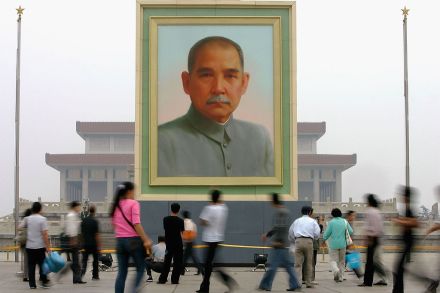
Walking around Taipei a couple of years ago, I spotted a familiar sight – a bronze statue of a moustachioed man, cane in his right hand, left leg striding forward. The man is Sun Yat-sen, considered modern China’s founding father. I recognised the statue because a larger version of it stands in the city centre of Nanjing, the mainland Chinese city that I was born and raised in. That one figure can be celebrated across the strait, both in Communist PRC and Taiwanese ROC, is the curious legacy left behind by Sun. March 12th this year is the centenary of Sun’s death, so what better opportunity to look at his legacy, and who better to discuss Sun than the historian Rana Mitter, who needs no introduction with Chinese Whispers listeners.

The new alliances dedicated to destroying democracy

After staging a failed coup and going to prison, the Venezuelan army officer Hugo Chavez ran to be president in 1998, campaigning against corruption and offering revolutionary change. His nation was seen as a prosperous beacon of stability, built on its great oil wealth, envied by many people elsewhere in the region. He won by promising to tackle the inequality that scarred it so badly and take on the oligarchs enriching themselves through favours and nepotism. Western celebrities, journalists and politicians, from Sean Penn through to Jeremy Corbyn, started flocking to South America to hail their new progressive hero supposedly fighting for social justice.

A Hindu Cromwell courteously decapitates hundreds of maharajas

On 25 July 1947, in the searing heat, almost 100 princes bedecked in jewels gathered in a circular room in New Delhi. Some of them ruled over principalities of less than a square mile; others over an area larger than Korea. All of them had been Britain’s close allies for more than a century and, now that the British were leaving India, many looked forward to regaining their states’ independence. But on that fateful day, as Lord Mountbatten swaggered around in his ivory white uniform, anxious murmurs rippled through the throng. A cousin of George VI, and related to virtually every royal in Europe, the viceroy was no republican; yet he was about to set in motion one of the great revolutions in world history.

Why did the Weimar Republic descend so rapidly into chaos?

‘Thirteen wasted years’ bellowed Adolf Hitler at receptive audiences in the spring of 1932. He was talking about the first full German democracy, the Weimar Republic. Proclaimed in November 1918, it was born out of a desire to do things better after the horrors of the first world war and was an ambitious attempt to establish one of the most progressive states in history. ‘Democratic chaos,’ sneered Hitler, ‘unmitigated political and economic chaos.’ Much of the electorate agreed. Less than a year later, Hitler became chancellor and immediately set about fulfilling his electoral promise to destroy democracy. The short and tumultuous story of the Weimar Republic continues to fascinate.

Boris Johnson was a terrible strongman

The ejection of Boris Johnson from Downing Street today proves that the UK has not gone the way of Donald Trump’s United States, Viktor Orbán’s Hungary or Narendra Modi’s India. For all our faults, the strongman model of leader ends in farce rather than fascism here. Liberal critics ought to be big enough to concede that Conservative MPs – more than any opposition party, movement or institution – saved us from populist authoritarianism. No doubt they did so for impure and self-interested reasons, but this is politics and it is deeds – not motives – that matter most. Johnson’s failure to impose his will on his parliamentary party was his greatest mistake.

We let Hong Kong down: Chris Patten on the end of colonial rule

After 13 years in parliament, rising star Chris Patten had the bad luck to be one of the few Tory MPs to lose his seat in 1992. Had he been re-elected he would probably have become chancellor of the exchequer. Instead, he found himself in the wilderness. But not for long. Within months he had been appointed governor of Hong Kong, tasked with the tricky business of presiding over the transfer of the territory to communist China. It was a lucky break. Had he been chancellor, the odds are that his political career would have come to a sticky end the following September, when the pound fell out of the Exchange Rate Mechanism. Instead, it was Norman Lamont who drew the short straw. By the time Patten arrived in Hong Kong the clock was ticking.

The rise of the new autocracy

Gstaad Dinner parties are no longer verboten here, so I posed a question to some youngsters my son had over: did any of them feel morally entitled to their privilege? The problem with talking about privilege is that the discussion goes around in circles, original thoughts get lost, and what emerges says more about those conversing than about the subject at hand. Ditto when I posed the question to my son’s friends. There were no straightforward answers. Let’s face it, privilege is so enjoyable that the beneficiaries are mostly seen as undeserving, spoilt lightweights — by the underprivileged, that is. Envy has always been around, as has the urge to take away wealth from those not seen as having earned it.

Glasnost merely confirmed Russia’s deep-seated suspicion of democracy

Thirty years ago the Soviet Union was guttering to its close. Those of us who were there remember the exhilarating hope, the apprehension, the illusion. For everyone else it is a distant echo. Russia was always likely to lose the Cold War competition with America. It was unmanageably large, too poor and too reliant on too few products. Stalin’s bloody grip had enabled the Soviet Union to defeat the Germans at a terrible cost to his people. When he died in 1953 his system entered a protracted agony. Over the next decade Nikita Khrushchev tinkered with half-baked solutions. They misfired, and he was overthrown by the hard men in the party, the KGB, and the army. His more cautious successors managed to equal America’s military might.

Ella Pamfilova and the dismantling of Russia’s democracy

Vladimir Putin’s Russia is hardly known for its free and fair elections. But a purge of the field ahead of this September’s parliamentary vote has led to protests even from politicians who benefit from his system. And it has brought the woman on whom the whole democratic façade relies close to a breakdown. Ella Pamfilova, the head of Russia’s Central Election Commission, had just wrapped up a meeting in which her officials disbarred the popular Communist party candidate Pavel Grudinin when she was approached by Nikolai Bondarenko, Grudinin’s ally and a popular YouTuber. ‘This is a disgrace to the whole country. You’re trampling democracy,’ he told Pamfilova in a video he posted to his channel.

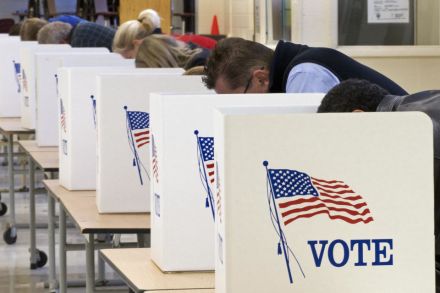
Why voters should have to show photo ID

This week’s publication of the Elections Bill has given pressure groups and others a fresh opportunity to complain about what they see as the latest manifestation of this government’s illiberalism: a requirement for people to produce photo ID when they go to vote. Forgive me, but I fail to see what is so terrible, so undemocratic, about that. The arguments go like this. First of all, opponents say, any change is unnecessary, as the UK simply doesn’t have a problem with voter fraud – with impersonation, say, or multiple voting. Trust in the UK electoral process is high and the instances of fraud are infinitesimal compared with the numbers of votes cast.

Watch: parish council meeting descends into chaos

Why are academic disputes so vicious? Because the stakes are so small – or so the saying goes. The same could probably be said of parish council meetings. Though they make up a small and vital part of our democratic life, these local bodies also have a rather unfortunate habit of being dominated by petty squabbles. Even so, Mr S was still taken aback by the drama, intrigue and betrayal on display at a Handforth parish council meeting for planning and the environment, which took place over Zoom on a cold evening in December last year. Thankfully, the meeting was captured by the council for posterity, so everyone can now witness the exciting world of local politics in Cheshire. Watch and enjoy… https://www.youtube.com/watch?

How democracy can subvert itself: Bunga Bunga reviewed

Italy has long captivated romantics from rainy, dreary, orderly northern Europe. Goethe, Stendhal, Keats and Shelley all flocked to Italy in search of the ideal society. There they found what they thought was a utopia. ‘There is,’ Byron marvelled in a letter home from Ravenna, ‘no law or government at all, and it is wonderful how well things go on without them.’ Well, Silvio Berlusconi has made some of Europe’s wisest men sound like chumps. If the notorious career — chronicled in the podcast Bunga Bunga — of the longest-serving prime minister of Italy since Mussolini and its sometime richest man has done one good thing, it’s to have dispelled for good our quixotic fantasies about his troubled nation.

What on earth has happened to Simon Schama: The Romantics and Us reviewed

‘You may think our modern world was born yesterday,’ said Simon Schama at the beginning of The Romantics and Us. If you do, though, I can only imagine that you’ve never seen any history documentaries on television — where, as a rule, the modern world is born in whatever period the documentary happens to be about, from Ancient Rome to the 1980s. After all, how can the past possibly be interesting if we can’t see ourselves reflected in it? As the title indicates, Schama’s choice, this time, of an era important enough to lead to us was the romantic movement.

How the Athenians would have handled the Lords

Arguments about the purpose or indeed very existence of anything resembling the House of Lords would have struck classical democratic Athenians as bizarre. But its Areopagus might prompt thought. This body had been in existence long before Cleisthenes invented radical democracy in 508 bc. It was made up of the wealthy aristocratic elite from whom alone the main state officials (archons) could be drawn. Their term of office completed, they joined the Areopagus for life. This body was the state’s legal guardian. The democratic reformer Solon (594 bc) slightly broadened its membership, and removed some of its political powers.