Culture

The decline and fall of eating out

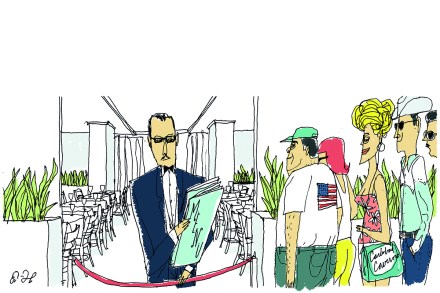
"Upgrade” is a term I associate with flying and getting a seat in the front cabin that you don’t pay for — except perhaps with “miles” and “points,” our version of Green Stamps. Upgrade’s predecessor from the era of rail travel was “step-up,” the term used by the Pullman Company when a passenger wished a better accommodation and space was available. You paid the conductor the step-up charge (in cash), and the porter dutifully toted your bags to your new compartment. Nowadays, it is no longer necessary to travel to upgrade. Just step out for lunch and add some “protein” to your salad. Upgrade! Marketing gibberish in the restaurant world is nothing new, but today it signifies the accelerating downgrade (sorry, no refund) of the whole business.

upgrade
clubs

Members’ clubs are having a moment

One lunchtime in May, the sixth floor of a restored warehouse on Manhattan’s Ninth Avenue buzzed with the sound of lingering lunch dates, pandemic-postponed reunions and the erratic clatter of computer keyboards beneath the inspired fingertips of creatives and those moonlighting as such. Just beyond the reception desk a gaggle of bespectacled, chino-clad men congregated. In suede sneakers and made-to-look-worn corduroy jackets, they clutched Scandi-chic satchels and laptop bags, poised to pounce on the next available artfully upholstered chair. Even one of the sumptuous velvet sofas would do. Next door, in the dining area, waiters weaved in and among patrons like figure skaters, determined not to risk their precious tips by spilling a drop of Bloody Mary or chai latte.

Mowing the lawn is underrated

I struggle to enjoy summer. So each year, when the last frost drifts away to Australia, or wherever it goes, I grit my teeth and remind myself of the most “hot girl summer” moment I’ve ever had, and look forward to reliving the pleasure of lawn mowing that brought it about: I was house-sitting for my parents at our old farmstead in rural Pennsylvania. One of the responsibilities of this job is to put the trash out for the trashmen every week, because more than a decade ago, a little black bear got into the refuse and scattered it from our house to Kingdom Come. The trash shed has been guarded by a thin piece of electrified barbed wire that has deterred both bruin and garbage collector with equal efficacy ever since.

lawn

The dangerous rise of academic diversity quotas

Who should be the custodians of science? For centuries, scientists themselves have been. Now, their custodianship is under threat. Science has long operated as a sort of guild, with the guild managing its own practice and traditions. This holds for the guild’s continuity: admission of aspiring members to the guild is controlled by the guild itself. For the sciences, aspiring members must clear a competitive series of hurdles: apprenticeship (graduate school), journeyman (post-doctoral fellow and assistant professor), then full membership (tenured professor). For the past few decades, science’s stewardship has been shifting into the hands of an arriviste managerial class with no idea what science is or any real respect for it.

Ain’t that good news

A few Fridays ago, I met Tablet magazine’s incomparable Liel Leibovitz for breakfast. Over inedible gluten-free banana bread, we caught up on everything from Covid to religion, politics and pop culture. The conversation took a depressing turn, as so many seem to these days. I asked Liel if he had seen some recent ridiculous news — now too distant and unremarkable to even remember — but which highlighted the extreme hypocrisy and self-defeating brokenness of our society. He said that he had, and added: “Isn’t it great?” “Great?” I asked. “Great,” he said. “Just terrific. Things like this make me giddily optimistic.” Liel shared his philosophy with me while we walked to the Upper East Side’s premier kosher butcher — Park East.

good

America’s rural population is shrinking

A new report finds that for the first time since these things have been kept track of, rural America’s population has shrunk. This trend is a shame for all Americans (except for a few of us who inhabit rural America and enjoy the solitude). The University of New Hampshire Carsey School of Public Policy findings are based on Census data from April 2010-April 2020, pre-dating the Covid outbreak and its dubious effects on people’s migratory habits (a Pew Research survey suggests that reports of a mass urban exodus during the height of the pandemic were overblown).

The death of literature

The greatest men make the greatest mistakes. One thinks of the late John Lukacs, the Hungarian-American historian who claimed that the age of the book is at an end. That is far from being the case, the electronic book having failed to drive the print version to extinction as enthusiasts had predicted. Indeed, the continuing flood of printed and bound books remains among the greatest threat to books today — good books, that is, books worth an intelligent man’s time.

literature
migrants

When migrants come, their culture does too

The challenge of integrating immigrants from the non-western world is not new to Europe. But a large influx of new migrants over the last decade, and a significant increase in harassment and sexual assault against women across multiple European countries, make it one that Europe can no longer avoid addressing. This story has its origins in the decades of economic recovery after World War Two, when many European countries faced a growing worker shortage for industry work. ‘Guest worker’ programs were created, notably in Germany, on the assumption that such workers would return home. But many workers preferred to stay in Europe and pursued family reunification. Jobs and welfare entitlements made Germany preferable to Turkey, France preferable to Algeria.

Why we need bullfighting

Which US state will be first to legalize bullfighting? OK, I need to qualify the question. A few bloodless corridas were held in Nevada in 2009, and some Portuguese-style bullfighting — again, bloodless — is permitted in California, legally classed as part of religious tradition. It won’t stop there, though. A friend in California breeds fighting bulls for sale to the Mexican market (bloodlines matter more than almost anything else to aficionados, each breeder seeking to stamp his beasts with his own aesthetic). My friend, the son of Mexican immigrants, is convinced it is only a matter of time before the law changes — probably through a referendum. ‘But we don’t want to win with 50 percent plus one. We want a big enough margin to settle the argument.

bullfighting

From Cool to Cringe: what’s happened to American culture?

Back in March, around 4,000 years ago, the world was ending. Plague swept in from the east like a horde. Clam-tight lockdowns, unthinkable even days before, were announced everywhere. Who could save us? On March 18 our prayers were answered. An honor roll of Hollywood bluebloods took action. Assembled by Wonder Woman herself, Gal Gadot, they created a video montage cover of John Lennon’s masterpiece — yes! — ‘Imagine’, which she posted — thank goodness! — on Instagram. ‘We’re all in this together,’ said Gadot’s expensive oval face, and, in a sense, she was right. Will Ferrell and Mark Ruffalo, Sia and Zoë Kravitz, Norah Jones and Amy Adams: they were all in this big wet bathful of tears together.

cool cringe

Diversity means culture, not race 

Americans have long thought that they are no different from other people, only freer and more fortunate. We pride ourselves on living independent lives in which we work out our personal destiny. We wish that everyone had these opportunities. But that individualist style of life is far less universal than most people think, and today it has come into question both at home and abroad. To recognize and address the reality of cultural difference is the leading challenge of our time. Individualism means daring to pursue our own goals and values. That culture is unique to the Western world: Europe and its offshoots, including America. It made Europe and then the United States unusually rich and powerful, so that they came to lead the world.

culture

Bring back our bitchy celebs!

You would have to be quite odd not to approve of the sudden surge of solidarity amongst Hollywood stars of the female persuasion. (Though I did wonder, when Frances McDormand called so movingly during her Oscar-winner speech ‘Meryl, if you do it everyone else will!’ whether she meant ‘Suck up to Weinstein for years’ or ‘Give Polanski a standing ovation’ - because Streep certainly led the liberal sheep in those fields.) But still - Ancient Mariner on the oceans of objectionability that I am - I do miss the days when ‘actress’ was shorthand not for ‘whore’ but for ‘bitch.’ These days, female actors want to be seen to be building each other up rather than tearing each other down.