Culture

Will this century see the end of books?

From our UK edition

Anyone proposing to publish a polemic between hard covers about the decline of literacy and reading will, of course, find themselves preaching to the choir. If you read books, you will agree with this one; if you don’t, your negligence will not be touched by its fervour. I won’t say that it is a useless object; merely how unhelpful it would be simply to agree with its main point. The decline of reading practices is quite convincingly demonstrated in surveys. Fewer and fewer people in the US and Britain read habitually, by their own admission. In one celebrated case, an entire cohort of English literature academics in America was unable to make anything at all of the first page of Bleak House.

The intrepid volunteers who risk all to preserve Ukraine’s cultural heritage

‘The nonsense was over at last,’ wrote the Lithuanian-Polish poet Czeslaw Milosz in 1939, as a period of uncertainty gave way to the horrors of the second world war. Charlotte Higgins quotes these words at the beginning of Ukrainian Lessons, describing the outbreak of full-scale war in Ukraine after eight years of ‘local’ warfare in the Donbas and the annexation of Crimea. From the first pages of this profound study of the impact of war on culture, replete with life stories, the author places the Russo-Ukrainian conflict within the context of global cultural history and geopolitics. References to Rwanda in 1994 and the bloody events in Londonderry in 1972 are in no way out of place.

Why Anthony Bourdain’s shows leave a bitter taste

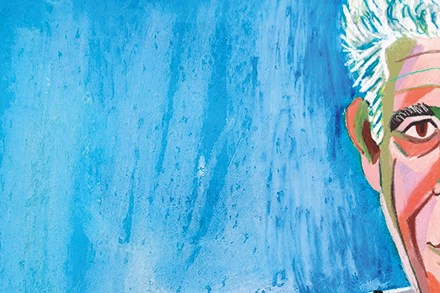
The Unabomber, Ted Kaczynski, never knew of Anthony Bourdain, I’d guess, but he understood his type well. Bourdain, who died in 2018, was an oversocialized leftist. A man who, to avoid a deep sense of guilt and worthlessness, overidentified with the system and presented conformity with its values as a kind of rebellion. That might sound complicated, but it’s really not. “Generally speaking,” Kaczynski once wrote, “the goals of today’s leftists are NOT in conflict with the accepted morality. On the contrary, the left takes an accepted moral principle, adopts it as its own and then accuses mainstream society of violating that principle.

bourdain

Why spiders deserve our respect, not fear or disgust

From our UK edition

I had not thought much about spiders until I read Maria Tatar’s Arachnomania; now I can think of little else. I even watched a film mentioned in the book – Eight-Legged Freaks. It was awful, though it did bring home how very scared people can be of spiders, especially large ones. But, as Tatar shows, spiders are also part of human history and culture; and they really are different. I use fly sprays to get rid of insect intruders. I would never now use them against arachnids as well. Tatar was first drawn to spiders by the Covid pandemic which locked us all down. It was then she discovered that the eight-legged freaks offered the possibility of ‘finding a model for survival and creativity in times of seclusion, darkness and gloom’. They are, as we shall see, paragons of survival.

Jewish artists are no longer safe in France

It is dangerous to be a Jewish artist in France. On Saturday, the well-known DJ Barbara Butch was forced to abandon her performance during a music festival in the Alpine city of Grenoble. Butch is an icon of the LGBT movement and best-known, among international audiences, for appearing in the "Last Supper" skit during the Opening Ceremony of the 2024 Paris Olympics. On that occasion the 45-year-old Butch infuriated conservative figures on both sides of the Atlantic with her irreverence. Donald Trump labeled the parody a "disgrace," as did the Vatican, which deplored "the offense done to many Christians and believers of other religions." On Saturday, it was the far-left who took offense to the presence of Butch.

The next Renaissance is coming

From our UK edition

When we think of the Renaissance, our minds naturally drift to figures such as Leonardo da Vinci and Michelangelo – and rightly so. These are individuals who transformed our understanding of art, science and human potential. What we tend not to consider, however, is how close we might be to another cultural revolution.  That is the argument now circulating on parts of the internet: that after a prolonged period of digital saturation – defined by algorithms, passive consumption and an overabundance of content – we are approaching a point of correction. Just as the original Renaissance followed a period of stagnation and upheaval, this new phase will be marked by a renewed emphasis on creativity, craft and intellectual depth.

In praise of Trump’s architecture

I was in Budapest last month, where the city’s castle is now being rebuilt in its old neo-Baroque style. The plan is to create a near-exact replica of the complex as it stood before the city’s siege in 1945, when it was reduced to rubble during the fighting. So much of the original was destroyed that whole wings – like the palace of the Archduke Joseph – will have to be rebuilt from scratch.  The new complex has been accused of being a sort of Disneyland. This isn’t helped by the fact that many of its structures are made largely out of concrete, with the baroque facades added later as an outer shell. Yet there is a deeper reason. The project is much too self-conscious.

Trump ballroom library

Palm Beach gets a European twist

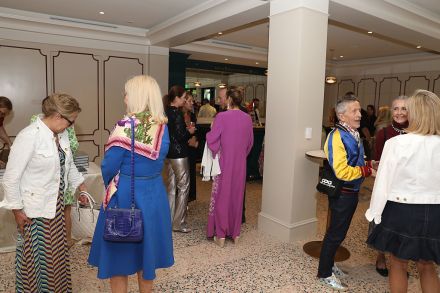
In these parts, it is always said that the most disappointing aspect of Palm Beach life is… well, the beach itself. Yes, it has sand, sea, minimal surf (and, as often as not, “dangerous marine life,” as the deep purple flags flown at the lifeguard stations indicate). But that is all. There is nothing like what you get, for example, in the north shore of the Mediterranean where, from Gibraltar in the west to Bodrum in Turkey, thousands of miles to the east, every few hundred yards you have a chic café or a ritzy restaurant, or boutiques selling everything from bikes to bikinis. No, the beaches of Palm Beach are socially inept, empty of entertainment, where the most exciting thing I have seen (twice) is a seven-foot shark caught on a line, which is a touch off putting for bathers.

How the Islamic Republic tried – and failed – to destroy Iranian culture

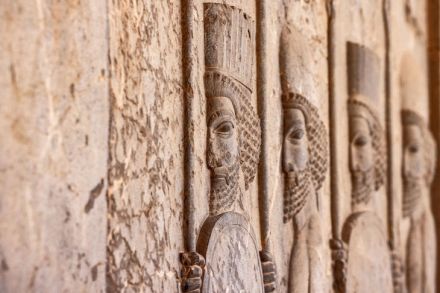
The Islamic Republic in Iran is not only at war with the United States and Israel. For years, the country's government has been waging war on Iranian culture. Music, poetry, storytelling, dogs, dancing, singing, art, dice and card games, romance, tolerance and the honoring of women are central to Persian culture and its ancient history. Yet under the Islamic Republic, these cherished expressions are banned or stigmatized, especially when pursued by women. The departure of Iran’s enlightened and educated from the country they love is one of the most poignant brain drains in history In the dark, dystopian times immediately following the Islamic Revolution in 1979, couples holding hands or a man so much as looking at a woman could lead to arrest, or worse.

Love Story’s counterfeit Kennedys

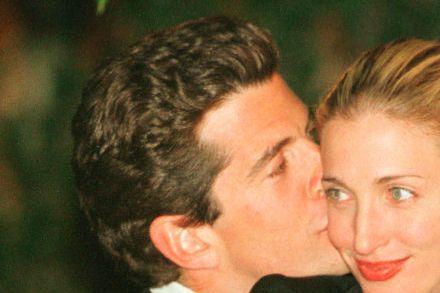
Last June, Jack Schlossberg, the Kennedy nepo baby currently running for the open seat in New York’s 12th Congressional District, called out the television mini-series, Love Story: John F. Kennedy Jr & Carolyn Bessette. Executive producer Ryan Murphy was, Schlossberg declared, exploiting this couple’s courtship, marriage and death, and “profiting off of it in a grotesque way.” On a key point, Jack can rest easy. Love Story, now airing on FX/Hulu, treats his uncle John F. Kennedy Jr. reverently. Elizabeth Beller, Bessette’s biographer, praises the show for “honoring the legacy of everyone involved.” If JFK Jr.

Nancy Guthrie and the gamification of crime

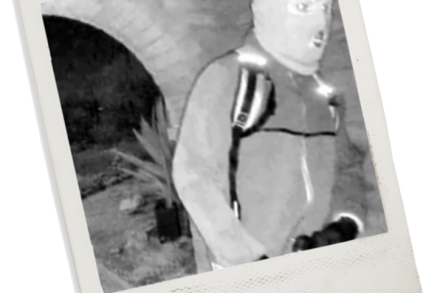
Nancy Guthrie had been missing for less than 48 hours when the game began. Not the investigation, which was already under way, with FBI agents crawling the Catalina Foothills and more than 30,000 tips flooding in from the public, but the thing building around her disappearance, the thing that one could generously call “journalism” in both its legacy and citizen varieties.

Americans are erasing European culture

Did Mariah Carey mime or not when she headlined the opening ceremony of the Winter Olympics in Milan? That was the main takeaway from last Friday’s jamboree. Organisers have since suggested that the US singer did indeed lip-sync to Domenico Modugno’s ‘Nel Blu, dipinto di Blu’ and the song that followed, her very own, ‘Nothing is Impossible’. ‘The technical, logistical and organisational complexities of an Olympic ceremony are not comparable to a live performance by a single artist,’ said a spokesperson for the organising committee.    Was there also a linguistical complexity in the decision?

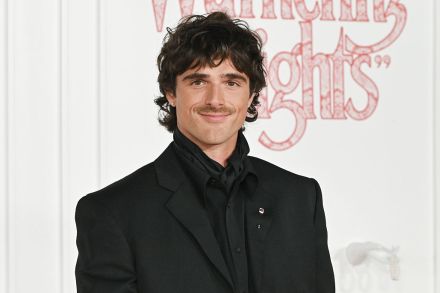
No, Jacob Elordi isn’t a ‘whitewashed’ Heathcliff

For those of us who associate Wuthering Heights either with high-school English classes or Kate Bush caterwauling over the moors while exhibiting some remarkable interpretive dance moves, the news that the new Emerald Fennell-directed film of what she calls “my favorite book in the world” has become the subject of a race-based controversy may come as a shock. Yet the latest interpretation of Emily Brontë’s classic novel, which is being released, appropriately, on Valentine’s Day, has already been met with contempt and derision by many before anyone even sees it.

jacob elordi

What Catherine O’Hara gave cinema

There are actors who dominate the movie screen, and actors who deepen it. There are stars who are "bankable" and have names above the titles, and there are artists who, almost invisibly, give a film its weight, its texture, its lasting emotional impact.  Catherine O’Hara, who has died at the age of 71, belongs emphatically to the second group. She was one of the rare performers whose presence elevated everything around her. She understood precisely how to serve the story, the tone and the ensemble. Over a career that spanned many decades, genres and registers, O’Hara enhanced every film she appeared in.  What made her exceptional was not merely that she was funny, though she was one of the great comic performers of her generation.

How mediocrity took over the Grammys

Is music getting worse? Rick Beato is a musician, producer and critic with more than five million YouTube subscribers. His answer would be: yes, pretty much. In a recent video, he compares the 2026 Grammy Song of the Year nominees to those of 1984. There are a few bright sparks among the slate of new songs, but Beato regards most of them as derivative, unoriginal and unlikely to be remembered past the end of the awards show. In contrast, 42 years on, all the 1984 nominees – Michael Jackson’s “Beat It,” The Police’s “Every Breath You Take” and Lionel Richie’s “All Night Long” among them – are firmly embedded in the popular music canon. One could ask the same question about science: has it gotten worse? My answer, I have to say, reflects Beato’s for music.

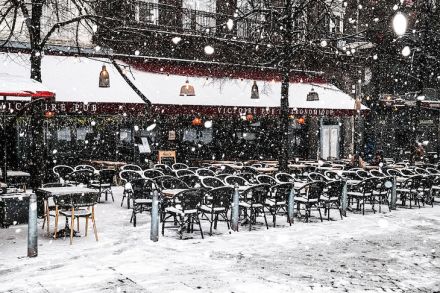
France’s bistros are dying

Emmanuel Macron says France’s traditional bistros should be granted Unesco world heritage status. Speaking at the Élysée this week, the French president vowed to help save the country's traditional cafes. "This is a fight that we want to take on, because our cafés and bistros aren’t just selling croissants, baguettes and traditional products – they’re also on the front lines of preserving French craftsmanship and know-how," Macron told a group of French bakers at the annual Epiphany cake ceremony. France doesn't need to list its bistros. It needs to decide whether it still wants them Macron is right about what the bistro represents. For generations, it has been a shared meeting place as much as a commercial one; somewhere to linger and belong.

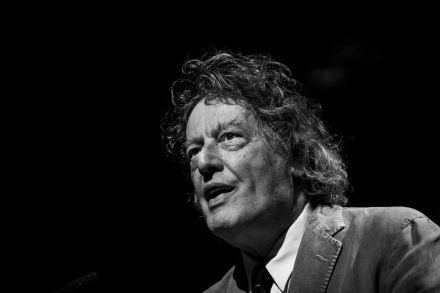
Tom Stoppard was himself to the end

"Tom Stoppard is dead." For anyone who cares for the theater, the English language, and especially for those of us who knew him, these words are as unthinkable as they are hard to bear. How can such a force of nature, such a generosity of spirit, such a voice of sanity, have fallen silent? And yet he has gone. To the end, his body emaciated by cancer, he was still the old Tom: self-deprecating but full of ideas and plans. He might have one more play inside him, he told me, but his fingers could no longer physically write and dictation somehow stopped the words from flowing. He was cared for by his magnificent wife Sabrina, who entertained us tirelessly.

The strange death of England

Whatever happened to Britain, or the UK, or England, or whatever they're calling it? We can't even agree on what it's called. But what happened to England, the England that, if you're over 50, you grew up learning about, the England that controlled the world, the England that ran the largest empire in human history at the end of World War One?  Britain, which is an island in a pretty inhospitable climate, controlled literally a quarter of the Earth's surface – and not controlled in the way the United States controls the rest of the world with an implied threat or with economic ties through trade, but with administrators and people sitting at desks with eyeshades, counting things.

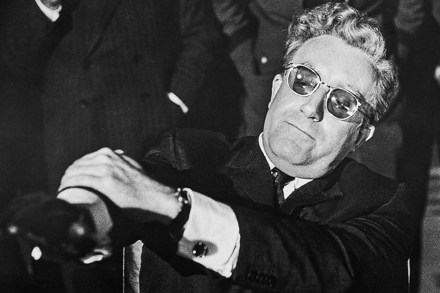
The Dr. Strangelove taxonomy of DC types

I tweeted the other day that my social life in Trump’s DC is just getting dinner or drinks with a different Dr. Strangelove character every week. It sounds like an exaggeration, but it’s not. Not really. Every week brings its own apocalypse – and the cast of characters responds accordingly. Find here a taxonomy of DC types: Dr. Strangelove (The theorist) The end of the world approaches and only the strong will survive it. Hands trembling slightly from too much caffeine and suppressed grandeur, he (it’s always a he) declares his grand theory of the world in so many words. Women, of course, will be spared. Perhaps you, too, will be counted among the lucky ones. Oh, you’re over 30? If you just read a little more Spengler. Learned a little more about semiconductors.

dr strangelove

Franco Zeffirelli’s slice of paradise in Positano

If you say the name Franco Zeffirelli to anyone under about 40, you’re likely to be met with bemusement. Find any opera or film lover over that age, however, and you will be greeted with a warm exclamation – “Ah!” – followed by a recitation of the Italian director’s greatest achievements. From his emergence in international culture in the 1960s with his seminal film of Romeo and Juliet to his legendary work on stage with such operatic titans as Maria Callas and Plácido Domingo, Zeffirelli became synonymous with tasteful, intelligent productions of the classics, all of which made him, for a time, the best-known cultural figure in Italy. It is fair to say that Zeffirelli, who died in 2019, didn’t always get it right, personally or politically.