Culture

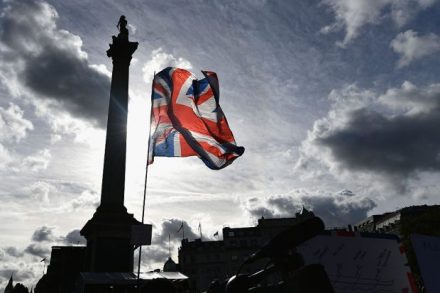
Is an oath to ‘British values’ really such a bad idea?

Most commentators have been over-hasty in ridiculing Sajid Javid’s proposal of an oath of allegiance to British values, to be sworn by those holding public office. It’s an opportunity to go right back to basics and ask a huge and naïve-sounding question. What is our public creed? What do we as a society hold in common? Some sneer that there is nothing particularly British about respect for the law, tolerance, human rights. True enough, but the alternative is to call them ‘Western values’ which is more contentious, more clash-of-civilisations-ey. Those who rubbish any attempt to articulate such values make the mistake of implying that such values are just natural, shared by all decent folk everywhere. They are not.

This Christmas, fall in love with the Spectator’s books podcast

Christmas is three days away, those heading off to relatives are starting to pack. Booze, books – and, I’d like to propose, one other item: the Spectator’s books podcast. Tis the season for finding a podcast, falling in love with it and downloading several episodes to listen to during a long drive (or lazy afternoons). Advances in technology mean you don’t have to listen to whatever nonsense might be on the radio. A good podcast can take you straight into conversations you’d love to have - which is what The Spectator's books podcast does. Each week Sam Leith, our brilliant literary editor, talks to authors about their ideas, approaches to their work, about maths, poems, science, the joy of museums and whether Roald Dahl was a hero or a turd.

Competition: write a response to the government’s ‘consultation’ on press freedom

Since my blog about the new threat to press freedom yesterday, and the notorious Section 40 being consulted on by the government, responses have been coming in thick and fast. A few of you have copied me in to emails sent to Karen Bradley, the Culture Secretary, many of them rather brilliant. More importantly, I've been contacted by a software designer who has agreed to make a form that we can use to send a template response to the government's consultation. This leaves us with one question: what form of words? One form has been created, here. But all you really need to do is mention Section 40 and a new Leveson report and officials are obliged to record your response. Here are three responses.

My Ritz Crackers woe

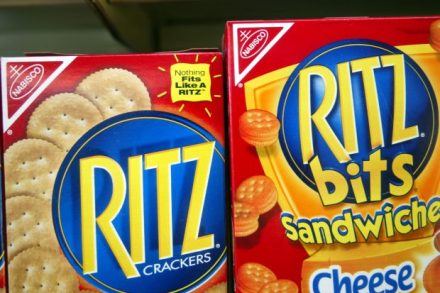
I ate some Ritz Crackers the other day, for the first time in more than 40 years, I would guess. And it worried me. I remember Ritz Crackers as being very salty – it’s why I liked them so much as a kid. It was also why my dad didn’t like them. And yet the biscuits I ate this week seemed blandly devoid of salt and were, I felt, unsatisfying. So the question is this – either Ritz has been bullied into reducing its salt content substantially, or the salt content in the other foods I eat these days is so shockingly high that Ritz seem to lack savour by comparison. Or both, I suppose. Anyone got a clue? Most of the treats of my youth have changed for the worse, mind, or vanished altogether. Mars bars are much less dense, for example.

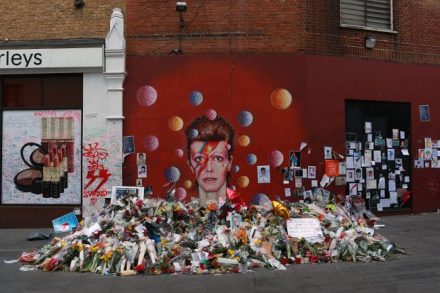
Daft celebrity mourners have made 2016 the year of the ‘Tearleader’

Despite my 'difficult' reputation, I am a cheery cove in real life, all the more so as I get older. But in true Dorian Grey style, I only stay this way by letting my intolerant side rule the roost on Facebook. Every morning my hot little hands positively itch to unfollow, defriend and block: a day which passes without binning a few dim bulbs is a day wasted. I’ve had an especially good run of it this year, as two things in particular have acted as cracking prompts for my 'negging' narrative. One has been the showing of bad attitude on the part of many Remain-supporting mates. I don’t expect everyone to be a bold Brexiteer like me, but I do expect people to be good losers.

The new battle for press freedom

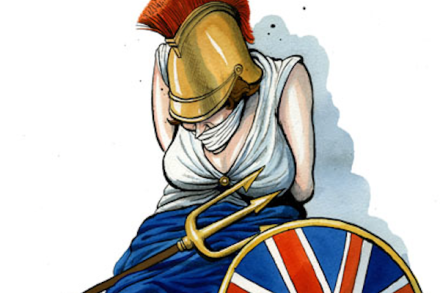
The fight for press freedom is back on – and it needs your help. The government is consulting on a draconian new law, the so-called Section 40, that could mean publications like The Spectator, who refuse to submit to Max Mosley's regulator, would have to pay the legal costs of anyone who wants to sue us, win or lose. We would be made a sitting duck for anyone who felt inclined to complain about anything. Take, for example, Camila Batmanghelidjh. She sent me a lawyers’ letter when Miles Goslett exposed the Kids Company scandal, and The Spectator became the only publication willing to call her out. It went no further as she had was a chancer and had no case – if she sued, she'd lose and would have to pay the costs. So she backed off.

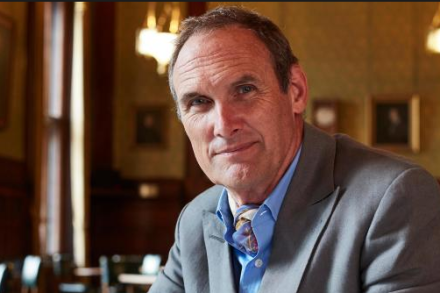
AA Gill, 1954 – 2016

When we redesigned The Spectator six years ago, we spent months working on the launch issue and there was one name we wanted on the cover more than anyone else’s: AA Gill. These six letters could make you smile all on their own. They were a guarantee of wonderfully entertaining writing, gorgeous, unusual turns of phrase and, always, originality and spark. He was rather expensive; we couldn’t afford him very often. But always worth the money, when we had it. It surprised me, at first, to see that he'd phone in his copy, and dictate it. He had written it down, he’d tell me, but it would make no sense to anyone: he was dyslexic, which made the whole process harder. I always thought that this also helped explain why his writing flowed with such gorgeous distinction.

In defence of Britain’s humanist values

In yesterday's Guardian Giles Fraser dismisses Louise Casey’s report on social division. Its desire to ‘integrate’ communities is serving liberal capitalist ‘hegemony’. And he dismisses Sajid Javid’s call for all Britons to affirm ‘the shared values that make Britain great.’ This, says Fraser, ‘is actually another way of saying that all must be obliged to pay homage to the real god: the economy.’ Thank goodness there are communities that dissent from ‘the dominant model of middle-of-the-road liberal secular capitalism'. He concludes that Muslims should be thanked for maintaining ‘their religious convictions and way of life. They refuse all that nonsense about religion being a private matter.

The Spectator’s Notes | 8 December 2016

‘Are you Charles Moore of The Spectator?’ I answered to that description. ‘Well,’ said my questioner, ‘I am worried that you’re becoming very right-wing.’ We were sitting by the fire in a charming, smoky hut with no electric light and lots to eat and drink. It was a shooting lunch, the sort of occasion where one is seldom held to account for anything. I could have tried to laugh the question off, but my interrogator exhibited high intelligence and class confidence, so I sensed she wouldn’t let me get away with that. Unfortunately, I didn’t know how to answer her. I am not offended by being called right-wing, because I don’t agree with the left-wing view that right-wingery is a mark of personal turpitude.

Don’t try to be liked, and buy your steak at Aldi – the lessons I’ve learned in 2016

Merry Christmas everyone. Here are some things I learned — or relearned — in 2016.   1. That which does not kill you makes you still alive. It’s weird to think that less than 12 months ago I was in hospital, dosed up with morphine, battered and bruised with a broken clavicle, numerous cracked ribs and a pulmonary embolism which can actually kill you, don’t you know. And now it’s as if the whole thing never happened. Well, apart from the hideous titanium plate, like a giant centipede, which I can still feel all stiff across my collar bone. And the bastard hunting ban my family has imposed on me…   2. Hunting is the only thing.

Hangovers

Although drinking excessive levels of alcohol is up there with Olympic cycling and democracy as things the British excel at, the same cannot be said for dealing with the aftermath. Over the festive season we splash more than £2 billion on trips to the pub as punters take exhortations to have a merry Christmas a bit too literally. But our subsequent hangovers cost the economy almost £260 million through sick days and a lack of productivity. A night on the tiles tends to leave people feeling a little defenceless the next day. However, for those of us who have no option but to be bright-eyed and bushy-tailed in the morning, there are measures that can be taken to limit the pain. As a former newspaper diarist, I’ve learned what to avoid when presented with trays of booze.

‘British values’ are a load of old codswallop

Sometimes a combination of news stories crop up that so perfectly sum up the spirit of the age, its absurdities and hypocrisies, that there ought to be a name for it. This week, for instance, I learned that the Home Office had barred three Iraqi and Syrian bishops from entering the country, the same department that quite merrily welcomes some of the most unpleasant hate preachers from the Islamic world. Elsewhere, there was also a report about racial and religious segregation in schools and the need to teach something called 'British values' to children to help them integrate. And finally, the winner of the country's most prestigious art award was announced, beating competition from the other shortlisted works, which included a gigantic anus.

The fashion world had no moral compass – until Melania Trump came along

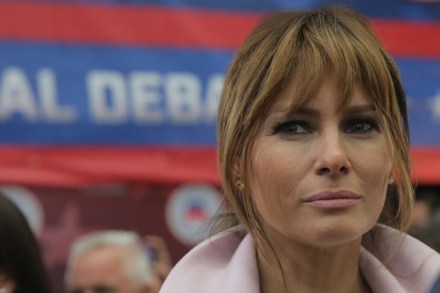
Will someone please dress Melania Trump? She looks like something out of The Only Way is Essex in those tight-fitting, mono-coloured dresses, matched with the plastic smile. But the fashion industry will not intervene, for its members have discovered a moral conscience. Designers including Marc Jacobs, Tom Ford and Derek Lam have made known their extreme reluctance to deal with America’s future First Lady. 'I’d rather put my energy into helping out those who will be hurt by Trump and his supporters,' said Jacobs. Separately, Lam stated that he would 'rather concentrate [his] energies on efforts towards a more just, honourable and a mutually respectful world.' Who knew these fashion leaders possessed a moral compass?

A view of St Paul’s is the least of London’s housing problems

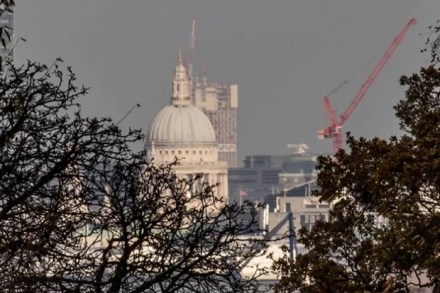
Richmond Park has been in the news a bit lately. It is portrayed as a bastion of wealth and privilege, whose residents stand accused of trying to lord it over ordinary voters. But never mind blocking Brexit, do the people who live there deserve the right to an uninterrupted view of St Paul's? Outrage has greeted the construction of a 42-storey tower in Stratford, East London, which is accused of compromising the view of Wren’s great cathedral from a mound in Richmond Park. Planning permission for Manhattan Loft Gardens, which will incorporate 250 flats as well as a 145-bed hotel, was granted back in 2011. Yet no-one seemed to notice at the time that the block would stand directly behind St Paul’s when viewed from Richmond Park. The cathedral says it was not consulted.

The day I got Rod Liddle sacked

On the few occasions when something I have written has directly affected a person, I have usually regretted it. During the row about the hunting ban, I got furious with Rod Liddle, then the editor of the Today programme, because he wrote an article attacking people who hunt. I composed a thunderous leader in the Daily Telegraph about his shocking lack of impartiality and called for his sacking. Amazingly, the BBC obliged. I was dismayed, because Rod (though indeed preposterous on that particular subject) was one of the few subversive spirits ever to rise to an important editorial position in the corporation. My guilt was only partially assuaged by his finding his metier as a columnist on this paper instead.

Is democracy in danger?

Is democracy in danger? This is the belief of a Harvard lecturer called Yascha Mounk whose thesis was profiled in an interesting New York Times piece this week. Mounk began studying the subject after writing a memoir about growing up Jewish in Germany which 'became a broader investigation of how contemporary European nations were struggling to construct new, multicultural national identities'. As the article points out: He concluded that the effort was not going very well. A populist backlash was rising. But was that just a new kind of politics, or a symptom of something deeper? To answer that question, Mr. Mounk teamed up with Roberto Stefan Foa, a political scientist at the University of Melbourne in Australia.

The Booker prize has triggered a bout of literary protectionism

Whatever happened to all those great liberal internationalists who damned the vote for Brexit as a case of isolationist Britain turning its back on the outside world? Julian Barnes, for example, is so pro-EU that not only was he against Brexit, he recently told the FT that he would still like Britain to join the Euro. It is a somewhat different story, though, when the literary establishment sees a threat to its cosy little world. Then, they come over all protectionist. Barnes is now bleating about the Booker prize being opened up to US writers. 'The Americans have got enough prizes of their own,' he complains. Novelist Amanda Craig was quick to play the internationalist over Brexit.

In defence of Eric Bristow

The Twitch-hunters, those antsy, intolerant guardians of what it’s permissible to say on Twitter, have claimed another scalp. Eric Bristow’s. The former darts champion, lovably known as the Crafty Cockney, will now probably be better known as hate-speaker thanks to the offence-taking army that took umbrage at his tweets about child abuse. For this quarrelsome mob has the power to destroy reputations, and it looks like it has successfully destroyed Bristow’s. Bristow’s speechcrime, or tweet-crime, was to gruffly express his views on the child-abuse scandal rocking football right now.

Welcome to the world of right-wing gateway drugs. Are you ready for the ride?

Even in its twilight years the Guardian remains the gift that keeps on giving.  As the tin-shaking below the pieces grows stronger (generally presenting the publication as the only barrier between the reader and incipient fascism) the pieces remain reliably ridiculous.  Yet even by these standards, Monday produced perhaps the Guardian’s worst shake-down effort to date.  The article was headlined "'Alt-right' online poison nearly turned me into a racist".  The explanatory subtitle continues ‘It started with Sam Harris, moved on to Milo Yiannopoulos and almost led to full-scale Islamophobia.  If it can happen to a lifelong liberal, it could happen to anyone.’  The author of this piece is…. ‘Anonymous’.

The joy of shoplifting

I was interested to read that police recorded more shoplifting offences in the year ending in March than they have since the introduction of the National Crime Recording Standard in 2003. The trend was unique among other diminishing types of hands-on thieving, single-handedly driving up the number of ‘property crimes’ reported in England and Wales, according to a study published by the Office for National Statistics. For a blissful moment, I was back in the heady days of Pop Sox and Labour landslides - the light-fingered calf-country of my 1970s provincial working-class girlhood - and as if surprised in adolescent self-abuse, I felt a blush creep up my ears and my heart skip a beat, as I recalled the splendid, sordid thrill of it all.