Culture

J. K. Rowling and the curse of the left

From our UK edition

How people who want a fairer society should vote at this election is causing agonies across the liberal-left. It is easy to mock the torn activists. Why do they bother? One vote is worth next to nothing under a PR system. Under first past the post there are hundreds of safe seats where there’s no point in voting, let alone worrying about how you vote. The number of safe Tory seats is likely to grow after this election. Indeed, if you believe the opinion polls, it is likely to rocket. The futility of casting a token anti-Tory vote is more apparent than ever. For all that, those who laugh at conscientious leftists are laughing at democracy. How can you justify it unless voters care about who they vote for?

In defence of the stiff upper lip

From our UK edition

At the time of the death of Diana, Princess of Wales, in 1997, Prince William and Prince Harry were in Balmoral. Somebody who claimed to know told me shortly afterwards that what the boys had most wanted to do, in reaction to the terrible news, was to go out and shoot a stag. They were not allowed to. I do not know if the story was true, but if it was, the boys’ desire seemed understandable. How could anyone — much less a teenager and a 12-year-old — ‘process’ such an event? The best immediate solace would be something strenuous, physical and wild. Twenty years later, Prince Harry has told us how it has taken him all this time — including ‘two years of total chaos’ — to deal with his shocking loss.

MPs should practice what they preach – and have a shorter summer holiday

From our UK edition

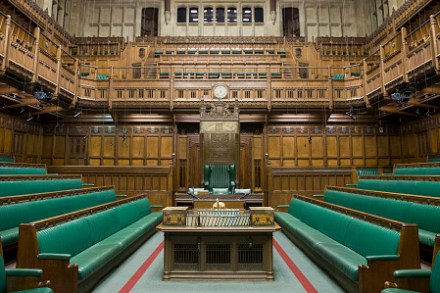
One of the consequences of the early election is that Britain will find itself without a functioning parliament for six weeks at a time when arguably it has never needed one more. I am sure that many MPs will feel entitled to a holiday after yet another election campaign – or at least those who are not sent into premature retirement. But what about Parliamentary business? The Great Repeal Bill requires debate and scrutiny – and in Parliament, not the TV studio. As thing stand, Parliament will rise in the first week of May.   It will then reconvene in the middle of June only to break up for the summer recess little over a month later. It will not return until October, after the party conference season.

The trial of Kelvin MacKenzie

From our UK edition

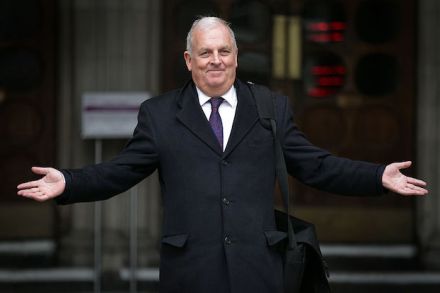
Kelvin MacKenzie’s baffling compulsion to pick at Liverpool has brought him up a cropper again, with the Sun pulling his latest polemic on Everton FC player Ross Barkley. MacKenzie has compared the footballer, recently victim of an assault in a nightclub, to 'a gorilla at the zoo' and added that, in Liverpool, 'the only men with similar pay packets are drug dealers and therefore not at nightclubs, as they are often guests of Her Majesty'. Liverpool is outraged. Fair enough. Everton has mimicked Anfield in banning the Sun. Why blameless footie hacks should be punished is beyond me, but that's up to the club. In a fairly extraordinary step, however, the Sun has suspended its columnist and denounced his copy as 'wrong', 'unfunny', and 'not the view of the paper'.

Forget the Garden Bridge – and let’s destroy our existing bridges

From our UK edition

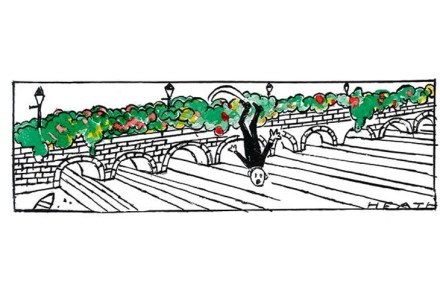
The Garden Bridge project, loved by Joanna Lumley and no-one else, has been roundly criticised by Dame Margaret Hodge in a report for the Mayor of London. In her review, Hodge says it would be ‘better for the taxpayer to accept the financial loss of cancelling the project’, a perspective that the Garden Bridge Trust have today condemned, calling it ‘very one-sided’. With £40 million already spent and an estimated £200 million required to complete the project, now seems a good time for City Hall to debate Hodge’s findings. But beyond the question of cash, we should also be interrogating whether the traditions of the city are being undermined by this prospective white elephant.

Give me the Anglican option

From our UK edition

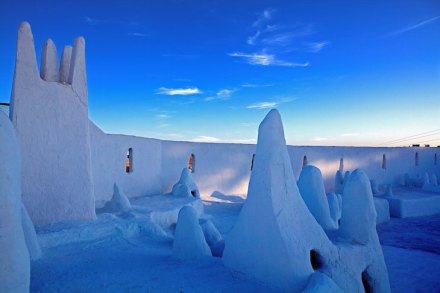
The Algerian government’s official tourist guide describes ‘the walled town of Beni Isguen — normally closed to foreigners — where the women, clad entirely in white, reveal only one eye to the outside world’. Rod Dreher’s Easter call to devout Christians to separate themselves as a community from what he believes to be the degeneracy of our western culture puts me in mind of that sad, disturbing place. Beni Isguen is one of the oasis towns near Ghardaia in southern Algeria. I visited many years ago and can be sure there has been little change since, for the community has clung to unchanging and uniting beliefs for hundreds of years.

Fashion is about change – and British Vogue’s first male editor is exactly that

From our UK edition

After months of speculation, Alexandra Shulman's successor at British Vogue has finally been announced. And in what may come as a shock to Samantha Cameron - who recently launched a new fashion line, and whose sister Emily Sheffield was hotly tipped for the role - the job has gone to someone cut from slightly different cloth. In fact, the powers that be at Condé Nast have gone for something quite radical: British Vogue now has its first black, male editor.   There will be plenty of people annoyed by Edward Enninful's appointment. Some will believe that editing Vogue is a woman's job - and that giving it to a man is a step in the wrong direction.

How to pick a winner in today’s Grand National

From our UK edition

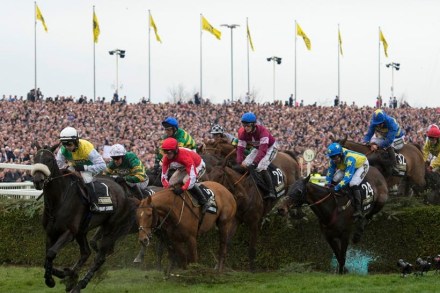
Aintree’s Grand National festival is well underway, with the ladies of Liverpool making the most of the unseasonably warm weather. It’s not just the champagne bars that will be doing well for themselves, though. The nation’s bookies also benefit hugely from today's Grand National race; it’s estimated that a quarter of the UK’s adult population will have a punt on it. The thing with the National is that with so many horses taking part, how on earth can you choose a winner? When there are 12 or so in a flat race, the probability of picking a winner is much higher. But with 40 horses to choose from, and the course so challenging, it’s a much harder task. Many people have one tried and trusted way of picking their horse. Some choose by colour.

Red Rum: the horse who saved the Grand National

From our UK edition

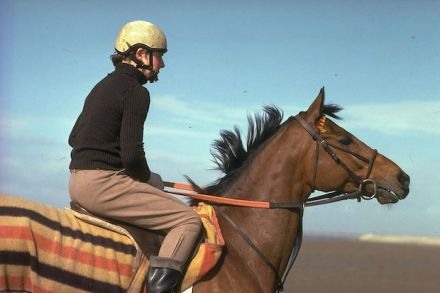
My first ever goldfish was called Red Rum. I won it (him?) at a point to point, so to a seven-year-old me, the name seemed utterly logical. I didn’t know anything about Red Rum ­– only that he was a racehorse. I did know his name however; and I don’t think I could have named many, or even any, other racehorses. That’s the power of Red Rum – arguably this country's most famous race horse – and this year marks the fortieth anniversary of his historic third win in the Grand National. He’s the only horse to ever have won the race three times, and when, aged 12, he returned to the track in 1977 for another go – having come second in ’75 and ’76 – many people thought he was too old to win. But he proved them all wrong.

Are you scared to talk about your faith at work?

From our UK edition

Religious believers feel nervous about expressing their faith at work – either by wearing symbols or talking about religion. They're worried they'll be mocked by secular bullies. And employers aren't aware of the situation. Or don't care. That's the implication of a new ComRes report, which I'm discussing on this week's Holy Smoke with my new co-presenter Cristina Odone. As you'll hear, we don't agree. She thinks religion is becoming the love that dare not speak its name in the workplace. I think we're in danger of being dragged into a PC grievance culture. There are also some very sharp observations from Henry Dimbleby, co-founder of the Leon restaurant chain. Anyway, here's our argumentative podcast. Don't miss it – and subscribe on iTunes!

The National Trust is compromised by its own success

From our UK edition

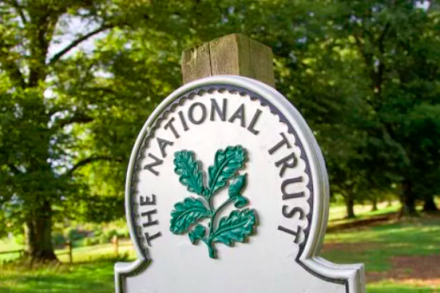
Cadbury and the National Trust stand accused of taking the Easter out of Easter eggs. The Trust’s ‘Easter Egg Trail’ is now renamed the ‘Cadbury Egg Hunt’. My little theory about the National Trust is that all its current woes result from the tyranny of success: it has become so attached to ever-growing membership (now more than four million) that everything is skewed to this and the original purposes are neglected. No doubt the substitution of the word ‘Easter’ by the word ‘Cadbury’ seemed a small price to pay for big sponsorship. This decision is a symptom of the Trust’s problem. But for the fate of Easter itself, one need not worry.

Pepsi’s advert gives protesters exactly what they want: another opportunity to protest

From our UK edition

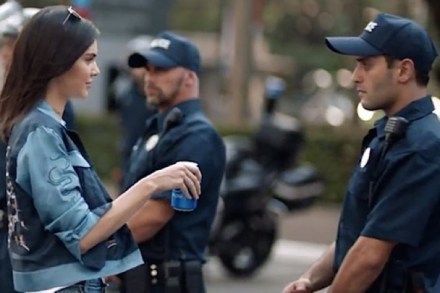
No sooner had Pepsi skooshed open its latest ad campaign, the internet burped it back up.  The soft drink giant's new commercial features Kendall Jenner (ask a young person) emerging from a crowd of protestors to offer a can of Pepsi to an officer on a police line. The advert is more sugary than the fizzy beverage it hawks. A parade of suspiciously attractive demonstrators march through the streets of a US city, powered only by air punches and smugness.  Their cause is unclear — but the placards bear such subversive slogans as ‘Join the conversation’. A confrontation with the least intimidating cops this side of a Keystone silent is mercifully averted when Jenner shows up and charms an amenable bobby with a can of pop.

Forget fake news. The bigger problem is misleading news

From our UK edition

The way that 'fake news' became an overnight crisis is telling; just as progressive ideas were being rejected by voters across the western world, the media suddenly discovered a glitch which explained why. Fake news is the new false consciousness. All democracies face the problem of uninformed voters. But in a reasonably educated society, this should not be critical, especially as the ignorant are far less likely to vote anyway. This has traditionally been a conservative and indeed ultra-conservative worry, but since the Anglo-Saxon Spring (or should that be Fall?), liberals have started to show more concern about it. The left-right axis is morphing into a globalist-nationalist one, and the majority of less educated voters fall into the latter camp.

The short path from censorship to violence

From our UK edition

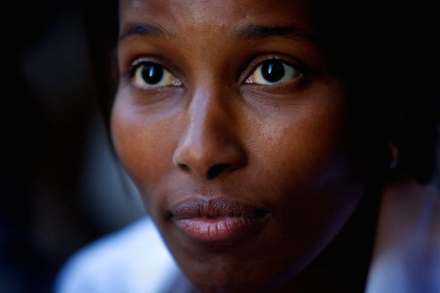
The news that Ayaan Hirsi Ali has cancelled her speaking tour of Australia due to 'security concerns' should concern anyone who believes in freedom. It is a dark day when a woman who fled to the West to escape the Islamist suffocations of Somalia, and precisely so that she might think and speak freely, feels she cannot say certain things in certain places. That even a Western, liberal, democratic nation like Australia cannot guarantee Hirsi Ali the freedom to speak her mind without suffering censorship or harm is deeply worrying. It points to the mainstreaming of intolerance, to the adoption by certain people in the West of the illiberalism that makes up the very Islamist outlook that Hirsi Ali and others have sought to escape.

Battersea Dogs’ Home’s political advocacy is a step too far

From our UK edition

Battersea Dogs and Cats Home is running a poster campaign to increase sentences for cruelty to animals. The current maximum is six months. It is probably popular — almost all campaigns for higher prison sentences are. But I doubt if the public interest would be served by locking up offenders for five years, as Battersea demands. The prisons are already full to bursting, increasingly by elderly people accused (in some cases, falsely) of ‘historic’ child abuse. Each prisoner costs the taxpayer more than £30,000 a year. One should be prepared to listen to the arguments, however. My real point is different: why should a dogs’ home campaign on public policy?

The golden rule for Daily Mail hysteria

From our UK edition

Here’s a cast-iron law of the media in 21st-century Britain: the hysteria about a Daily Mail article will always be worse than the Daily Mail article itself. It will be more silly, shrill, over-the-top, reactionary and potentially harmful to public life than the polemic or editorial or sidebar shot of a half-dressed celeb it is raging and spluttering against. You can hold me to this. Go through the archives of Twitterstorms about the Daily Mail — they number in the gazillions — and you will see it’s the same every time: every bad thing the Mail has said or done has paled into insignificance in comparison with the hot, mad 24-hour fury of the Twits it has generated. Consider ‘Legs-it’.

Forget ‘virtue signalling’ – ‘empathy patrolling’ is the new moral phenomenon

From our UK edition

I’ve had just about enough of being told how to feel about what happened last Wednesday.  I feel angry. I still feel shock. I feel a keen ache for the families of those murdered, especially the loved-ones of PC Keith Palmer.  I feel that cold spite that works its way into your heart at times like these, vengeful cruelty passing itself off as hard-headedness. When I remember this, I feel ashamed to have given in to it.  I feel scared of an ideology that crashed into the 21st century in an outrageous spectacle but has now made its choreography more low-key.  I feel contempt for the demagogues who seek to exploit the raw emotions of After Wednesday. I feel disdain towards those rolling their eyes at the locution ‘After Wednesday’.

David Storey, 1933 – 2017: Britain’s great post-war novelist

From our UK edition

Britain’s greatest post-war novelist is reported as having died today, at the age of 83. It seems a rather extravagant claim for David Storey, who, lumped together with other writers who had the great advantage of not coming from London or the Home Counties, as 'kitchen-sink' and 'angry young man', drifted out of fashion just as he was producing some of his greatest work. But I can’t think of many who come close to the Yorkshireman. Doris Lessing maybe, possibly Ballard and Burgess, certainly Graham Greene if you count him as post-war. But Storey deserves to be remembered in that pantheon, that Champions League elite.

Could Health and Safety kill off home cooking?

From our UK edition

If Health and Safety is (are?) your thing, you must always be dreaming, like Alexander the Great, of new worlds to conquer. The next one, I predict, will be cooking at home. Recently I have noticed talk about the bad effect of ‘particles’ produced by hot food cooked in or on ovens. The sequence will go thus: a study will prove that people who cook at home inhale more particles than others, reducing their life expectancy. A woman seeking divorce will win a higher settlement because, she says, she was forced to spend hours of each day in such dangerous culinary conditions, suffering various ‘harms’. Then it will be shown that children are the innocent victims of passive cooking. Ovens, except for microwaves, will be forbidden in new-build homes.

Cynicism is the West’s great weakness

From our UK edition

Pankaj Mishra’s book Age of Anger is good in parts, but also shows the weakness of leftist thought. It is a bold history of political ideas that traces the extremism and populism of our day to nineteenth-century sources. Both Isis supporters and Trump supporters are reacting to the insecurity caused by neoliberal globalisation, he argues. ‘Cosmopolitan civilisation based on individual self-interest’ has brought material wealth at the cost of creating huge expectations that lead to dangerous resentment. And now social media intensifies such resentment. More people reject traditional politics, due to ‘the gap between the profligate promises of individual freedom and sovereignty, and the incapacity of their political and economic organisations to realise them.