Culture

The obsession with diversity in theatre risks spoiling Shakespeare

From our UK edition

Twelfth Night launched at the National Theatre this week, with Malvolio turned into Malvolia. ‘We’ve definitely upped the gender-bendedness of the play,’ says Phoebe Fox, who is acting Olivia. Otiose, one might think, since the original is gender-bent to perfection. But Shakespeare did not have to wrestle with the strict controls now demanded in the subsidised theatre. In the same feature in which Phoebe Fox speaks, Ben Power, the deputy director of the National, tells the Sunday Times, ‘There are agendas we are aware of now, and we have targets in terms of gender and ethnicity, because we want to be as diverse as possible, speaking to our audiences, reflecting the nation to them.

How to get away with murder

From our UK edition

Given our seamy obsession with serial killers, real and fictional, one would expect the crimes of Stephen Port to have made more of a mark on the national psyche. Port was convicted in November of the rape and murder of four young men in Barking, east London over a 15-month period. His modus operandi was cold and calculating: He would contact men on gay hook-up sites and incapacitate them with 'date rape drug’ GHB, before sexually assaulting and murdering them. A further seven men were drugged and/or raped but lived. Port is serving a whole-life sentence; he will die in prison. What makes these crimes particularly shocking is that the Metropolitan Police apparently had multiple chances to stop them and failed each and every time.

James O’Brien spreading ‘fake news’ via the BBC is a must-watch

From our UK edition

The row about ‘fake news’ and the ‘crooked media’ appears to be ongoing.  And every time the BBC and other mainstream media mention it they present themselves solely as the victims of such phenomena.  So let us turn to just one edition of the BBC’s Newsnight. On Wednesday of this week the programme was presented by James O’Brien.  Now in the first place Mr O’Brien is a strange choice to present this programme.  Not just because his awkward, cut-out, Lego man gait makes it obvious why he has made his career in radio, but because he is the sort of hyper-partisan figure who, if they came from the opposite political side, would never be hired by the BBC. But back to Wednesday’s Newsnight.

Ken Loach’s Bafta’s diatribe shows he is stuck in the past

From our UK edition

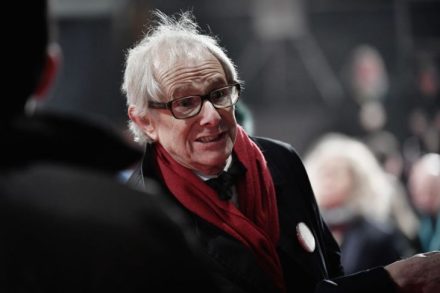
Ken Loach, who seems to defy the rule that you get more right-wing as you get older, used his Bafta acceptance speech last night to attack the Tories. He said that the Government would 'have to be removed' and went on to say:  'In the real world, it’s getting darker. And in the struggle that’s coming between the rich and the powerful...the big corporations and the politicians that speak for them on the one hand, and the rest of us on the other the film-makers know which side they’re on.' To be fair to voters, they seem to be quite set on removing governments, or at least overturning the status quo: first in Britain and then the United States, and this spring perhaps even in France and the Netherlands.

The David Beckham email leak should trouble us all

From our UK edition

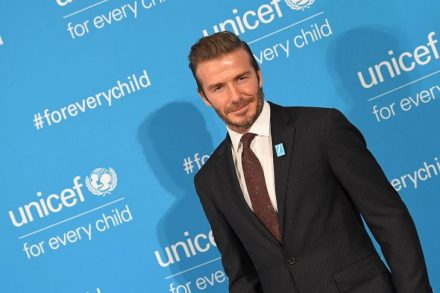
What would you do if naked pictures emerged of a celebrity you liked? Or one you didn’t? What about a slew of emails that were meant to be private that were hacked and then leaked into the public domain? Would you turn away from them, tutting. Or might you be tempted to read them? Would your inclination to read them increase if you liked the person, or if you really disliked them? We seem confused about all of this at the moment. The leak of David Beckham’s emails has condensed the confusion. Most of us believe that private communications should be private. Most of us believe that people’s private communications should not be hacked. And yet whenever they are hacked and then released we cannot help but crawl over the results. Perhaps we should pause.

Paris wants to fight terror with culture. Will it work?

From our UK edition

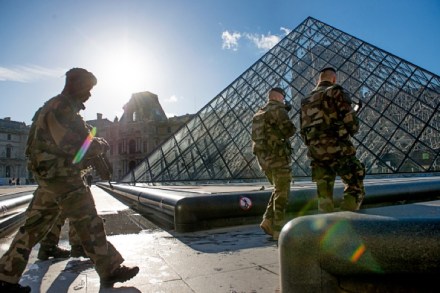
The news about the machete man in the Louvre broke just as my Eurostar was approaching Paris. Was this just a one-off, or were there more terrorist attacks to come? In the Gare du Nord that lunchtime, the atmosphere was humdrum. Armed policemen passed by like ghosts, unseen and unnoticed. For Parisians, these incidents have become a normal part of daily life. I figured the Louvre would still be cordoned off, so I headed for the Musée d'Orsay. If the Louvre attack was part of a co-ordinated assault on the cultural institutions of the French capital, the Musée d'Orsay would be another prime target. Would the museum be closed, as a precaution? Would the visitors stay away? Neither. People were queueing to get in, tourists and locals. The mood in the queue was laid back.

Yes, the Spectator’s writers disagree. That’s why they’re Spectator writers

From our UK edition

Matthew Parris’s article about the madness of the Brexiteers has caused much interest on social media, as did Alex Massie’s article along the same lines on Friday. I’ve been amused to see this described by some as a evidence of mutiny on HMS Brexit. A magazine’s star writers attacking each other with some passion, and sparing no weapon in the process. What’s going on? Simple: the same thing that has been going on since The Spectator was first published 189 years ago. We have no party line on Brexit, or anything else.

PETA’s Warhammer ban reveals the hypocrisy of its fake fur policy

From our UK edition

There are lots of problems with Warhammer fans. Bad haircuts, terrible dress sense, to name just two. These aren’t even stereotypes; as a little girl I went to the Games Workshop multiple times with my brothers, so have first-hand experience. Still, I feel strangely defensive over Warhammer because it has been the victim of a vicious smear campaign. PETA has launched the most bemusing of attacks on the brand after spotting that some of its characters wear fur clothing. The Viking-style 'space wolves' have caused particular offence. I should emphasise at this stage that the fur isn’t actually real.

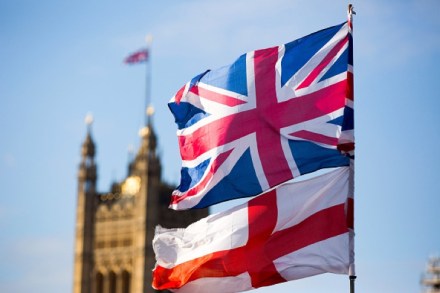
Has the term ‘British’ lost all meaning?

From our UK edition

We've been filling in our son's school application form this week. Below his name, date of birth and gender - which I'm horrified to see only has two options, despite the form clearly stating that it is indeed 2017 - is 'ethnicity'. I suppose I'm meant to put 'White British' although I dislike the phrase. Nine-times out of ten when I see the W-word used in the media it's as an insult or gripe, usually followed by 'privilege' or - shudder -'feminist'. Of course, there's another term we could use instead: English. According to the Guardian: 'English patriotism is on the rise at the expense of a sense of British identity, with voters in England increasingly likely to describe themselves as solely English, according to research.

How Alexander Chancellor saved The Spectator

From our UK edition

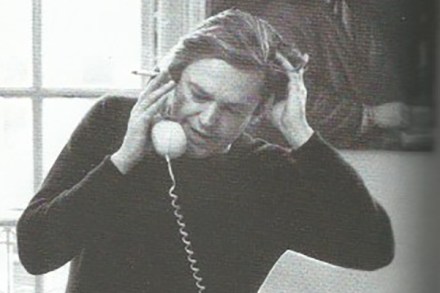
On the wall behind my desk hangs a picture of Alexander Chancellor when he was editing The Spectator, with cigarette and telephone in one hand and looking very much the hero that all of us in the magazine have long regarded him. His death, announced earlier on this morning, is awful news: we have lost not just a columnist but the godfather of the magazine. Some editors improve their publications, others aren’t so lucky - but Alexander saved The Spectator. The magazine as we know it today – its tone, its mix, its success – is his. Before he took over, sales were tanking. We were the only publication to support Brexit in the 1975 referendum (other than the Morning Star); an admirable position but one that had become something of an obsession.

Alexander Chancellor, 1940-2017

From our UK edition

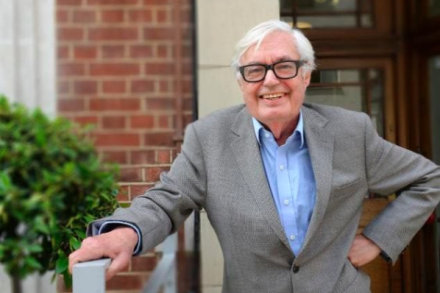
Alexander Chancellor, who died this morning aged 77, created the modern Spectator. Since 2012, he has also been a weekly columnist with his Long Life column - which darted from the vagaries of growing old, to memories of his time as editor of The Talk of the Town in the New Yorker, to the wicked foxes who nabbed his beloved ducks at his Northamptonshire house. Spectator editor from 1975 to 1984, he was responsible for giving the magazine the amusing, anarchic, clever but readable feel it has today. It was Chancellor who employed Taki - still happily with us - and had the inspired idea of pairing his High Life column with its polar opposite, Low Life, by Jeffrey Bernard.

A female culture war has begun

From our UK edition

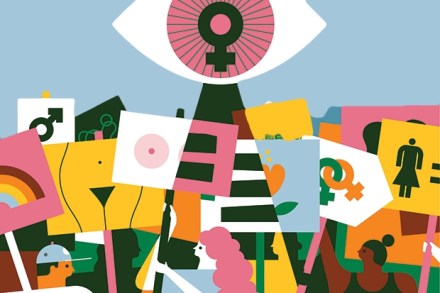
I didn't go on the women's march last weekend, and it's not the kind of thing I'd go to. However, Trump's previous form with regards the female sex is a reasonable cause for at least registering a protest. This is not to deny there are things I wish would be protested more, such as Rotherham, but I accept that's basically whataboutery and no reason to ignore Trump's behaviour. But you'd think, looking at an event like this, that there was a sort of culture war in which women were set in conflict with the patriarchy, represented by the three-times married president. Lots of women were marching for the right to have abortions, for instance, and this came as the new president reversed Obama's policy on funding overseas abortion (as all Republican presidents do).

We are living in a seriously phony age

From our UK edition

At the risk of coming across all Holden Caulfield, this is a seriously phony age. Everywhere you look there are people objecting to things they think other people have said or would like them to have said. This past Saturday provided a fine example when in Washington and various other Western capitals some people decided that a fine response to the Trump administration is to pretend that it is ‘anti-women’ in some way. Various politicians, Guardian journalists and others without lives walked around for a day tilting furiously at this imaginary enemy. Some took their daughters with them, as though it is a good idea to inebriate the next generation with the same cocktail of phantoms and lies.

Forget ‘peace and love’. Protest language has turned violent

From our UK edition

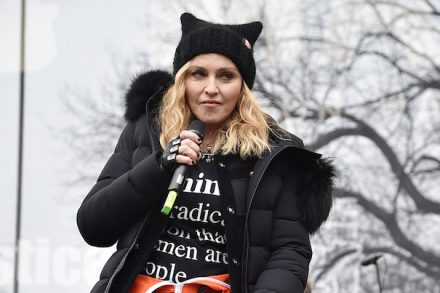
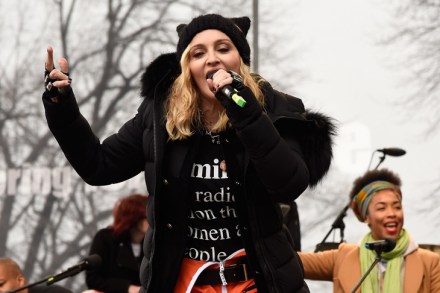
So Madonna says she doesn’t really want to blow up the White House. Her remarks at Saturday’s women’s march -- 'Yes, I'm angry, yes, I am outraged, Yes, I have thought an awful lot about blowing up the White House' – have, she says, been 'taken wildly out of context'. She has missed the point. No-one remotely thought that she would personally mix the Semtex, or offer any help to someone else to do so. But she was using inflammatory language which she ought to know somebody, somewhere will take seriously. If an unhinged loner in the backwoods of Virginia heads to Washington with a pick-up full of explosives she will be culpable in the same way as Henry II was in asking, rhetorically, so he thought, who would rid him of a turbulent priest.

The hypocrisy of the ‘Free Melania’ feminists

From our UK edition

I like to prance around showing off in hats and shouting at men as much as the next broad but - apart from the fact that I can get it at home - there were several reasons why I chose not to join a whole batch of my bitches on the Women’s March this weekend. Firstly, I was sure it would be full of 'Strong Women', a phrase I hate at the best of times - and feel should only be used if the lady in question can tear a telephone directory in half with her bare hands - and which seemed especially inappropriate to describe a bunch of overgrown Violet Elizabeth Botts having a collective temper tantrum because their side lost.

Only the right kind of women are invited to march against Donald Trump

From our UK edition

The Women’s March on Washington is going to be big. Officials say 1,800 buses have been registered to park in the city today. The subway will open at 5 a.m. (it usually starts running at 7 a.m. at weekends) to accommodate the numbers. In all, 250,000 people are expected to join the rally to show their disapproval of Donald Trump, dwarfing the numbers that attended his inauguration and parade a day earlier. It is fitting that women are taking the lead. Trump’s misogynist language and disregard for half the population has been one of the most shocking parts of his aggressive campaign.

Britain’s spy agencies could do with a woman’s touch

From our UK edition

I always knew security agencies were missing a trick with the ladies. Currently, less than four in ten workers in MI5, MI6 and GCHQ are female, which isn’t just embarrassing, but bad for national security; because women have the potential to be great spies.  But things are about to change. Since 2015, intelligence services have been on a massive drive to get more women into the ranks, scouting around Mumsnet for older, patriotic would-be agents. GCHQ has even announced a competition to find 13 to 15-year-old girls for the industry, having realised the worth of social-media savvy young girls.

The ‘clean eating’ gurus are now repenting – but the damage has been done

From our UK edition

Ella Mills, née Woodward - aka 'Deliciously Ella' - was on Radio 4 this morning discussing 'clean eating'. Many will know her as one of the main advocates of this fashionable nutritional advice, even though she now says she doesn't like to use the phrase 'clean'. Her best-selling book suggested that food could be used as medicine and could help cure illness. In August 2015, Isabel Hardman and I looked at the cult of clean eating in The Spectator. It had all the elements of a classic cult - devotees, a life-changing, inspirational message, a distinct lack of evidence to back up any of it - and now, it seems, even its most prominent priestesses are starting to repent. Mills's book became one the fastest-selling debut cookbooks of all time.

How the Stepford students rekindled racial thinking

From our UK edition

Many mad things are happening on campuses. Fancy-dress parties are banned lest the costumes offend minority groups. Saucy pop songs are forbidden lest they turn male students into marauding sex machines. Controversial speakers are No Platformed. But perhaps the worst thing is the rekindling of the racial imagination, the return of judging people by race. Yesterday was Martin Luther King Day in the US, a day when Americans, and many non-Americans too, celebrate the man who most famously said people should ‘not be judged by the colour of their skin, but by the content of their character’. Also yesterday, it was reported that the student union at the School of Oriental and African Studies in London thinks white professors aren’t capable of teaching black students.

What Oxfam won’t tell you about capitalism and poverty | 16 January 2017

From our UK edition

Your average milkman has more wealth than the world's poorest 100 million people. Doesn’t that show how unfair the world is? Or given that the poorest 100 million will have negative assets, doesn’t it just show how easily statistics can be manipulated for Oxfam press releases? They’re at it again today: the same story, every January. “Almost half of the world's wealth is owned by just 1% of the world's population” it said in 2014. It has done variants on that theme ever year, each time selling it as a new "big" story. All the time peddling the impression that inequality is getting worse, that the rich are engorging themselves at the expense of the poorest.