Culture

Poor conduct

From our UK edition

Last weekend Daniel Barenboim brought the Staatskapelle Berlin to perform at the BBC Proms for a cycle of Elgar’s symphonies. As Elgar only finished two of the things, it is among the easier symphonic cycles to pull off. But the Staatskapelle played beautifully over two nights at the Albert Hall, with moments of outstanding musicianship. They were let down only, at the end of the second evening, by their conductor. Turning around on the podium to face the audience, he announced that there was something he wanted to say. ‘I don’t know whether all of you will agree with me, but I would really like to share that with you.’ And then he began to spoil the evening.

Is the ASA brave enough to ban adverts for children?

From our UK edition

We all know that advertising is the work of the devil – creating entirely spurious wants, including in small children – but making it gender neutral doesn’t help. The Advertising Standards Authority is extending its brief to ensure that advertising does not confirm unhelpful sex stereotypes. That is to say, it is going to ban advertisements suggesting that little girls want to be ballerinas (Aptamil) or showing Lynda Bellingham at the stove (Bisto). Guy Parker of the ASA says, 'advertising standards can play an important role in tackling inequalities and improving outcomes for individuals, the economy and society as a whole'; the ASA will make sure it does by stigmatising the offenders.

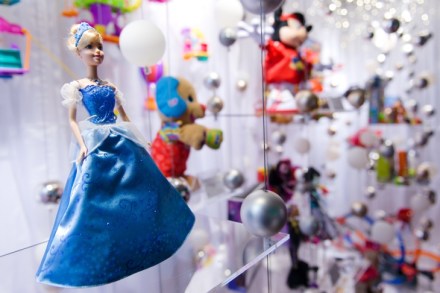
The Princess generation needs to grow up

From our UK edition

I never dreamed I’d see the day when I agreed with Miriam González Durántez - such a snob that she believes people can be socially snubbed by being given Hellman’s mayonnaise, such a Euro-bore that she found Brexit ‘devastating’ and so short-sighted that she sees sex with Nick Clegg as a reasonable proposition. But with this recent Twitter rant, I quite warmed to her: ‘When you have a 2.30 hours delay in a British Airways flight (what is happening to this airline!?) open the inflight shop magazine and want to scream: STOP-CALLING-GIRLS-LITTLE-PRINCESSES!!

English cricket is too glass half-empty for its own good

From our UK edition

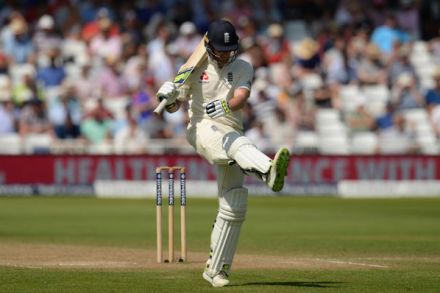
There is, let us be honest, a certain kind of England supporter who derives some cheerful satisfaction from disaster and weak-minded capitulation. Many England cricket supporters - for it is summer and time to put away minor matters such as Brexit and concentrate instead on more substantial civilisational matters - are naturally crepuscular, forever looking forward to the dying of the light. And why not? There is much to be said for being an Eeyore, especially if - as sometimes seems to be the case - being a Tigger is the only available alternative. Nevertheless, it is always a mistake to take things too far. Today’s miserable collapse at Trent Bridge, where England have been beaten by 340 runs, losing twenty wickets inside 100 overs, is a case in point.

Welcome to the green belt: a safe space for lily-livered Londoners

From our UK edition

I am thoroughly enjoying Melissa Kite’s latest, justifiable, gripes which have been provoked by her move out of London. Stuff shuts too early, for a start. And there are signs everywhere telling you what you can and can’t do, officious Lib Dem and Labour parish councillors and a general air of nastiness. Also, they won’t let her ride her horse in the village. I think Melissa’s problem is that she hasn’t moved to the country, but to the faux country. She is in the green belt, and the green belt is crowded and fraught and terrified that it is about to be eaten up by London. Further, its inhabitants are increasingly the same bad-tempered, moaning, sociopathic middle-class tossers that one finds in the capital.

A letter to… The Guardian’s sanctimonious letter writer

From our UK edition

This one is priceless, believe me. Truly priceless. For a long time now I’ve been buying The Guardian for its unintentional hilarity. Not just the columnists, but even more so the letters pages. This is from their fatuous Saturday family section: yes, it is a minor miracle that such a reactionary receptacle still exists at The Guardian. This is an anonymous letter from a reader saying something they’ve always wanted to say – they have one every week. If you have the time read it all – because it tells you what these people are really like underneath. These tolerant, caring, liberals. If you can get to the part about the father in law going to his car boot without either laughing hysterically or looking just plain aghast, then I would be surprised.

The interns were the real stars of the Spectator summer party

From our UK edition

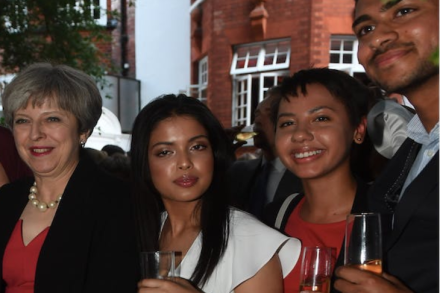
It was The Spectator’s summer party last night, the high point of Westminster’s social calendar. We had the Prime Minister, Foreign Secretary, Home Secretary - and Lady Nugee (aka Emily Thornberry) apparently walking away in a fury when told her friend could not come in just because he had a peerage. We had a High Life bar, in honour of Taki, and a Low Life one, named for Jeremy Clarke. But the stars were a group of young people from the Social Mobility Foundation, and I thought I’d say a little more about them. We at The Spectator have worked with the SMF for years. Typically, they are straight-A students from disadvantaged backgrounds: bright, hard-working and hugely appreciative of advice and opportunities.

Free as a jailbird

From our UK edition

Food programmes are having a strange effect on me: I watch them and feel nauseated. Masterchef, The Great British Bake Off, Great British Menu, half a dozen others. In the past I’ve watched and loved them all, sharing the exhilarating triumphs and gut-wrenching despair of the trembling hopefuls. A thousand times I’ve held my breath with them, waiting for the axe to fall: ‘The person leaving us this week is… Wendy.’ Cue the tears and blotchy, shell-shocked face — and that’s just me. But lately something’s changed. I noticed myself finding the way the experts and chefs talked about the food vaguely distasteful, and the feeling grew stronger.

The Grenfell inquiry outcome must not be predetermined

From our UK edition

Having worked flat-out to defend judges over the Article 50 case in the Supreme Court, the BBC has gone the other way, in relation to the judiciary, over Grenfell Tower. Its news coverage is working hard to displace the retired judge Sir Martin Moore-Bick from his appointment to chair the inquiry into the fire. Groups purporting to speak for the Grenfell victims are given airtime to denounce him. The idea is that they and their activist lawyers are entitled to a veto on who runs any inquiry, thus attaining effective control of what it decides. Something similar led to the hopeless, expensive collapse of chairman after chairman in Theresa May’s misguided independent inquiry into child sexual abuse. This is not in the public interest.

Young people check their privilege – and feel deeply disappointed

From our UK edition

Who would want be a member of Generation Z? Having your every youthful screw-up tracked and recorded on social media, facing the robot job apocalypse and without a lolly's chance in hell of ever owning a home in London - even if medical advancements allow them to work until they're 200. To top things off, they're saddled with years of student debt after their three years learning about Whiteness and Privilege at university. As the Guardian puts it: Students from the poorest 40% of families entering university in England for the first time this September will emerge with an average debt of around £57,000, according to a new analysis by a leading economic thinktank.

The funniest video I’ve ever seen

From our UK edition

I suppose it says something about me, but I don’t think I've ever seen anything funnier than this video – this brief video – of a man travelling to his target on a hoverboard.

The smoking ban ripped the soul out of this country

From our UK edition

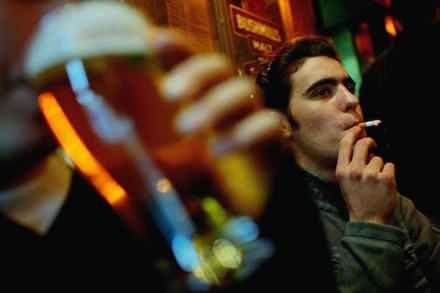
It is 10 years since smoking in public places was banned in England. Ten years since officials decreed that we could no longer light up at work, in restaurants, in pubs and even at bus-stops. Ten years since you could follow your Tiramisu with the satisfying throat hit of a drag of nicotine. Ten years since pubs were fuggy and convivial, packed with hoarse ladies telling stories and old blokes propping up the bar rather than shiny-haired new dads wearing a baby in a sling and wondering whether to treat themselves to buffalo wings or mac’n’cheese balls. Seriously. Babies in pubs. I’ve seen it with my own eyes. I hate the smoking ban. I hate what it has done to this nation. It has ripped out its soul.

I, Iain Duncan Smith – the ex-welfare secretary on tower blocks and work assessments

From our UK edition

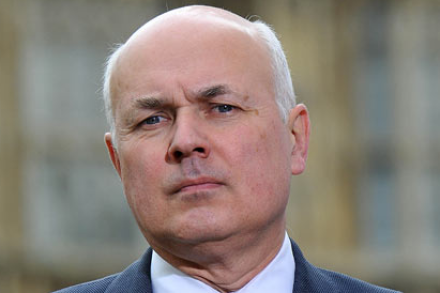
This morning, The Spectator held a series of discussions about the future of Conservative welfare reform, chaired by Andrew Neil and made possible by the sponsorship of the Joseph Rowntree Foundation. It was a sell-out invent with a stellar panel, and we’ll bring you the full reports later. But I thought it worth mentioning what our keynote speaker, Iain Duncan Smith, had to say about tower blocks and the work capability assessments made notorious in the film I, Daniel Blake. There are 4,000 tower blocks in Britain which the former Work & Pensions Secretary says represent an "architect-led" planning mistake. "Tower blocks, by and large, are not part of the housing culture of the United Kingdom.

If you can’t afford a home, why vote Tory?

From our UK edition

Back in the 90s and even early noughties, it was a cliché that middle-class English people used to talk about house prices at dinner parties. That hasn't been the case for a good decade, if my social circles are any indicators; it would be like bringing up interesting anecdotes of people we know discovering they have cancer. For years, a handful of miserablists, such as our own Nick Cohen, have been warning that housing inflation is not the great boom it was once believed to be, but is in fact an unmitigated social disaster. For years we've done nothing about it. And finally, in 2017, rising house prices have proven to be the crack in the dam for the right. It has lead to a flood of devastating support from the under-45s for a left-wing Labour leader.

The anti-tabloid snobs are the real bigots

From our UK edition

So now we know who’s really responsible for the horrible attack at Finsbury Park Mosque: it was the Sun wot done it. And maybe the Daily Mail too. No sooner had Darren Osborne allegedly crashed a hired van into Muslim worshippers than certain so-called liberals were stringing up the tabloids. The low-rent press poisoned his mind, just as it’s always poisoning plebs’ minds, they claimed, without a morsel of evidence. He could take the Guardian for all we know. They present their tabloid-baiting as a challenge to bigotry, when anyone who knows anything about history knows that fearing the tabloids and their dim, malleable readers is classic British bigotry.

Feeling full of rage? Blame the summer heat

From our UK edition

Bicycling up Regent Street in the intense June heat last week, I was cut up by a black cab driver. When I remonstrated with him, he leapt out of the cab and assaulted me, with a violent shove in the small of my back, trying to push me off my bike. It was the heat that did it. The driver wouldn’t have deserted his snug cab — and his passenger — if it had been raining. But, in the longest heatwave in more than a decade, he went stir-crazy in his confined space, as the black paint of his taxi absorbed mind-altering quantities of ultraviolet rays. He isn’t the only one who goes bonkers in this weather. When summer heat strikes the British, it morphs into summer madness.

Yes, Grenfell is a scandal. No, Theresa May does not have blood on her hands

From our UK edition

“Burn neoliberalism, not people” said Clive Lewis in a tweet showing the skeleton of Grenfell Tower. Odd words from a Labour MP. When asked just what he meant, he explained that his 'agenda' is to 'end not just the current government but Thatcherite economic dogma'. In this way the grief and anger after the Grenfell Tower disaster has been moulded into a march on No10 with chants of 'May must go' and 'blood, blood, blood on your hands'. Just a few days ago, John McDonnell was calling for a protest march in Westminster. Now, he has got one. https://twitter.

Those who died at Grenfell Tower were the victims of bad government

From our UK edition

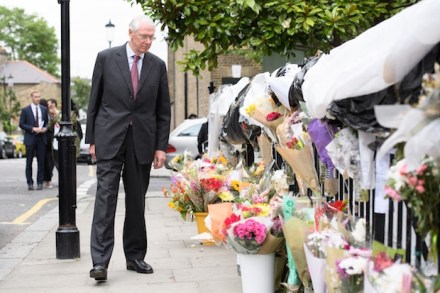
Had the Grenfell Tower tragedy befallen one of the millionaire high-rises built along the Thames recently, it would still be a catastrophe that shocked the country and the world. But what makes this disaster so numbing and sickening is to see, in the faces of the dead, some of the most vulnerable people in our society. People who were, in effect, in the care of the state – that is to say, in our collective care. If we pay taxes and vote, we’re part of a system that’s supposed to devote the greatest attention to those in greatest need of government help. And on Tuesday night, dozens of them were killed – through, it seems, near-contemptuous neglect from various layers of government.

Theresa May’s mistake? Putting style over substance

From our UK edition

There are many lessons to learn from the utter calamity of the general election, but here is just one: be cautious of any politician who asks you to judge their ideas via their clothes. Theresa May did – and it should have been a warning sign. As she discussed 'boy jobs and girl jobs' on The One Show, she wore pearls and a tweed jacket, to keep the Daily Mail happy. The election was announced, business-like, in a blue-and-white pinstriped power suit. She appeared in Vogue – her favourite magazine – wearing expensive leather trousers, then spent the following weeks having to defend the decision. The chainmail necklace became her talisman throughout the campaign. Then there were the shoes. So many shoes. Kitten-heeled.

Yes, the lowest-paid did best under Cameron

From our UK edition

Was the general election a vote against austerity? I was on the Today programme this morning to discuss this point, and in the course of the interview said that the lowest-paid did best under the Cameron years. This raised some degree of incredulity from Twitter, reported by Huffington Post. What planet am I on? I thought I’d answer. The Cameron years were tough, especially for those on welfare. But the aim was always to make people better-off by moving them into work. David Cameron did cut tax for employers, with corporation tax far lower. Liam Byrne, with whom I was on the Today programme, said that companies hoarded cash – but he didn’t say that they also employed a lot more people than they used to. So while 442,000 public sector positions were cut, 3.