Crime

Letters: In defence of Land Rovers

How to stay safe Sir: Mary Wakefield is correct to highlight the opprobrium heaped on anyone who suggests sensible safety advice to women (‘Don’t mix up murder and hate crime’, 2 October). It has long been the case that this is the one area where it is impossible to give crime prevention information without stirring up a hornet’s nest. Motorists are constantly told not to leave valuables on display when they park their cars, as they may return to find their windows broken and the articles stolen.

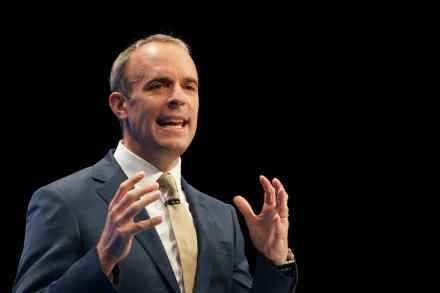
How Raab plans to fix the law

How do you solve a problem like Britain’s creaking criminal justice system? To the newly appointed Secretary of State, the answer involves ripping up the Human Rights Act, rolling out more electronic tags for convicts and pumping cash into preventative projects. At a Spectator event this morning, held at Tory Party Conference, Dominic Raab explained that rewriting the UK’s human rights laws was central to his reforming mission. He told editor Fraser Nelson: The Prime Minister was very clear when he appointed me deputy PM and Justice Secretary that he wanted this done… Overhauling the Human Rights Act is not just a good way of dealing with the foreign nationals that we can’t deport but also of ironing out our constitution.

How would making misogyny a hate crime have saved Sarah Everard?

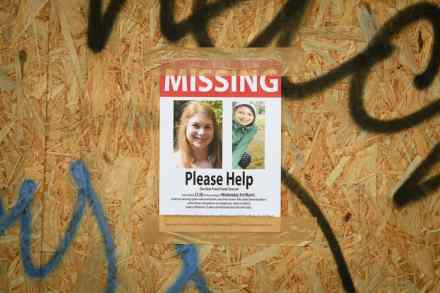
I’m not sure very many of our politicians, the London Mayor or even the Met can really be said to care about the death of Sabina Nessa, the poor young school-teacher murdered in London nearly a fortnight ago. If you claim to care about the victim of a terrible crime, if you’re going to grandstand and say ‘something must be done’, you have to care about what actually happened to her. The circumstances matter — else how can you try to prevent it happening again? ‘Say her name’, they all intone, before using that same name as a sort of springboard from which they can leap on to their own favourite hobby-horses and canter off, quite forgetting this very particular, very sad affair.

The green movement flirts with violent sabotage

From our US edition

'What actions are you recommending for the pro-life movement?' the New Yorker Radio Hour host asks his guest, a tenured university professor and author of How to Blow Up an Abortion Clinic. 'Well,' the guest replies, 'I am recommending that the movement continue with the March for Life and crisis pregnancy centers but also open up for property destruction. We need to step up because so little has changed and so many babies are still being killed. So, I am in favor of destroying machines and property, not harming people. I think property can be destroyed in all manner of ways. It can be neutralized in a very gentle fashion, or in a more spectacular fashion as in potentially blowing up an abortion clinic.' 'Do you yourself plan to be involved in such actions?

law climate

Sabina Nessa and the truth about stranger danger

The brutal murder of primary school teacher Sabina Nessa in Kidbrooke, South London this month has prompted more anger about female safety on British streets. It’s reminiscent of the aftermath of the horrible case of Sarah Everard, another instance of a killer targeting a female victim – seemingly out of the blue – in a public space assumed to be safe. Such incidents understandably heighten fears among women of predatory attacks by men, and lead to calls for greater protection – more police patrols or rape alarms, for instance. Campaigners have praised men for crossing over to the other side of the road rather than walking behind women in order to help them feel safe: ‘it’s small actions like that that make a huge difference,’ said one.

There’s nothing noble about televising violent crime

Are there crimes that are too depraved to be dramatised? And how long should programme makers wait before real life crime becomes the subject of a TV show? If the case of the Night Stalker - a serial burglar and rapist who terrorised south east London for 17 years during the 1990s and 2000s - is worthy of being turned into television, then doing so now is surely too soon. Hundreds of elderly woman and men - the youngest, 68; the eldest in her nineties - fell prey to the Night Stalker. Men and women, sleeping in their beds, woken by a gloved hand, a masked face. A decade after Delroy Grant, the man responsible, was brought to justice, ITV is broadcasting Manhunt: The Night Stalker.

Why do some women find killers irresistible?

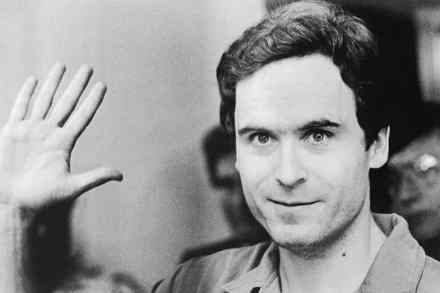
Women who fall in love with killers have always fascinated and repulsed me. What drives them? Do they think they can ‘save’ these men? Are they secret sadists, acting by proxy? Are they masochists, getting a cheap thrill from communicating with someone who has tortured a fellow woman to death? Bonnie and Clyde syndrome, also known as hybristophilia, puts the case that, as an evolutionary reproductive trait, some women can be drawn to ‘bad boys’ who are prepared to break rules/laws and are therefore ‘stronger’. I was pleased to see that Denmark has now banned prisoners serving life sentences from starting romantic relationships while in jail.

Life in LA is murder

From our US edition

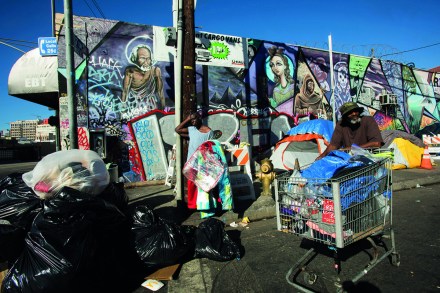
It was a punch in the face, followed by a thick spray of blood. Then another punch, another victim. More blood. I was witnessing a random assault on two elderly tourists in broad daylight. A man walked up to a couple, hit the woman so hard she fell to the ground bleeding and when the husband stepped forward to protect her, he too was pummeled. ‘I saw what you did!’ I yelled as the assailant fled. I called 911 and followed him through a parking garage and onto a side street. In a few minutes, police arrived and apprehended the man. As rescue workers attended to the victims, an officer asked if I would testify in court. I agreed and watched as the attacker was handcuffed and removed.

los angeles california

The rise and fall of the yakuza

For the first time in history, an organised crime ‘yakuza’ boss has been sentenced to death in a Japanese court. Satoru Nomura, head of the Kudo-kai group in Fukuoka, was found guilty of murder and three assaults after a trial held without a jury due to fears of possible intimidation. If a planned appeal fails, he will be hanged. We’ll find out about it after it happens. What makes the case remarkable is that no evidence was presented linking Nomura directly with the crimes he was accused of. The judge nonetheless concluded that they took place on his orders and had the confidence to deliver the ultimate sentence. The case marks a new low in the seemingly terminal decline of the once fearsome crime syndicates.

How Nextdoor became the new Neighbourhood Watch

Long before the official numbers began to rise, back in 2014, it was clear that knife crime was on the up. You could tell by the way small boys chased each other through the park with machetes, and by the zombie blades left in flower beds. Now, seven years later, I feel the same way about what goes by the cosy-sounding name of ‘neighbourhood crime’. There’s the fashion for car theft (as poor Sam Leith found out), and the constant predatory circling of iPhone thieves on e-scooters. But worse than that, I think burglary is back, and I think it’s thanks to crack. We know drug use is creeping up: on Tuesday it was announced that drug-related deaths in England are at the highest level they’ve ever been. As for burglary stats, for those I rely on Nextdoor.

A lament for Washington DC (no, seriously)

From our US edition

Washington DC — I’ll try not to overstate things here — does not have a stellar reputation. Most Americans regard it as corrupt, alien, taking in an exorbitant amount of their taxpayer money and blowing it on stupid wars and bureaucratic boondoggles. DC is the Swamp, a fetid hothouse of buzzing lobbyists and special interests. It’s the Deep State, where well-oiled gears interlock and turn towards ever more self-enrichment and self-preservation. The reality has always been a bit sadder. Washington is more pseudo-expertise than evil genius, more $3 Coors until closing than three-martini lunch.

washington dc

Boris’s crime crackdown will be harder than he thinks

Can crime be beaten with a beaten down police force? The government certainly hopes so. Today, the Prime Minister launched the much trailed ‘Beating Crime’ Plan. Not trailed enough, according to the boss of the cops’ union, The Police Federation, who says the first he heard about the plan was last Sunday — shortly after his organisation, representing 130,000 front line officers, passed a vote of no confidence in the Home Secretary. How has this fracture between police and politicians come to pass? In rhetorical terms, this is the most pro-police administration in the last ten years. It has certainly worked hard to exorcise the malign impact of Theresa May.

Domestic violence affects us all

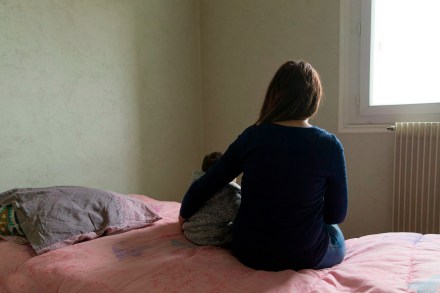
Since the first Covid-19 lockdown last year, cases of domestic abuse and subsequent deaths have risen. In England and Wales, a woman dies as a result of domestic violence every three days. But the reality is that few perpetrators are arrested, let alone charged and convicted. The rise in cases is beginning to worry government ministers, which is no surprise given domestic abuse has never been properly tackled. Cabinet office minister Michael Gove has been planning how best to use existing powers to tackle this shadow pandemic. Ideas include a minimum standard for police and other criminal justice agencies to increase prosecutions and better protect the victims.

What the hell is going on in DC?

From our US edition

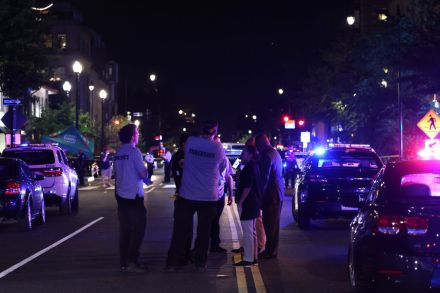
Imagine dining al fresco at a popular French brasserie in Washington DC. It’s a clear, summer night and the streets are buzzing with residents and tourists alike. You’re enjoying your Burger Americain, and suddenly gunshots ring out down the street. Diners duck and run for cover. You later hear that two men were injured just blocks away from where you were enjoying your meal. The stark realization hits: the heart of the nation’s capital is not safe. Thursday night’s shooting on 14th Street was just the latest shocking crime to occur in a well-populated and upscale area of DC. Three people were shot and wounded just outside of Nationals Park during a heavily attended baseball game last week.

dc

Critical father theory

From our US edition

Throughout the 1970s and 1980s, my stepfather worked as an auto mechanic in Upstate New York, at a ‘youth camp’ nestled in a pine forest. The bucolic sobriquet was a euphemism; this ‘camp’ was a medium-security pre-prison of sorts for boys 14-17, mostly from New York City, sent up following precocious encounters with the law. These youthful offenders were not the worst of the worst. Boys implicated in rape, murder or similarly terrifying offenses were assigned elsewhere, to compounds with barbed wire and armed guards. As it happened, campers liked to hang around the garage, and over the years, some who showed diligence and aptitude with tools were taken under my stepfather’s wing.

father dad
cities

Anti-anti-crime policies are ruining American cities

From our US edition

I didn’t meet Davell Gardner Jr. Yet his photo — and the bubbly personality it captures — will forever remain etched in my mind. The picture shows a baby with fuzzy curls; trusting, happy eyes; a beaming, gap-toothed smile. His chubby, loaf-like baby hands remind me of my own kids’ hands, which I often can’t help kissing or blowing raspberries on. There he is, crawling on his dad’s belly, enjoying one of the last playtimes of his life. On July 12 last year, a convoy of three cars pulled up in front of a residential building on Pulaski Street, in Brooklyn. Suspecting potential gang activity, officers in an NYPD cruiser flashed their lights, and one of the cars, a Volkswagen Jetta, sped away. The cops gave chase, exactly as the gangsters had hoped they would.

The true cost of the convenience economy

‘Where’s the car?’ said my wife Alice, interrupting my Zoom meeting on Saturday morning. ‘It’s where you left it,’ I said perhaps more pointedly than was kind. ‘When you drove it home last night. On the drive.’ ‘No it isn’t,’ she said. I left my Zoom meeting, shambled to the front of the house and looked out of the window. She was right. Half-full skip, yes. Wheelie bins, yes. The usual pizza boxes, empty vodka miniatures and crisp packets scattered outside our house by generous pedestrians? Present and correct. But no car. ‘It’s been stolen,’ I said gloomily and, of course, I was right.

Lori Lightfoot’s inner Republican

From our US edition

It’s not known when Chicago mayor Lori Lightfoot experienced the first stirrings of her secret GOP gland, but knowledgeable conjecture puts it perhaps two nanoseconds after taking the oath of office in 2019. It’s then that Lightfoot, buoyant after having been swept into office with 74 percent of the vote, surely had an alarming thought: ‘OMG, I’m mayor. What do I do now?’ All Democratic politicians aspiring to executive office have a secret Republican gland, although it’s vestigial till they sit behind an executive desk. When it’s dormant they can sign up for any damn fool notion. During her mayoral campaign, Lightfoot had cheerfully endorsed both an elected school board and an elected police board.

lightfoot

Michael Avenatti is the latest Spectator contributor to be jailed

From our US edition

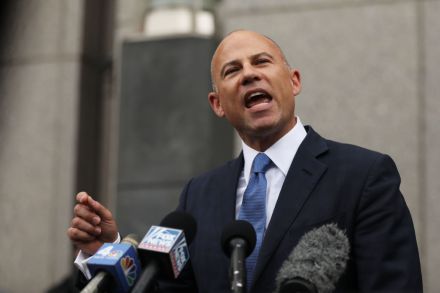
Which Spectator contributor will be jailed next? Taki and Michael Avenatti have both done time after bylining in these august pages — and Roger Stone only swerved his 40-month sentence by the grace of President Trump. It could be argued that The Spectator’s decision to publish Michael Avenatti was not our finest moment. The Creepy Porn Lawyer, as Tucker Carlson insisted on calling him, is not the best egg in the anti-Trump basket. But we believe in free speech, and Avenatti was eager to trash Beto O’Rourke and that’s always good idea.

michael avenatti

The shooting of a journalist – and the dark world of Dutch organised crime

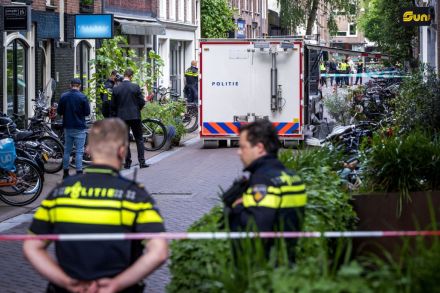
In an attack that has rocked the Netherlands, a leading Dutch crime reporter is fighting for his life in hospital after being shot in broad daylight. Last night, at around 7.30 p.m., the investigative crime journalist Peter R De Vries was shot five times on a busy street in central Amsterdam after leaving a television studio where he was recording a talk-show. The horror on the face of the Amsterdam mayor was visible at a hastily-organised 11 p.m. press conference to discuss the attack, while tributes for De Vries flooded in from everyone from Dutch king Willem-Alexander to caretaker Prime Minister Mark Rutte. Rutte called the shooting ‘an attack on the freedom of the press… appalling for our democracy, justice system and society’.