Covid-19

What can we hope to learn from the Covid inquiry?

16 min listen

This week there have been some interesting developments in the public Covid-19 inquiry where scientists and mathematical modellers have been giving testimony on how prepared the government was to tackle the pandemic and how they used expert advise.  Within the sessions, WhatsApp messages revealed that Dame Angela McLean – who at the time was chief scientific advisor to Ministry of Defence – sent a secret message referring to Rishi Sunak as 'Dr Death the chancellor' in reference to the public health impacts of the 'eat out to help out' scheme. What were some of the other revelations? Did we get any clarity on how these mathematical models were produced and implemented? And what can we hope to learn from what promises to be a long and protracted inquiry?

Neil Ferguson wasn’t a lockdown fanatic

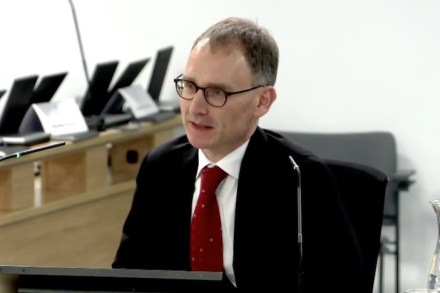
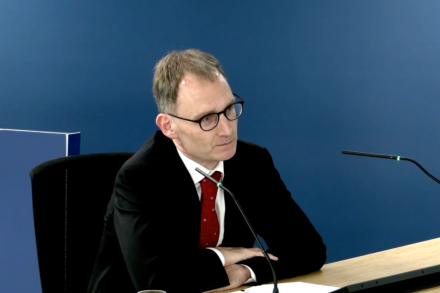
Is the Covid inquiry running out of steam? Today, it saw one of Covid’s biggest stars take the ‘witness stand’: Professor Neil Ferguson, of Imperial College, whose paper in March 2020 was instrumental in persuading Boris Johnson to call a lockdown. Ferguson, of course, went on to achieve notoriety by breaking the very lockdown rules he inspired by meeting his lover, leading to his resignation from Sage.      For the duration of Ferguson’s evidence, which spanned several hours, the number of people watching the live feed rarely reached more than 600. But for those who did take the trouble to listen, what did they learn? Ferguson, it turns out, was initially a bit of a lockdown sceptic.

Has Matt Hancock just had a good idea?

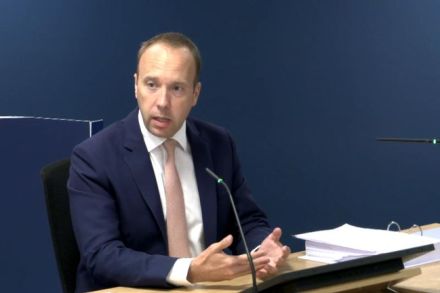
Matt Hancock’s evidence to the Covid inquiry was some of the most explosive we’ve seen so far. It was largely damaging to anyone who wasn’t Matt Hancock, naturally, but the former health secretary did induce some rather big cringes from all present when his voice cracked as he said ‘I’m not very good at talking about my emotions’. He also apologised to all those who had lost loved ones. Hancock did offer some important insights into the mistakes made at crucial moments in the run-up to the pandemic.

Covid’s legacy: how will China remember the pandemic?

48 min listen

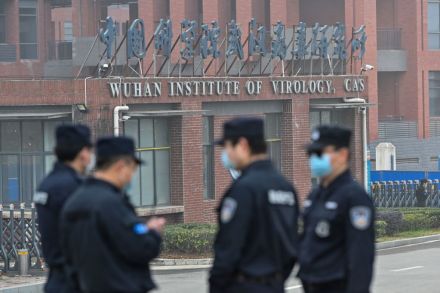
Three years ago, as people across China welcomed the Year of the Rat, a new virus was taking hold in Wuhan. In London, the conversation at my family’s New Year dinner was dominated by the latest updates, how many masks and hand sanitisers we’d ordered.  Mercifully, Covid didn’t come up at all as we welcomed the Year of the Rabbit this weekend, though my family in China are still recovering from their recent infections. The zero Covid phase of the pandemic is well and truly over. So what better time to reflect on the rollercoaster of the last three years? In exchange for controlling the virus, China’s borders were shut for most of that time, while the economy has tanked and a general of children had their schooling disrupted.

Pouria Hadjibagheri and the UK’s abandoned open data revolution

With a new year comes the New Year’s Honours and I’m struck to see an MBE given to Pouria Hadjibagheri. He’s the technical lead of a civil service team whose drive and creativity led to the Coronavirus data hub. It was a breakthrough in the democratisation of public data. He and his team saw to it that information and metrics were not the secret preserve of a Whitehall cabal, cherry-picked to make a certain point, but available to everyone. This transformed the debate about the virus and the need for lockdown, allowing for new perspectives and new projects. The Spectator’s data hub was one of them. If you were pleased we avoided lockdown in December last year, you have Hadjibagheri’s team to thank – they made the debate possible.

The danger of learning too much from Covid

When Ray Bradbury was asked if his dystopian vision in Fahrenheit 451 would become a reality, he replied: ‘I don’t try to predict the future. All I want to do is prevent it.’ In the hot embers of the Covid-19 pandemic, it may not be enough to foresee infectious disease threats if we lack the ability to forestall them. After all, predictions were made about 2019. In a Ted talk four years earlier, Bill Gates warned about what he later called ‘Disease X’, a respiratory disease that would cause millions of fatalities. Devi Sridhar, a professor of public health at the University of Edinburgh, addressed the Hay Festival in 2018 with an uncanny description of a zoonotic virus from China that could spread across the globe.

Macron’s vaccine culture war

When French prime minister Jean Castex and health minister Olivier Véran held a press conference last week, they outlined the timetable for a gradual easing of the country's many Covid-19 restrictions. Véran talked of an 'encouraging evolution' in the fight against the virus, despite the fact that France had in the previous week recorded an average of over 300,000 daily cases.  As of 2 February, the wearing of masks outdoors will no longer be mandatory; a fortnight later, the French will be able to experience once more the pleasure of standing at a bar with a glass of whatever takes their fancy. Since the start of this month, this practice has been outlawed.

The UK economy has returned to its pre-pandemic size

Nearly two years after the UK experienced its biggest economic collapse in 300 years, the economy has returned to pre-pandemic levels. GDP is estimated by the ONS to have grown by 0.9 per cent in November, almost twice what had been expected – making it 0.7 per cent larger than it was in February 2020. The US and Sweden managed to pass pre-pandemic levels last spring. China took just a few months. But Britain, whose economy fell further than almost any developed country in 2020, is catching up. Britain, whose economy fell further than almost any developed country in 2020, is catching up The below chart shows how UK growth is now at the top end of forecasts (shaded area) better than envisaged in any Budget since that of March 2020.

Will I ever go on holiday again?

Last night I dreamt I went on holiday again. It seemed to me I stood by the departure gate, and for a while I could not enter, for I kept setting the metal detector off. Then, like all unvaccinated dreamers, I was possessed of a sudden with supernatural powers and passed through the barrier. The boarding tunnel wound away in front of me, its sides covered with weeds. As I pulled my hand luggage on squeaky wheels, I lost sight of the open door of the plane, and then it appeared again, the smiling stewardess beckoning. I came to the door suddenly with my heart thumping. There was a British Airways Boeing twin-engine jet, and my seat on it, secretive and silent as it had always been, the navy blue leather shining in the moonlight of my dream.

My Omicron hell

Gstaad   It is hard to imagine that we have reached the year 2022 and are still imposing completely irrelevant restrictions on each other. By we I mean those of us in the supposedly enlightened West, where silliness, jealousy, cruelty and woke rule the roost. I’ll begin with the Chinese virus that has contrived to dominate the headlines even more than Boris and Meghan put together. I got it following my Christmas party, which was a great success if one is to believe some of the thank-you notes I received. All I can say is that it’s not true that chastity is sexually alluring. If it were, women would go for newly ordained priests who take their vows seriously, rather than elderly swine.

Is Boris feeling lucky?

The political and economic new year is all about surging Covid and a surging cost of living. The list of what families in particular will contend with in the coming weeks is enough to induce tears of exasperation. Take schools for starters. Staff absences, largely caused by coronavirus, were 8 per cent at the end of last term. On the Department for Education's own projections, the Omicron surge means these absences will rise to between 9 per cent and 13 per cent at the beginning of this term, and it is not inconceivable the upward path in absences will peak at between 20 per cent and 25 per cent. The Education Secretary, Nadhim Zahawi, is determined schools should remain open.

Five lockdown questions the cabinet must ask

The cabinet will meet this afternoon, with more restrictions and even a new lockdown on the agenda. But have ministers been given the information they need to make an informed decision? There are rumours of briefing documents being sent around over the weekend with a pro-lockdown bias (i.e., heavy on the worst-case scenarios and not much said about potential side-effects). But the Times today reports that this time around the cabinet wants a full discussion — with at least ten ministers demanding a better quality of briefing before decisions are made that affect the lives of millions. The below is a list of questions that ministers need answered: 1. What is Sage’s central scenario for Omicron — and what assumptions lie behind it?

Is the EU heading for a booster crisis?

The Omicron variant spreads far more quickly. It infects far more people. And it is already rampant around the world, and probably unstoppable no matter how quickly borders are closed, or restrictions on socialising are put in place. Still, despite that, the one thing we already know for sure is that booster jabs are very good at controlling serious disease, and governments are scrambling to get as many shots into arms as quickly as possible. There is just one problem. If you happen to live in Germany, there are not enough of them to go round. And, even more worryingly, that may be the first sign the European Union is about to head into a booster crisis every bit as serious as the vaccine crisis that delayed the roll-out of the inoculation campaign at the start of this year.

Why a large rebellion matters for Johnson

Boris Johnson will this evening face his largest Tory rebellion yet as the issue of vaccine passports comes to a vote in the House of Commons. Today MPs will vote on various aspects of the government's Covid Plan B proposals — much of which has already come into force. There will be four votes: one on face masks being mandatory in venues like the cinema and theatre; another on daily lateral flow testing to avoid self-isolation if you are a close contact of a positive Omicron case; a third on mandatory vaccination for NHS staff and finally — and most controversially — the introduction of vaccine passports.  The Spectator has a live tally of the Tory MPs planning to rebel on the issue of so-called Covid passports.

Johnson is imperilled. So why are his enemies helping him?

It's a topsy turvy world when your friends and allies do you all kinds of damage and then your enemies and detractors accidentally ride to the rescue. But that’s what's going on in the life of Boris Johnson. His lax approach to the conduct of his own circle is a major factor in his popularity slump. Whether that be backing Owen Paterson, wilfully being taken in by partying Downing Street staffers or over-indulging his wife’s focus on animal rights, utopian environmentalism and support for the Stonewall agenda.  Yet now the cavalry has appeared over the brow of the hill and it is made up of people who wish to bring him down. But they serve only to remind the Tory tribe why it turned to him in the first place.

Boris Johnson is becoming a risk to his own Covid rules

'It feels like a tipping point. Trust in Boris is collapsing. It could be fatal'. So spoke a senior Tory, who hitherto has been a great cheerleader for the Prime Minister. Sunday night's address to the nation by Boris Johnson won’t, he says, change the perception of Tory MPs that his recent performance has been wholly inadequate. That feeling may in fact be reinforced by Johnson’s choice of simply speaking sombrely down the barrel of a camera lens rather than holding a press conference and taking questions.

Will the public take Plan B seriously?

After holding strong for two weeks, fears over the Omicron variant look set to change the government’s course on Covid restrictions. Reports this morning suggest that Plan B could be implemented as early as tomorrow, including advice to work from home and — more controversially — the introduction of vaccine passports. The timing is interesting: rumours about the possible decision landed hours after a video clip — showing the Prime Minister’s former press secretary joking about last year’s alleged Downing Street Christmas party with No. 10 aides — was leaked. Downing Street still adamantly denies the party took place.

Omicron: cause for hope?

It will be weeks before we know just how worried we should be about Omicron — but the first indications seem hopeful. The epicentre of the first recorded outbreak has been the subject of a study that suggests that it may be milder than Delta. Early data from 166 patients in the Tshwane district comes with the usual caveats, especially that very little Omicron has been found among South African over-65s. But the study nonetheless has two weeks of hospitalised Omicron patients to analyse — more than any other country. Here are the main indications so far:  Fewer people hospitalised with Omicron have ended up in intensive care: 8 per cent, compared to 25 per cent for Delta.Fewer patients need oxygen: only about a third.

Why there is more Omicron than we know

Yesterday the UK Health Security Agency (UKHSA) announced it had identified another 26 Omicron cases, and the total number of cases in the UK had reached 160. The rate of increase from zero in little over a week seems significant. But the one thing we know is these official figures are a significant underestimate of how many cases are actually in the UK. Here’s why. Omicron is already with us in much greater size than we know. There will already be significant transmission within communities.

Do masks really halve the risk of Covid? A note on the evidence

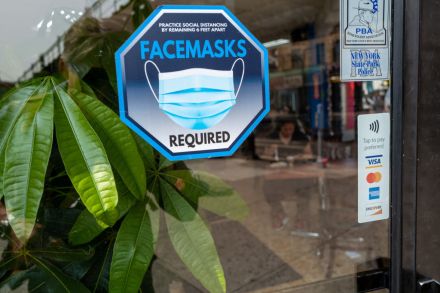
‘Most of the trouble in life comes from misunderstanding’ as Willy Loman said in Oscar Wilde’s masterpiece An Inspector Calls. Grating isn’t it? But also a reasonable facsimile of how science reporting often reads, at least to those of us self identifying as scientists. Pre-Covid it was so. With Covid the problem has become, well, an epidemic. Recent reporting about the efficacy of masks is a classic case in point. You might remember the study in question: it certainly made headlines when it came out. 'Mask-wearing cuts Covid incidence by 53 per cent, says global study', stated the Guardian: 'results from more than 30 studies from around the world were analysed in detail'.