Corruption

Corruption affects everything in Palestine – even vaccines

From our UK edition

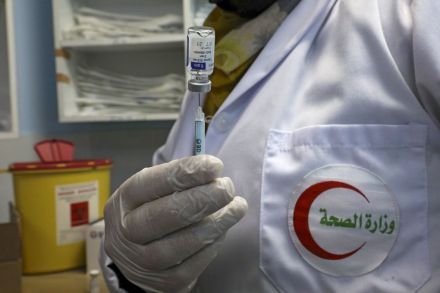
Visit certain parts of the West Bank and you’ll encounter mansions owned by senior officials in the Palestinian Authority (PA). By any standards – let alone those to which ordinary citizens are accustomed – they are impressive, with arches, colonnades and tall windows. If you’d been watching them in recent weeks, you might have seen vaccines being quietly delivered to these residences in unmarked cars, having been skimmed off the supply intended for medical workers. Those, at least, were the allegations made by a number of Palestinian human rights and civil society groups. Last week, the Palestinian health ministry was forced to come clean.

Nicolas Sarkozy and a very French corruption scandal

From our UK edition

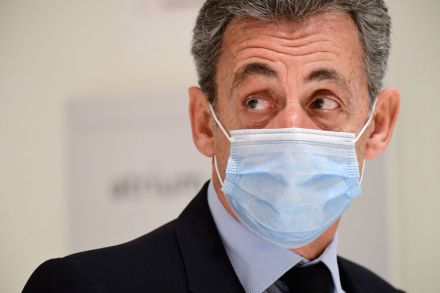
Nicolas Sarkozy, 66, President of France from 2007 to 2012, currently a valued member of Emmanuel Macron’s informal council of advisors, was today sentenced to a year in prison for bribery and corruption in a case with roots in his murky relationship with the late Muammar Gaddafi, the not much missed brotherly leader of Libya. This scandal is a tangled web, even by French standards. For those who have spent years attempting to get to the bottom of it, it offers the tantalising prospect that Sarkozy could become the first former French President ever to be thrown in the Paris prison called La Santé – although it doesn’t have a reputation for being good for the health.

How democracy can subvert itself: Bunga Bunga reviewed

From our UK edition

Italy has long captivated romantics from rainy, dreary, orderly northern Europe. Goethe, Stendhal, Keats and Shelley all flocked to Italy in search of the ideal society. There they found what they thought was a utopia. ‘There is,’ Byron marvelled in a letter home from Ravenna, ‘no law or government at all, and it is wonderful how well things go on without them.’ Well, Silvio Berlusconi has made some of Europe’s wisest men sound like chumps. If the notorious career — chronicled in the podcast Bunga Bunga — of the longest-serving prime minister of Italy since Mussolini and its sometime richest man has done one good thing, it’s to have dispelled for good our quixotic fantasies about his troubled nation.

Italy’s Achilles heel: corruption and cronyism

From our UK edition

Tim Parks is a seasoned, incisive observer of football, the railways, work, domestication and plenty more in his adoptive country of half a lifetime. What is, what ought to be and the machinations in the delta between provide much of his material. In this tale of two countries in one, bright, hard-working Valeria leaves Basilicata in southern Italy to study communications and marketing at a private university in Milan — shiny subjects in a city of business a long way from home (the same distance could take her to Tunis or Belgrade). She arrives laden with bread, pastries, fruit and wine, given to her by three aunts at railway stations on her journey. Her family and her circle of friends are all from the south, but she wants her life to be in the north.

Is change on the horizon in Baltimore?

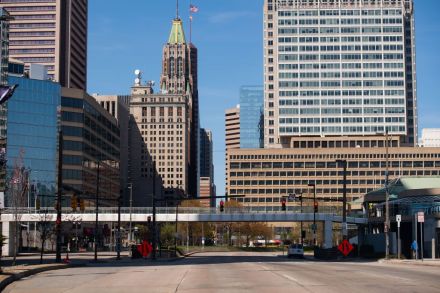
Crime-ridden Baltimore finally dodged a bullet this week. The bullet, in this case, was former mayor Sheila Dixon, who nearly became mayor again, despite resigning from office a decade ago when a jury found her guilty of misdemeanor embezzlement. Perhaps this loss can undo the curse of the Baltimore mayor’s office.Considering the string of scandals plaguing recent mayors, curse may not be a strong enough word. Decide for yourself: 2010: Mayor Dixon, who assumed office in 2007 after Mayor Martin O’Malley was elected Maryland governor, resigns after soliciting gift cards from a wealthy developer that were intended for poor children but were used on shopping sprees while she was city council president. City Council President Stephanie Rawlings-Blake assumes the office.

baltimore

Moscow rules in London: how Putin’s agents corrupted the British elite

From our UK edition

In the past year alone, Russia-watchers have been treated to books entitled The Code of Putinism; Putin’s World; Putin vs the People; The Putin System and We Need to Talk About Putin — just to mention the ones with Putin’s name in the title. In addition, Robert Service’s Kremlin Winter, Sergei Medvedev’s The Return of the Russian Leviathan and Andrew Monaghan’s Dealing with the Russians have also offered their own insights into the history, politics and future of Putin’s Russia. In this crowded field, is there a place for Putin’s People? Happily, there is.

End of an era

From our UK edition

There’s been a Dimbleby on air since before I was born but last Friday saw the end of that era when Jonathan retired as chairman of Radio 4’s Any Questions after 32 years. It’s a bit like imagining life in Britain once the Queen dies. The Dimbleby family has been intertwined with the history of the BBC, and major national events, since the second world war when Richard, the father, carved out his career as a war reporter, most famously from Belsen in 1945. Mere mention of the name conjures up those Reithian values — clear reportage, an intelligent and fair-minded assessment of what’s going on, and access to that information for everyone.

A quick and dirty guide to Chicago’s down and dirty mayoral election

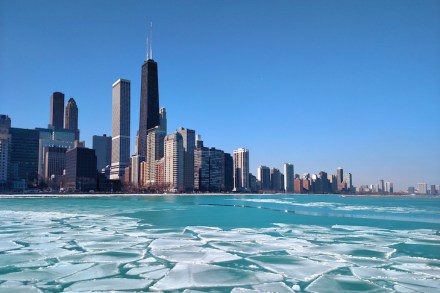
On Tuesday, Chicago voters head to the polls to vote for Rahm Emanuel’s successor as Da Mayor. ‘Why vote in late February?’ you might ask. ‘Didn’t Chicago just vote in November for House members and Governor?’ Oh, you naive soul. For decades, Chicago has held its elections in February precisely because it is cold, often snowy, and hard to get to the polls. When you suppress ordinary voters, who is left? For many years, it was reliable voters for the old Chicago Democratic Machine. Some of them drove city busses or garbage trucks; others shuffled papers in city offices. Some filled potholes. Many more watched their co-workers fill potholes while they grabbed a cigarette. What better way to ensure that insiders get reelected?

chicago

A nation of beggars and plutocrats

From our UK edition

Picture India in 1991. You need to make several trips to Delhi and wait three years to import a computer. Coca-Cola is contraband; there is a 22-month waiting list for a car, and an interminable queue for admission to the exclusive club of telephone owners: there are only five million active connections in a country of 900 million people. Post-colonial India elevated suspicion of private business into a public virtue. But with the collapse of the Soviet Union, which maintained a vital $6 billion trade relationship with India, the rhetoric of economic self-reliance and political non-alignment became insupportable. All that stood between India and bankruptcy when the government was compelled to throw open the economy in the summer of 1991 was $2 billion.

Partners in crime

From our UK edition

It’s not every day that a television screenwriter is threatened with a trial for sedition, but G.F. Newman was after his series Law & Order aired on BBC2 in 1978. ‘The political fallout was enormous and there was a move to try and get me prosecuted by Sir Eldon Griffiths and a gang of MPs, but it didn’t go anywhere,’ Newman remembers. ‘It would have been a wonderful case had it done so.’ Law & Order rocked the boat by doing the unthinkable, so much so that BBC director-general Sir Ian Trethowan was hauled over the coals by the Home Office minister John Harris (later Lord Harris).

A brutal band of thieves

From our UK edition

Mark Galeotti’s study of Russian organised crime, the product of three decades of academic research and consultancy work, is more than timely. In these days of ever more bizarre Russian attacks, it reads like the essential companion to a bewildering and aggressive new world, a world that is no longer confined behind Russian borders but seeks actively to penetrate and disrupt our own society. Essentially a history of the development of Russia’s unique form of organised crime, it constantly illuminates and clarifies the familiar, legal narrative of Russian history and the attitudes of Putin’s clique. The Russian mafia’s distinctive culture originally emerged during the years of revolution and civil war.

The Mutiny and the bounty

From our UK edition

Sullying the glorious sunshine, sand and sea, Miami in the 1940s, when I first ventured there, was already overcrowded, vulgar and exorbitant. It got a lot worse. By the early 1980s, the period to which this sensational criminal history is devoted, it had become the capital of Cubans in exile and America’s most prosperous cocaine entrepot, where the annual murder rate was more than 300. Attempts to impose law and order were handicapped by corrupt police, a corrupt judiciary and corrupt juries.

His dark materials | 12 October 2017

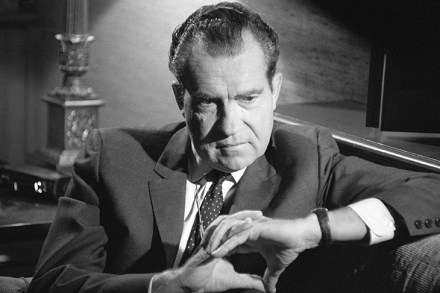
In this giant, prodigiously sourced and insightful biography, John A. Farrell shows how Richard Milhous Nixon was the nightmare of the age for many Americans, even as he won years of near-adulation from many others. One can only think of Donald Trump. Nixon appealed to lower- and  lower-middle-class whites from the heartland, whose hatred of the press and the east-coast elite, and feelings of having been short-changed and despised by snobs, held steady until their hero and champion unmistakably broke the law and had to resign his second-term presidency. Nixon won a smashing re-election in 1972, even as it was apparent that the White House was awash with skulduggery.

Putting the boot into Italy

From our UK edition

A young woman, naked and covered in blood, totters numbly down a night road. A driver spots her in his headlights and swerves. Was he the last to see Clara alive? Did she jump to her death from a parking structure, as stated in the report? Are her rich family trying to hide more than their property deals? What was the preternatural bond that tied together Clara and her brother? Why did she let various older men seduce her? Who is running a Twitter account in her name, having begun with ‘I didn’t kill myself’? These questions will keep haunting you even after you’ve turned the last page of Ferocity.

Gleaming pictures of the past

From our UK edition

If you think you know what to expect from an Alan Hollinghurst novel, then when it comes to The Sparsholt Affair, you’ll almost certainly be right. Once again, Hollinghurst explores British gay history by plunging us into haute bohemia over several decades of the 20th century. (A few years ago he told an interviewer that the main characters in his next book ‘will all be more or less heterosexual’: a plan that sounded pretty unlikely at the time and, seeing as this is his next book, was evidently abandoned.) Once again, he combines his broad sweep with plenty of equally impressive close-up analysis — and all in prose that manages to be both utterly sumptuous and utterly precise.

Punks vs. Putin

From our UK edition

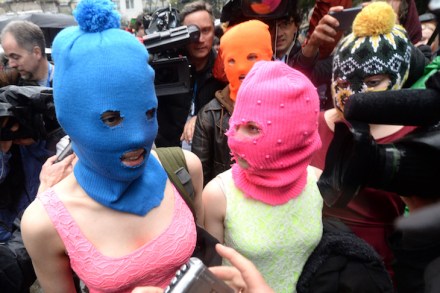
What makes for meaningful political protest? In regimes where ideology was taken seriously (such as the Soviet Union or America during the Cold War), dissidents and dissenters could target rulers’ political ideas, whether communist or capitalist. But in regimes where ideology is used more to distract than indoctrinate (such as Putin’s Russia or Trump’s America), directly opposing the leaders’ ‘narrative’ (one which can change, depending on political expedience) risks playing right into their game.

On the trail of a lost masterpiece

From our UK edition

On 27 May 1939, the German liner St Louis docked in Havana with 937 passengers on board: all but a handful of them were Jews in flight from the Third Reich. After a dismal farrago of diplomatic obstruction, bare-faced corruption among local officials and the incitement by Nazi propaganda of anti-Semitic prejudice ‘even’ (as Leonardo Padura sorrowfully puts it) ‘among the open and happy Cubans’, only a score of refugees could disembark. The US refused entry to the rest. Their ship of despair sailed back to Europe.

Wild life | 9 February 2017

From our UK edition

 Laikipia plateau, Kenya My great-grandpa Ernest Wise was an engineer who sailed to South Africa towards the end of the 19th century to build Cecil Rhodes’s Cape-to-Cairo railway. Although that project never took off, he decided to stay on in the continent — and he prospered. A cousin recently sent us a photograph of Ernest and his six children, taken in the 1890s at his home in Pretoria. Ernest wears a humorous expression and he looks as if he is about to speak to me, still in Africa 130 years later. I imagine him saying, ‘What, my boy — still there?’ The Wise family image is among the photographs and paintings at home on the farm in Laikipia that we have started to move to safer ground elsewhere.

TB or not to be

From our UK edition

If you are 70-plus, the shadow of TB will have hung over your childhood and youth, as it did mine, and Linda Grant’s new novel strikes many a chord. My maternal aunt had the disease, and spent months in a sanatorium like the one described in The Dark Circle, but finally had a thoracotomy (removal of a lung and seven ribs). She was also given the ‘new’ wonder drug Streptomycin and together with the operation, it cured her to live until she was 86. From the sanatorium, she sent me drawings of herself lying under a blanket on the freezing terrace halfway up a mountain.

Italian Notebook

From our UK edition

 Lido di Dante, Ravenna When the earthquake struck in the dead of night at 3.36 a.m. — the Devil’s Hour — I was in front of my computer in what used to be the cow shed. This is the only time of day when my six boisterous children and their high-voltage Italian mother are not around. The insects, attracted by the light, are worse at night but they can be killed if necessary. As for the toads (we have biblical numbers that emerge from the underworld at night via the open glass doors), I quite like them. Even though there are three on the coat of arms of the Devil himself, I just sweep out with a broom any toad I notice hopping across the floor. The silence is so intense that I can hear the horse and the donkey munching hay in the stable 100 yards away.