Tanjil Rashid

What’s the greatest artwork of the century so far?

From our UK edition

15 min listen

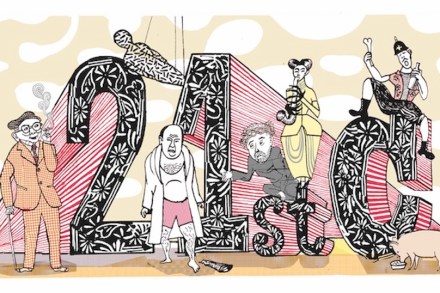
For this week's Spectator Out Loud, we include a compilation of submissions by our writers for their greatest artwork of the 21st century so far. Following our arts editor Igor Toronyi-Lalic, you can hear from: Graeme Thomson, Lloyd Evans, Slavoj Zizek, Damian Thompson, Richard Bratby, Liz Anderson, Deborah Ross, Calvin Po, Tanjil Rashid, James Walton, Rupert Christiansen and Christopher Howse. Produced and presented by Patrick Gibbons.
Was Brazil the real birthplace of modernism?

From our UK edition

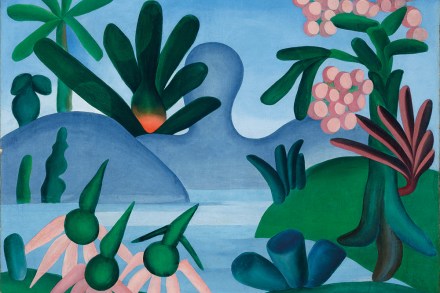
A paradox of art history: to understand the artists of the past, it helps to study how, and where, they conceived of the future. If today we foresee the future in the East, previous generations looked westward. In the last century, Europeans, having inherited a seemingly aged and decrepit civilisation, determined that the future of art was to be found in the New World. That much is well known. But this did not always mean America. Indeed, the true cognoscenti had a different country in mind: Brazil.

Nadine Dorries, Katy Balls, Edmund West, Sam Dalrymple, and Tanjil Rashid

From our UK edition

32 min listen

On this week’s Spectator Out Loud: Nadine Dorries reads her diary (1:12); Katy Balls analyses the politics behind the Assisted Dying debate (5:58); Edmund West allows us a glimpse into Whitby Goth Week (11:55); reviewing Avinash Paliwal’s book India’s New East, Sam Dalrymple looks at the birth of Bangladesh (17:39); and Tanjil Rashid reveals William Morris’s debt to Islam (21:23).  Produced and presented by Patrick Gibbons.
William Morris’s debt to Islam

From our UK edition

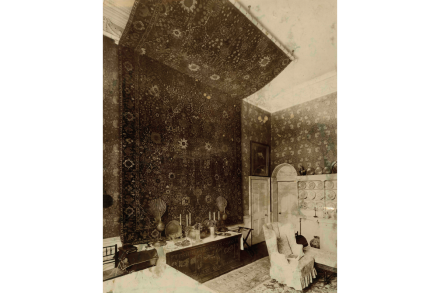
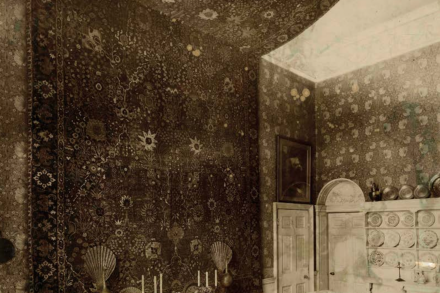
When William Morris was born in Walthamstow, in 1834, it was little more than a clump of marshland at the edge of the Epping Forest. This was the terrain of his free, frolicsome childhood, and it would forever form his image of humble, Edenic England, uncorrupted by the industrialist’s yoke. About the only thing that remains of this prelapsarian Walthamstow, amid its railway lines and brownfield sites, is the family home where Morris grew up, in some splendour – now a gallery dedicated to his artistic legacy. ‘To us pattern designers, Persia has become a holy land, for there our art was perfected’ The landscape has been supplanted, and much of the population transplanted.

A once-great engine of culture, slowly running out of steam: the BBC at 100

From our UK edition

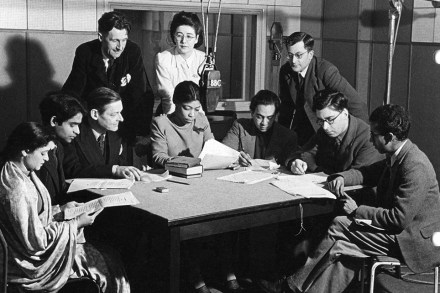
I had my birthday recently – one I share  with a venerable old aunt who shaped my formative years. Well-travelled and fluent in more than 40 languages, Auntie broadened my horizons well beyond the dreary suburb where I lived. She informed me about events in faraway lands, but also steeped me in ‘our island story’. On intimate terms with everybody in the arts, Auntie was unbelievably cultivated. Back then, she also spoke with an unmistakable clarity that was a model for non-native speakers – such as myself. Millions worldwide acquired English in this way, gaining with it a whole civilisation. And so last month, on my birthday, I was genuinely more moved by the thought of the BBC turning 100.

Kazuo Ishiguro: My love affair with film

From our UK edition

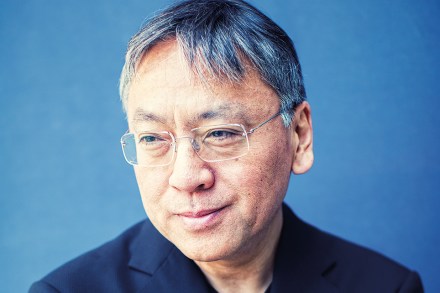
Everyone has a type they can’t resist. For the writer Kazuo Ishiguro, it’s old men. Old men secretly worried they’ve spent entire lives on the wrong side of history. Old men born in a world of certainty, transplanted to a different, more dubious one. Old men asking themselves, as so many of us will do (if we haven’t already): ‘What was it all for?’ But as I wait at the offices of a West End PR firm to interview Sir Kazuo about his new film with Bill Nighy, Living, I can’t help but wonder what unlikely preoccupations these are for arguably the nation’s greatest living literary talent. Those of us with humdrum lives may daydream about winning a Nobel Prize.

The man who changed Indian cinema

From our UK edition

At 6ft 4½in tall, Satyajit Ray was head and shoulders above his countrymen. His height was unheard of among Bengalis, ‘a low-lying people in a low-lying land’, as the colonial saying went. With his stature, jawline and baritone voice, he might have been a Bollywood hero. Instead, he chose to tower over the world of art-house cinema, a directorial giant among the likes of Bergman, Kurosawa and Fellini, alongside whom he is credited with inducting cinema into the temple of high culture. His standing was secured with his first film, Pather Panchali, which premièred at New York’s Museum of Modern Art in 1955. India then only churned out musicals which, as Ray later put it, ‘present a synthetic, non-existent society’.

Deaths of despair: how Britain became Europe’s drugs capital

From our UK edition

37 min listen

In this week’s episode: Is there any substance to the government’s new drugs agenda?In The Spectator this week Fraser Nelson writes the cover story on the government’s new 10 years drugs plan and finds that while on the surface this seems like a new war on drugs, it might actually have some thoughtful and effective policies buried within it. Fraser is joined on the podcast by Christopher Snowden, the head of lifestyle economics at the Institute of Economic Affairs. (00:52)Also this week: Can Islam save Britain’s churches?Britain has for a long time now has been becoming a more and more secular nation. This has meant that many churches that used to have full pews are at risk of turning into luxury flats or another Tesco Express.

Common prayer: when churches become mosques

From our UK edition

A Presbyterian minister, a Pentecostalist pastor and a Sunni imam come to worship in the same place. It’s not the start of a joke: this is literally what happens at my local church in east London which, strangely, now encompasses a mosque. It was in danger of being closed, but instead the walled church complex has been partitioned, with a chunk of it sold off to Muslims while the main church building remains the home of two different Christian denominations. The site serves as a sanctuary for followers of rival creeds, a kind of suburban Temple Mount. The shared use indicates an unlikely chapter in the life of a once-renowned institution, founded in 1642 when Protestant nonconformists met in Stepney amid civil war.

The vivid memory-scapes of Hong Kong master Wong Kar Wai

From our UK edition

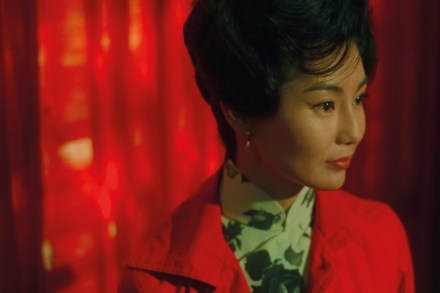
The films of Wong Kar Wai are a kind of map of Hong Kong. In them the city becomes a magnificent metropolis of missed connections, a tempestuous port where ill-fated lovers cross paths like ships in the night. And Wong has filmed the city from so many angles, with such spatial precision, that if the People’s Republic were ever to grow impatient with the territory’s seditious tendencies and raze it to the ground, Hong Kong could be reconstructed, flawlessly, from Wong’s films alone. A major retrospective on the Chinese film director is under way at the BFI and ICA. It couldn’t be more felicitous, since Wong Kar Wai is that most retrospective of filmmakers, always looking back, his characters ever in search of lost time.

The legend of Marlene Dietrich

From our UK edition

How to sum up the legend of Marlene Dietrich? She was an actor, a singer, a style icon, even a war hero. A retrospective is under way at the BFI, where more than a dozen of her films are being shown throughout this month. Many admirers saw only the shimmering legs and forgot the sharp intellect, the wartime gallantry. But it would be wrong to deny that body image was central to her success. It was with this in mind that the critic Robin Wood christened Dietrich ‘the Venus de Marlene’. Like the statue alluded to, Dietrich is a monument of Western culture, her image cast not in stone, but in light (that marble of the modern world, made possible by the newly invented movie camera).

A salmagundi of tedium: The White Pube podcast reviewed

From our UK edition

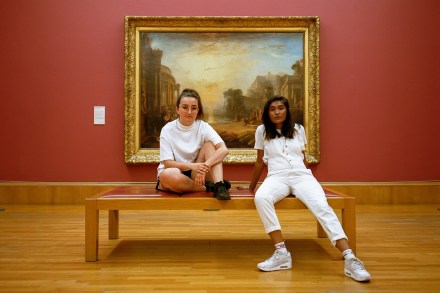
The White Pube started life as an influential art blog, written by Zarina Muhammad and Gabrielle de la Puente. The name announced iconoclastic intent, playing on the White Cube gallery — which certainly deserves mockery (like a city law firm, it has outposts in Hong Kong and Manhattan). But The White Pube podcast is as inanely conventional as the gallery it makes fun of. Each episode is an hour-long salvo by the hosts, or ‘art critic baby gods’, and as with their exhibition reviews — rated with emojis, not stars — conversation is appealingly informal and spontaneous. But they have little of interest to say, especially about their ostensible subject. Three episodes into this art criticism podcast, hardly an artwork has featured.

How democracy can subvert itself: Bunga Bunga reviewed

From our UK edition

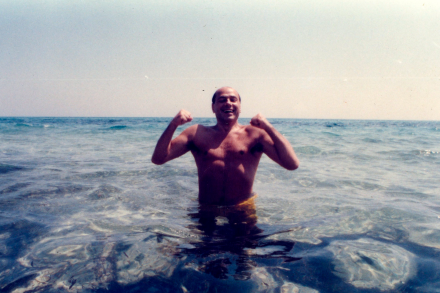
Italy has long captivated romantics from rainy, dreary, orderly northern Europe. Goethe, Stendhal, Keats and Shelley all flocked to Italy in search of the ideal society. There they found what they thought was a utopia. ‘There is,’ Byron marvelled in a letter home from Ravenna, ‘no law or government at all, and it is wonderful how well things go on without them.’ Well, Silvio Berlusconi has made some of Europe’s wisest men sound like chumps. If the notorious career — chronicled in the podcast Bunga Bunga — of the longest-serving prime minister of Italy since Mussolini and its sometime richest man has done one good thing, it’s to have dispelled for good our quixotic fantasies about his troubled nation.

School’s out: the true cost of classroom closures

From our UK edition

35 min listen

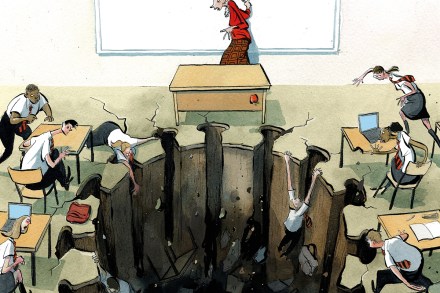
Schools have been closed for almost three months - what is the true cost of these closures on pupils (1:00)? Plus, have Brexit negotiations started looking up (13:15)? And last, are the statue-topplers of Rhodes Must Fall going about their mission the wrong way (22:45)?With teacher Lucy Kellaway; the IFS's Paul Johnson; the Spectator's political editor James Forsyth; the FT's public policy editor Peter Foster; journalists Tanjil Rashid and Nadine Batchelor-Hunt.Presented by Cindy Yu.

The statue-topplers are obsessed with white men and white history

From our UK edition

On my visits to Bristol in the past, there was always a certain statue peering over the city centre that would trigger heightened emotions in me. I’m not talking about the recently toppled monument of slave-trader Edward Colston, but the memorial to another representative of empire: the radical scholar and reformer Raja Rammohan Roy, who came to London in 1830 as the ambassador of the Mughal Emperor (who was by then a titular sovereign under the rule of the East India Company), and died in Bristol three years later. He now stands in pride of place on College Green, outside the cathedral, about five minutes’ walk from where the Colston statue stood, until last weekend. Both statues commemorate quintessential products of the British Empire.