Conservative party

Tory greens make hard-headed pitch for environmentalism

Something strange is happening in the world of green Conservatism. After the PM decided to take out the 'green crap' last year, greeny Tories might have been forgiven for beating a bit of a retreat and licking their wounds. Well, if they did, they didn't take much time to do it: now they're fighting hard with a new vision for Green Toryism. Today the Conservative Environment Network re-launched with a pamphlet called Responsibility and Resilience which argues that true Conservatism is the best worldview for environmental policy. It contains quite an interesting mix of voices, from Zac Goldsmith to Environment Secretary Owen Paterson, who has written an essay on natural capital.

The Workers’ Party?

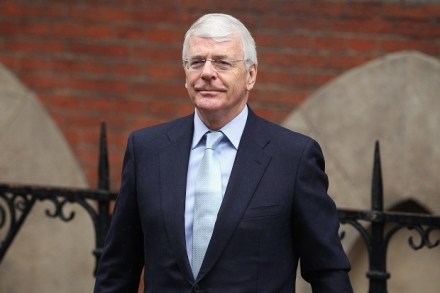
Much hilarity among those of a leftish persuasion in Westminster that the Conservatives might dare call themselves the Workers' Party, as Grant Shapps enthusiastically did yesterday. Mind you, when Shapps gave his speech making this claim alongside Sir John Major yesterday, journalists were excluded, so he might not have said it at all. But assuming he did, there's no reason why the Conservatives should provoke any more hilarity than any other Westminster party when they make this claim. There are, though, two warnings that if not heeded, could make this new tag seem as hilarious to voters as previous attempts at rebranding. The first comes from David Skelton, whose campaign Renewal is pushing for the Tories to do more to appeal to working class voters.

Tories talking to themselves

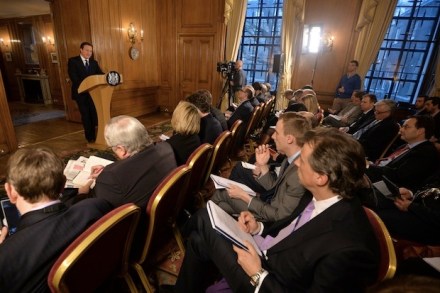
If Grant Shapps and John Major gave a speech but no journalists were there to cover it, did it really happen? That’s what happened today. The Tories invited one pooled camera into their headquarters to see the former prime minister stand next to the party chairman in a belated attempt to prove that at least two senior Tories did not go to Eton. Loyal MPs and spinners delivered the speech line-by-line on Twitter; but the only interesting bits were briefed out to the Daily Mail last night. Apparently, Sir John could only afford half an hour off from watching cricket, so there was no time for a Q&A – nothing at all to do with his off-message comments that have generated plenty of column inches over the last year.

Minority government hint is boost for backbenchers – if they believe it

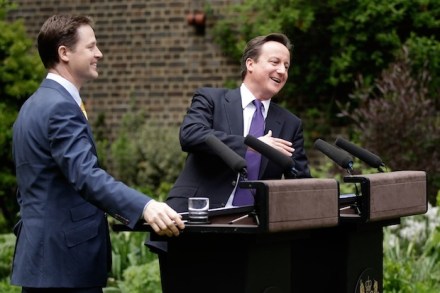
That David Cameron is reportedly considering committing to minority government above coalition is a strong message to his backbenchers that he's not preparing to hop back into bed with Nick Clegg and co in 2015. They have been growing a little feverish about the idea, and ministers have made it known in the party that they would vote against a coalition in any secret ballot on a new deal (provided, of course, that there is a secret ballot). This is good for party relations in the straightforward sense that Cameron is signalling to his backbenchers that he doesn't like the Lib Dems as much as they suspect he does, but also because he is to a certain extent signalling that he is prepared to do business with his own MPs, even though that will not be a walk in the park.

Tory call to rebrand National Insurance is politically smart

The government's legislative programme is pretty light at present. But the Bill that is going to spark the most interest this week is destined to go nowhere at all. It's a Ten Minute Rule Bill, introduced by Tory MP Ben Gummer this Tuesday, and calls for National Insurance to be renamed the 'Earnings Tax'. What's in a name? Well, there are two good reasons why this Bill which won't go anywhere (Ten Minute Rule motions are simply used as a way of making a point and drawing attention to an issue) has, as I understand it, already gained a great deal of attention and sympathy at the highest levels of government. The first is the reason that Gummer cites for introducing the motion in the first place: transparency.

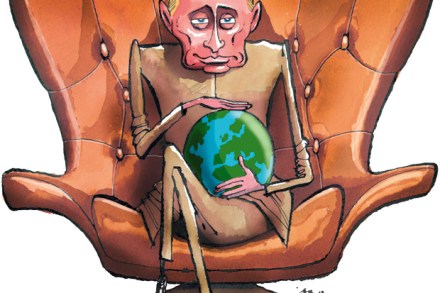
Vladimir Putin’s new plan for world domination

[audioplayer src="http://traffic.libsyn.com/spectator/Untitled_2_AAC_audio.mp3" title="Anne Applebaum and Matthew Parris discuss how far we should let Putin go"] Listen [/audioplayer]It’s been a generation or so since Russians were in the business of shaping the destiny of the world, and most of us have forgotten how good they used to be at it. For much of the last century Moscow fuelled — and often won — the West’s ideological and culture wars. In the 1930s, brilliant operatives like Willi Muenzenberg convinced ‘useful idiots’ to join anti-fascist organisations that were in reality fronts for the Soviet-backed Communist International.

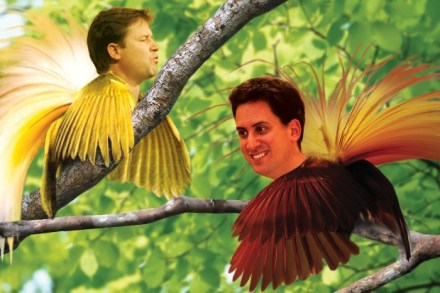
The Coalition mating game

There are ornately-feathered birds in New Guinea that have less bizarre mating rituals than Labour and the Lib Dems. The two parties need to show that it isn't impossible to work with one another in a future coalition while also keeping their own supporters reassured that they're not desperately keen to jump into a bed with another party that activists find themselves embroiled in dirty by-election and local fights with. Hence the weird back-and-forth dances and plenty of displays of aggression that we've seen over the past couple of months. So Ed Balls in January suggested Nick Clegg's head would not be the price of a Coalition after all with the Lib Dems and was immediately slapped down by Clegg.

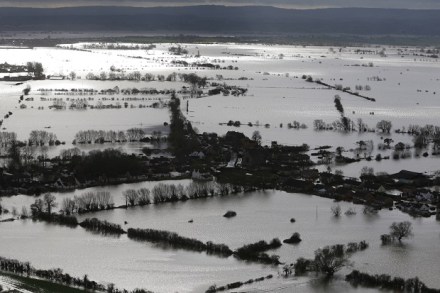
Taxpayers fund farmers to wreck their landscape and flood their homes

Go to Google Maps and type in Lechlade - the Cotswold town at the start of the navigable Thames. Instead of looking at it on the map, click the 'satellite' button in the top right-hand corner of the screen for an aerial photograph, and follow the river west towards its source near Kemble in Gloucestershire or east towards Oxford. You may notice something that is so commonplace in British river systems most people ignore it: the woods, marshes and wetlands are all but gone. Farmers have ploughed fields up to the banks. Because there is nothing - or next to nothing - to soak up the rain, water and silt flows straight off the bare fields into the river and heads downstream.

Tory candidate: Conservative party not doing enough to convince minorities it is not racist

Is the Conservative party doing enough to attract ethnic minority voters? We've reported previous pushes by Chairman Grant Shapps and Home Secretary Theresa May to appeal to groups who have centre-right values but are turned off the Tories. But the FT today suggests that the top of the party is struggling to show enthusiasm, with one party insider claiming that Lynton Crosby feels it 'muddies the message' to move away from economy, jobs, welfare and immigration. The party's candidate in Dudley North, Afzal Amin, agrees that the Conservatives are failing to communicate properly with ethnic minority voters.

Rebel Raab cut down to size

Pint-sized Tory MP Dominic Raab ruffled the feathers of the powerful with his amendment to the Immigration Bill last month, which forced the government into a humiliating abstention. Raab has a growing group of supporters (who call themselves the Raabels) on the backbenches. His popularity has made an impression in the corridors of power. I hear that spinners for one Cabinet minister have taken to turning down broadcast bids by saying: 'Try Dominic Raab, he's always keen for publicity!

Boris and ballots: what might happen to the Tory party in 2015

What are Boris Johnson's real chances of becoming Tory leader? I examine the Mayor of London's standing with Conservative MPs in my Telegraph column today - and it is fascinating how polarised opinion is about the Mayor in the Tory party. His supporters insist he is the only hope for the Conservative party, while those who don't want him to lead really, really don't want him to lead and display a fair bit of personal hatred when talking about the Mayor. But the problem that those in the anti-Boris camp have is that they can't see who else from the current group of well-known leadership hopefuls would enjoy the same sort of cut-through. As for when he might come in, my sources among those who are actively promoting Boris in the Commons are adamant that this is about 'post-Dave'.

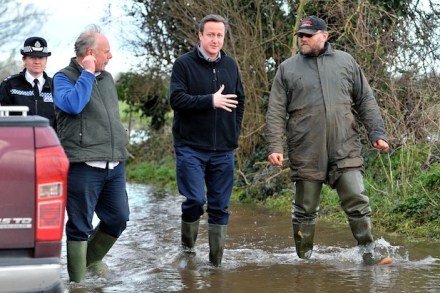
If David Cameron can’t get the floods right, all his hopes will wash away

[audioplayer src="http://traffic.libsyn.com/spectator/TheViewFrom22_13_February_2014_v4.mp3" title="James Forsyth and Isabel Hardman on how the floods will define the PM's legacy" startat=1218] Listen [/audioplayer]It is all hands to the pump in Downing Street. The entire No. 10 operation from the Prime Minister down to the Policy Unit is focused on the floods. ‘We are all on a war footing,’ declares one official. David Cameron is spending his time poring over maps of the affected areas. ‘It is quite remarkable,’ says one minister who attends the Cobra meetings on the floods, ‘to hear the Prime Minister asking Gold Command about individual farms.’ Cameron knows that the floods will be a defining moment for his government.

Britain is doomed – even if Salmond loses September’s independence referendum

Last Thursday’s cover story makes alarming reading, Alex Massie arguing that Alex Salmond may come close to achieving victory in September’s vote. Alex wrote: ‘It is beginning to be appreciated, even in London, that Alex Salmond might just win his independence referendum in September. The break-up of Britain will have begun, David Cameron will have to contemplate being Prime Minister of a rump country — and HMS Britannia will be sunk, not with a bang but a whimper. It will be due as much to English indifference as Scottish agitation.’ I would still put my pound sterling on a No vote, and current odds for independence are around 7/2; but I suspect that ultimate victory will probably go to the SNP. There a number of reasons why the union is doomed.

Boris labels Vince Cable’s comments about London ‘cretinous’ – exclusive details

Boris Johnson spoke to the 301 group of largely pro-Cameron Tory MPs last night. The meeting was open to all, but I hear that around 48 MPs turned up in the end. One MP present mutters that 'it wasn't a huge turnout. The all-party parliamentary beer group attracts more attendees'. Naturally, Boris was late. My sources tell me that Boris spoke about his achievements as London mayor, including the number of French citizens who have moved to london, crime statistics, air quality, Crossrail, driverless trains, jobs and affordable housing. But he also made the case for London as a powerhouse for the rest of the country, saying that 'what's good for London is good for the whole of the country'. He then called Vince Cable's comments about London being a drain on the rest of Britain 'cretinous'.

David Cameron’s clear lines on flooding put essay crisis PM back on top

We certainly didn't learn much new about David Cameron from his flooding press conference this afternoon. We already knew that his approach to crises is to let things get rather bad for a little while, and then, with his back against the wall, to perform well as a statesman taking control of a messy situation. He did that again today, with a clear line that 'money is no object' as a means of countering the Ukip line on diverting some of the aid budget to flood victims.

How does the Tory party solve its ‘women problem’?

It's a week since Harriet Harman claimed it was 'raining men' in the Tory party, and yet the debate still rages about whether the Conservatives have a 'women problem'. Tory backbencher Tracey Crouch has written a forceful piece for the Mail on Sunday on why she felt Ed Miliband's intervention at Prime Minister's Questions on Wednesday was patronising. It's worth a read, not least because she tries to dispel the myth that women are being turned off Parliament just because it's rowdy: 'Some of the loudest and, in some cases, most effective hecklers in Parliament today are women MPs. Even the most unruly Labour men think twice before taking on Conservatives such as Anna Soubry and Claire Perry because they know they will be cut down to size by an even sharper and wittier putdown.

Why are feminists intolerant? It’s age, not sex

There has been a lot of comment about a recent Michelle Goldberg piece in the Nation on feminism in social media and how incredibly unpleasant feminists are to each other. That is not entirely surprising, in one sense. All political ideologies are wracked by internal struggle, especially those that reach an impasse in their goals. And Twitter is full of angry, self-righteous eejits. But there is also something uniquely intolerant about feminism in the online age. Partly it seems to be because it is much more dominated by one-upmanship over victimhood; the ground war of the sexes was won a long time ago, but what has followed is a deluge of un-winnable everyday injustices, things that no amount of legislation will ever solve because they are a part of human relationships.

Tory plotters mull ‘sacking’ Lib Dems as Lib Dems continue to grump about Gove

What are the Coalition parties going to do for the next few months in the run-up to the general election? Judging by the way the Liberal Democrats have behaved this week, they're going to spend a great deal of time talking about Michael Gove, which isn't encouraging for anyone who got a little bored of that particular ding-dong around the time of the childcare debacle. They're certainly not planning to do much in the way of legislating, either.

The quango state: how the left still runs Britain

[audioplayer src="http://traffic.libsyn.com/spectator/TheViewFrom22_6_February_2014_v4.mp3" title="Fraser Nelson discusses David Cameron's quango problems" startat=1350] Listen [/audioplayer]Last week Sally Morgan reverted to type. After almost three years as a model of cross-party co-operation, instinctive Labour tribalism finally won out as she accused Downing Street of purging Labour supporters from high offices. Of the many Labour types appointed by the coalition into quangos, she was probably the last person the government expected to go hostile. Not only had she done a fine job chairing Ofsted, the schools inspector, but she was a proven reformer who certainly shares Michael Gove’s passion for new schools. Like many Blairites, she is something of a Goveite at heart.

How we fired Anne McIntosh MP

The decision not to reselect Anne McIntosh, as seen by one of her local party members. One evening last March I was standing at the back of the crowded annual meeting of Thirsk and Malton Conservative Association, observing in a semi-detached way as a rank-and-file member. Our MP, Anne McIntosh, was delivering an angry speech against the association’s chairman, Peter Steveney, and its executive council, who had voted two months earlier not to reselect her as parliamentary candidate for 2015 — a decision confirmed by a membership ballot last week. She paused to scan the room, dropped her voice half an octave, and snarled: ‘Martin Vander Weyer, where are you?