Conservative party

Stand up for the real meaning of freedom

When pressed for a statement of their beliefs, conservatives give ironical or evasive answers: beliefs are what the others have, the ones who have confounded politics with religion, as socialists and anarchists do. This is unfortunate, because conservatism is a genuine, if unsystematic, philosophy, and it deserves to be stated, especially at a time like the present, when the future of our nation is in doubt. Conservatives believe that our identities and values are formed through our relations with other people, and not through our relation with the state. The state is not an end but a means. Civil society is the end, and the state is the means to

The big idea that can win the Tories the next election

In one sense David Cameron is lucky that the Conservatives do not enter 2014 with a lead in the polls. If they did, the Prime Minister would be under pressure for stitching up the Fixed Term Parliaments Act with Nick Clegg, thereby denying himself the chance of doing what all strong governments have done over the past 35 years, with unfailing success: going to the country after four years. Barring a vote of no confidence, we already know the date of the next election: 7 May 2015. With the exception of John Major in 1992, no Prime Minister who waited five years has won re-election since Clement Attlee in 1950

Video: David Cameron’s New Year message for 2014

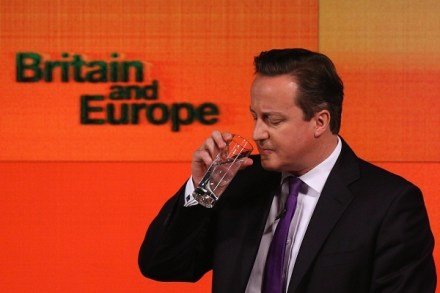
David Cameron’s New Year message (and his accompanying Times op-ed) is an upbeat call to stick with the Tories to get the job done. He writes of his desire to ‘turn Britain into the flagship post-Great Recession success story. A country that is on the rise’. And in his video message he focuses on the signs that the country is already rising. Downing Street is keen to stress that this message is no Blair/Brown-style relaunch of the government with a shiny new logo and a plan. It is the Prime Minister trying to encourage optimism about Britain’s best days lying ahead of it, but that ‘recovery is real, but it’s

Six moments that hardened up the Tories in 2013

For the Conservative party, 2013 has been the year of Lynton Crosby. Just over a year ago, the Wizard of Oz was appointed David Cameron’s chief election strategist. Now he’s full-time. His brief is to make sure the Tories in government have a clear message – something that eluded them in the 2010 campaign. And to see that the message is articulated in deeds, not words. In April, the Prime Minister described his own strategy by using a quote from the late Keith Joseph: ‘the right thing to do is to address the things people care about; to fix yourself firmly in what Keith Joseph called the “common ground” of

Tories take Spectator advice and offer Boris a campaigning role

The Sun on Sunday’s story this morning that senior Tories have opened talks with Boris Johnson about a campaigning role for the Mayor follows some advice offered by James Forsyth in the pages of this magazine back in May. In his politics column, James argued that Boris needed a role in the 2015 campaign to reach voters who might otherwise be turned off by the Tories: ‘Persuading the public that Labour can’t be trusted with office again is necessary but not sufficient. To achieve victory, the Tories must connect with the electorate in a way that they are currently not. That means Cameron finding a role for Boris; he’d be

Tory wars back after Christmas truce

After a seasonal interlude, rival Tories are back to doing what they do best: warring over the heart and soul of the party. In the cuddly corner, we have Bright Blue; a think tank of hoody-huggers who are imploring the PM to be nice to immigrants. The Guardian has been purring with approval since Bright Blue’s director Ryan Shorthouse ‘specifically called for the Tory Party to adopt a Liberal-Conservative manifesto for the election’: ‘At the moment, the messaging is quite negative and uninspiring – it’s not enough to win voters and gain momentum. We need to be more inspiring and bigger picture than that and we need a positive vision, not

Tea at 22: Michael Fallon on jobs, Europe and Ukip

In the latest episode of Tea at 22, I interviewed Conservative business and energy minister Michael Fallon on his work in two Whitehall departments, Tory EU policy, and the party’s approach to Ukip. Fallon was the Spectator’s Minister of the Year for 2013. He had some very interesting points about how the Business department in particular might look different under a Tory majority government, suggesting that the Lib Dems had held the Tories back in getting more young people into work. Asked whether the Lib Dems had left the labour market rather more gummed up than the Tories would like, Fallon said: ‘Yes we would certainly have liked to have

Rushing to judgement on the ‘crack cocaine of gambling’

Ed Miliband’s pledge to crack down on the ‘crack cocaine of gambling’  is a significant moment in the extraordinary moral panic over fixed-odds betting terminals (FOBTs). Earlier this year, the Department for Culture, Media and Sport found that there was very little data to back up the anecdotal evidence of the anti-FOBT brigade and so decided to commission some research. This process will take 18 months and a decision about stakes and prizes will be made once there is some evidence to study. This eminently reasonable, evidence-based approach has naturally been howled down by the anti-gambling lobby whose campaign has thus far relied on anecdotes and, at best, half-truths. Earlier

Will ignoring FOBTs be enough?

When he spoke to the 1922 Committee on Wednesday, David Cameron told MPs that the Conservative attack on Labour must not involve fighting the party on its own territory. He named payday loans as one of the issues that Ed Miliband and co want to create an ‘evil Tories’ narrative on. But another one that Miliband is currently focusing on is fixed-odds betting terminals, or FOBTs. The Labour leader has announced today that a Labour government would give councils the power to ban or cut the number of FOBTs in their areas. Visiting Kilburn today, Miliband said: ‘Currently there is almost nothing that can be done to stop the spread

Tories try to adapt their food bank message

There was a food bank debate yesterday in the House of Commons. We all know that, but what few people can tell you is what was said. Instead, there is a furious debate raging about whether the Tories were laughing at poor people not having enough money for food, or whether Labour MPs were laughing too. I’ll leave that to other people to tussle over, suffice to say that it wasn’t the most edifying debate I’ve watched, mainly because as with all arguments in Westminster over food banks, both sides were jeering one another and making ugly accusations about each other too. These accusations tend to boil the problem of

Cameron to 1922 Committee: We must tell voters a hung parliament would threaten our radicalism

David Cameron received a rapturous banging of desks at the final meeting of the year for the 1922 Committee this evening. My sources have given me a run-down of what was said. Backbenchers were, I hear, very cheered by some of his words, particularly on his 2015 strategy. The Prime Minister told his MPs that the important thing to avoid is fighting Labour on their own territory. That means resisting being dragged into ding-dongs about payday loans and other pet issues that Labour likes to raise (the problem with this is that it creates a vacuum for Labour to invent its own description of what the nasty Tories think when

Ukip and Tories scrap over their squeeze message

One thing that has been abundantly clear about the Tory plan for Ukip is that it will involve a long, slow ‘squeeze message’ (more on that here) that has already been deployed: the vote Ukip, get Miliband line. Naturally, Ukip is keen to counter that and argue that in fact this early squeeze message to encourage voters to think strategically is just wrong. To that end, party donor Alan Bown has taken out a full-page advertisement in the Telegraph today that argues ‘UKIP stand poised for a major breakthrough in 2015, within reach of victory in many seats across the country’. He outlines the results of four polls: in the

Tories are a ‘trust fund failure away’ from understanding ordinary voters, says Tory MP

Home truths hurt the most when they come from your own side. Mr S was gabbing with a backbench Tory MP the other day, talking about how the Tories might connect with what the said MP described as ‘[those] parts of the public that we used to rely on in the Eighties and Nineties.’ The MP said rather wearily that the party needed to speak ‘in a way that those in our party who are only a trust fund failure away from having to work for a living, struggle to.’ Ouch. Who could he have been talking about, I wonder?

Cap child benefit? There are better ways to cut the welfare bill

David Davis is plainly right that the Tories are just testing the water to see how talk about capping child benefit to two children for people on the dole goes down with the punters. And the predictable result is that the water isn’t really all that cold.  The suggestion has gone down nicely with quite a few, especially those – no offence folks! – who sound off on the internet. Any restrictions on welfare are popular; we know that. And it’s all too easy to think of examples of egregious fecundity on the part of people who we would probably prefer not to be parents at all: the child-killer Mick

Nadhim Zahawi’s child benefit call is rare outburst from No10 policy board

Number 10 was quick to pour cold water on Nadhim Zahawi’s suggestion in the Mail on Sunday that child-related welfare benefits should be restricted to two children per family (for new births only), with a source saying that ‘this is not government policy and is not supported by the Prime Minister’. But aside from whether this is a good policy or not, Zahawi’s intervention is interesting as it marks a significant departure from the way the Number 10 policy board, of which he is a member, works. Zahawi has only recently joined, but his colleagues on the board have been instructed to be entirely discreet about their work. Jo Johnson,

What is the big Ukip plan?

Today’s announcement that migrants cannot claim benefits if their English is so bad that they are unemployable looks suspiciously like another attempt by ministers to reassure fears about the end of those transitional controls on Bulgarian and Romanian migrants. And that is, in turn, an attempt to reassure Tory MPs that the government has done everything it can to keep Ukip at bay. But what is the Tory plan for Ukip? It needs to work out how to fight Nigel Farage’s party in the European elections, how to pre-brief the European elections (presumably by talking up Ukip’s chances so much that any result looks like a disappointment), and how to

What does pay row mean for Cameron’s relations with his MPs?

Tory backbenchers are in an odd mood after PMQs. They weren’t happy about the leaders agreeing so readily on their pay, but their stances were hardly a surprise, and Labour MPs looked just as flat as Ed Miliband and David Cameron skirted around a possible cross-party deal on pay. But what’s striking is that while Tory MPs who do think they deserve a pay rise are angry that the leaders and ministers such as Philip Hammond have made it so clear that it cannot happen, they are not angry with Cameron specifically. Instead, they are angry with the executive in general, muttering darkly that this is another sign that ‘those

What Tory ministers think about European reform: exclusive details

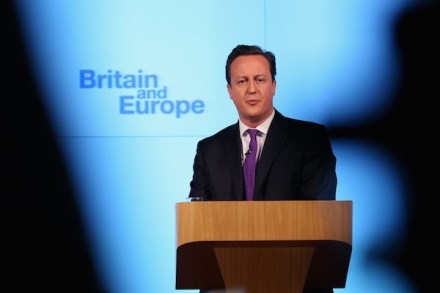
Remember that shopping list of EU reforms that Conservative party members sent ministers in the summer? Well, they’ve finally got a reply. I’ve got hold of a letter to members from Europe Minister David Lidington, which answers some of their concerns and gives us an interesting glimpse into where Conservative party thinking currently stands on European reform. The first point worth making is that while Lidington’s letter is very upbeat about the prospects of reform in Europe, the minister focuses on the opportunities for Europe-wide reform, rather than the likelihood of a new relationship with the EU for the UK. Of course, these changes can take place as part of

Britain’s immigration debate is utterly mad

This week’s Mail on Sunday carried two stories on the same page about immigration. Perhaps unwittingly the two stories — and one man in particular — demonstrate the craziness of this country’s immigration debate. One story was about a Conservative party candidate at the 2010 election who has defected to UKIP. Her ex-husband has released a video made while she was a Conservative candidate saying stuff about sending illegal immigrants and failed asylum seekers back home. The second story is about a Labour party pollster who tweeted sarcastic comments about Labour voters who express concerns about immigration levels. Perhaps unfortunately for him the Conservative MP Nadhim Zahawi (who I once heard speak

The Tories have to fight on their ground, not Labour’s

At the beginning of the autumn, strategists from all three parties assumed that the theme of the season would be Labour’s poll lead narrowing as the economic recovery picked up pace. But that hasn’t happened. Instead, Labour’s lead has remained and its own poll numbers have actually ticked up. This is, largely, thanks to Ed Miliband’s reframing of the political debate about the economy, making it about living standards But the autumn statement showed that when the political conversation is focused on the broader economy, the Tories have the better of it. Thursday has weakened Ed Balls, strengthened George Osborne and begun to move the political debate off Labour’s turf