Conservative party

George Osborne readies his tax dividing line

George Osborne was on Andrew Marr this morning announcing support for a new garden city at Ebbsfleet in Kent and the extension of Help to Buy on new build homes until 2020. The Tories hope that these policies will show both that they are planning for the long term and that they are supporting aspiration. But what struck me as most significant was Osborne’s response when told by Marr that he was sounding more like a Liberal Democrat than a Conservative. He instantly replied, ‘Conservatives believe in lower taxes, Liberal Democrats want to put taxes up.’ We already know that Osborne believes that the rest of the deficit can be cleared without any more tax increases and this reply suggests that the Tories will run in 2015 as the only party that won’t put up taxes.

Polling worries for Miliband – and for Cameron

There’s been much hullaballoo this afternoon over a Populus poll that shows a Labour lead of one point. The usual caveats apply (it’s just one poll!); but, nevertheless, this sample adds to the sense that Ed Miliband is in difficulty. There is, incidentally, only 419 days to go until election day. If the Populus poll was disappointing, then this projection compiled by Stephen Fisher of Oxford University could have Miliband reaching for the scotch: ‘Forecast Election Day Seats: Con : 307 Lab : 285 LD  : 31 Con largest party, but short of a majority by 19’ A dismal prospect for Labour; but there are also worries for the Tories because they are not yet benefitting from Miliband’s malaise and the economic recovery.

Michael Gove, Boris Johnson and the return of Tory wars

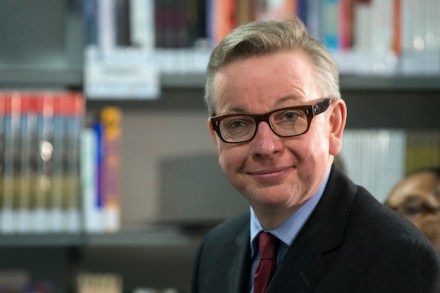
[audioplayer src="http://traffic.libsyn.com/spectator/TheViewFrom22_13_March_2014_v4.mp3" title="James Forsyth discusses Gove vs Boris" startat=722] Listen [/audioplayer]From the moment he took his job, Michael Gove knew that he would make energetic and determined enemies. The teachers’ unions, local councillors and even his own department all stood to lose from his reforms — and all could be expected to resist them. What the Education Secretary did not expect was hostile fire from those who should be his friends. At the start of the coalition, Gove and Nick Clegg were allies. With a moral passion rarely seen in British politics, they used to argue that social mobility should be the centrepiece of the government’s reform agenda.

Podcast: Gove’s last stand, the march of the dog police and the future of conservatism in America

Why is Michael Gove under attack from his coalition partners, his own party and numerous enemies? On this week’s View from 22 podcast, Toby Young, James Forsyth and Fraser Nelson ask whether the Education Secretary’s attitude and policies are his own undoing. Is he, as Anthony Horowitz describes in this week's magazine, an unsettling character who is too abrasive in his approach to reforming education? Which of Gove’s friends are out to get him? Should he be worried about the threat from Boris Johnson? Are we witnessing a return of the Tory wars? And is Rupert Murdoch involved? James Delingpole and Freddy Gray ask if conservatism is in a better or worse state in America than it is in Britain? Can anyone in the GOP stop Hillary Clinton?

Renewal offers a vision for a Tory workers’ budget

How can the Tory party broaden its appeal? Renewal, a group founded to do just that offered its answer at a packed Westminster pub yesterday evening. With just eight days to George Osborne’s 2014 budget, Robert Halfon MP and Renewal’s David Skelton offered their vision of a ‘workers' budget for the Workers’ Party.' Arguing that ‘what happened in Scotland [to the Conservative party] is slowly happening in the North’, Halfon outlined why he believes the Conservative Party needs to change its narrative, mission and structures to go beyond its traditional reach, particularly with working class and ethnic minority voters.

‘Almost a conservative’ – in praise of Bob Crow, 1961-2014

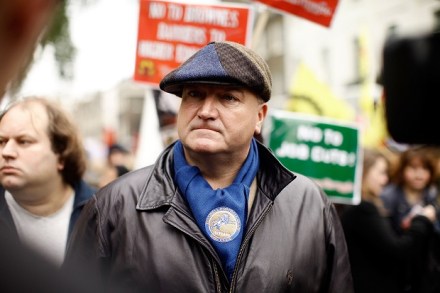
Very sad to hear of Bob Crow's death. Doubtless his erstwhile political opponents will be falling over themselves to say that he will be 'sadly missed'. But I've admired him for a while. He was in many ways the last of a breed: a union leader feared by the government. I used to share the view held by all floppy-haired men in pink shirts, that  Crow was basically a thug holding London to ransom by demanding absurdly high salaries for Tube drivers; blokes who just sit there pushing a button while we hard-up arts graduates slave away for much less money.

What’s next for Tim Montgomerie?

Normally, we wouldn’t blog about a journalist moving jobs — but Tim Montgomerie is an exception. He is an actor in, not just an observer of, Britain's political drama which is why it's significant that he has decided to step down as opinion editor of The Times, to do other things (as yet undefined). Normally, ‘do other things’ is a euphemism – but in Tim’s case, it fits a pattern. He is a serial political entrepreneur, an ex-Iain Duncan Smith staffer who set up ConservativeHome website, and the Centre for Social Justice think tank and can be found behind various other projects (PoliticsHome, 18 Doughty Street TV, and others).

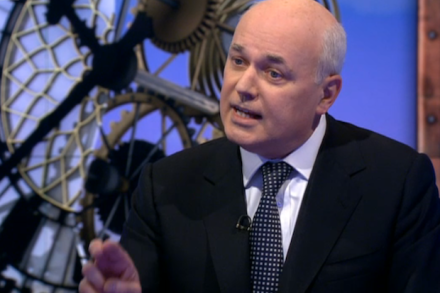
Iain Duncan Smith ties himself into universal knots over welfare reform

Will Universal Credit ever become universal and will the lowest paid still face an effective tax rate of a sometimes outrageous 76 per cent? Iain Duncan Smith took a grilling over his plans for welfare reform on the Sunday Politics today, but didn’t give a clear answer to either of these questions regarding his reforms. Firstly, on the progress of implementing Universal Credit, the Work and Pensions Secretary claimed that ‘Universal Credit is already rolling out and the IT is working’, despite just 6,000 people currently on the ‘Pathfinder’ stage. In his initial plans, a million people claiming six existing working-age benefits were due to be on the Pathfinder stage by April 2014.

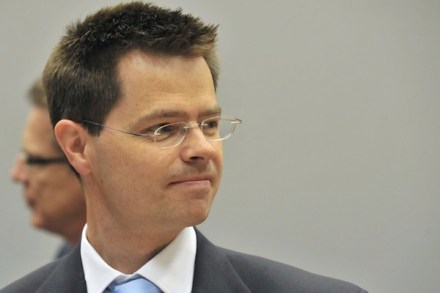
David Cameron pays the price for another lazy shuffle

The Tory leadership is not best pleased with James Brokenshire, the Immigration Minister whose ill-judged speech turned a media spotlight onto the Cameron’s nanny. There are mutterings in Downing Street about the speech having being submitted for clearance very late. But Number 10 can’t escape its share of the blame for this fiasco. First, the speech should never have been cleared. The problems it would cause were obvious, which is why one Lib Dem tells me ‘we all fell out about laughing when we read it.’ Second, Brokenshire should never have been appointed to this job.

Exclusive: Cameron and Osborne ambush Lib Dems in Cabinet meeting

A dramatic Cabinet this morning as the Tories ambushed the Lib Dems over the contents of the Queen’s Speech. First, Cameron took them by surprise by demanding that a recall bill be included in the speech. This was quite a slap to the Liberal Democrats seeing as just last month they were publicly blaming Cameron and Osborne for the fact that a recall bill was not going to be included in the Queen’s Speech. But this wasn’t the only bit of Tory aggression this morning. For Osborne then took up the baton, pushing for the inclusion of an EU referendum bill in the coalition’s legislative agenda. David Laws and Nick Clegg dismissed this idea. But IDS then pointed out that the Liberal Democrats used to boast of being in favour of an In / Out referendum.

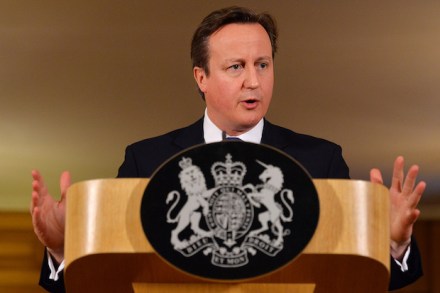
David Cameron’s moral mission on public spending

David Cameron's speech on the economy today is designed to hit Labour on its weak spot again: reminding voters that while this government is trying (with varying levels of success) to cut public spending and hack back the legacy of debt for our children, Labour wants to borrow more. Ed Miliband and Ed Balls will say they won't borrow a penny more on day-to-day spending, a linguistic sleight of hand which leaves them with plenty of leeway to borrow tons more for capital spending. But still they try to criticise the Conservatives each time official figures appear showing government borrowing levels. The Prime Minister wants to remind voters that no matter how critical Labour is of this government's borrowing, Miliband and Balls want to borrow even more.

No.10 aide Patrick Rock resigns after being arrested over child abuse image allegations

Jaw-dropping news tonight: the Daily Mail’s James Chapman reveals that Patrick Rock, the deputy director of the Number 10 policy unit and a long-serving political ally of David Cameron, has resigned after being arrested on child porn charges. Rock was one of Cameron’s Downing Street fixers. The two had worked together as SPADs to Michael Howard and Rock was very much part of the old special adviser network. So, when Cameron and Ed Llewellyn, Cameron’s chief of staff, were looking for a trusted hand to beef up the domestic side of the Downing Street operation they turned to their old colleague, Rock. Rock’s influence in Downing Street had ebbed slightly in recent months. Jo Johnson had been brought in over his head to run the Policy Unit.

The post-Cameron long-list

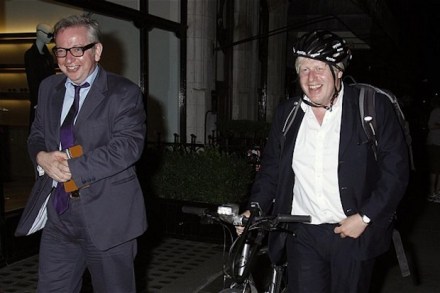
Boris being Boris, he has managed to rule something out without actually ruling anything out at all. As Isabel noted this morning, the Mayor of London has said he will not stand for Parliament before 2015, and will remain in City Hall as promised until 2016. Which is not the same as ruling out standing in the 2015 election. The latest Boris v Osborne twists have allowed speculation about a post-Cameron age to rise to the surface again, and having spoken to Tory MPs over the last few weeks, it is obvious that said speculation is never far from their lips. 2015 is still a white-knuckle fight, but that’s not to say plans are not afoot were it all to go very wrong for the PM.

Boris insists he is ‘united’ with George Osborne

After reports that he was furious with George Osborne and David Cameron for trying to call his bluff by telling him to stand as a parliamentary candidate in 2015, Boris Johnson got his chance to deny that he was at war with the Chancellor on his 'Ask Boris' LBC show this morning. Diana in Surbiton asked Boris about the story, insisting that he tell her what he said to the Chancellor: 'I've said many things to my friend George Osborne,' he chuckled, adding that 'I haven't had a conversation of any such kind with George Osborne'. He added: 'George and I have a very, very good working relationship and indeed an old, old friendship and what we both want to do is get David Cameron re-elected in 2015 and that is the project about which we are united.

Net migration is up, but net migration is a meaningless term

The latest figures showing a big increase in net migration are a blow to the Conservatives, although it obviously reflects on the relative strength of the British economy; at least in relation to the basket cases of southern Europe, from where large numbers have come. It will almost certainly mean more Tory voters joining Nigel Farage’s purple revolution, especially because it illustrates the impossibility of controlling immigration while Britain is inside the EU; the number of EU citizens arriving went up from 149,000 to 209,000 in a year. But that’s part of the curious 80/20 Rule about the immigration debate; Europeans accounted for only a fifth of migration under New Labour, and yet received at least 80 per cent of the coverage.

MP who discussed defection with Ukip tells Coffee House: I couldn’t trust Farage

The Telegraph's Chris Hope has a very interesting interview with Ukip Treasurer Stuart Wheeler in which he says seven Tory MPs had lunch with him to discuss a possible defection to the party. Wheeler says these talks took place more than a year ago, and since then the excitement about possible defections has clearly died down. Why aren't Tory MPs interested any more in defections? I've spoken in private to most of the MPs who held talks with Wheeler - and some with Nigel Farage too - and most of them say they feel there is still a good chance of their party winning in 2015, and that David Cameron's EU referendum pledge did give them hope that he was finally listening to them. This was something Farage accepted when I spoke to him earlier this month.

Nature belongs at the heart of school life

History, Edmund Burke wrote, is ‘a pact between the dead, the living and the yet unborn.’ Nowhere is this pact more important than in our relationship with nature. Conservative governments have always sought to protect and enhance the natural environment – whether through Disraeli’s Public Health Act, which sought to limit the environmental impact of the industrial revolution; or Eden’s Clean Air Act, which helped lift the London smog.  We shouldn’t forget it was Margaret Thatcher’s drive to cut sulphur emissions that stopped the acid rain which was damaging our woodlands and killing the fish in our lakes and rivers.

I’m scared to admit to being a Tory in today’s C of E

[audioplayer src="http://traffic.libsyn.com/spectator/TheViewFrom22_27_February_2014_v4.mp3" title="Ed West discusses political bias in the church" startat=640] Listen [/audioplayer]I am training for ordained ministry at a Church of England theological college. I am a trainee vicar, if you will. I am also a Conservative, which puts me in an extremely small minority and quite a tricky position. At my college, there are approximately 60 ordinands in full-time residential training. Of those 60, there are no more than three or four who would describe themselves as Conservative and the overwhelming majority would call themselves (proudly) socialist. There is also a sizable minority of Marxists.

Gove: Lib Dems think we’re anti-apple pie, cream and custard. Clegg: We’re being grown up about Coalition

The Coalition is merely cohabiting now - that much has been clear for a while. But one partner doesn't seem to acknowledge quite how unreasonable its behaviour is. The Lib Dems have been cheesing off the Tories with what have appeared to be an increasing number of increasingly heated attacks: from David Laws wading into the Ofsted row to Ed Davey attacking 'diabolical' and 'wilfully ignorant' Tories, and from even 'native' Danny Alexander making dire (but specific) threats about his dead body and taxation to Nick Clegg describing George Osborne's call for further cuts in welfare spending after 2015 as a 'monumental' mistake. But today at his monthly press conference, Clegg denied that his party was pursuing an aggressive policy of differentiation.