Conservative party

John Prescott battling, and the Tories get thrashed in northern cities

John Prescott’s trials continue. There will be a run-off between Prescott and the Tory challenger, Matthew Grove. This has been quite a turn around, with Grove staging a late charge in the race for first preference votes when the rural East Riding area was called in his favour. He displaced the independent candidate, retired copper Paul Davison, who finished third by a mere 300 votes. The race has been very close so far; now it comes down to second preferences. Sky News’s Jon Craig reports that the Tories are confident of an upset. There have already been a couple of shocks in the PCC results. In North Wales, Labour’s Tal Michael

Marriage tax breaks would alleviate child poverty, Mr Duncan Smith

The problem about relative poverty is precisely its relativity. The child poverty index, which measures whether a family’s income is below 60 per cent of the average, is a case in point; when incomes go down, bingo, so does child poverty. Which means that one sure fire if controversial way to improve the Government’s child poverty record would be to drive down everyone’s earnings. Iain Duncan Smith, Work and Pensions Secretary, made just this point yesterday when he made a speech about whether the definition should be rather wider than it is. ‘As we saw last year,’ he observed, ‘when the child poverty level dropped by two per cent –

Another sign that CCHQ is moving on to an election footing

Today brings yet another sign that CCHQ is gearing up for the long election campaign. After yesterday’s news that the party has chosen the forty seats it intends to target at the next election, I now hear that talent is being moved out of Whitehall and back to Millbank to beef up the team there. Giles Kenningham, one of the most effective Tory spin doctors, is taking leave from the Department of Communities and Local Government, to head up CCHQ’s media operation following Susie Squire’s secondment to Downing Street. Kenningham joined the Tories from ITV in 2007. In the 2010 election, he was one of the two Tories who took

George Osborne’s combination of austerity and social libertarianism is repellent

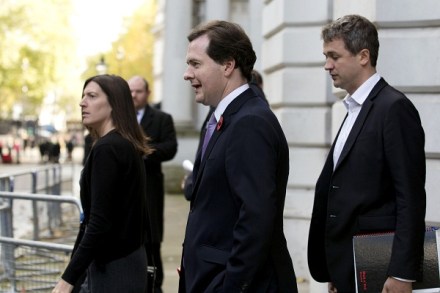
George Osborne’s spirited bid in The Times (£) earlier this week  to appropriate the Obama victory for the Tories is a curious mirror image of the Labour Party’s arguments to the same effect. Both ignore the reality that the US is the US, not us, and Obama is Obama; formulas for election success aren’t a peel-off/stick-on tattoo, to be transferred between one body politic and another. But the article was interesting for what it told us about the Chancellor himself, quite apart from a slightly nerdy obsession with American elections. The fifth and decisive point in his piece was all about how social liberalism plus fiscal conservatism was the key

The View from 22 — Britain vs. Germany, kicking the Lib Dems and the BBC 28

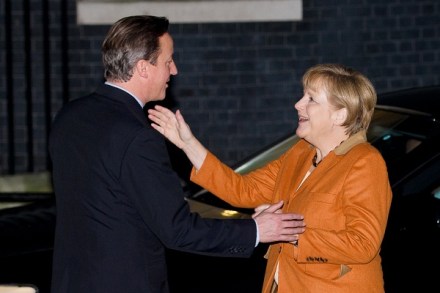
Are Britain and Germany heading for an almightily clash over the future of the EU? In this week’s Spectator, Christopher Caldwell argues that Angela Merkel has had enough of Britain’s position and is out to give David Cameron a kicking over Britain’s lack of solidarity with her nation. On the latest View from 22 podcast, Fraser Nelson explains the significance of about is about to happen: ‘The [problem is the] extent to which Europeans don’t understand us, they can not get that for Britain, it is an issue of sovereignty. They keep thinking well the Brits don’t want to agree the next budget, let’s give them a few sweeteners —

Exclusive: David Cameron accused of misleading over gay marriage polling

One of Britain’s leading pollsters has written to the Prime Minister to rebuke him for misleading his supporters over whether the Conservative Party would suffer in the polls if they legislated on gay marriage. The Spectator has seen an incredible exchange of letters between the Prime Minister, the former Welsh Secretary, Cheryl Gillan, and Andrew Hawkins, the CEO of the polling company ComRes. Since being sacked in September, Gillan has become one of the Prime Minister’s more vocal critics and recently slammed the government’s gay marriage proposals. Responding to Gillan in a letter that was then leaked to the Pink News, David Cameron relied heavily on polling data from ComRes

They’re nearly here but still, no one cares about elected police commissioners

This time tomorrow, the country will be flocking to the polls to select their first ever police commissioners. Or at least some of them will. Turnout has long predicted to be low, but the latest analysis by Sky’s psephologist Michael Trasher suggests it will come in between 15 and 20 per cent. Such a figure would be the lowest of any election in modern times (outside of London). As the Electoral Reform society notes, the current record stands from 1998 at 25 per cent. Much of the apathy towards these elections can be blamed on poor public understanding of PCCs. Although a marketing push has been underway in the last few

Another headache for the Tory whips

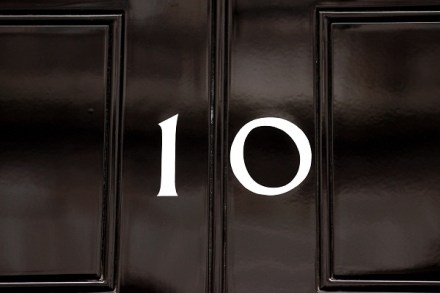
Today brings yet another set of reminders for Numbers 9, 10 and 11 Downing Street about how difficult maintaining party discipline is going to be. First, there’s The Guardian story about Chris Heaton-Harris trying to use James Delingpole and the threat of him running as an anti-wind farm candidate in Corby as leverage to toughen up the party’s position on the issue. Then, there’s the letter signed by 15 Tory MPs calling on Cameron to make a transferable tax allowance for married couples part of the 2013 Budget. In a sign of where a lot of the trouble will come from in the coming months, the lead signatory to the

Delingpolegate?

What’s wrong with supporting James Delingpole? Ask the Guardian: it has had a tremendous amount of fun exposing the Tories’ campaign manager for the Corby by-election, Chris Heaton Harris MP, appearing to support The Spectator’s very own James Delingpole. The paper has obtained video recorded by what it describes as an ‘undercover Greenpeace reporter’ of Heaton-Harris telling an audience at the Tory conference that he encouraged James Delingpole to stand as the anti-wind farm candidate in Corby. He says that he has made ‘a handful of people’ available to Delingpole, including the deputy chairman of his constituency. Finally, he adds, more in jest than complete seriousness it seems to me: ‘Please don’t

No ifs, no buts, we need a decision on Heathrow now

The Prime Minister presumably believes we face a critical shortage of airport capacity in London. Why else would he signal a possible U-turn on what was a headline pre-election promise? He knows that one reason west London voters backed the Conservatives in the last general and local elections was his decision to rule out any prospect of building Labour’s 3rd runway at Heathrow. But if that is how he feels, why on earth would he commit to doing absolutely nothing for three years? I am yet to meet anyone who believes an airport review should take anything like so long; indeed the majority of options have been studied to death.

Race, gay marriage and modern Conservatism. Lessons for David Cameron from America. – Spectator Blogs

So, we’ve had nearly a week to digest the results of the American election and contemplate what, if anything, it might all mean for politics there and, naturally, in this country too. Let’s begin with a necessary caveat: the “read-across” from American elections to the British political scene is something that must be handled deftly. If considered with a sensible measure of proportion, however, it can be instructive since some of the challenges facing political leaders in Britain are comparable in kind (though not always in degree) to those faced by their cousins in the United States. Demographics aren’t destiny and policy matters more than journalists sometimes liked to pretend.

George Osborne, the insubstantial chancellor?

George Osborne’s public interventions on issues other than the economy are few and far between, which is why his article in today’s Times merits attention. In it, Osborne analyses some of the causes of Barack Obama’s victory and then applies his findings to the 2015 election in Britain. On the basis of this article, we can conclude that the Tories’ leading strategist expects to fight the next election in a challenging economic climate against two men, Ed Balls and Ed Miliband (in that order), who he intends to blame for causing Britain’s ills. He will present Ed Balls and Ed Miliband (in that order) as reactionaries who exist beyond the

Order returns to the Tory party on fuel duty vote

Tonight was a good one for the Tory whips. What looked last week like it could have been a tricky vote on a Labour motion to delay the fuel duty rise, turned into a relatively easy government win. There were only nine Tory MPs absent from the vote and every other Tory MP backed the government. Now, the reason there was no rebellion was, at least partly, because Treasury ministers dropped a fair few hints that there would be action on fuel duty in the autumn statement. Robert Halfon, who has led a sustained campaign on this issue, said after the vote that it was ‘Right to wait until’ the

Briefing: Another fuel duty freeze?

It looks like George Osborne will put the planned fuel duty rise on hold again, in order to avoid another Tory rebellion and potential government defeat in the Commons. This battle has its origins in a Labour Budget: that of 2009, in which Alistair Darling introduced a fuel duty escalator whereby fuel duty would increase by inflation-plus-a-penny every April from 2010 to 2013. In his 2011 Budget, Osborne announced that he was abolishing the escalator and instead cutting fuel duty by 1p per litre. From January 2012 onwards, the escalator was to be replaced by a ‘fair fuel stabiliser’, under which the duty rises by inflation-plus-a-penny when oil prices are

True Tories want a press that is free but accountable

Is the idea of any form of statute relating to the press inimical to liberty and therefore incompatible with Conservative belief?  Fraser Nelson argues that it is but it is time for Conservatives to think again and for journalists to reassess who is really on their side in this debate. People elect Conservative Prime Ministers to sort things out.  They expect us to take difficult decisions and to confront unaccountable power along the way.  The unavoidable truth is that there is unaccountable power vested in the hands of newspaper editors and proprietors which has contributed to the current crisis in journalism.  Why do wealthy individuals want to own newspapers?  They

Tory MPs vs free press

How strong is the Conservative commitment to liberty? Today’s Guardian front page holds the answer. A long line of Tory MPs have written to the newspaper, calling for the Prime Minister to seize a ‘once-in-a-generation’ opportunity to regulate the press. It is surprising as it contains several of the names I would had put down as friends of liberty. Jesse Norman, Andrea Leadsom and Nadhim Zahawi are the last people you’d expect to be writing to the Guardian demanding state action against the newspapers. The Guardian says that the signatories hope to make a  ‘cross-party consensus’ is possible. I bet they do. Politicians have always wanted to get some kind

Nick Boles: Where the Tories were wrong on modernisation

Few people have been more important to Tory modernisation than Nick Boles. He co-founded Policy Exchange, the think tank that has developed most of its policy ideas, and has been a tireless—and tieless—advocate of it. But one of the things that has always marked Boles out is his willingness to think and reflect. In an interview with The Spectator this week, Boles — who was promoted to the government in the last reshuffle — assesses what he and his fellow modernisers got right and wrong. He concedes that the modernisers lacked ‘a strong, economic message’ and that they became too carried away with ‘media zeitgeist’ issues like ‘chocolate oranges in

A clear message for the second half of this Parliament

Yesterday in the House, both parties welcomed the re-election of Barack Obama. An incumbent leader has been returned to the White House. Incumbency is of course a massive factor in US politics – an incumbent has been unseated only a handful of times in history. The reason for this is clear. For all the bumps and knocks you get along the way as a government, getting your message out is much easier when you’re already standing on the podium. For the four years of his first term, Obama’s grassroots and digital campaigns never ceased. It’s an important lesson for UK politics. This week, as we enter the second half of

The View from the Cocoon of Denial and Epistemic Closure – Spectator Blogs

William F Buckley has, alas, gone the way of all flesh but his National Review lives on and arguably remains the flagship journal of contemporary American conservatism. It certainly considers itself such. As the Republican inquest into last night’s election disaster begins, National Review offers a useful – and perhaps telling – glimpse into the contemporary conservative soul (American edition). Here’s what its contributors have been writing today: Mary Matalin: What happened? A political narcissistic sociopath leveraged fear and ignorance with a campaign marked by mendacity and malice rather than a mandate for resurgence and reform. Instead of using his high office to articulate a vision for our future, Obama