Conservative party

The hardcore Tory rebels and their new friends

There is now a hardcore of rebels in the Conservative party who have defied the government on three key votes. The 37 MPs below have rebelled on the EU referendum vote, the House of Lords Reform Bill, and the EU budget. The question for the whips and the Prime Minister now is do they write these MPs off their Christmas card lists as forever-rebels, or do they launch a charm offensive that could melt even the steely heart of Peter Bone? I blogged yesterday about some of the problems that the Conservative leadership is creating for itself in terms of party loyalty, and while Bill Cash is hardly going to become chief whip, there may be others in this group who aren't beyond rescue.

Ministers ward off Tory revolt on crime compensation

The government has just managed to ward off another possible revolt in the House of Commons from Tory MPs. It failed earlier this autumn to get a revision of the Criminal Injuries Compensation Scheme through a delegated legislation committee when four Conservative MPs present refused to support it. The revised scheme will see half of all those seriously injured following a violent crime receiving no compensation at all and nearly 90 per cent of victims receiving less money. So John Redwood, Angie Bray, Jonathan Evans and Bob Blackman threatened to rebel, leading to Justice Minister Helen Grant withdrawing the legislation from the committee. Grant brought the legislation before committee again this morning, but this time there were different MPs considering the plans.

The View from 22 — the fight for press freedom and an EU problem for Cameron

What effect would any form of statutory regulation have on the press in this country? In this week's cover feature, Nick Cohen writes that if the Leveson Inquiry recommends strong measures to curtail the press, they will not be practical thanks to the constant evolution of the media industry. On this week's View from 22 podcast, Nick explains the problems of defining who exactly is the press and who are journalists: 'You can't say what a newspaper is and you can't say who a journalist is. When I started in journalism, people used to say it was a trade, not a profession...that was true in theory but false in practice — you couldn't be a journalist unless you worked for a state or private media conglomerate.

Don’t blame the whips for the EU budget revolt: the problem is higher up

What is striking about this evening's revolt on the EU budget is that it was organised at lightning speed by the rebel camp. Mark Reckless and Mark Pritchard only tabled their amendment on Monday morning, whereas the rebellion of the 81 over the backbench motion for an EU referendum took weeks of careful planning. This time round, in just three days, the shadow whipping operation managed to stir up 53 MPs prepared to troop through the 'yes' lobby in favour of the call for a real-terms cut. The whips themselves are already saying that they know the blame will land on Sir George Young's head when they believe it wasn't his fault. And even those who were the most enthusiastic signatories the Reckless/Pritchard amendment disagree that the whips should take the flak.

Government suffers humiliating defeat on EU budget

The government has just suffered an embarrassing defeat on the EU budget. The rebel amendment, which called for a cut rather than the real terms freeze David Cameron is proposing, passed by 307 votes to 294. There are, I think, three significant consequences of tonight’s vote. First, it has been yet another reminder that David Cameron can barely control his party when it comes to Europe. We’re waiting for the precise number of Tory rebels tonight but it seems like about 50 MPs defied the whips. This means that if Labour is prepared to join with the Tory rebels, it can overturn the coalition’s majority.

Government expects to lose EU budget vote

While the rebel whips are still rounding up Tory MPs to vote against the government on the EU budget motion, which starts in the Commons shortly, a senior government source tells me that they now expect to lose the vote. David Cameron's line at Prime Minister's Questions that 'at best we would like it cut, at worst frozen, and I'm quite prepared to use the veto if we don't get a deal that's good for Britain' may not have taken the sting out of the rebellion itself, but it might be easier for the government to now argue that losing a vote on an amendment which calls for a cut is less embarrassing when the Prime Minister himself says he would prefer a cut himself. The real damage may well be to the whips, who appear to have been completely wrong-footed by this amendment.

Change at Number 10

Gabby Bertin is one of David Cameron’s long-marchers; she has been with him since he won the leadership in 2005. Bertin has acted as his political spokeswoman for the last seven years, pushing the Cameron message and dealing calmly with the inevitable crises and mishaps. Few people know what Cameron thinks as well as Bertin does and are as prepared as her to tell him when he is going wrong. Cameron, for his part, values Bertin’s ability to, in his words, ‘see round corners.’ But in a fortnight’s time, she goes off on six months maternity leave. I understand that Susie Squire, currently running the press operation at CCHQ, will step into Bertin’s shoes.

EU budget: MPs warned revolt ‘could undermine coalition’

It was inevitable that the new team of whips was going to be rather unsettled by tomorrow's vote on the EU budget: it's the first challenge the team has had to face. But what is surprising is quite how serious their palpitations are. I understand from a number of Conservative MPs that one of the key threats isn't you-won't-get-a-promotion-in-this-government, or we'll-reveal-the-truth-about-your-mistress, but that a big rebellion tomorrow will threaten the very stability of the coalition government. When I was first told this, I found it slightly incredible: this is a non-binding vote where the popular amendment calls for the Prime Minister to go further than he has promised in negotiations, rather than directly contradicting his stance.

Tory whips in a flap over EU budget rebellion deploy Rees-Mogg

At this morning's Cabinet meeting, ministers discussed tomorrow's debate on the EU budget, which is shaping up to be a big row. MPs I have spoken to who have either signed or are considering putting their names to the amendment calling for a real-terms cut in the budget have found their whips to be in quite a flap about the issue. Even though it might be convenient for the Prime Minister to use a vote in parliament calling for a cut as a weapon at the budget summit itself, the party leadership is clearly sufficiently nervous to have pushed for a rival amendment from Jacob Rees-Mogg and Peter Bone.

Will David Cameron grant Northern Ireland control of corporation tax? – Spectator Blogs

Monday morning in dreich late October. What more appropriate moment to ponder the questions of corporation tax and Northern Ireland? The question of whether the Northern Ireland Assembly should control the rate of corporation tax payable in the two-thirds of Ulster for which it is responsible won't go away, you know. Nor, despite the fact that the London press has paid little attention to it, is this some local matter of no importance to the rest of the United Kingdom either. On the contrary, David Cameron's decision on this seemingly-arcane or merely local matter is more important than it seems and, in fact, one of the more significant questions demanding his attention right now.

Liam Fox: all weaker Eurozone members should leave the single currency simultaneously

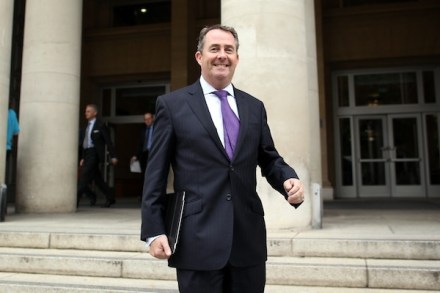
Since leaving the Cabinet, Liam Fox has acted as a cross between a scout and an out-rider for various of his former Conservative Cabinet colleagues. In a speech in Oslo tomorrow, he’ll argue that the only way to deal with the Euro crisis is for all of those countries who cannot realistically cope with the demands of the single currency to leave in one go. Otherwise, he argues the markets will simply pick the weaker countries off one by one. Fox is certainly right that if Greece left, or was forced out, of the single currency, Spain and Italy would then find themselves under intense—and, probably intolerable—market pressure. But I suspect that the Eurozone lacks the political and economic awareness to make the kind of clean break that Fox is proposing.

The Great Reckoning

In my Observer column today, I talk about the scourging of Britain’s failed elite. To give readers an idea of how many institutions are in the dock, I quote an extract from Piers Morgan’s diaries from the summer of 2004. Because I have more space, I can give you the full ghastly detail here – what lucky people you are. Morgan's managers had just fired him from the editorship of the Mirror for running pictures of British soldiers pissing on Iraqi detainees, which a fool could have told him were crude fakes. There is a risk that when the pictures are seen in the Middle East they will endanger men and women in the forces. Morgan does not care. He toddles off to the 40th birthday party of Ross Kemp. Brown is there. Blunkett is there.

Ken Clarke’s 2015 campaign slogan

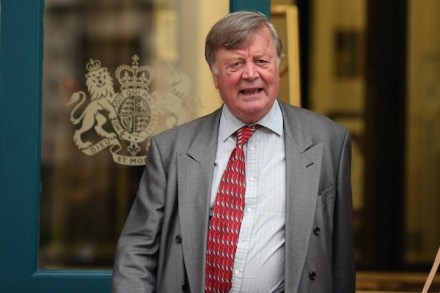
It was not a huge surprise when Ken Clarke rowed back this afternoon on his comments to the Telegraph about tax breaks for married couples. The minister without portfolio was hardly going to get through the first interview he has given since the reshuffle without saying something he would later have to 'clarify'. But he made another interesting observation to the newspaper about the Tories' 2015 strategy. He said: 'If we are back to strong growth by the next election, we probably won’t need to campaign. If at the next election, the economy is in strong normal growth, George Osborne will be given the Companion of Honour or something and we will all get safe back.

The Carswellian revolution

While Conrad Black re-entered polite society at Lulu’s in Mayfair last night, the Hospital Club in Soho saw the advent of a new political force. A tie-less Douglas Carswell, the rebellious Tory MP for Clacton, took to the stage to launch his new book The End of Politics and the birth of iDemocracy, a work described by Dominic Lawson in last week’s Sunday Times as ‘as a revolutionary text… right up there with the Communist Manifesto’. Carswell thanked his wife Clementine for allowing him to lurk in the shed for weeks on end while writing his revolutionary tome, and then confessed that he had spent much of the time ‘Skyping with Dan Hannan’, his fellow ultra-modernising Tory.

Margaret Thatcher and the Tory party’s change on Europe

Charles Moore’s biography of Margaret Thatcher promises to be the most important British political book in decades. Tonight, we got a preview of it when Charles delivered the Centre for Policy Studies’ second Margaret Thatcher lecture. The subject was Thatcher and Europe. I won’t say too much about it because we’re running a version of it in the coming issue of The Spectator. But one thing that Charles demonstrated was that even when Thatcher was campaigning for British membership of the European Community, as then was, she was never in favour of the European project. One of the other thing that Charles’s lecture brought out was the shift in the balance of power in the Tory party on Europe.

Cameron irked on Europe as backbenchers rattle the referendum cage

Throughout his statement on the European Council, David Cameron seemed slightly irritated. One sensed that the headlines of the last few days have rather got under his skin. Cameron began by declaring that the Council meeting had made ‘limited progress’, which is hardly much to report to the House. He also was unable to resist another pop at Chris Bryant; complaining that he still hadn’t apologised to him when the Labour MPs asked a question. It was striking what a pro-European tone Ed Miliband took in his response to Cameron. It was all about how Cameron was losing control of his party over Europe and needed more friends there.

Rumours of Lynton Crosby’s return snowball

Plenty of newspapers have been following the scent of my magazine report that Lynton Crosby is about to return to the Tory fold. Here’s something to help them along. One Tory government source tells me that the Tory leadership ‘are trying to twist his arm’ because ‘there's a recognition that he would bring some focus, discipline and clarity to the campaign that was missing last time.’ My Whitehall whisperer says that negotiations have been going on for some time. Apparently, the biggest impediment is not George Osborne, who would have to surrender control of election strategy, but Crosby’s exorbitant fees.

Cameron tries to show he’s still got it with tough crime announcement

It's clear the government has had a bad week when the Prime Minister pops up on a Monday with a crowd-pleasing policy announcement. Recent re-launches have been shared by senior Lib Dems and Tories following the collapse of Lords reform, for example, to demonstrate that the Coalition is still working well. But today, the Lib Dems are nowhere to be seen: the Prime Minister's big crime announcement is a response to a terrible week for the Conservative party, rather than the coalition as a whole. Cameron is using law and order as a traditional Conservative area, arguing that 'retribution is not a dirty word' and that alongside a 'tough' approach to crime, all but the most high-risk prisoners will be offered rehabilitation by the end of 2015.

Theresa May won’t deny she told Andrew Mitchell to go

Theresa May’s political stock has risen this week. Announcing an intention to opt-out of EU law and order directives pleased Tory MPs while her decision not to extradite Gary McKinnon was popular. But we’ve also seen the Home Secretary operating -rarely for her - beyond her brief. She played a key role in pushing Andrew Mitchell out, something she effectively confirmed on the Sunday Politics. When Andrew Neil pressed her on this, she simply replied ‘I’m not going to talk about private conversations’.