Conservative party

Tory MP mulls boundaries rebellion

In spite of the best efforts of its ministers in the Lords, it looks as though the government is going to face a vote on the dreaded boundaries legislation early next year, with the Electoral Registration and Administration Bill returning to the Upper Chamber in January. The big story is that the Lib Dems will be able to kick the reforms away until 2018 using an amendment, but it isn't just the members of the smaller Coalition party who will be rebelling against government policy. Tory MP Glyn Davies has now come out as an opponent of the reforms, too. On his blog, he writes that he is 'contemplating voting against my government for the first time' for a number of reasons.

The party of little tykes

Whose fault is it that the Tory party is so rebellious? Some think it's the beastly backbenchers, while others argue it's the Tory leadership. I was amused to watch a beaming Brian Binley lead David Cameron into the 1922 committee on Wednesday, given the backbencher was only recently penning an angry letter to the press about how the Prime Minister was ruining everything. There will always be people like Binley in every party, and Downing Street has made very clear that it would answer his desire for a move to the right by staying firmly in the centre ground. But are there really are so many other Conservative MPs who started out as thorns in the flesh from their first day in Parliament?

David Cameron should explain why Europe isn’t working

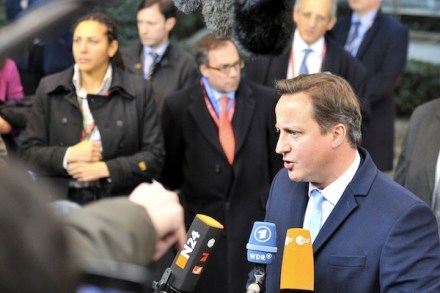
Philip Collins knows a thing or two about speech writing; but I can’t help thinking that his assessment of what David Cameron should say about Britain and the EU is misguided. Perhaps it’s his Labour blood, but he is fascinated with ‘those in Mr Cameron’s party who are obsessed with Europe in general or frightened of UKIP in particular’. Collins’ analysis seems to suggest (or hopes?) that Cameron’s speech will be primarily for Bill Cash et al. But the speech is the first step to a referendum renegotiating Britain’s position in the EU. The primary audience must be the public – Mrs Bone rather than Peter Bone. Therefore, its content should be about people rather than politics. What might David Cameron say?

Grant Shapps launches Tory target seats campaign

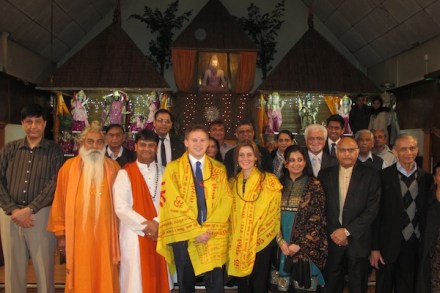
If the Tories are to win a working majority at the next election, they are going to have to take seats off Labour. Even if the Tories won every single Liberal Democrat seat they are targeting — something that is highly unlikely to happen, they would still only have a majority of one. Doing this after five years of austerity government is going to be extremely difficult. The Tory strategy for it, involves boosting the party’s vote among groups that the party traditionally underperforms with. Tellingly, Grant Shapps is launching the Tory target seats campaign today in a Hindu temple in Harrow West, a seat where the Tories underperformed last time; the Labour majority there actually went up in 2010.

We need a recipe to solve food poverty

At Prime Minister’s Questions yesterday, the Opposition touted food banks as evidence of Britain’s regression into a Dickensian era. With 128,000 visitors passing through the Trussell Trust’s doors last year, today was not the first Wednesday on which the Government has been blamed for more children going hungry and more families struggling to put food on the table. But why are food banks multiplying at a rate of three a week and are they really a workable solution? One answer is that organisations such as the Trussell Trust can now place their leaflets in jobcentres. In addition, unlike under Labour, food banks can now receive referrals from a range of sources such as Community Nursery Nurses, Headteachers, and Health Visitors.

Mitchell row could make MPs think again before criticising a colleague in trouble

Tory MPs - and the occasional Lib Dem, too - were flocking around Andrew Mitchell in the Commons yesterday to show their support for the former chief whip. He is enjoying a new wave of support in his party, rather than languishing as persona non grata on the backbench. But the picture is still not clear. Mitchell himself admitted that he swore during the exchange with the police: less politically toxic, perhaps, than 'pleb', but swearing at a police officer is still something that can land you with a fine in a Magistrates Court. And there are two other police officers who claim the chief whip said both words. Another person who has not emerged unscathed from this row is Sir Jeremy Heywood. He reviewed the CCTV footage himself, but seems not to have noticed that there were no witnesses.

David Cameron promises Tory MPs strong 2015 offer on Europe

David Cameron's appearance before the 1922 committee was designed to reassure his party, and he tried to do this by promising them that the Conservative party would be strong on Europe in 2015. It has been a hard term, and today's PMQs was savage, so the Prime Minister decided to start his speech by telling them to think about the Conservative party's record in government. He touched on welfare, on schools, on the NHS - in particular mixed sex wards and waiting times - and income tax. He is clearly looking forward to the next election, too, as he mentioned the appointment of Lynton Crosby, to cheers from those listening, as well as attacking the Labour party. He also told the MPs about the importance of a strong and united Conservative party.

Andrew Mitchell’s next step could be an international job

The Westminster grapevine is buzzing with the latest rumours about the truth of ‘pleb-gate’. There are legal limits to what we can say. But a few things seem certain. Andrew Mitchell’s friends believe he is on the cusp of vindication. On the Today Programme just now, David Davis called for him to be returned to high office as soon as possible. Davis also claimed that Mitchell had not been able to handle the matter in the way that he wanted to because of constraints imposed on him by people around the Prime Minister. One lesson of the Mitchell affair is that the only person who can really defend a politician when his integrity is under attack, is the politician himself.

Was the deputy chief whip just doing his job by passing on Mitchell concerns?

The latest twist in the Andrew Mitchell story is particularly intriguing. The Guardian is reporting that news of the confrontation between the police and the chief whip was passed onto Downing Street by the deputy chief whip John Randall. Now, Randall and Mitchell were known not to get on and Randall played a key part in forcing Mitchell out by indicating that he was not comfortable working under him. This latest news threatens to inject yet more poison into the Tory bloodstream. If brother whips can treat each other like this, what hope party discipline? But one longstanding Conservative MP made the case to me just now that Randall’s behaviour is not as odd as it might seem.

A pact wouldn’t solve the Tories’ UKIP problem

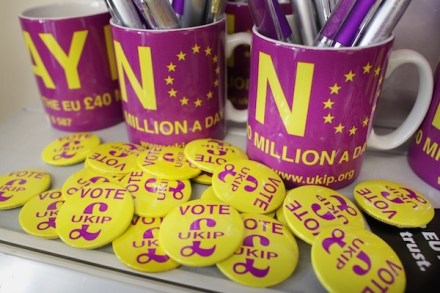
UKIP has seen a significant bump in support in the latest set of polls: it is up five points with Populus this morning. All of which makes Lord Ashcroft’s examination of why people are attracted to UKIP particularly timely. The Ashcroft polling confirms that the UKIP vote is only partly about Europe. It also reflects a wider anger with a political class that appears aloof from peoples’ concerns. Among those considering voting UKIP, the most frequently stated reason is to send a message to the big parties on Europe and immigration. It is also striking that any kind of Tory / UKIP pact seems unpopular. ‘The few voters who had heard the idea of a Conservative-UKIP pact thoroughly disapproved of the proposal.

Nick Clegg wants gory government: so should the Tories

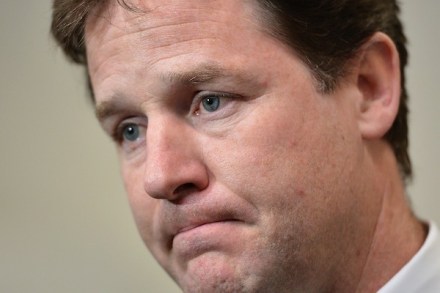
There's nothing wrong with Nick Clegg putting some distance between his party and the Conservatives. Today the Liberal Democrat leader is going to open up about the gory details of government, explaining where his party has held the Tories back, and heralding a new era where he and colleagues are honest about what they actually think of policies. On Friday, I argued that this sort of honesty about the workings of coalition government was a good thing. But there is one caveat to this. Conservative MPs are pretty unhappy at present, and it's not just that they are overtired before the Christmas break.

Tensions in the tearoom on gay marriage

This week's developments over gay marriage have left a febrile atmosphere in the Conservative party. As Fraser wrote yesterday, David Cameron seems to have driven his party 'quite mad' by pursuing the policy, and the mood in the tearoom after Maria Miller's statement on Tuesday certainly seems to have underlined that. I understand from a number of MPs that there was an 'excitable' confrontation between a member of the 2010 intake and one of the members of the Freedom to Marry group. The new MP was irritated by the position that his colleague had taken and was jabbing his finger angrily as he spoke.

Gay marriage: no culture wars, please, we’re British

Ever since the issue of gay marriage returned to British politics, we have seen the debate become crazier and crazier.  When Tony Blair handled this with his Civil Partnerships Act 2004, he did so with care and discretion, mindful of deeply-held opinions on either side of the debate. David Cameron seems to pursue gay marriage as some kind of defining mission statement, and seems to have driven his party quite mad. Nick Clegg released a speech drawing a distinction between the supporters of gay marriage and 'bigots'. He revoked the b-word, but his tactic was clear. We are witnessing an attempt to bring American-style culture war to a country that has never known it - and is utterly unsuited to it. I look at this in my Telegraph column today.

The 2011 census proves why politicians are distrusted

What do people take away from the 2011 census? I cannot help but see the clearest possible reason for why trust of politicians is at an all-time low. Perhaps other voting members of the public remember as far back as 2004 when the Labour government predicted that fewer than 20,000 people would come to Britain from those Eastern European countries given full access to the UK labour market. As of last year the Office of National Statistics confirmed at least 669,000 people from these countries working in the UK. Or they might remember Labour immigration minister Phil Woolas promising in an interview with the Times in 2008 that, ‘It’s been too easy to get into this country in the past and it’s going to get harder.’ Mr Woolas even talked about quotas being brought in.

Maria Miller holds gay marriage briefing to reassure nervous Tory MPs

After giving her statement to the House of Commons on the government's plans for gay marriage, Maria Miller held a meeting with Tory MPs. I understand that the meeting was a question-and-answer session designed to help reassure Tories about the 'quadruple lock'. It was well-attended, although apparently the Secretary of State was around 25 minutes late, which meant Peter Bone left early to make another appointment. This was immediately interpreted as a walkout in protest from Bone, who is one of the more vocal opponents of the legislation. I spoke to Bone this evening, who said 'I wasn't storming out: it was a private Q&A meeting with Maria Miller who was 25 minutes late'. But even though he didn't storm out, Bone is still not happy or reassured by today's announcements.

Liam Fox’s attack on Foreign Office peeves former ambassador

Liam Fox sparked a row with a former diplomat today after accusing the Foreign Office of an institutional bias towards greater integration with the European Union. The former Defence Secretary is building up a reputation for himself as a rallying figure for the eurosceptic right wing of the Conservative party with a series of speeches on Britain's relationship with Europe, and today he attacked the civil service for having a weak spot for the continent. He told an Open Europe event at the Royal United Services Institute that the government's desire to renegotiate its EU position was impaired as a result of the FCO being 'totally wedded to the concept of ever-closer union, for whom integration into the EU is virtually an article of faith'.

Attorney General to reject warnings of gay marriage legal challenge

I understand that when the gay marriage bill is published, the Attorney General will make clear that the chance of a legal challenge at the European Court of Human Rights to religious institutions that don’t want to marry gay couples is ‘negligible’.  As Isabel says, what wavering Tory MPs think of this legal opinion will be key to determining how they vote. The debate inside the Tory parliamentary party about this issue is becoming increasingly rancorous. There’s real fury among some MPs about the language being used by some of the opponents of same-sex marriage. David TC Davies decision to opine on whether parents want gay children has infuriated many MPs.

No 10 insists churches are protected under gay marriage plans

The government may be forced to explain its plans for gay marriage in the House of Commons today if an urgent question is granted. Chief among the questions from backbenchers will be the consequences for religious institutions that continue to oppose the idea and do not want to conduct such ceremonies. There are some Tory MPs who are viscerally opposed to the idea of gay marriage in any form, but others are wavering and need reassurance that they will not vote for something which leads to the situation where a vicar is forced as a result of a European Court judgement to conduct a same sex marriage against their will.

Tim Loughton attacks coalition’s failure to support married couples

Tim Loughton was one of the surprise sackings in September's reshuffle: he was an able minister who knew his portfolio very well indeed. He's evidently reluctant to let that ability go to waste, and has already made interventions on child protection and benefit cuts. His speech later today for the Centre for Social Justice hits the nail on the head of a big Tory problem: marriage. Loughton isn't joining some of his colleagues in attacking gay marriage specifically, but rather the Conservative party's failure to reintroduce tax breaks for married couples. He has written of his dissatisfaction that the Autumn Statement contained no such measures in the Telegraph today: Family matters to Mr Cameron and to the Conservative Party. I hope that family still matters to this Government.