Comedy

No laughing matter | 18 May 2017

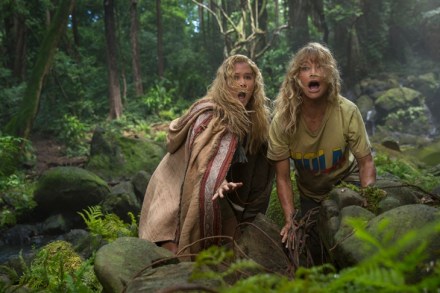
We love Amy Schumer. Fact. And we love Goldie Hawn. Fact. But can we love Snatched? Not so much, if at all. Perhaps the addition of ‘if at all’ is unnecessary, and rather mean. But it’s done now. There are a couple of decent jokes, it’s true, but they are 1) all in the trailer and 2) happen within the first ten minutes, after which there is every chance you will 1) lose the will to live and 2) wish you’d opted for Guy Ritchie’s King Arthur. But, as we are so often warned, do be careful what you wish for. From what I’ve heard, King Arthur may not only make you lose the will to live but may also make you regret ever having lived. (Too much again? Done now.
Arms race | 4 May 2017

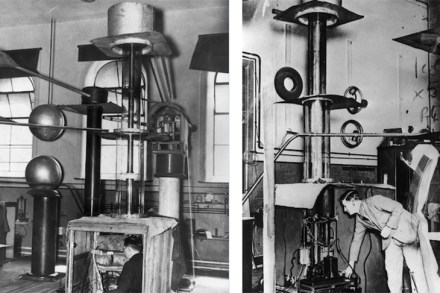
Like most documentaries, Britain’s Nuclear Bomb: The Inside Story (BBC4, Wednesday) began by boasting about all the exclusives it would be serving up. Unlike most, it was as good as its word. What followed did indeed contain much previously unseen footage and interviews with people — including ‘this country’s bomb-maker in chief’ — who’ve never before spoken about the part they played in Britain becoming a nuclear power. It also did a neat job of fitting the story to our favoured national myth: the one about old-fashioned British pluck and know-how triumphing over both the odds and the shamefully professional ways of other countries. In the 1930s, for example, the race was on to split the atom.

Pleasing pedantry

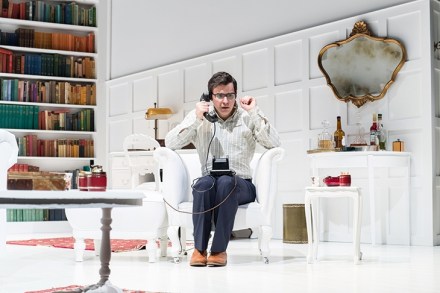
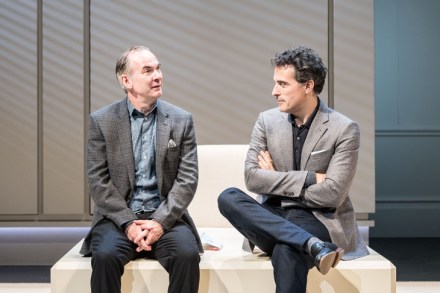
Christopher Hampton’s 1968 play The Philanthropist examines the romantic travails of Philip, a cerebral university philologist, forced to choose between his unexciting fiancée and a predatory seductress. The play’s opening scene contains one of the most brilliant comic shocks in all drama. And the paradoxes and flashes of Hamptonian wit are an everlasting treat. ‘I’m a man of no convictions,’ says Philip. ‘At least I think I am.’ The production, brilliantly directed by Simon Callow, is exquisite to look at. Libby Watson creates a stark white sitting room, with great pools of crimson carpet, enlivened by colourful rows of books that are harmonised carefully, but not obtrusively, with the overall palette.

Boozy bard

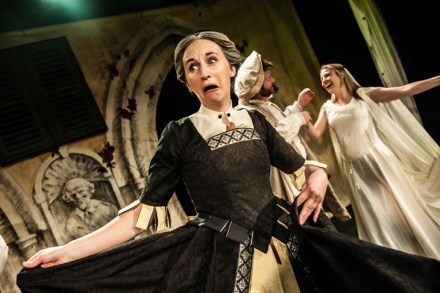
Even the Bard’s staunchest fans admit that ‘Shakespeare comedy’ may be an oxymoron. That’s the assumption of the touring company Shit-Faced Shakespeare, which produces the plays as adventures in boozy slapstick. The audience is encouraged to swig along too. I saw their hooch-assisted Much Ado. The colourful costumes looked a bit am-dram, perhaps deliberately, and the stage was decorated with cheap flapping drapes on which gargoyles, arches and other medieval devices had been painted. Enter a larky compère in puffy breeches carrying a horn. ‘PARP PARP’. He announced that a member of the cast had just consumed two beers and half a litre of gin in the dressing room. Which is quite a lot.

Britain’s comics can’t stand Brexit – but the joke is on them

One of the best things about Brexit has been its shattering of anti-establishment pretensions. All the people who for yonks had been getting away with posing as rebels and disruptors and irritants to the status quo have been exposed as utterly allergic to radical political change; as small-c conservatives freaked out by revolt; as the nervous, nodding footsoldiers of political power. From the trustafarians of Momentum, those laptop Leninists who fantasised that they were revolutionaries, to columnists like Caitlin Moran, the Times’ token rebel who once said she lives ‘like it’s 1969 all over again and my entire life is made of cheesecloth, sitars and hash’ (cringe much?

Victim mentality

Elle has been described as ‘a rape revenge comedy’, which seems unlikely, and also as ‘post-feminist’, which is likely as, in my experience, that simply means anything goes so long as you acknowledge that feminism has happened. The film stars Isabelle Huppert, who was Oscar-nominated for her performance, and who has repeatedly said that her character, Michèle, is not ‘a victim’ although, as you have to watch Michèle being raped or near-raped several times, I don’t know how we can be so sure about that. Perhaps I’m just not sufficiently in touch with my ‘post-feminist’ side to fully comprehend.

On the money | 9 March 2017

Fans of tough investigative journalism should probably avoid Channel 4’s How’d You Get So Rich? Presenter Katherine Ryan’s main tactic is to ask wealthy people how much they paid for something and, when they tell her, to repeat their answer in a tone of wondering admiration. Yet, despite her best efforts to keep it shallow, the programme does end up shedding some light on our peculiar attitudes to the very rich — and in particular our capacity to feel superior and inferior to them at the same time. Ryan, a Canadian comedian who’ll be familiar to anybody who’s watched virtually any panel show, began Monday’s opening episode at the Shropshire pile owned by Steve Smith, the founder of Poundland.

All human life is there

This book kept reminding me of Robin Williams in One Hour Photo. Just as his character spied on customers’ private lives while developing their pictures, so Chris Paling gets to know the readers at the library where he works. Unlike Williams he doesn’t follow them home at the end of the day (in fact some of the female librarians have the opposite problem), but Paling’s anonymous, functional role lets him observe without being observed. He sees the woman with two small children who takes out Is Daddy Coming Back in a Minute?, explaining sudden death to children in words they can understand. The ‘effete, shaven-headed man in a well-cut suit’ who angrily discusses his new shrink on his mobile phone.

Stuffed but dissatisfied

Sandi Toksvig’s new play opens in a Gravesend care home where five grannies and a temporary nurse are threatened by rising floodwaters. In Act One the ladies prepare for a rescue party that fails to materialise. In Act Two they build a life raft out of plastic bottles. There’s a bizarre sequence involving a silly young burglar who gets beaten up and flung through a window by a woman of 71. The ending is more of a petering out than a conclusion. All the characters feel interchangeable apart from the nurse, who claims to come from Cheltenham. Her name, Hope Daly, prompts one of the old dears to quip. ‘My life in a nutshell.’ Later Hope admits, ‘I’m from Croydon, OK? I don’t tell people because I don’t need the pity.

Thirtysomething blues

If ever there was a book for our uncaring, unsharing times, it is Gwendoline Riley’s First Love, in which Neve, a woman in her mid-thirties, struggles with a truly awful family and with the men in her life, while trying to make a career as a writer. That latter point might suggest some kind of bildungsroman approach, but in fact the meat of First Love is in its rich character depictions, from which Riley teases out a series of painful but exquisitely comedic episodes. Neve’s father is a crude, self-styled ‘socialist’, full of class resentment and personal bitterness, while her pretentious mother, now remarried to a condescending Sunday painter, is so utterly self-absorbed that she is blind to Neve’s difficulties, forever complaining about her own lot instead.

Dual control | 19 January 2017

Revolting (Tuesdays) is the BBC2 comedy series that spawned the now-infamous sketch ‘Real Housewives of Isis’. It has been watched on the BBC’s Facebook page nearly 30 million times and rightly so because it is fearless, funny and near the knuckle. A pastiche of reality TV shows set in places like Beverly Hills, the sketch depicts three young British jihadi brides brightly discussing their domestic lives in some Raqqa-like hellhole. ‘Ali bought me a new chain,’ boasts one, ‘which is eight feet long. So I can almost get outside, which is great.’ Cue shot of black-hijabed housewife lurching towards the doorway of her bombed-out home, dragging the cooker to which she has been leashed.

Death rattle

The Barbican website warns us that Ligeti’s opera Le grand macabre ‘contains very strong language and adult themes’. The strong language consists of the four-letter words that are known to everyone and used by most people, and the adult themes are sex/love and death, which this opera has in common with almost any non-comic opera you can think of, and without which the genre would certainly never have been conceived or added to over more than four centuries. But while love and sex have often also provided the stuff of comedy, death is another matter, and presumably it is Ligeti and Michael Meschke’s robust treatment of this (superbly translated into English by Geoffrey Skelton) that we might need to be warned about.

Drama queen

God, what a dusty old chatterbox Schiller is. Like Bernard Shaw, he can’t put a character on stage without churning out endless screeds of cerebral rhetoric. But unlike Shaw, he has no sense of humour, nor any instinct for the quirks and grace notes that create a personality. Mary Stuart is a psychological drama with a single issue. How soon, and with what political consequences, can Elizabeth execute her treacherous cousin Mary? Schiller’s characters sound and feel identical: super-brainy, highly confident know-alls who treat each problem like a gang of Chancery briefs discussing a particularly knotty insolvency case. Director Robert Icke’s regimented production imposes high-street fashions on England in the 1560s.

Lin Cook, who died before Christmas, personified that odd breed: the celebrity widow

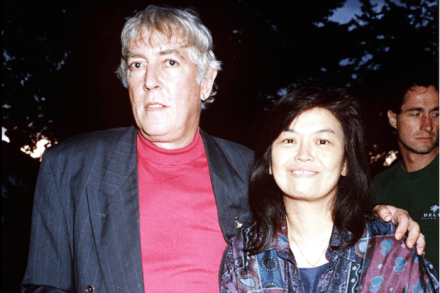
Amid the flurry of famous deaths during 2016, one particular passing has been more or less forgotten. Peter Cook’s third and final wife, Lin Cook, died on the eve of Advent, at the age of 71, shortly after the BBC broadcast Victor Lewis-Smith’s new documentary about Peter, for which Lin gave a rare interview. I got to know Lin in the Noughties, while compiling two biographical collections of her late husband’s work. It was an intriguing insight into the world of that strange showbiz phenomenon, the celebrity widow. Celebrity widows are a paradox – ostensibly public people, they’re actually intensely private. Lin personified this odd breed. Although I was in touch with her for over 15 years, when she died I realised I barely knew her at all.

Weird and wonderful | 29 December 2016

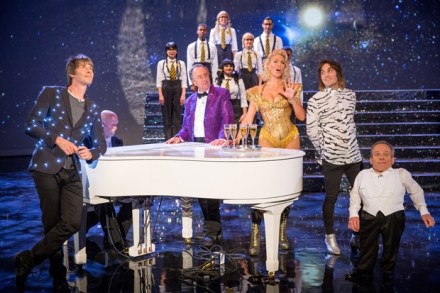
As you’ve probably noticed, TV critics spend a lot of their time trying to identify which other programmes the one they’re reviewing most resembles. Sadly, in the case of BBC2’s The Entire Universe, this noble quest proved futile. Written and emceed by Eric Idle, the show did contain plenty of familiar television elements: songs, dance troupes, Warwick Davis making jokes about how small he is, a lecture by Professor Brian Cox on the nature of the cosmos. Yet the way it mixed them together was so unprecedentedly odd that it may well have made the average Boxing Day viewer feel they must be drunker than they thought.

Joking apart | 24 November 2016

A horse walks into a bar.… David Grossman takes the opening line of an old joke for his title, which could be a signal of comedy to come; and indeed he strews his novel’s pages with punchlines — good, bad-taste and groan-worthy. But this is gallows humour at its darkest: Grossman beckons us into a basement comedy club in an Israeli town, and uses the world of stand-up to explore not jokes but the nature of guilt. We stick with the comedian Dovaleh G from the moment he stumbles on to the stage till he exits two hours later. There are Israeli in-jokes — ‘How do paratroopers commit suicide? Jump off their ego onto their IQ’ — but long before the end, laughs have faded and applause has given way to hostility.

Old stamping ground

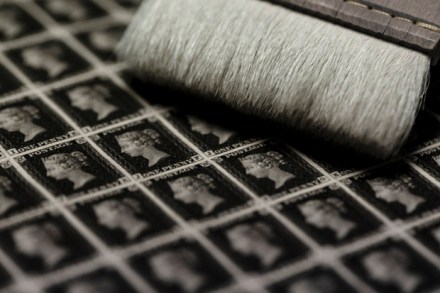
If I tell you that on Monday there was an hour-long documentary about the history of stamp-collecting, then you probably don’t need this column’s usual bit in brackets saying which channel it was on. Indeed, at times Timeshift: Penny Blacks and Twopenny Blues seemed determined to be the most BBC4-like programme in the history of BBC4: cheerfully niche, heroically indifferent to all notions of cool and so old-school in its production style that any mention of France was introduced with a blast of accordion music. Above all — and unlike so many other documentaries elsewhere — it was wholly confident that its viewers would be interested in interesting things without having to be shrilly reminded every few minutes of how interesting they are.

Space oddity

One of David Bowie’s last works, Lazarus, is a musical based on Walter Tevis’s novel The Man Who Fell to Earth. Enda Walsh has written the script. The lead character, Newton, is a derelict celebrity addicted to gin who occupies a big brown apartment full of bickering attendants. It’s unclear who or what Newton is. Human or alien? Something in between? His ontological status is a further puzzle. He may be alive, dead, half-dead, non-dead, half-undead or semi-not-quite-half-unalive. This is a problem, dramatically. A character who exists outside the mortal realm can’t make choices or perform actions that affect himself and others. He’s not a personality, therefore, just a puzzle wearing some clothes. Beige clothes in this case.

Angry bird

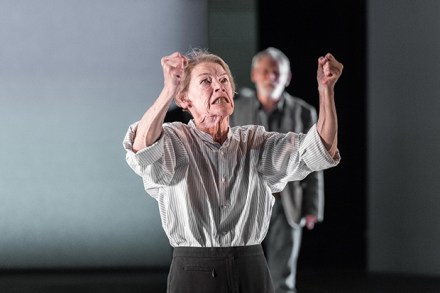
Dynastic affairs and international relations were once a seamless continuum. Royal weddings accompanied peace treaties. An heirless realm was vulnerable to invasion. Botched successions led to war. This is the political context of King Lear but Deborah Warner sets the play in modern times, which muddles everything. Britain in the Dark Ages is represented by a scout hut or a therapy suite. Plain walls, bleached flooring, a semi-circle of blue plastic chairs. Enter the king’s court led by a crownless Glenda Jackson (Lear), sporting a black ensemble topped by a chic scarlet cardigan. Is this a brutal tyrant on the brink of a psychotic meltdown? Nope. It looks like Granny wearing ‘something special’ for her 80th at the care home.

Have our thin-skinned times killed off satire for good?

Is satire dying? Zoe Williams asks in the Guardian whether the shrinking of permissible speech is killing comedy. To make her point, she wonders if the mid-1990s satire The Day Today would be tolerated in 2016 and whether 'its surrealism belongs to another age'. The spoof news show, which in some ways seems slightly prophetic 20 years later, was sometimes edgy, and often surreal, and Williams recalls one scene in which a presenter announces in a dead pan manner that the Bank of England had issued 'an emergency currency based on the Queen’s eggs, several thousand of which were removed from her ovaries in 1953 and held in reserve'.